When you are choosing between reclaimed slate and newly quarried slate for an active roofing project, the sourcing process matters as much as the material itself. Cost, appearance, availability, and long-term performance all depend heavily on where the slate came from and how it was inspected before shipment.
Reclaimed Slate Roofing supplies hand-inspected salvaged slate sourced from verified historic structures, with nationwide freight delivery typically arranged within approximately 3 to 7 business days after order confirmation. Builder-direct sourcing also removes intermediary retail markup while allowing contractors and architects to review inventory condition before approval.
For restoration projects, specification-driven repairs, and architecturally sensitive new construction, evaluating source quality properly helps prevent mismatched repairs, installation complications, and inconsistent material performance later in the project cycle.
Key Takeaways
- The long-term reliability of slate depends more on sourcing and inspection standards than on whether the material is reclaimed or newly quarried.
- Matching color, thickness, weathering, and profile becomes especially important on restoration and repair projects.
- Roofing-specific suppliers generally provide stronger documentation, grading, and freight coordination than general salvage channels.
Understanding How Reclaimed and New Slate Differ
At a distance, reclaimed slate and new slate may appear broadly similar. Both originate as natural stone roofing products split into individual tiles. Once evaluated closely, however, differences in weathering, surface texture, and visual consistency become more apparent.
Surface Character and Architectural Appearance
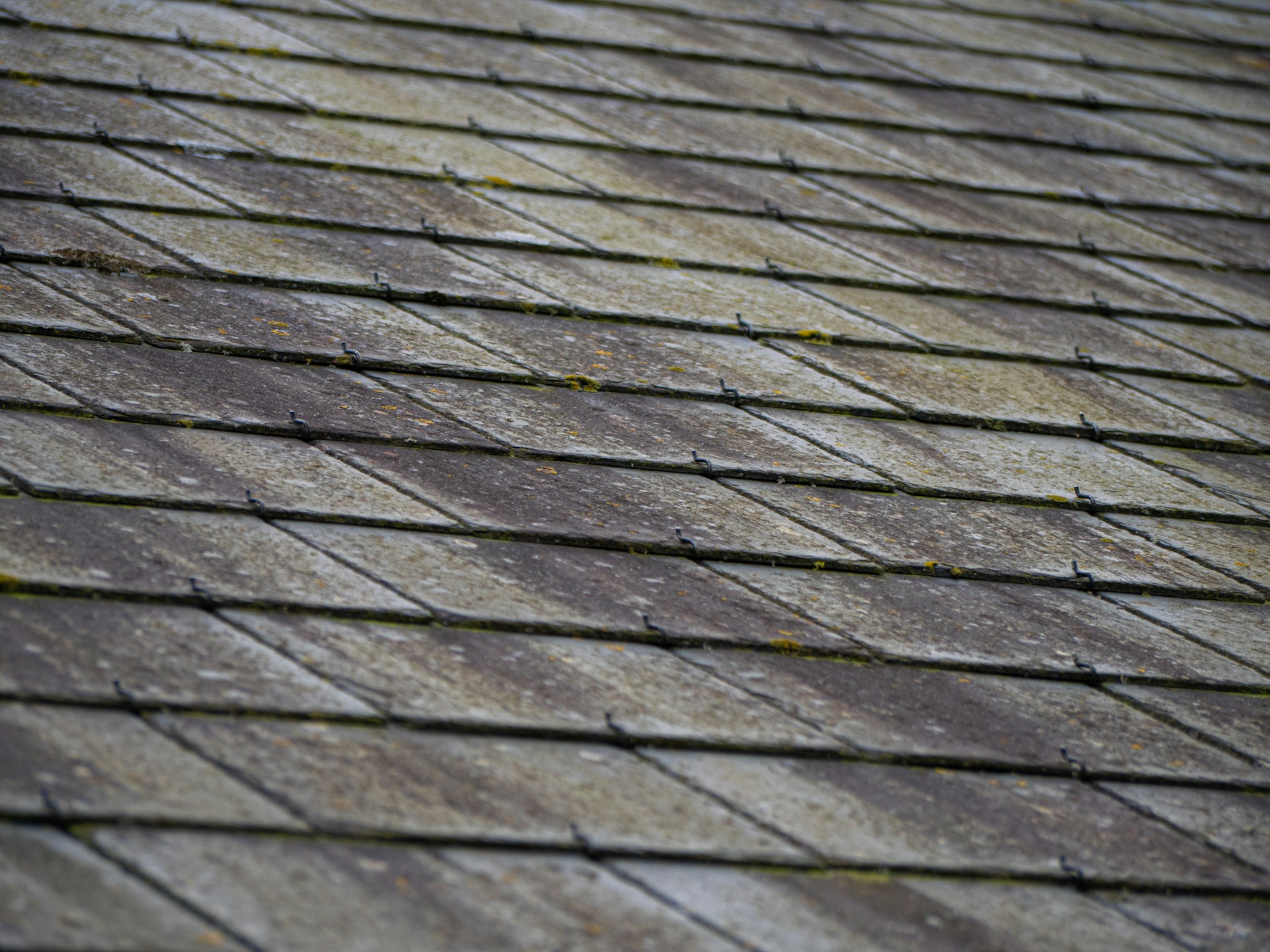
New slate typically presents cleaner edges, tighter color consistency, and a more uniform surface appearance. Reclaimed slate carries weathering patterns, oxidation, and subtle dimensional variation developed through decades of environmental exposure.
For historic restoration work, those differences often determine whether a repair integrates naturally into the existing roof field. Surface weathering and tonal depth cannot be reproduced fully through newer material alone.
Uniformity and Color Consistency
New slate generally offers greater dimensional consistency because it comes directly from controlled quarry production. Reclaimed material, even when sorted carefully, often includes variation in thickness, color range, and edge texture.
That variation may be desirable on restoration projects where visual continuity with an older roof matters more than perfect uniformity. On large contemporary projects requiring highly controlled appearance, newly quarried slate may align more closely with the design intent.
Why Existing Roof Conditions Affect Material Choice
Repair and addition work usually requires the closest possible match to the existing roof system. According to the National Park Service guidance on slate roof preservation, successful slate repairs depend on matching color, thickness, texture, and exposure patterns as closely as possible.
For that reason, reclaimed slate sourced from comparable regions or time periods often integrates more effectively into older roof assemblies than newly quarried alternatives.
Performance, Longevity, and Common Failure Points
The long-term performance of a slate roof depends primarily on material quality, installation standards, flashing systems, and maintenance practices rather than simply on whether the slate is reclaimed or new.
Structural Reliability of Properly Inspected Reclaimed Slate
Natural slate remains durable because of its density, low water absorption, and structural stability. Reclaimed slate that has already performed successfully through decades of weather exposure can continue functioning effectively when inspected and prepared correctly before reuse.
Inspection standards matter significantly. Roofing-specific reclaimed suppliers typically sound each tile to identify hidden fractures or delamination before approving material for resale.
Why Installation Quality Matters More Than Material Age
Most slate roofing failures occur because of deteriorated flashings, fastening issues, or improper installation techniques rather than because the slate itself failed structurally. The National Park Service guidance on slate roof repair notes that properly detailed flashing systems and fastening methods remain essential to long-term roof performance.
Material age alone rarely determines service life when the slate itself remains structurally sound.
Repairability and Long-Term Maintenance
Well-installed natural slate roofs regularly remain serviceable for 75 to 100 years or longer. Reclaimed slate sourced from historic structures may still provide decades of additional use when handled, stored, and installed properly.
Many contractors also retain extra matching slate after installation to simplify future maintenance and preserve visual consistency during isolated repairs.
Cost, Lead Times, and Project Planning
Material Pricing and Distribution Structure
New slate distributed through retail channels often accumulates additional markup through multiple intermediaries. Builder-direct reclaimed slate sourcing can reduce those added costs, particularly on larger roofing projects.
Final pricing still depends on slate type, quantity, color rarity, dimensional consistency, and freight distance.
Reclaimed slate generally requires additional sorting during installation because thickness and dimensional variation may exist within a batch. Experienced installers typically account for this during project planning and waste calculations.
Availability and Freight Timing
New slate orders may involve extended quarry lead times depending on size and color requirements. Reclaimed inventory depends on currently available building removals and prepared stock.
Reclaimed Slate Roofing typically coordinates freight shipment within approximately 3 to 7 business days after order confirmation, provided the required inventory is already available and approved.
Contractors planning large roof installations should confirm quantity availability and reserve matching material early in the scheduling process.
When Reclaimed Slate Makes More Sense
Historic Restoration and Repair Work
Historic restoration projects generally benefit most from reclaimed slate because matching weathered roof systems with newly quarried material can be difficult visually. The National Park Service guidance on substitute materials for historic buildings emphasizes the importance of compatible replacement materials on preservation projects.
Reclaimed material from comparable regions and periods often produces the closest visual integration.
Contractors evaluating materials such as grey reclaimed slate or black reclaimed slate frequently prioritize weathering consistency over strict dimensional uniformity.
Large Contemporary Roof Installations
New slate may be preferable on projects prioritizing highly controlled appearance across large uninterrupted roof areas. Uniform sizing and quarry consistency can simplify layout planning and installation sequencing in those scenarios.
The decision ultimately depends on whether architectural uniformity or historical continuity carries greater importance within the project scope.
Why Synthetic Roofing Solves a Different Problem
Synthetic slate products address a different market category focused primarily on lower upfront cost and reduced structural weight. They do not replicate the long-term repairability, weathering patterns, or historic compatibility associated with natural slate roofing systems.
For preservation-focused projects, reclaimed or newly quarried natural slate generally remains the more appropriate specification path.
Evaluating Source Quality Before Approval
Questions To Ask About Inspection Standards
Before approving reclaimed slate inventory, contractors and architects should ask how the supplier inspects material before resale. Sounding, visual grading, and culling procedures all influence long-term usability.
Reliable suppliers should be able to explain:
- how slate is tested,
- what percentage of material is rejected,
- and how batches are categorized before shipment.
Roofing Specialists Versus General Salvage Yards
General salvage yards occasionally carry usable slate inventory, but roofing-specific grading standards are inconsistent outside dedicated roofing suppliers. Mixed inventory piles may contain significant variation in thickness, quality, and usable yield.
Roofing-specific reclaimed suppliers typically sort, inspect, and document inventory before material reaches the buyer, reducing additional labor during installation.
Regional Slate Types and Matching Considerations
Regional slate characteristics influence color range, weathering, and long-term appearance.
- Vermont slate often includes grey, green, and purple tonal variation.
- Welsh slate is typically dense with blue-grey coloration.
- Spanish slate generally presents darker coloration and tighter texture.
- Buckingham Black slate remains known for its deep black appearance and dimensional consistency.
Reviewing batch photographs and samples before approval helps contractors verify compatibility with the existing roof or intended architectural finish.
Choosing the Right Material for the Project
A Practical Framework for Decision-Making
Reclaimed slate generally performs best when:
- restoration accuracy matters,
- visual weathering continuity is important,
- or sustainability goals influence specification decisions.
New slate may align more effectively with projects requiring:
- highly controlled appearance,
- large uninterrupted roof fields,
- or minimal dimensional variation during installation.
Both materials can provide excellent long-term performance when sourced carefully and installed properly.
Information To Gather Before Requesting a Quote
Before requesting pricing or match evaluation, contractors should prepare:
- roof square footage,
- target slate size,
- preferred color family,
- installation schedule,
- and freight delivery details.
Projects involving repair work should also include photographs and measurements of the existing roof system whenever possible.
Buyers reviewing inventory through Reclaimed Slate Roofing can typically request batch photography before final approval to confirm weathering, sizing, and color consistency.
Frequently Asked Questions
How much does reclaimed slate usually cost compared to new slate?
Builder-direct reclaimed slate often costs less per square than newly quarried slate distributed through retail channels. Final pricing depends on slate type, dimensional consistency, quantity, and freight distance.
What are the advantages and drawbacks of reclaimed slate roofing?
Reclaimed slate offers authentic weathering, historic compatibility, and lower embodied carbon through material reuse. The primary consideration is ensuring the slate has been inspected and culled properly before installation.
How can I tell whether reclaimed slate is still structurally sound?
Structurally reliable slate generally produces a clear ring when sounded lightly and should not show visible delamination, severe edge deterioration, or structural cracking. Roofing-specific reclaimed suppliers commonly perform these inspections before shipment.
Will reclaimed slate match my existing roof?
Matching depends heavily on sourcing material with similar color, thickness, weathering, and regional characteristics. Reclaimed slate from comparable time periods and quarry regions generally integrates more effectively into older roof systems than newly quarried material.
Where can I buy reclaimed slate roofing and what should I compare between suppliers?
Contractors should compare inspection standards, batch documentation, quantity consistency, freight coordination, and sourcing transparency before approving reclaimed slate inventory. Roofing-specific suppliers generally provide stronger documentation than general salvage channels.
What additional labor or installation challenges come with reclaimed slate?
Reclaimed slate may require additional sorting during installation because thickness and dimensional variation can exist within a batch. Most installers account for modest additional waste and layout adjustment during project planning.
Choosing Material With Long-Term Architectural Value
Reclaimed and newly quarried slate both remain durable roofing materials when sourced carefully and installed properly. The better choice depends less on age alone and more on project priorities such as restoration accuracy, visual consistency, sustainability goals, and available inventory.
Reclaimed Slate Roofing supplies hand-inspected reclaimed slate sourced from historic structures, with nationwide freight coordination and builder-direct inventory support for restoration, repair, and specification-driven roofing projects.
Call 225-954-8393 to review available inventory, request batch photographs, or discuss project requirements before final approval.