If you are sourcing reclaimed slate roofing in New Orleans for a restoration, a period-accurate repair, or a new build that needs to sit right next to 130-year-old neighbors, the material decision is not simple.
The city's dense stock of late 19th-century and early 20th-century structures means color, cut, thickness, and patina all have to line up with what is already on the roof or across the street. Getting the wrong slate shipped to a job site on Magazine Street is not just a material problem. It is a schedule problem and a preservation compliance problem.
Reclaimed Slate Roofing supplies authentic salvaged slate and clay tile sourced from verified historic buildings, hand-inspected and shipped direct to your job site at builder-direct pricing. Most orders move within 2 to 5 business days after confirmation, so active builds do not stall waiting on material.
In this guide, you will find what makes reclaimed slate the right match for New Orleans architecture and how to evaluate tile size, color, and condition before ordering.
It also covers what natural slate handles in Gulf Coast weather and how quality is checked before a crate leaves the warehouse. Every section is built for the contractor, architect, or roofer who needs answers fast.
Why Authentic Reclaimed Slate Fits New Orleans Architecture
Reclaimed slate carries the exact geological and surface profile of the original roofing installed on New Orleans historic homes. No new quarry product or synthetic panel can duplicate a century of natural weathering baked into each tile.
Matching Late 19th and Early 20th Century Roof Profiles
Most slate roofs installed across New Orleans between 1870 and 1920 used standard-length slates in random widths. Common sizes were 16", 18", and 20" long with widths varying across a single course.
Graduated installations, where the largest slates sit at the eave and decrease toward the ridge, also appear on high-style Italianate and Queen Anne residences. The Slate Roofing Contractors Association documents these graduated slate roofs as a defining feature of period work.
Matching these profiles requires salvaged slate cut to the same proportions. A 20" x random black reclaimed slate, for example, drops into an existing field without telegraphing itself as a replacement.
New quarry slate, even from the same geological region, reads differently against original tiles that have had a century of UV and moisture exposure.
Patina, Color Drift, and Historic Character in Garden District and Uptown
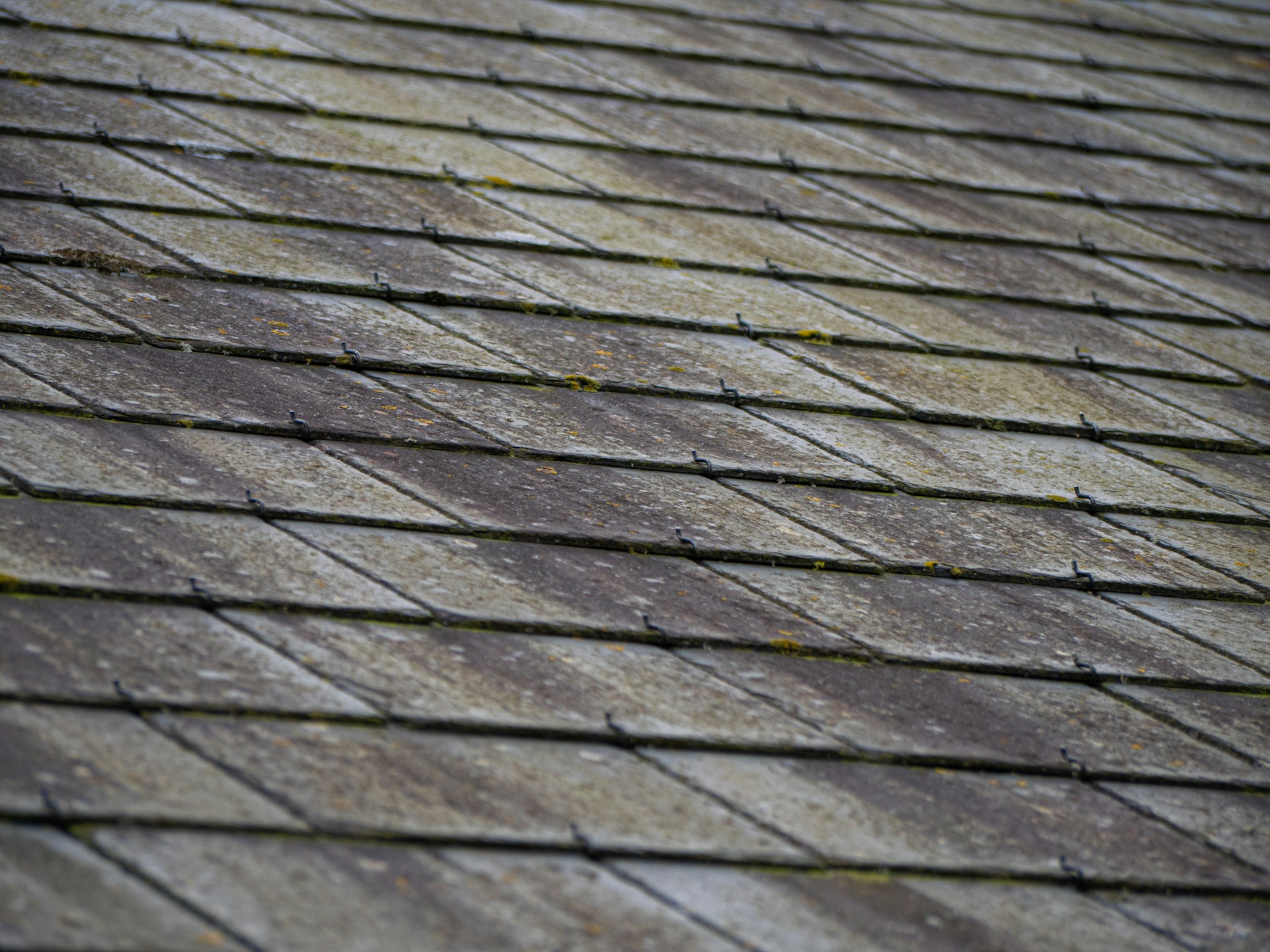
Garden District mansions and Uptown doubles carry slate roofs in deep blacks, neutral greys, and occasional greens or purples. Over decades, these surfaces develop a color drift caused by mineral oxidation, lichen, and atmospheric exposure.
That drift is part of the building's documented character. Preservation review boards notice when a patch of bright new slate breaks the visual field.
Genuine reclaimed slate retains its original uncleaned surface, so the patina integrates with an existing roof rather than contrasting against it. Batch photos and color descriptions, compared in natural daylight, let you confirm a matching historic slate order before anything ships.
When Reclaimed Slate Makes Sense for Repairs, Additions, and Full Replacement
A partial repair on a 1905 shotgun needs five or ten slates that blend in. A full roof replacement on a restored Greek Revival needs 30 squares that look like they have been there since the building went up. In both cases, salvaged slate outperforms new product on visual accuracy and often on unit cost.
Additions and dormers on historic homes also benefit from salvaged stock. When an architect adds a rear wing to a Garden District home, specifying reclaimed slate from the same era keeps the roofline consistent.
That consistency matters to the homeowner, to the review board, and to long-term property value. Knowing what to check before ordering that slate is the next step.
What Gulf Coast Buyers Should Check First
Before you call any supplier, you need four measurements and a clear understanding of the existing roof field you are matching. Skipping this step leads to returns that are not accepted on salvaged material.
Tile Size, Exposure, Thickness, and Headlap Compatibility
Slate roofs are defined by tile length, width, exposure (the visible portion), and headlap (the overlap hidden beneath upper courses). A standard 20" slate set at a 3" headlap gives you an 8.5" exposure. If the existing roof runs a 7.5" exposure, your replacement slate needs to match that setting, not the textbook number.
Thickness is especially important on reclaimed stock. Salvaged slates may run 3/16" to 1/4" or heavier. Mixing a 3/16" tile into a field of 1/4" tiles creates a visible lip that catches water and looks wrong.
Color Matching for Black, Grey, and Weathered Mixed Roof Fields
Black reclaimed slate holds a deep, consistent tone with natural texture that reads well against lighter stone or painted wood trim.
Grey reclaimed slate offers a softer, more neutral field that works across restoration, traditional, and transitional projects. Many New Orleans roofs carry a mix of both, sometimes with faded green or mottled pieces scattered through the field.
When matching, request batch photos from your supplier and compare them against your existing roof in natural daylight. Evaluate color and format carefully before you approve an order, because reclaimed stock is sold as final sale once it ships.
How Roof Inspection Shapes Material Selection Before Ordering
A thorough roof inspection tells you more than just how many slates need replacing. It reveals the original installation method, fastener type, underlayment condition, and flashing profile. Identifying the quarry source and grade of the original slates helps you match replacement material accurately rather than guessing from the curb.
Your inspection should document any soft, delaminating, or cracked tiles, the condition of copper or galvanized flashings, and whether the deck boards need attention. All of that information feeds directly into your material order. Understanding how natural slate handles Gulf Coast conditions is the next consideration.
How Reclaimed Slate Performs in Heat, Humidity, and Storm-Prone Conditions
Natural slate is a metamorphic stone that has already survived one roof cycle, often 75 to 100 years or longer. Its mineral composition makes it resistant to the exact conditions New Orleans throws at a building envelope.
Why Natural Stone Outlasts Many Synthetic Alternatives
Synthetic slate products are typically made from rubber, plastic, or fiber cement. They are rated for 30 to 50 years under ideal conditions. Natural slate, especially hard grades like Buckingham or Peach Bottom, can exceed 100 years of service.
Reclaimed slate that has already served 80 years and passes a sound test still has decades of performance ahead of it.
The National Park Service notes that properly installed slate needs little upkeep and lasts 60 to 125 years depending on grade, as covered in its brief on maintaining historic slate. Synthetic alternatives cannot match that track record in a coastal subtropical climate.
Moisture Resistance, Service Life, and Low-Maintenance Performance
Slate absorbs very little water, typically less than 0.25% by weight for hard grades. In a city that averages over 60 inches of rainfall per year, that near-zero absorption rate prevents freeze-thaw damage, biological growth penetration, and internal delamination.
Properly flashed and fastened, a reclaimed slate roof on a New Orleans home needs little beyond periodic flashing checks and gutter maintenance.
Reusing salvaged stone also eliminates quarrying demand and diverts material from landfills. That practical sustainability can count toward Leadership in Energy and Environmental Design (LEED) Materials and Resources credit categories, though specific point eligibility varies by project.
Weight, Structure, and Installation Considerations for Coastal Projects
Standard slate weighs between 700 and 1,000 pounds per square foot (100 square feet), depending on thickness.
Before specifying reclaimed slate on a coastal project, confirm the structure can carry the load. Most historic New Orleans homes with original slate roofs already have framing sized for that weight. New construction or additions may need engineered upgrades.
- Verify rafter spacing and dimension for dead-load capacity
- Use stainless steel or copper fasteners to resist salt air corrosion
- Specify a minimum 30-pound synthetic underlayment for secondary protection
- Detail all flashings in copper or stainless, not galvanized steel
Detailed coastal climate roofing guidance covers fastener and flashing specs for hurricane-prone zones. With the right structural backing, the next question is how reclaimed slate is evaluated before it ever ships.
How Quality Is Evaluated Before Material Ships
Every piece of reclaimed slate that leaves a responsible supplier has been individually checked for structural integrity. The process is hands-on, not automated.
Hand Inspection, Sounding, and Culling for Reuse
Sounding is the standard field test for slate viability. Each tile is held at one corner and tapped with a knuckle or small hammer. A clear, ringing tone indicates a sound, dense piece with no internal fractures. A dull thud means the slate is soft, delaminated, or cracked internally. It gets culled.
Beyond sounding, inspectors check for edge chips, nail hole integrity, and uniform thickness. Tiles that pass are sorted by size and color, then staged for crating. This process is labor-intensive but non-negotiable for material that needs to perform for another 50 years on a live roof.
Reviewing Batch Photos, Fit, and Finish Before Approval
Because reclaimed slate orders are final sale, the review step before shipping matters. A supplier should provide batch photos showing color, surface condition, and size distribution. You review these against your project specs and confirm the order before crating begins.
This approval step is where restoration projects either go smoothly or stall. If color or size does not match your existing field, it is far better to catch that in a photo than on a loaded pallet at the curb.
Job-Site Delivery, Crating, and Freight Timing for Active Builds
Orders ship crated and palletized, ready for job-site unloading. Liftgate service and delivery scheduling are available on request. Typical turnaround runs 2 to 5 business days after order confirmation, which keeps most active restoration and reroofing projects on schedule.
Tracking details and delivery instructions go out before the shipment arrives. If freight damage occurs, it should be reported within 48 hours so a carrier claim can be filed. This level of coordination is what slate roofing contractors on tight timelines need from a material supplier. It feeds directly into how you build a sourcing plan.
Sourcing Strategy for Contractors and Architects
The best sourcing decisions balance three variables: historic accuracy, lead time, and material cost per square.
Balancing Historic Accuracy, Lead Time, and Budget
On a restoration where the Historic District Landmarks Commission (HDLC) is reviewing materials, accuracy is not optional. You need the right color, the right cut, and documented provenance. On a new build designed to blend with neighboring historic structures, you have slightly more flexibility on exact match. You still need period-appropriate character.
Comparing slate cost per square across different sizes and colors helps you budget realistically. Pricing on salvaged slate varies by rarity, size, and current inventory levels. Locking in material early in the project timeline prevents budget surprises.
When to Source Salvaged Slate Versus Clay Tile for the Same Project
Some New Orleans roofs combine slate on the main structure with clay tile on dormers, bays, or porch roofs. In those cases, you may need to source both materials, with slate handled as a separate order matched to the dominant roof field.
The decision between slate and clay for a specific roof section depends on what was originally installed. Field evidence and historic photos are your best guides. If the original material was barrel clay tile, a slate replacement will not pass preservation review.
Using Local Contractor Input Without Relying on Directory Listings
Local roofers and restoration contractors who work New Orleans historic properties regularly know which sizes, colors, and thicknesses are hardest to find. Their field experience is valuable for refining your material specs before you contact a supplier. Relying on general directory listings or broad online searches for reclaimed material sourcing often leads to dead ends or middlemen.
A direct supplier relationship, where you call, describe the project, and get a straight answer on what is in stock, saves more time than scrolling through listings. With your sourcing plan in place, the final step is making the material call.
Making the Material Call for Your Next New Orleans Project
The difference between a smooth material procurement and a delayed one usually comes down to what you confirm before you approve the order.
Questions to Ask a Supplier About Current Inventory and Matching
When you call, start with the specific size, color, and quantity you need. Ask whether the supplier has that exact format in stock right now or if it needs to be pulled from a larger salvage lot. Get clarity on:
- Available sizes (16", 18", 20" x random)
- Color options (black, grey, mixed weathered)
- Thickness range and sorting method
- Batch photo availability before order approval
- Estimated ship date after confirmation
These questions separate a professional supplier from a broker who is guessing at inventory levels.
What to Confirm Before Final Sale Approval
Reclaimed slate is sold as final sale. That makes the pre-approval review critical. Confirm color match against your roof inspection photos. Verify tile dimensions against your measured exposure and headlap. Review the batch photos carefully. Once you approve and the order ships, it is yours.
The same final sale policy applies to salvaged clay tile orders. Measure twice, approve once.
Building Reclaimed Slate Into a Fast Turnaround Sourcing Plan
When your project timeline is tight, and the material has to match a historic roof field in New Orleans, a direct supplier ships most orders within 2 to 5 business days after confirmation. Orders arrive crated, palletized, and ready for your crew.
Call Reclaimed Slate Roofing directly at 225-954-8393 to check what is in stock and get a quote built around your project specs. Or browse available slate inventory and see what sizes, colors, and formats are available to ship this week. If you know what you need, call. If you are still narrowing it down, the inventory page is the fastest place to start.
Frequently Asked Questions
What Does Reclaimed Slate Typically Cost per Square Foot Installed, and What Line Items Move the Price Most?
Reclaimed slate material generally runs between $8 and $18 per square foot depending on size, color, and rarity. Installation labor, copper flashing, underlayment, and any structural reinforcement are the line items that push total installed cost higher.
How Do You Verify Salvaged Slate Is Job-Site Ready, Hand-Sounded, Thickness-Sorted, and Free of Soft or Delaminating Pieces?
Each tile is held at one corner and struck to produce a tone. A clear ring means the slate is dense and sound. Dull or flat tones indicate internal fractures or delamination, and those pieces are culled before packing. Thickness sorting ensures uniform coursing on the finished roof.
Which Slate Colors and Sourcing Regions Pair Best with New Orleans-Era Architecture?
Black slate from Pennsylvania and Virginia quarries matches the majority of late 19th-century New Orleans slate roofs. Grey slate from Vermont works well on early 20th-century structures. Purple and mottled green slates appear on higher-style residences and are harder to source, so confirm availability early.
What Underlayment, Fastening, and Flashing Details Are Required to Spec Reclaimed Slate for Hurricane-Prone Coastal Conditions?
Use a minimum 30-pound synthetic underlayment, stainless steel or copper nails sized to the slate thickness, and copper or stainless flashings at all penetrations and transitions. Avoid galvanized fasteners, which corrode faster in salt air environments. Local building codes may require additional wind-uplift fastening.
How Much Usable Coverage Should You Expect from a Reclaimed Lot After Culling, and How Should Waste Factor Into Takeoffs?
A well-culled reclaimed lot typically yields 85% to 90% usable material. Build a 10% to 15% waste factor into your takeoff to account for breakage during shipping, handling, and installation. Ordering slightly over your calculated square footage prevents mid-project shortages.