Specifying clay roof tiles for a restoration or a high-end new build means choosing the right profile before you talk price or timeline. Barrel, mission, French, flat, and interlocking profiles all shed water differently, sit on the deck in their own way, and change the character of the roof.
Pick the wrong one, and you get tiles that do not course with the existing field, flashing that will not line up, or a look that clashes with the architecture. For contractors and architects comparing clay tile roof types, the profile is the first filter, and it narrows every material decision that follows.
Reclaimed Slate Roofing supplies authentic salvaged roofing materials, including reclaimed Barrel Clay Roof Tiles pulled from historic structures and hand-inspected before shipping.
Inventory on specific profiles varies as new salvage comes in, so it is worth confirming availability before you specify. Builder-direct pricing and a typical 2 to 5 business day turnaround make it a practical source for genuine reclaimed clay tile.
In this guide, you will find a breakdown of barrel, mission, French, Roman, flat, and interlocking profiles.
You will also find the performance factors that matter, like freeze-thaw resistance and color stability, plus practical tips for matching reclaimed tile to what is already on your roof. Each section is built to help you specify with confidence.
Why Profile Matters Before You Specify a Tile Roof
Not all clay tile roofs perform or look the same. The profile controls water-shedding speed, wind resistance, fastening method, and visual weight. Treat clay tile as one big category, and you end up with mismatched repairs, structural headaches, and a blown budget.
A curved barrel tile and a flat interlocking tile need different battens, underlayment, and flashing details. Get that wrong on a restoration, and you risk both the roof's integrity and its historic accuracy.
The gap between clay tile and other roofing is significant too. Clay tile can last well over 75 years, resists fire, and holds its color instead of fading under UV the way petroleum-based products do.
Concrete tiles mimic some clay profiles, but they weigh more per square, weather differently, lack the patina reclaimed clay develops, and absorb more moisture, which is a problem in freeze-thaw climates.
How Shape Affects Water Shedding and Roof Character
The cross-section of a tile decides how fast water leaves the roof. Curved profiles like barrel and mission create channels that speed runoff. Flat tiles rely on overlap and gravity. The shadow lines, texture, and depth of a roof all come down to profile.
A Spanish-style barrel roof looks nothing like a flat English tile roof, even with the same clay body.
Why Clay Tile Roofs Are Not Automatically Interchangeable
You cannot drop a mission tile into a flat tile installation without reworking battens, changing headlap, and recalculating load. Even within one profile family, size variation between makers and eras means one barrel tile might not course properly next to another.
This is especially true with reclaimed material: tiles from different salvage sites can share a profile name but differ in radius, length, or lug placement.
When Historic Context Should Drive Material Selection
On a project under preservation review, National Park Service historic roofing standards call for keeping original roofing materials and their character-defining features, which means matching the tile profile, not just the material.
Swap a two-piece barrel system for a one-piece S-tile, and you change the building's historic character, even though both are clay. Profile accuracy is required for preservation, not optional.
Barrel and Mission Profiles
If you are sourcing curved clay tile for a Mediterranean, Spanish Colonial, or Mission Revival building, the first thing to sort out is the difference between barrel and mission tile.
People use the terms interchangeably, but they are different systems with different installation needs. Order the wrong type for a period-correct curved roof and your crew will notice on the roof, not when they open the box.
Reclaimed salvaged clay tile, including reclaimed barrel tile pulled from historic buildings, is hand-inspected and culled before shipping. The difference between barrel and mission comes down to whether the system uses two tile shapes or one.
What Defines Barrel Tiles
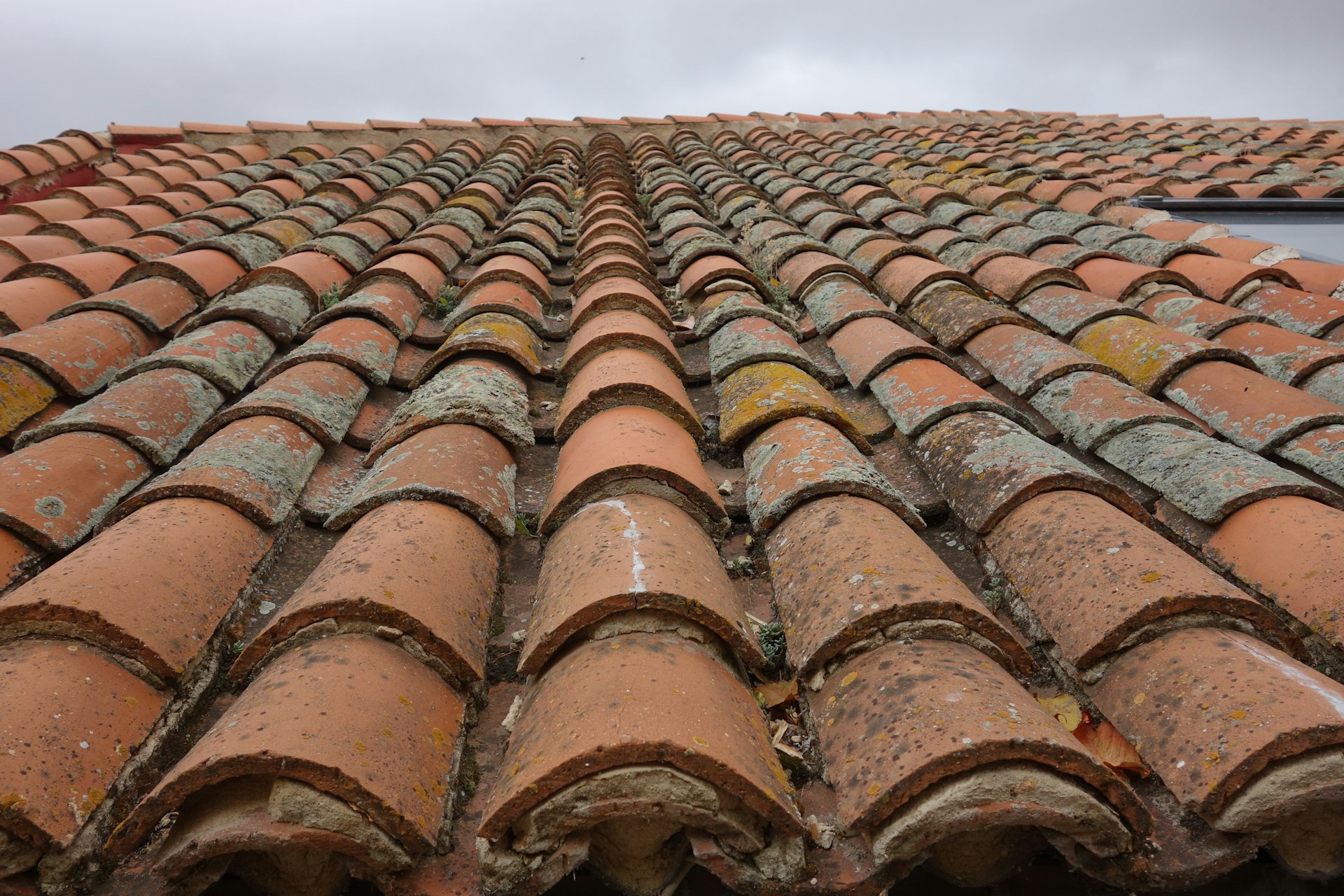
Barrel tiles are semi-cylindrical clay tiles that create alternating convex and concave channels. In a traditional two-piece barrel system, one tile sits concave (channel down) and another sits convex (channel up) over the joint.
That layered setup creates the deep, rhythmic shadow lines you see on Spanish Colonial and early California buildings, one of the oldest and most recognizable clay roofing configurations.
How Mission Tile Compares to Two-Piece Barrel Systems
Mission tile is the tapered, half-round clay tile used in simpler barrel installations. In a true mission layout, all the tiles share one shape and alternate between pan (concave, face-up) and cover (convex, face-down) positions. Some modern mission tiles are one-piece units made to look like the two-piece system.
If you are matching an existing historic mission roof, confirm whether the original used separate pan and cover tiles or a single molded profile, because that detail drives sourcing.
Where These Curved Forms Are Commonly Used
Barrel and mission profiles are everywhere in the American Southwest, Florida, and coastal California, and on historic churches, civic buildings, and estates across the Southeast.
When you work with reclaimed clay tile on these buildings, check the tile's radius and taper against what is already up there before you order.
French, Roman, and Other Patterned Clay Tiles
Past barrel and mission, there is a whole world of patterned clay tile. French tiles, Roman tiles, double Roman tiles, pantiles, and S-shaped profiles each have their own drainage geometry and visual rhythm.
If your project needs one of these regional profiles in a reclaimed format, finding an exact match can be the toughest part of the spec process. Inventory on these shifts constantly, so a quick call to confirm availability beats specifying something that is not in stock.
French Clay Tiles and Their Drainage Channels
French clay tiles have a flat body with raised ribs along one or both edges. Those ribs create clear channels that run water straight down the slope. The profile sits flatter than a barrel tile but carries more dimension than a standard flat tile.
French tiles were common on the Gulf Coast, in Louisiana, and along parts of the eastern seaboard, so they turn up often in historic preservation work.
Pantiles, S-Shaped Profiles, and Other Regional Variants
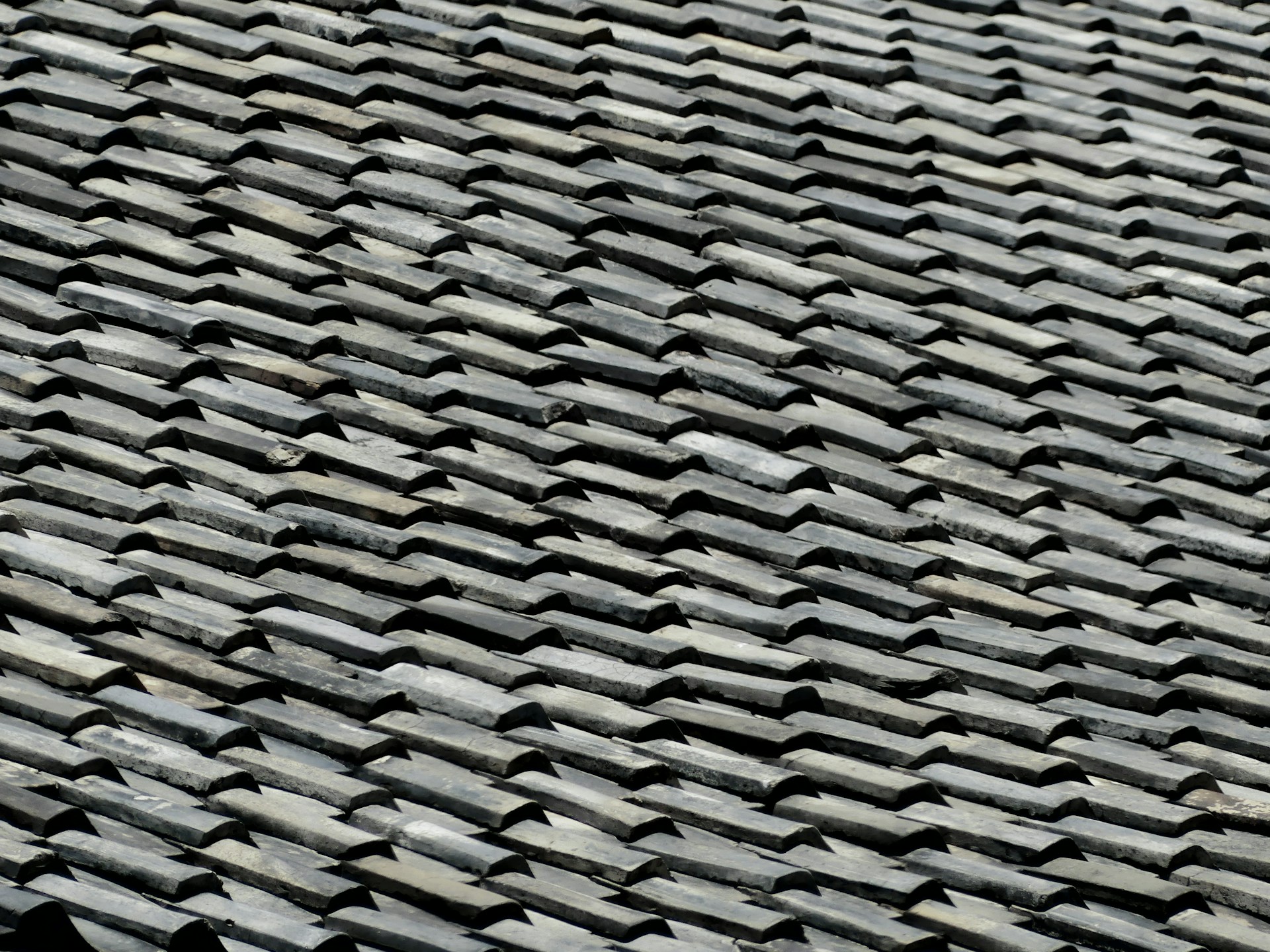
Pantiles have a continuous S-shaped cross-section that combines pan and cover into one tile. The profile sheds water efficiently and lays faster than a two-piece system.
Regional versions of the S-shape appear under names like Spanish tile, with exact size and curve depending on origin. When you source clay tiles for architects and heritage projects, measure the S-curve radius and the overlap width, not just the tile length.
Flat and Interlocking Options for Cleaner Roof Lines
Flat and interlocking clay tiles give a very different look than the curved profiles. For a clean, linear roofline, or a building that originally had flat tile, you need to know how these differ from each other and from the curved systems above.
This group ranges from simple shingle-style flats to engineered interlocking systems built for wind resistance.
Flat and interlocking profiles are common on Georgian, Tudor, and many early American buildings. Authentic reclaimed versions in the right size and color call for a supplier with rotating inventory, so confirm what is in stock with your project dimensions and target profile in hand.
Flat Clay Tiles for Historic and Contemporary Applications
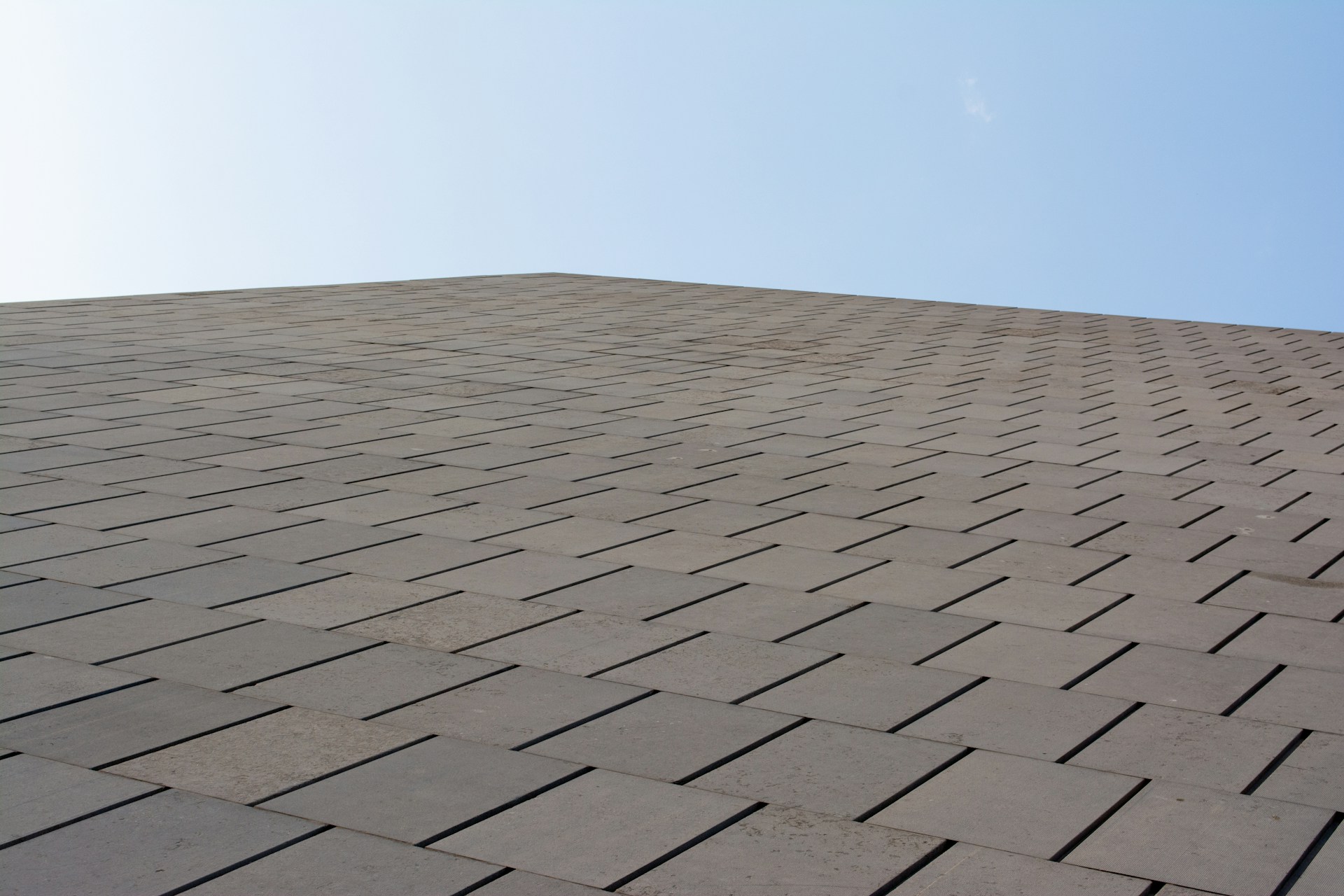
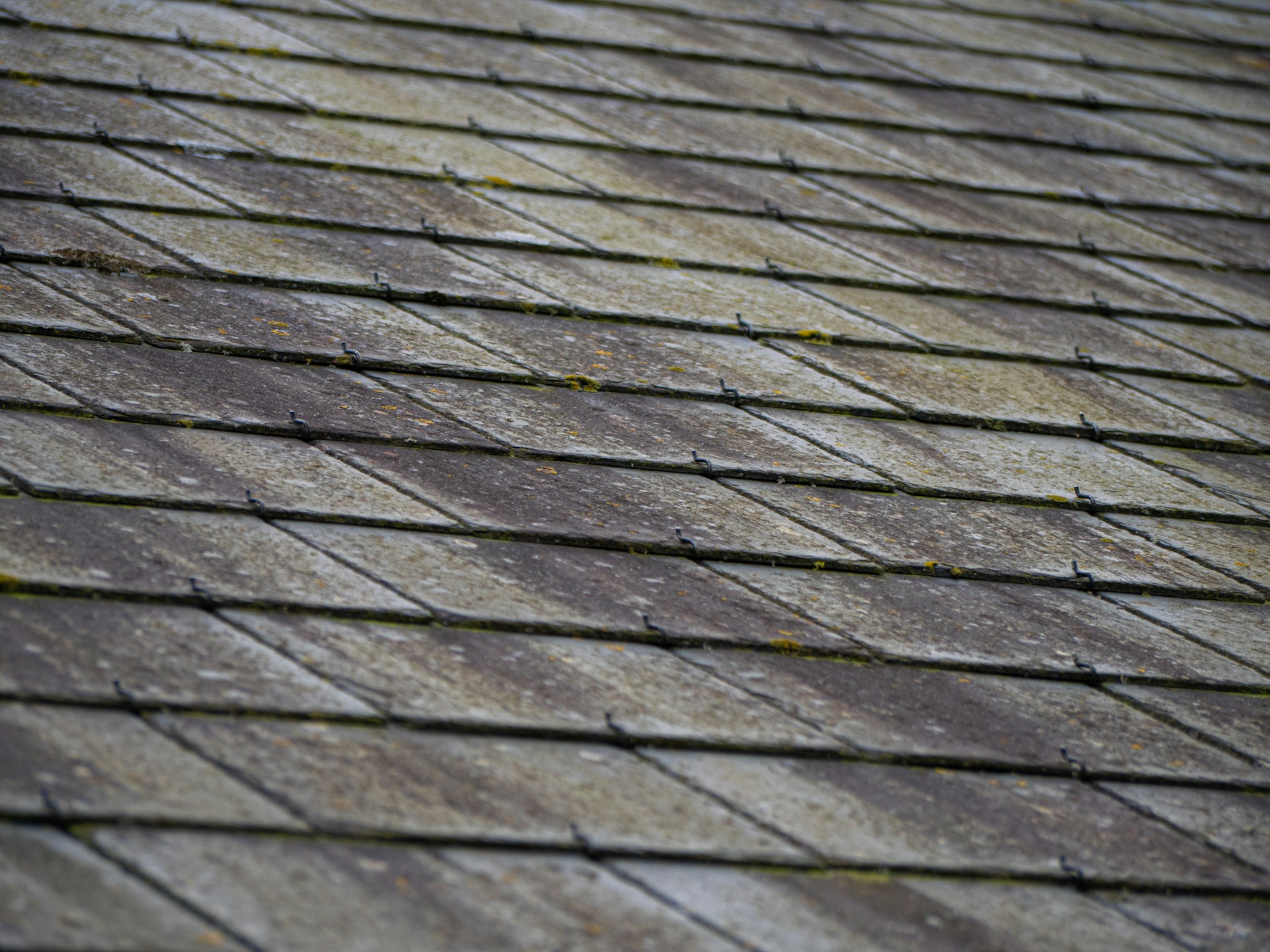
Flat clay tile is the simplest profile, a rectangular slab laid in overlapping rows with staggered joints.
It produces the smooth, uniform surfaces you see on English cottages, Colonial American buildings, and modern designs that borrow from those styles. Flat tiles also suit small patch repairs where you are matching only a few rows.
Interlocking Tile Systems and Wind Performance
Interlocking clay tiles have molded channels, ribs, or flanges along their edges that lock the tiles together. That mechanical connection boosts wind resistance well beyond simple overlapping flat tile.
In high-wind or coastal areas, interlocking profiles reduce the risk of tiles lifting during a storm, and hurricane-zone codes often require additional fastening for non-interlocking tiles. For material performance in exposed areas, a guide to coastal roof performance covers the trade-offs.
How Locking Profiles Change Installation Strategy
Locking clay tile changes how the roof goes together. Your crew has to align the interlock channels precisely, which means tighter batten-spacing tolerances and less room to adjust once a row starts.
Synthetic underlayment rated for clay tile is standard under these systems. With reclaimed interlocking tile, confirm the locking geometry is consistent across the batch, since dimensional differences between salvage sources can make a locking system impossible to lay correctly.
Performance, Climate, and Material Selection Factors
Choosing clay tile is not only about profile shape. Climate, surface treatment, weight, and how the color holds up all decide whether a clay roof lasts or fails early. For a site with rough winters, salty coastal air, or intense heat, the wrong tile body or finish can cut a roof's lifespan short.
Natural and glazed clay tiles each react to weather differently, and knowing the difference matters before you settle on material, especially with reclaimed tile where the tile's past is part of the appeal.
Freeze-Thaw Resistance and Low-Absorption Tiles
Clay tile can crack in freeze-thaw cycles when water gets inside and expands. Low-absorption tiles, fired hotter and denser, resist that damage far better. For a cold-climate job, test water absorption before placing a large order. Tiles under 3 percent absorption usually handle freeze-thaw cycles without trouble.
Glazed vs. Unglazed Surfaces
- Glazed clay tiles carry a glassy coating baked onto the surface, which adds color options, lowers water absorption, and gives a reflective finish.
- Unglazed clay tiles keep their natural clay color and weather gradually, building the patina prized in reclaimed material.
Glazed tiles hold their color permanently. Unglazed ones shift in tone as they weather but rarely break down structurally. For restoration, matching a weathered, unglazed tile is far easier with real salvaged material than with new.
Weight, Repairability, and Long-Term Color Behavior
Most clay tile roofs run about 9 to 12 pounds per square foot installed, so your structure has to carry that load.
Easy repair depends on finding matching profiles, and reclaimed tiles from the same era and region as your old roof give the best shot at a color and size match. Fading is not an issue with natural clay, since the color runs through the whole tile, not just the surface.
Sourcing Reclaimed Tile for Restoration and Premium New Builds
Finding the right clay roof tile for restoration or a high-end new build is rarely a catalog exercise. You want tiles that match your old roof's profile, size, color, and weathered surface, and that inventory is not sitting at a big-box store. Pricing climbs fast when you source from specialty dealers with long lead times and added markup.
Genuine salvaged tile at builder-direct pricing, with most orders shipping in 2 to 5 business days, is the practical alternative. Inventory changes as new salvage arrives, so confirming what is available is usually the quickest path.
Matching Existing Profiles, Scale, and Patina
Start with a sample from your current roof. Measure length, width, thickness, and any curve, and photograph the surface color in daylight. Those become your search criteria. A guide to matching reclaimed tile breaks the ID process down step by step.
With reclaimed tile, patina is the visual giveaway, and new tile cannot fake decades of natural weathering.
What to Confirm Before Requesting Roofing Quotes
Before you ask for prices, pin down these:
- Profile type (barrel, flat, interlocking, pantile, and so on)
- Dimensions (length, width, thickness of your existing tiles)
- Quantity needed (total square footage plus 10 to 15 percent extra)
- Delivery location and site access for freight trucks
- Timeline for when you need material on site
Having this ready makes quoting faster and saves a round of back-and-forth.
When to Compare Reclaimed Clay with New and Specialty Alternatives
Reclaimed clay tile is the best fit when you care about matching the look, historic accuracy, and sustainability.
New production tile suits brand-new builds with nothing to match. Specialty options like solar tiles can sometimes integrate with clay systems but rarely work on historic buildings. For most restoration and heritage-focused new builds, real reclaimed clay is the closest match in both look and lifespan.
Get the Profile Right Before You Source
Every decision about a clay tile roof comes back to the profile. Barrel, mission, French, Roman, flat, and interlocking profiles each carry a different structural job, shed water differently, and change the look of the building. Getting the profile right protects the roof's performance and the building's character for decades.
If you already know the profile you need, call Reclaimed Slate Roofing at 225-954-8393 to check stock and get a quote tailored to your project. Still deciding? Browse the current tile inventory to see which sizes, colors, and formats are ready to ship.
Frequently Asked Questions
What Are the Most Common Clay Roof Tile Profiles Used on Residential Builds?
The main ones for homes are barrel (mission), S-tile (Spanish), flat, and interlocking. Barrel and S-tile are common in the Southwest and Southeast, while flat tiles show up more on Colonial, Tudor, and modern homes in the Northeast and Mid-Atlantic.
How Do Spanish "S" Tiles Compare to Flat Clay Tiles in Weight, Drainage, and Wind Performance?
Spanish S-tiles are a bit heavier per piece because of their curve, and they shed water faster thanks to built-in channels. Flat tiles depend on overlap for drainage and are more likely to lift in wind unless fastened or interlocked. S-tiles generally do better in heavy rain, while flat tiles suit milder climates with less wind.
Which Clay Tile Shapes and Colors Best Suit Modern Architecture Without Losing Authentic Character?
Flat and low-profile interlocking clay tiles fit modern lines well. Unglazed natural clay in grey, charcoal, or earthy tones bridges contemporary design and classic material character. Reclaimed flat tiles bring real patina that new tile cannot match.
What Underlayment and Fastening Methods Are Typically Specified for Clay Tile Systems in High-Wind Zones?
High-wind areas usually require synthetic underlayment approved for tile, mechanical fastening of every tile with corrosion-resistant nails or screws, and sometimes adhesive or wire ties as backup. Hurricane-zone codes often spell out exact fastener spacing and minimum pull-out strength.
Where Do Contractors Typically Source Job-Site Ready Clay Roof Tiles, Including Salvaged and Builder-Direct Inventory?
Contractors source clay roof tile from specialty distributors, salvage yards, and builder-direct suppliers. For reclaimed material, calling the supplier is the fastest way to check profile, color, and quantity, since salvage inventory turns over and is not always listed.