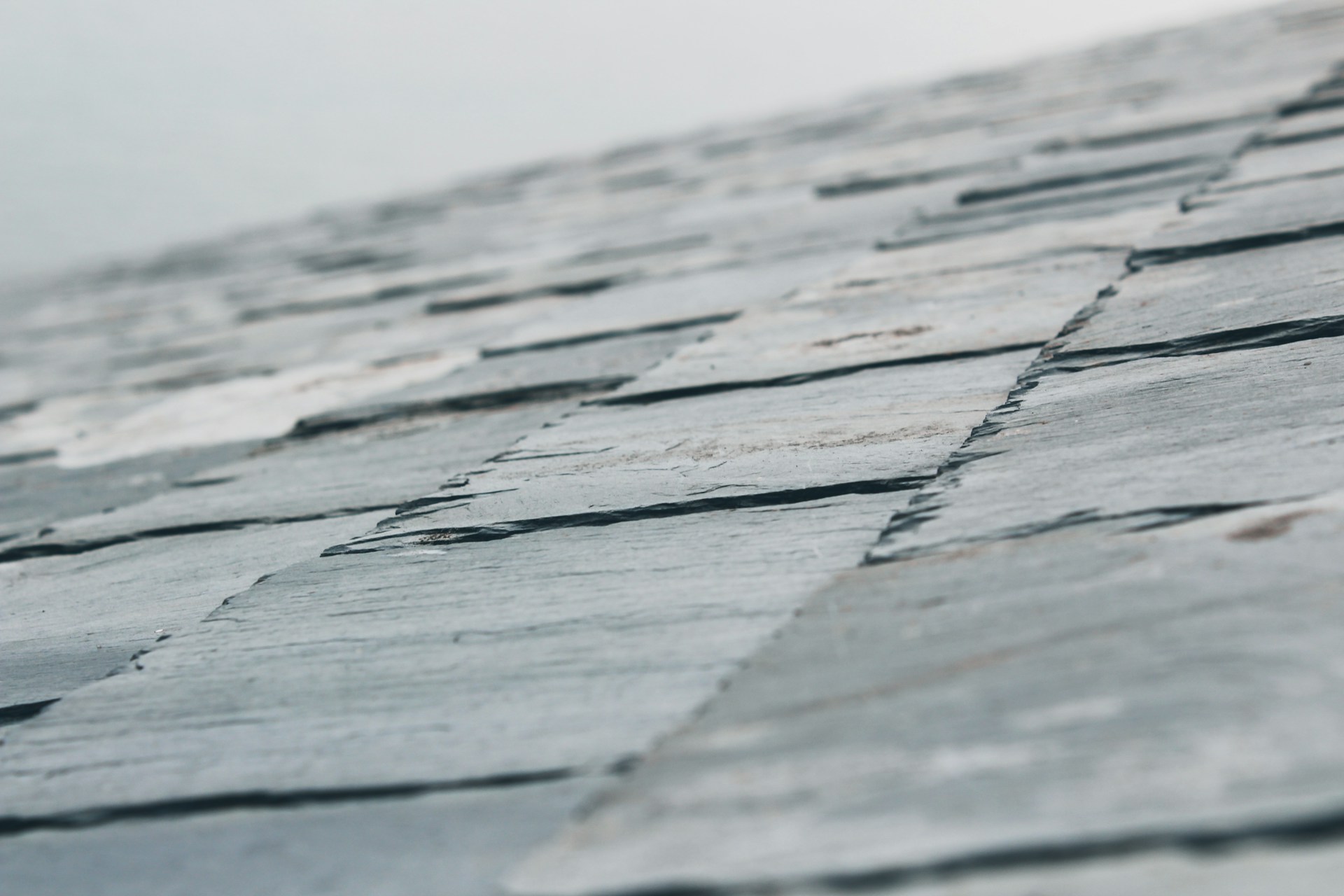
When you are specifying roofing for a restoration or a high-end new build, one question keeps surfacing: will salvaged slate hold up as long as the original installation did? You already know the stone lasted a century on its first roof.
What you need is hard evidence that the same tile, pulled from a demolition site and reinstalled, still has decades of proven performance left in it. Reclaimed slate durability is not a matter of faith. It is a measurable outcome of mineral composition, inspection rigor, and installation detail.
Reclaimed Slate Roofing supplies authentic reclaimed slate that is hand-inspected, sounded, and culled before it ships. Every piece keeps its original weathered surface; nothing is cleaned, refinished, or coated.
The material arrives builder-direct, crated and palletized, with most orders turning around in 2 to 5 business days. That sourcing model is the backdrop for everything below about what separates a sound salvaged tile from a compromised one.
In this guide, you will learn which mineral and structural properties give natural slate its long service life and how professional inspection identifies tiles that will not perform.
You will also see which installation details protect or undermine a reclaimed roof, along with how reclaimed slate compares to synthetic alternatives on cost, maintenance, and lifespan.
Every section is built on trade-level detail.
Why Old Slate Still Performs After Decades
Natural slate quarried 100 or 150 years ago often outperforms roofing made today. The reasons are geological, not sentimental. The stone's mineral structure, density, and porosity determine whether it sheds water, resists freeze-thaw cycles, and holds its fastener holes over a full roof life.
What Gives Reclaimed Slate Its Durability and Service Life
Slate's durability starts with low porosity and low water absorption. According to the National Park Service, slate's roofing properties of high strength and low absorption are what make it effective as roofing.
When a tile absorbs very little moisture, freeze-thaw damage has almost nothing to act on. Carbon-rich black slate and iron-oxide greens owe their color to the same minerals that make them dense and weather-resistant.
Fire resistance is inherent in the stone. Slate does not burn, releases no toxic fumes, and carries a Class A fire rating with no chemical treatment. These properties do not degrade with age.
A tile pulled from a 120-year-old roof still offers the same fire and weather protection it provided on day one, provided its structure is intact.
Typical Lifespan Ranges for Hard and Soft Historic Slate
Not all slate is equal. Hard slates from certain quarry regions routinely exceed 100 years of service.
Soft slates deliver strong performance on a shorter timeline. The NPS notes that properly installed slate roofs reach a slate roof service life of 60 to 125 years or longer depending on the stone type.
When you source salvaged tiles, knowing the quarry origin tells you how much service life likely remains. A Peach Bottom slate pulled at 100 years may easily have another 75 ahead of it.
Why Proven Weather Exposure Matters More Than Appearance
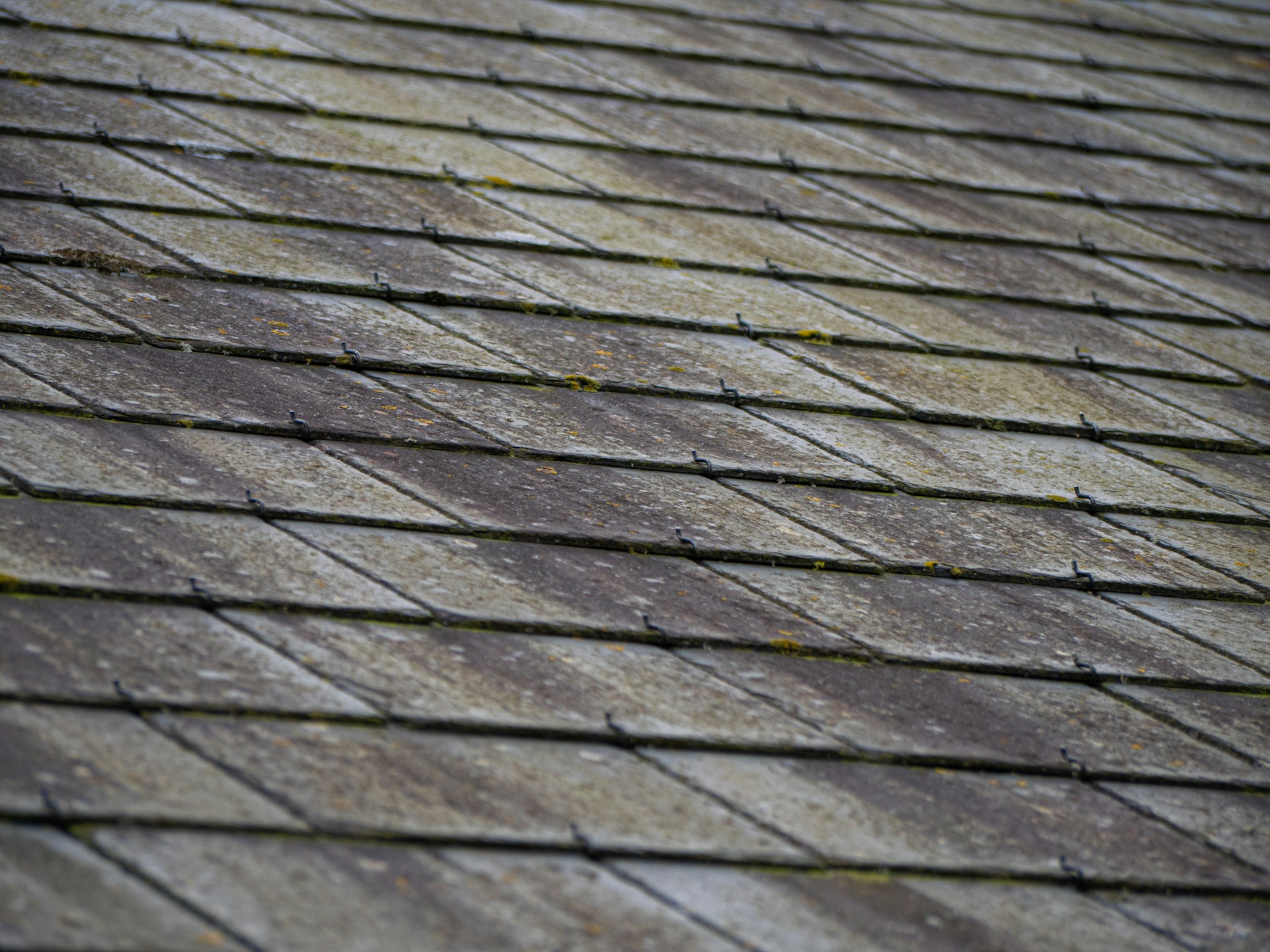
Surface patina, lichen staining, and mild color shift are cosmetic. They tell you the tile has weathered, not that it has weakened. A century of freeze-thaw exposure without cracking is the best durability test money cannot buy: you are looking at a tile that has already passed the harshest real-world trial available.
Many historic roofs on Gilded Age estates and early 20th-century civic buildings in the Northeast are stripped during renovation, yielding salvaged slate with a record of preserving historic roofs through decades of weather.
That proven track record is what separates reclaimed slate from a new quarry tile with zero field history.
How Structurally Sound Tiles Are Identified
Every salvaged slate tile goes through a multi-step physical evaluation before it is considered fit for reuse. The process is manual, deliberate, and built to catch defects that would cut a tile's remaining service life short.
Hand Inspection, Sounding, and Culling
Sounding is the simplest and most reliable field test. You hold a tile by one corner and tap it with a knuckle or another piece of slate. A clear, ringing tone signals a dense, intact tile. A dull thud or rattle indicates internal fractures, delamination, or soft spots that compromise structural integrity.
Hand inspection follows. Each salvaged tile is checked visually and by touch for surface flaking, edge chips, and cracks that run through the full thickness. Tiles that fail any step are culled and never enter inventory. That is the process applied to every batch before it is crated.
Signs of Delamination, Flaking, and Soft Spots
Delamination is the primary failure mode in aged slate. It occurs when moisture penetrates along the cleavage planes and the stone splits into layers. A delaminating tile feels spongy, sounds dead, and often shows visible separation at the edges.
Flaking on the surface is normal weathering. Flaking that progresses into the body of the tile is not. If you can peel layers off with a fingernail, the tile is compromised. Soft spots, usually found by pressing firmly on the face, indicate internal decay. These tiles go straight to the cull pile.
- Clear ring on sounding = structurally sound
- Dull thud or rattle = internal fracture or delamination
- Edge chips under 1/4 inch = cosmetic, usually acceptable
- Through-body cracks = reject
- Surface flaking only = normal patina, acceptable
- Peeling layers = advanced delamination, reject
Thickness Tolerance, Cleavage, and Edge Condition
Consistent thickness matters for a flat lay and proper headlap coverage. Salvaged slates with excessive thickness variation create humps and gaps that invite water infiltration. A tolerance of plus or minus 1/8 inch is standard for most reinstallation work.
Edge condition tells you whether a tile was carefully removed or pried loose with a crowbar.
Clean edges with original factory or hand-cut profiles that seat properly against adjacent tiles. Badly chipped or uneven edges leave gaps in the coursework, and on matching work, edge quality is as critical as color.
Installation Details That Protect Long-Term Performance
A reclaimed slate roof's actual service life depends as much on what is underneath and around the tile as on the tile itself. Fastener choice, underlayment type, and flashing detail either protect the system or silently undermine it.
Underlayment Compatibility and Secondary Water Control
Breathable underlayment is preferred under slate because it lets moisture vapor escape from the deck. Synthetic underlayment works when it is rated for vapor permeability. Non-breathable membranes can trap condensation against the wood sheathing.
Ice-and-water shield belongs at the eaves and in valleys, not across the entire deck. Full coverage under slate eliminates the drying capacity the assembly needs.
For climates prone to ice dams, limited self-adhering membrane at vulnerable points plus breathable felt or synthetic over the field gives balanced secondary water control.
Fasteners, Headlap, and Pre-Drilled Repairs
Copper or stainless steel nails are the only acceptable fasteners for slate. Galvanized nails corrode over decades and fail before the slate does. Two nails per tile, placed at the nail line, are standard.
Headlap is the vertical overlap between courses. For standard-slope roofs, a three-inch headlap is typical; steeper pitches can use less, lower slopes need more. When a salvaged tile requires new nail holes, pre-drilling prevents cracking. A carbide-tipped masonry bit at slow speed produces clean holes without stressing the stone.
Flashings, Valleys, Ventilation, and Ice Management
Copper or lead-coated copper flashings outlast the slate itself. Aluminum flashings do not. Step flashings at sidewalls, counter flashings at chimneys, and open or closed valleys all need metals that will not corrode in 30 years and trigger a failure cascade.
Ventilation prevents ice dams by keeping the roof deck temperature close to outside ambient. Ridge vents paired with soffit intake carry heat away from the underside of the slate. Restoration projects on historic buildings in humid climate roofing conditions often need upgraded soffit ventilation to meet modern code while preserving the roofline.
Performance Limits, Climate Stress, and Roof Structure
Hard natural slate handles most U.S. climate zones without issue. Three variables test every roof system: wind uplift, freeze-thaw cycling, and dead load on the framing.
How Reclaimed Slate Handles Wind, Moisture, and Thermal Cycling
Slate's density gives it strong wind resistance. At 800 to 1,000 pounds per square foot (100 square feet), the weight alone resists uplift that would peel lighter materials. Proper two-nail fastening adds mechanical hold.
Water absorption below 0.25 percent is typical for hard slate varieties. At that level, freeze-thaw cycles cannot generate enough internal pressure to crack the stone.
Softer slates with absorption rates above 0.6 percent are more vulnerable, which is why quarry origin and stone type matter at the sourcing stage.
When Weight Requires Roof Framing Review
Slate roofing weighs roughly 800 to 1,500 pounds per square depending on tile thickness and size. If the original structure was built for slate, the framing is typically adequate. New builds or re-roofs where the previous material was asphalt shingle may need a structural engineer's review.
Rafters spaced at 16 inches on center with adequate lumber dimensions usually handle the load. The review is simple, inexpensive, and prevents a costly mid-project surprise. Any architect specifying reclaimed slate on a structure not originally designed for it should include this step in the project scope.
Common Failure Points That Are Not the Slate Itself
Most reclaimed slate roof failures trace back to components around the tile, not the tile itself.
- Corroded flashings allowing water behind the slate
- Deteriorated underlayment from trapped moisture
- Failed galvanized nails letting tiles slip
- Inadequate ventilation driving ice dam formation
- Cracked or missing hip and ridge pieces
Address these supporting elements during installation, and the slate itself rarely becomes the weak link.
How It Compares on Cost, Maintenance, and Material Choice
Reclaimed slate costs more per square foot than synthetic alternatives upfront, but far less per decade of service. That distinction drives most professional material decisions.
Reclaimed Slate vs Synthetic Slate Over a Full Roof Life
Synthetic slate products carry manufacturer warranties of 30 to 50 years. Reclaimed hard slate has a defensible remaining service life of 75 to 100 years or more. Over a 100-year building life, you may replace a synthetic roof two or three times. A properly installed reclaimed slate roof may never need full replacement.
Material Costs, Labor Costs, and Long-Term Value
Labor for installing salvaged slate runs higher than for synthetics. Specialized skills are required, and fewer crews handle the work. That labor premium is real. It is also a one-time expense on a material that does not need to be torn off and replaced in 30 years.
For a detailed breakdown, a guide to reclaimed slate value covers current material pricing, freight costs, and how builder-direct purchasing affects the bottom line.
Maintenance Needs for Repairs, Replacements, and Matching Work
A reclaimed slate roof needs low annual maintenance: periodic inspection, prompt replacement of cracked or slipped tiles, and flashing upkeep keep the system performing. Matching material for repairs is easy when you source from a supplier that stocks multiple colors and sizes of salvaged slate.
Period homes in New England, the Mid-Atlantic, and the Southeast benefit from suppliers who carry hard-to-find historic slate. A single mismatched tile on a visible slope undermines both curb appeal and property value.
What to Confirm Before You Order
Ordering reclaimed slate is not the same as ordering manufactured product off a spec sheet. Color variation, sizing, and batch-level detail all require your review before material ships.
Batch Photos, Sizing, and Color Match Expectations
Reputable suppliers provide batch photos showing the actual tiles in your order, not generic stock images. You should see the color range, surface condition, and approximate sizing before you approve shipment.
Reclaimed slate comes in random widths within a given length. A "16 x random" batch means tiles are 16 inches long and vary in width. That variation is part of the authentic character, but you need to confirm the width range works for your coursework layout.
Questions to Ask About Inspection, Shipping, and Job-Site Readiness
Before you commit to a supplier, confirm these details:
- Was every tile hand-sounded and visually inspected?
- Are tiles crated and palletized for safe freight delivery?
- Is liftgate service available for sites without a forklift?
- What is the turnaround time after order confirmation?
- Are tracking and delivery scheduling provided?
Orders sold as final sale are standard for reclaimed materials, which makes pre-shipment review and clear batch documentation even more important. Any supplier who cannot answer these questions is not operating at a professional level.
Availability, Extra Quantities, and Repair Planning
Reclaimed slate inventory is finite. Once a batch from a specific demolition site is gone, that exact color and patina may not be available again. Order at least 10 to 15 percent extra for breakage, cutting waste, and future repairs.
Storing surplus tiles in a dry location gives you matching material for repairs down the line, which matters most on restoration projects where authenticity depends on genuine salvaged stone. The sustainability case is straightforward: reusing existing stone avoids new quarrying, diverts material from landfills, and carries no additional embodied carbon from manufacturing.
Frequently Asked Questions
How Long Do Hand-Inspected Reclaimed Slate Roof Tiles Typically Last Once Reinstalled?
Hard slate varieties like Peach Bottom or Buckingham Virginia commonly deliver another 75 to 100 years of service after reinstallation. The key factor is the quarry origin and the quality of the inspection that confirmed the tile's structural integrity before it shipped.
What Job-Site Checks Confirm a Salvaged Slate Is Sound Enough for a Long-Service Roof?
Hold the tile by one corner and tap it. A clear ring indicates a dense, unfractured stone. Follow up with a visual check for through-body cracks, peeling layers, and excessive edge damage. Any tile that sounds dead or shows delamination should be set aside.
Which Installation Details Most Affect the Service Life of Salvaged Slate?
Copper or stainless steel nails, proper headlap for the roof pitch, breathable underlayment, and corrosion-resistant flashings have the greatest impact. Most reclaimed slate failures trace back to failed fasteners, corroded flashings, or trapped moisture beneath non-breathable membranes.
What Kinds of Wear or Patina Are Normal on Heritage Slate, and What Damage Is a Red Flag?
Surface color variation, lichen staining, and light surface flaking are all normal and cosmetic. Red flags include peeling layers you can lift with a fingernail, through-body cracks, a dull thud on sounding, and visible soft spots when you press the tile face.
How Do Thickness, Size, and Coverage Influence Long-Term Roof Durability?
Consistent thickness, within plus or minus 1/8 inch, ensures a flat lay and proper water shedding. Larger tiles mean fewer seams per square foot and fewer potential leak points. Coverage rates vary by tile size, and proper headlap calculations must account for the actual dimensions of the salvaged batch you receive.
Making the Right Call on Reclaimed Slate for Your Next Roof
Reclaimed slate durability is not theoretical. It is set by the stone's mineral density, confirmed by hand inspection, and protected by correct installation. When you source tiles that have already survived a century of weather, you start with a material that has passed the hardest test available.
If you know your project specs, call Reclaimed Slate Roofing directly at 225-954-8393 to check current stock and get a quote built around your sizes, colors, and delivery timeline. If you are still narrowing things down, browse the in-stock reclaimed slate to see what is available to ship this week.