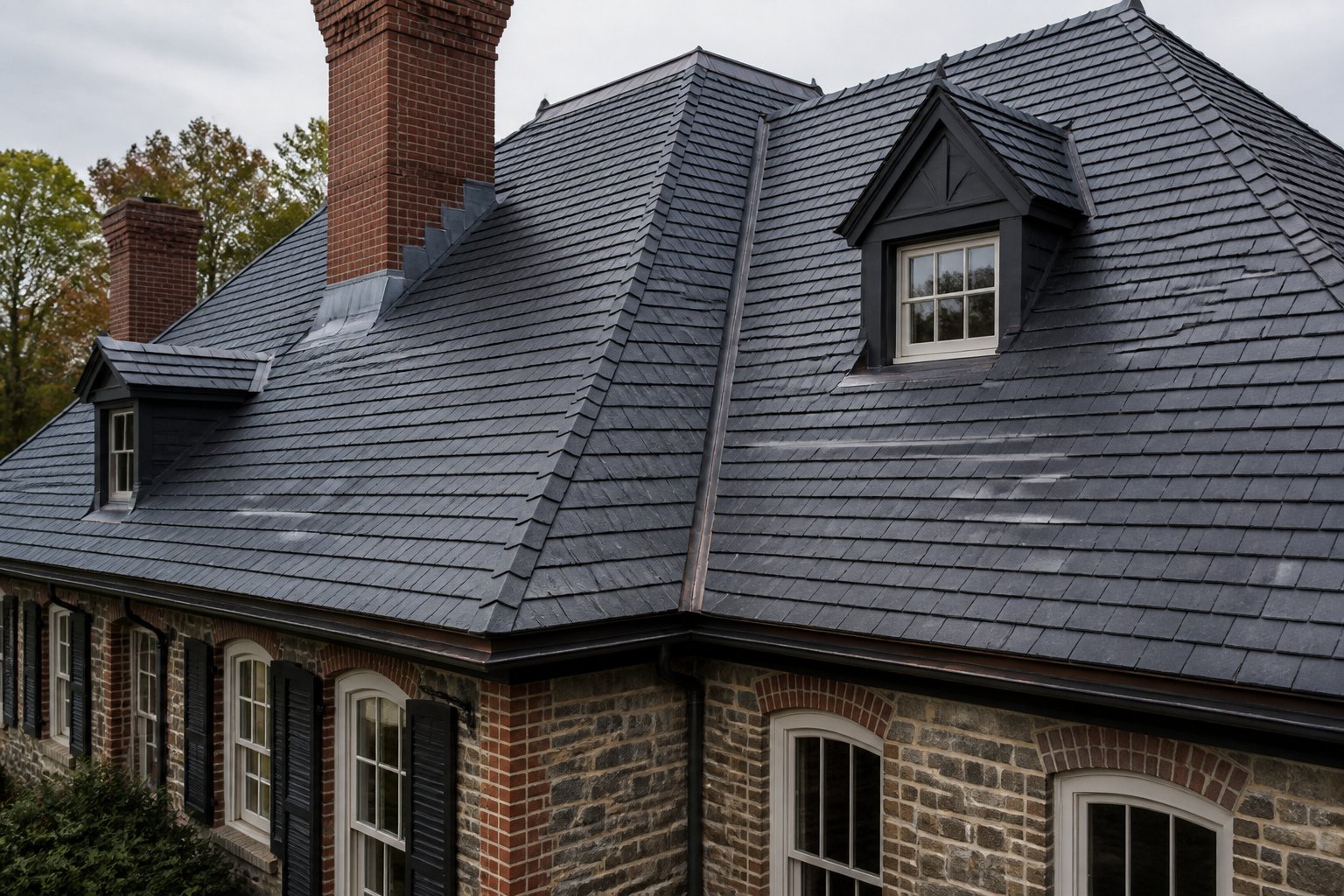
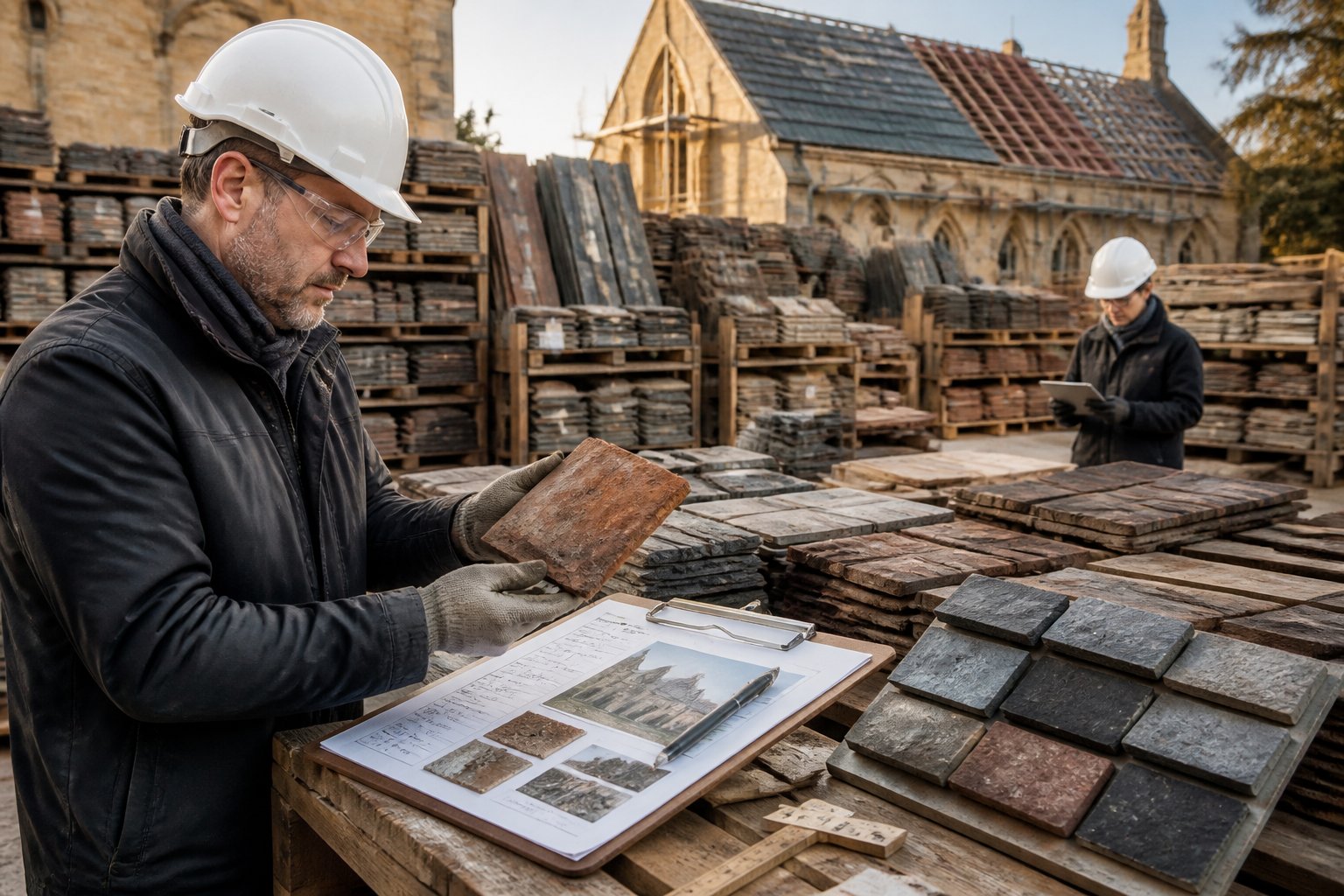
Reclaimed slate price depends on factors like condition, color, rarity, and regional availability. Understanding these variables helps you plan your roofing budget with confidence and ensures you select materials that deliver value and long-term performance.
Reclaimed Slate Roofing provides carefully inspected, builder-direct reclaimed slate that balances cost efficiency with authentic, historic character. Their vetted materials give you reliable quality without inflated markups or delays.
This guide explains what influences reclaimed slate pricing, how to evaluate quality, what current market trends look like, and how to buy smart—whether you’re sourcing slate for a full roof, a repair, or a specialty project.
What Is Reclaimed Slate?
Reclaimed slate comes from roofs that have been taken down, cleaned, and prepared for reuse. It offers a unique character and durability you won’t find in new materials. Understanding where reclaimed slate comes from, its types, and how it differs from new slate helps you decide if it fits your project.
Definition and Sources
Reclaimed slate is natural slate removed from old buildings or roofs. When these structures are renovated or demolished, workers carefully take off the slate, inspect it, and clean it. This process ensures the slate remains strong enough for new use.
Historic homes, commercial buildings, and factories often provide sources for reclaimed slate. The materials may show signs of age, like natural wear or patina, which can add charm. Using reclaimed slate also means less waste since it gives old materials a new life.
Types of Reclaimed Slate
Several types of reclaimed slate differ mainly in color, thickness, and origin. Common colors include black, gray, green, and purple, with each color coming from specific quarries or regions.
You might find:
- Black Slate: Popular for modern and historic homes due to its sleek look.
- Gray Slate: Classic and versatile.
- Green or Purple Slate: More rare and often prized for unique projects.
Thickness varies, so confirm the specific measurements to match your roofing needs.
Differences Between Reclaimed and New Slate
Reclaimed slate has a history and often shows signs of weathering, like slight chips or a worn surface. These marks prove it’s authentic and durable. New slate, by contrast, looks more uniform and may lack the aged character.
Reclaimed slate can be as strong as new slate, especially when sourced from trusted suppliers. Sometimes, older slate was cut thicker and is more durable than modern pieces. Price-wise, reclaimed slate may cost less due to its resale nature, but availability and rarity can affect the cost. It’s a more eco-friendly choice because it reduces demand for new quarrying.
Factors Affecting Reclaimed Slate Price
The price of reclaimed slate depends on several key areas, including where the slate comes from, its condition, and the costs to source and prepare the materials. Understanding these factors helps you know what affects the cost and choose the right slate for your project.
Location and Availability
Where the slate is located affects the price. Slate from areas with many old buildings or quarries is easier to find and usually costs less. If the slate is rare in your region, expect higher prices due to shipping and scarcity.
Some types of slate are only found in certain places. For example, black slate with a consistent dark tone often comes from specific old roofs. This rarity can increase the price. High demand for reclaimed slate in a popular building area can also push prices up.
Condition and Quality
The age and condition of reclaimed slate are important to the price. Well-preserved, strong, and clean slate will cost more because it can last a long time. Look for signs like chips, cracks, or heavy weathering. These flaws lower the value because they may reduce the slate’s durability.
Some wear can also add character, which may appeal to certain buyers. Every piece is inspected and tested before sale. Higher-quality slate that passes these tests is priced higher but gives you better long-term performance and reliability.
Sourcing and Salvage Costs
Getting reclaimed slate involves careful removal from existing buildings or old roofs. This salvage process requires time, labor, and sometimes permits. Costs for demolition, careful handling, and transportation add to the price.
Slate must be cleaned and prepared for reuse, which takes additional work. If your project demands a specific color or historic style, sourcing that exact material can increase costs.
Current Market Trends for Reclaimed Slate
Prices for reclaimed slate vary depending on location, history, and demand. You can expect differences in cost based on where you buy, how prices have changed over time, and how many people want reclaimed slate now.
Regional Price Variations
Where you buy reclaimed slate affects the price. In areas with lots of historic buildings, reclaimed slate is more common and can be less expensive. But in regions with fewer old structures, prices are higher because supply is limited.
Coastal areas and parts of the Northeast tend to have higher prices because the slate is often older and in better condition. Transport costs also add to the price if you are far from major sources. If you're in the Midwest or South, you might pay less, but options are fewer, and quality can vary. Prices can range from $5 to $15 per square foot, depending on these factors.
Historical Pricing Patterns
Reclaimed slate prices have risen steadily over the past decade due to the increasing focus on sustainability and demand for authentic materials in restoration. About five years ago, pricing was about 20-30% lower.
The growth in interest for eco-friendly roofing and historic preservation has pushed prices up. You can expect reclaimed slate to be more expensive than new slate in some cases, but you pay for authenticity and character that new materials don’t offer.
Influence of Demand on Pricing
When demand for reclaimed slate goes up, prices follow. High-profile restoration projects and luxury builds often drive interest. Right now, demand is strong among architects and builders who want rare colors and textures. This raises prices for unique, high-quality pieces.
Spot shortages happen when popular batches sell out fast, and costs may increase temporarily. Prices can also be affected by the labor cost needed to reclaim and prepare each piece. The more vetted and cleaned the slate, the closer it will be to the higher end of the price range.
Moisture Management Costs and Underlayment Choices
Moisture control directly affects reclaimed slate pricing because higher-performance underlayments add to the project budget. Research from Building Science Corporation notes that reliable roof assemblies depend on materials that control water intrusion while allowing trapped moisture to dry.
Selecting breathable, durable underlayments reduces long-term maintenance expenses and helps reclaimed slate perform at its highest level. These materials also protect the roof deck from rot, which can otherwise lead to costly repairs.
Factoring in underlayment performance upfront keeps your reclaimed slate investment stable and minimizes unexpected expenses tied to moisture-related failures.
Comparing Reclaimed Slate to New Slate
When choosing slate for your roof, you need to think about cost, looks, and how long the material lasts. Each type has benefits that affect your project’s budget and appearance.
Price Differences
Reclaimed slate usually costs less than new slate because it is recycled from old roofs and doesn’t require the same mining and manufacturing costs. However, reclaimed slate might need more work to sort and prepare, which can add to the price.
New slate prices can be higher due to extraction, cutting, and shipping. New slate is also available in more consistent sizes and thicknesses, which can reduce labor costs during installation.
If you want a budget-friendly option with history, reclaimed slate is a good choice. For uniformity and simpler installation, a new slate might fit better.
Aesthetic Value
Reclaimed slate has a unique character. Each tile shows natural wear like patina, chips, or color changes from decades of use. This gives your roof a weathered, historic look you won’t get with new slate.
A new slate tends to look cleaner and more uniform. It comes in a wide range of colors and finishes. This works well if you want a modern or precise design. Choosing reclaimed slate means embracing natural imperfections as part of the design. New slate offers consistent color and texture suited to new builds or certain styles.
Longevity and Performance
Both reclaimed and new slate can last over 100 years if installed well. Reclaimed slate was originally made to last and still performs strongly today after proper inspection and cleaning.
A new slate is fresh and less likely to have hidden weak spots. It may last longer in some cases, but it requires sourcing and shipping from the quarry. Using reclaimed slate can save materials from waste and still give you a reliable, long-lasting roof.
Buying Reclaimed Slate: Tips and Considerations
When buying reclaimed slate, you need to check the quality carefully, understand how slates are graded, and choose a reliable supplier. This ensures you get durable, authentic materials that fit your project’s needs and budget.
Inspecting Slate Before Purchase
Look closely at each piece for cracks, chips, and wear. Small imperfections are normal in reclaimed slate and can add character, but large cracks or broken edges can cause leaks or reduce lifespan.
Check the thickness of the slates. Thicker pieces usually last longer and resist the weather better. Also, note the size and shape to make sure they fit your roof pattern without waste.
Ask if the slate comes cleaned and ready for installation. Slate that’s still dirty or covered in mortar will take more work on your end.
Understanding Grading
Slate grading shows the quality and durability of each batch. Grades usually range from premium to utility. Premium slate is thick, uniform in size, and has very few flaws. Utility grade is thinner and may have more chips or cracks.
Grades affect price and lifespan. Higher-grade slate offers long-term value despite a higher upfront cost. Lower grades might suit cosmetic repairs or less critical areas, but you risk faster wear. Ask your supplier to explain their grading system clearly. Knowing what grade you’re buying helps plan your budget and installation method.
Working With Suppliers
Choose suppliers who specialize in genuine reclaimed slate, not replicas. Genuine slate carries characteristics like natural patina and weathered edges that you cannot get with new, mass-produced slate.
Make sure your supplier ships quickly and handles orders professionally. You want materials delivered fast and on time, directly to your jobsite. Before ordering, discuss your project details, roof size, and slate grade preferences. Clear communication ensures you get exactly what you need without surprises.
Cost Breakdown for Popular Applications
Understanding the costs of reclaimed slate depends on how you use it. Pricing varies because the amount of material, preparation, and installation differs. Knowing what drives expenses will help you plan your budget clearly.
Roofing Projects
Reclaimed slate for roofing often costs between $10 and $30 per square foot. This price covers the slate itself, with costs based on size, color, and condition. Installation usually costs more than the material because slate is heavy and needs skilled roofers.
Special shapes or colors raise the price. Authentic, tested slate lasts decades. Add $5 to $10+ per square foot for flashing, underlayment, and labor. Reclaimed slate saves money over time because it resists weather and lasts longer than cheaper options.
Flooring and Interior Uses
For interior use, reclaimed slate costs less per square foot than roofing slate, usually $5 to $15. Prices depend on thickness and finish. Installers clean and sometimes cut interior slate to fit tight spaces.
Flooring needs a smooth finish, which can increase preparation costs. Setting the slate with mortar and grout costs around $7 to $12 per square foot.
Flat, easy-to-cut slate pieces help you save money. Reclaimed slate inside your home adds character and durable surfaces without the high cost of new stone.
Landscaping and Outdoor Projects
Reclaimed slate used for patios, walkways, or walls usually costs $4 to $12 per square foot. Thickness, size, and sourcing logistics affect the price.
Outdoor slate needs less processing than roofing or flooring slate, but must be durable and slip-resistant. Installation costs vary. Simple placement is cheaper, while building walls or stairs requires skilled labor and raises costs.
Choose reclaimed slate to create unique, long-lasting landscape features that resist weather and add vintage charm. It often provides better value than new stone because it’s rare and pre-matured.
Ways to Save on Reclaimed Slate
Plan your purchase, work with local sources, and time your buy carefully to lower costs. These steps help you get authentic materials without overspending.
Bulk Purchasing Strategies
Buying reclaimed slate in large quantities often lowers the price per square foot. Suppliers may offer wholesale rates for enough material to cover an entire roof or multiple projects.
Avoid small orders, which usually cost more. Ask about volume discounts or bundled deals that include delivery. Buying more slate at once means fewer shipments and savings on freight and handling fees.
Partnering With Local Demolition Firms
Local demolition companies often remove slate from old buildings before demolition. Building a relationship with these firms can give you access to quality reclaimed slate at lower prices, sometimes even before it reaches suppliers.
Contact demolition crews directly or explore joint agreements to get first pick of materials. This approach reduces markup and may save you time, as you get slates freshly reclaimed and inspected.
Seasonal Price Fluctuations
Slate prices can change with the seasons. Demand drops in colder months when roofing projects slow down. You may find better deals or special offers during fall and winter compared to spring or summer.
If your project is flexible, schedule your purchase during off-peak periods. Take advantage of lower prices and faster delivery as suppliers clear inventory during slower months.
Sustainability Benefits and Price Implications
Using reclaimed slate saves natural resources and reduces landfill waste. It also affects your project costs beyond just the material price. Knowing these factors helps you plan a project that values both the environment and your budget.
Environmental Impact
Choosing reclaimed slate reuses materials that already exist. This reduces the demand for new slate mining, which uses energy and disrupts landscapes. Reclaimed slate lasts for decades, so fewer replacements mean less waste over time.
Careful inspection and cleaning of reclaimed pieces reduces waste from damaged or unsuitable material. Your roofing becomes part of a circular system, giving historic materials new life instead of filling landfills.
Reclaimed slate lowers your carbon footprint because less manufacturing and transport of new stones are involved. You also avoid the energy and water use linked to quarrying new materials. These savings can mean smaller environmental fees or compliance costs in your area.
LEED and Green Building Credits
If you aim for LEED certification or other green building standards, reclaimed slate can earn you valuable points. LEED rewards projects that reuse materials and reduce environmental impact.
By specifying reclaimed slate, you qualify for credits under categories like Materials and Resources (MR), especially for reuse and regional sourcing. Reclaimed slate is already processed and often shipped less than new material.
Using authentic reclaimed roofing can improve your project's sustainability profile. This helps you meet environmental goals and adds value to your property. While the upfront price may be slightly higher, you can lower overall costs through certification and reduced waste fees.
Summary of Reclaimed Slate Price Insights
Reclaimed slate prices reflect the material’s history and quality. Prices vary depending on the slate’s condition, color, and rarity. You pay for authentic, durable roofing pieces that have been carefully inspected and cleaned.
Reclaimed slate usually costs more than new synthetic alternatives. Each piece is unique and often hard to find. You get natural weathering, color variation, and authentic character that new slate cannot match.
Here’s what affects reclaimed slate pricing:
- Source and rarity: Older, hard-to-find slate will cost more.
- Condition: Slates with minimal chips or cracks are priced higher.
- Color and style: Black slate or rare earth tones often carry premium prices.
The cost reflects authentic materials that bring lasting value to your projects.
Choosing reclaimed slate means investing in roofing that is eco-friendly and built to last. The cost reflects authentic materials that bring lasting value to your projects.
How Smart Slate Buying Delivers Long-Term Value
Understanding reclaimed slate price trends helps you choose materials that balance cost, durability, and authenticity. By looking at condition, origin, grading, and demand, you make decisions that support both your budget and your project’s long-term performance.
Reclaimed Slate Roofing provides vetted, builder-direct materials that simplify selection and reduce costly guesswork. Our authentic reclaimed slate offers proven longevity and historic character for a strong return on investment.
If you’re planning a roofing project, evaluate slate carefully, compare grades, and work with trusted suppliers. Call us for a quote today to secure reliable, cost-effective reclaimed slate for your next roof.
Frequently Asked Questions
Reclaimed slate pricing depends on several factors, including size, quality, and origin. You can find reclaimed slate tiles through specialized roofers or suppliers who offer vetted, builder-direct materials.
How much does reclaimed slate typically cost?
Prices for reclaimed slate usually range from $10 to $30 per square foot, depending on the slate's condition and rarity. Larger, thicker slates or those with unique colors tend to cost more.
Where can I find reclaimed slate tiles near me?
Look for suppliers who specialize in historic or reclaimed roofing materials. Some deliver nationwide and keep a stock of tested, authentic slate ready to ship quickly.
What factors influence the price of salvaged slate roofing?
Age, thickness, size, color, and condition all affect pricing. Slates from rare sources or with unique finishes carry a premium. Shipping distance and order size also impact costs.
Can you sell old slate roof tiles, and if so, for how much?
You can sell old slate tiles if they are in good condition. Prices vary widely, but generally expect to get between $5 and $20 per square foot, depending on quality and rarity.
What are the best uses for used Spanish and Ludowici roof tiles?
These tiles are great for restoration projects and custom builds where you want authentic, historic character. They work well on homes needing period-accurate roofing or distinctive aesthetics.
Is there a market for buying and selling reclaimed roof tiles?
Yes. Builders, architects, and restoration specialists consistently seek genuine reclaimed tiles. These materials add history and style to new projects and offer durability that many value.