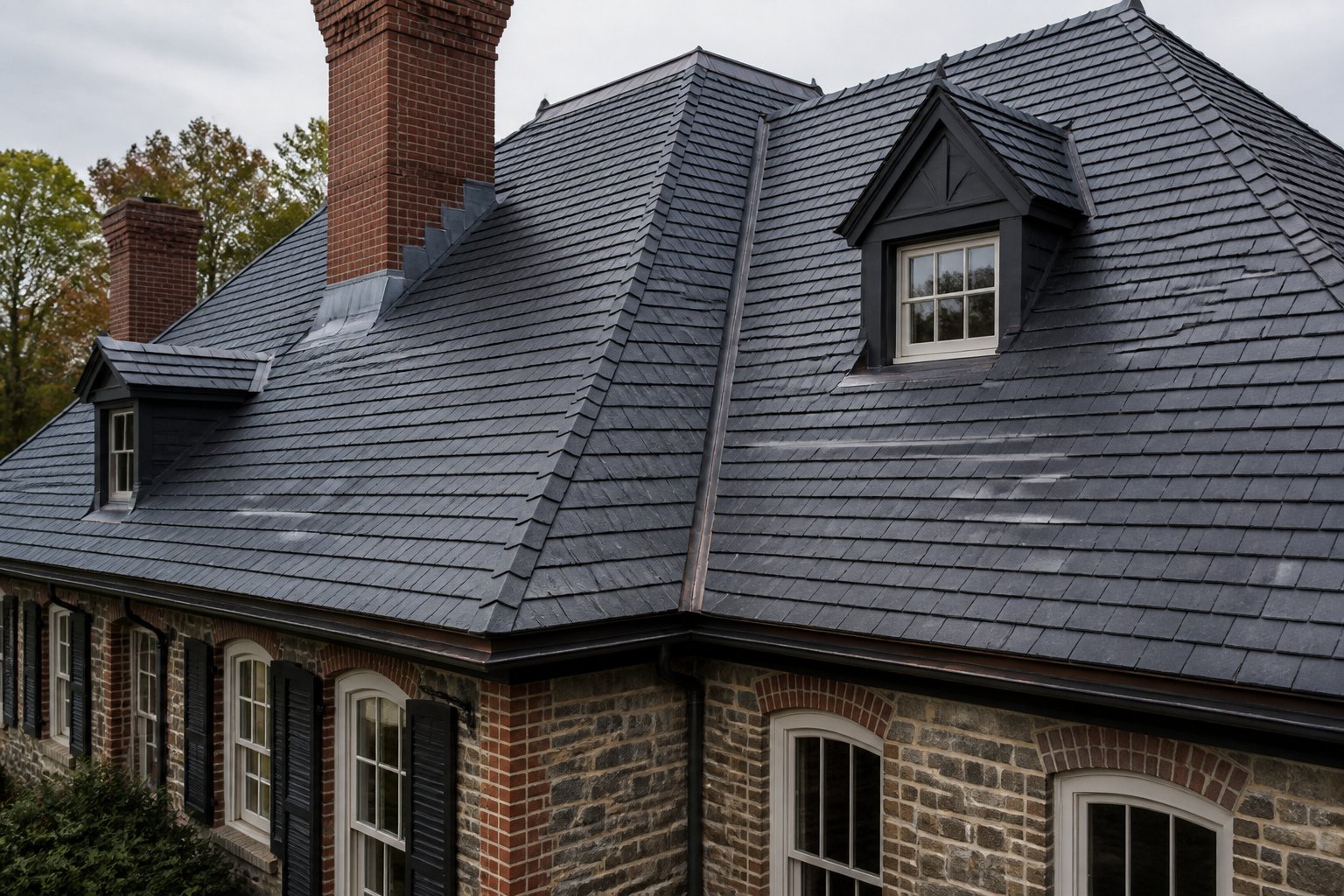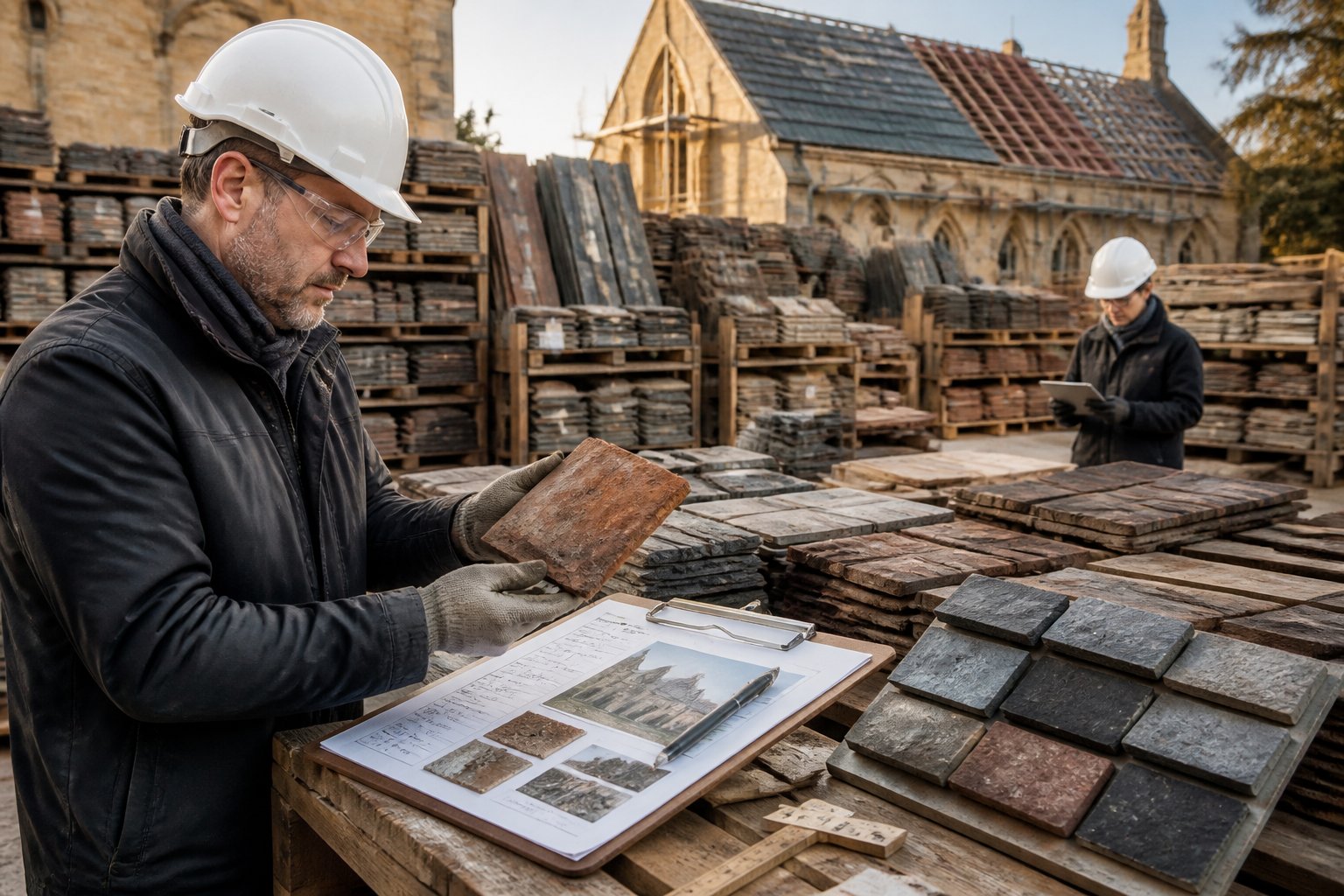
When you want slate with real history, dependable performance, and minimal installation surprises, hand-sorted reclaimed batches are the way to go. They deliver the character of century-old material with the consistency you need on a modern job—because every piece is inspected and grouped by color, thickness, and quality before it ever leaves the yard.
Hand-sorting lets craftsmen pull out damaged or low-grade pieces, leaving you with solid, uniform tiles that install cleanly and look intentional once they’re on the roof or wall. It cuts waste, supports sustainable building, and often comes in at a lower cost than new premium slate—without sacrificing longevity.
At Reclaimed Slate Roofing, our team hand-sorts, cleans, and grades each batch so what you receive is genuinely job-ready. No filler pieces, no mystery colors, no headaches—just reliable, vetted slate shipped fast and backed by decades of expertise in reclaimed materials.
In this guide, you’ll learn how to choose the right hand-sorted batches for your project, what quirks to expect during installation, and how hand-sorting compares to machine-sorted or mixed-lot alternatives. By the end, you’ll know exactly how to pick reclaimed slate that fits your schedule, budget, and design goals.
Hand-Sorted Reclaimed Slate Batches
Hand-sorted reclaimed slate batches group carefully selected historic tiles by size, color, and soundness. You end up with material that’s ready for roofing work, complete with visible wear and real-world durability.
Hand-sorted slate means someone actually inspects each tile by eye and touch. Sorters weed out cracked, delaminated, or badly weathered pieces.
They group tiles by thickness, length, and quality, so you can order a consistent set for a specific roof area.
Typical sorting checks:
- Straightness and flatness
- Nail-hole condition and intact bedding plane
- Color and surface patina
Batches arrive labeled for pitch, exposure, and repair work. That takes the guesswork out of estimating coverage and waste on site.
How Reclaimed Slate Differs from New Slate
Reclaimed slate comes from older roofs and brings natural weathering and patina. New slate is quarried and cut to uniform dimensions, so it’s more predictable in size and edge finish.
You’ll notice reclaimed tiles often have nail holes, tooling marks, and a lived-in texture—perfect for older structures. New slate? It’s all about exact thickness and consistent breaking, which can make installation a bit easier.
For restoration projects or high-end builds where looks matter, reclaimed slate just fits. New slate works best when you want strict uniformity and almost no on-site fitting.
Physical Characteristics of Hand-Sorted Reclaimed Slate
Reclaimed slate brings color variation, surface patina, and some minor edge wear. Expect:
- Colors: black, grey, purple, green, and even some mottled mixes
- Thickness: usually 1/4"–3/8", but batches are graded for consistency
- Defects removed: large cracks, severe delamination, and non-structural spalls
Hand-sorted batches are sized so most pieces lay with minimal trimming. Each batch lists approximate square footage, average thickness, and common uses (full roof, repair, or accent).
When you buy from Reclaimed Slate Roofing, pieces arrive cleaned, inspected, and ready to ship. That speeds up your schedule and cuts down on sorting time at the jobsite.
The Hand-Sorting Process
Hand-sorting separates usable roofing slate from waste, groups matching sizes and grades, and removes defects. Here’s how crews pick material, the techniques they use, and the checks that keep batches job-ready.
Selection Criteria
Check each piece for usable surface area and thickness. Accept slates with at least 80% flat face and consistent thickness for nail-hold; reject pieces with big delamination, deep cracks, or missing corners that mess with overlap.
Match color and grain when pulling a batch for one roof. Group black, gray, or weathered tones separately. Sort by size—typically 8x16, 10x16, and up—so installers get consistent exposure lines and fewer cuts.
If you can, note hardness and origin. Harder slates from Vermont or Wales handle foot traffic and hail much better, so save those for high-wear spots. Fragile or thin pieces? Use them for low-stress areas or repairs.
Sorting Techniques
Workers lay slates out on clean tables and use guides to sort quickly. Calipers check thickness, a straight edge spots warps within a millimeter or two. Accepted pieces go into labeled crates by size, color, and grade.
They use their hands as much as their eyes—tapping the slate near edges to hear if it rings (a good sign). Slates with surface patina or nail holes get tossed in a “character” pile for visible roof spots.
Each crate gets a tag: origin, size, grade, and estimated coverage. That makes ordering and on-site matching way easier.
Quality Control Measures
Quality control runs in two steps: initial sort and final verification. After sorting, a supervisor checks a sample of each crate (about 5–10% of pieces) for thickness, breakage, and appearance. They log any rejects and why, for traceability.
Slates get cleaned and lightly press-tested before packing so they won’t flake in transit. Foam separators and pallet straps keep things from moving and chipping. Each batch gets photographed and lot numbers recorded, so you can match or replace slates later.
If you’re buying from Reclaimed Slate Roofing, ask for their inspection report and delivery tags to confirm the batch fits your project.
Environmental Benefits of Reclaimed Slate
Reusing hand-sorted reclaimed slate cuts waste. You keep long-lasting roofing out of landfills and lower demand for new quarrying.
Reclaimed slate saves energy and shrinks emissions. Mining and making new slate burns fuel and electricity; reclaiming uses way less of both.
You conserve raw materials and protect landscapes. Fewer new quarries mean less habitat disruption and less rock stripped from historic sites.
Using reclaimed batches supports circular building. Each piece still has a lot of life left, so you get long-term performance without the impact of new production.
Choosing reclaimed slate keeps your project’s embodied carbon down. The tiles are already out there, so your roof’s upfront carbon footprint is lower.
Reclaimed Slate Roofing inspects and sorts every batch for strength and consistency, so you avoid waste from rejected or unsuitable pieces.
Plus, you get material with proven longevity. Slate that lasted decades on another roof will probably outlast plenty of modern alternatives, which means fewer replacements and less future material use.
Features of Hand-Sorted Reclaimed Slate
Hand-sorted reclaimed slate stands out for its color, texture, and surface wear. You’ll see deliberate choices for consistency and pieces that match specific design goals.
Variety in Color and Texture
Hand sorting lets you pick batches with certain colors and surface patterns. Maybe you want deep charcoal with fine grain for a modern look, or mottled green and purple for historic accuracy. Each batch lists dominant hues and common variations, so you know what’s coming.
Texture plays a big role in both looks and slip resistance. Smooth, cleft faces reflect light differently than rough, riven ones. Sorting separates thicker, denser tiles from thinner ones, so you can match roof slope and fastening methods.
Keep an eye out for notes on origin and quarry type. Slate from different places shows consistent color families and workability. Hand sorting reduces mixed lots, so your installer spends less time grading on-site.
Aged Patina and Weathered Finish
Reclaimed slate comes with a patina you just can’t fake. That means mineral streaks, surface sheens, and soft edges from decades of weathering. These features give a roof an authentic, settled look right away.
Weathering also tells a story about performance. You can check each tile for delamination, hairline cracks, and mineral stability before you buy. Hand sorting weeds out the damaged ones and groups tiles by wear, so you get material suited to full restorations or visible patch repairs.
Order from a vetted supplier like Reclaimed Slate Roofing, and you’ll get each piece cleaned and classified. The batch description will mention typical weathering, surface quirks, and recommended uses so you can plan installation.
Using Hand-Sorted Reclaimed Slate Batches
Hand-sorted reclaimed slate gives you consistent color, size, and condition for jobs that need authenticity and long life. Use these batches for matched pieces in visible areas, or when you want fewer onsite cuts and less waste.
Roofing Projects
Hand-sorted reclaimed slate works for full roof replacements, partial reroofs, and patch repairs on historic or high-end homes. When pieces are sorted by color and thickness, installers spend less time matching and lay courses faster with cleaner sight lines.
Hand-sorted batches minimize sorting mistakes on the roof, which means fewer callbacks for mismatched pieces and better weatherproofing since pieces fit right under flashing and ridge work. Specify the grade, color, and thickness before ordering to keep things running smooth.
If you’re handling restorations, these batches keep the original roof character while meeting modern installation standards. Reclaimed Slate Roofing can send vetted batches ready for the jobsite, which saves time and hassle.
Interior and Exterior Flooring
Reclaimed slate works for entryways, patios, and high-traffic corridors where you want historic patina and a tough surface. Hand-sorted batches let you pick tile sizes and finishes that match the room’s style and slip-resistance needs.
On floors, uniform thickness matters for grout lines and transitions. Hand-sorting keeps height variation down, so installers can set tiles flat and avoid grinding or shimming. Seal or treat as needed for indoor moisture; outdoors, pick frost-resistant pieces and prep the subfloor right.
For custom features like hearths or terraces, specifying a sorted batch helps you get consistent visual runs without last-minute mixing of colors or sizes.
Sourcing and Purchasing Hand-Sorted Reclaimed Slate
When you’re working with reclaimed slate, the supplier you choose determines how smoothly your project goes. You want batches that are truly hand-sorted, fully graded, and shipped in packaging that protects every piece. That’s the standard our team follows every day at Reclaimed Slate Roofing, where we specialize in providing reliable, consistent reclaimed slate for contractors, architects, and restoration professionals across the country.
Finding Reputable Suppliers
A trustworthy supplier should be able to explain exactly how their slate is sourced, sorted, and graded—and back it up with documentation. You should expect detailed batch photos, written grading notes, and origin information that tells you where the material came from and how old it is. For full roofs, it’s smart to ask for soundness or absorption checks so you know every tile can handle long-term exposure.
That’s why our team inspectors sort every tile by hand, checking each piece for thickness, structure, and color consistency. When you order from us, you get transparent lead times, builder-direct pricing, and batch records you can actually rely on. If you’re coordinating a tight project schedule, we can also arrange fast, direct shipping to your jobsite—no middlemen, no last-minute surprises. Need reassurance? We’re happy to provide contractor references who have used the exact color range or batch type you're ordering.
Batch Size and Packaging
The right batch size depends on the scope of your project. Small repair work usually requires a few mini-bundles, while full roof installations call for palletized batches with an extra 5–10% to cover trimming and waste. Before you place the order, confirm the average coverage per pallet, slate counts, and dimensions—details we include automatically with every load.
Packaging matters too. Slate should arrive crated or tightly palletized with edge guards, spacers, and moisture-resistant wrapping. We band all crates for forklift handling and nest tiles to minimize chipping during transit. This keeps your material protected whether it’s traveling across town or across the country.
Smaller crates can be lifted onto roofs more easily but may cost a bit more to ship. Larger pallets lower the per-piece price but require onsite equipment. We provide exact pallet weights and dimensions upfront so you can plan labor and equipment before delivery day.
Installation Considerations
Always check each batch before starting. Hand-sorted reclaimed slate comes in all sorts of thicknesses, sizes, and wear levels, so it's smart to separate pieces by grade upfront. That way, installation goes smoother and the finished roof looks more uniform.
Pick a compatible underlayment and the right nails. Old slate usually calls for copper or stainless nails, plus a solid, ventilated deck—otherwise, moisture issues can sneak up on you. Check your local code for spacing and attachment details.
Plan for flashing and transitions early on. Reclaimed slate doesn't always play nice with new metal flashings, so you might need to fabricate flashing on site. Allow for thicker pieces at valleys, hips, and ridges—those spots take a beating.
Be ready to spend extra time fitting and cutting. With reclaimed slate, you’ll do more hand labor than with new, uniform tiles. Hang onto spare slates from the same batch for future repairs—matching color and texture later can be a pain.
Protect the roof deck while you work. Reclaimed pieces sometimes have chipped edges, so handle them gently. Felt or a breathable membrane helps prevent leaks. Check each piece for cracks and toss any that look like trouble.
Label and document batches right there on site. Jot down the source, grade, and delivery date. That record makes matching material for repairs easier and keeps things historically accurate.
Reclaimed Slate Roofing can supply vetted, job-ready batches if you’re in a hurry. Ask about sorting grades and extras when you order—sometimes it’s worth it.
Longevity and Maintenance of Reclaimed Slate
Reclaimed slate, if installed right, can last 75–150 years. You're getting stone that's already weathered decades, so it shrugs off rot and fire way better than a lot of modern stuff.
Take a look at your roof twice a year and after big storms. Watch for slipped or cracked slates, busted flashings, and loose nails. Fixing small problems fast saves you from bigger headaches down the road.
Cleaning’s not complicated. Just brush off debris, moss, and leaves with a soft brush or use a low-pressure wash. Skip the harsh chemicals and high-pressure washers—they can trash the edges and bedding.
Stick with compatible nails and flashing when you repair. Mixing metals leads to corrosion and ugly stains over time. A trusted supplier like Reclaimed Slate Roofing can help you find pieces that actually match.
Aim for targeted replacements, not tearing off the whole roof. Hand-sorted batches make it easier to match color, size, and thickness. Keep a few spares from the same batch on hand for future fixes.
Jot down maintenance actions and dates for each job. That history helps you spot patterns and proves you’ve looked after the roof—handy for warranty or resale.
Comparing Hand-Sorted Reclaimed Slate to Machine-Sorted Options
Hand-sorted reclaimed slate means someone actually inspected every piece for thickness, soundness, and that hard-to-fake historic patina. You get fewer surprises during installation, and the roof just looks better.
Machine-sorted batches are faster and cheaper. Machines sort by size and weight, but they can miss hairline cracks or sneaky repairs. That means more waste once you’re up on the roof.
Hand-sorted batches give you consistent color and character. Each tile is picked to fit your project’s vibe, which matters for visible roof planes and high-end restorations.
If you need a lot of slate quickly, machine sorting helps. It’s fine for jobs where perfect matching isn’t a big deal, though you might spend extra time on site sorting usable pieces.
Hand-sorted slate usually costs more per square foot and takes longer to assemble, while machine-sorted is cheaper but might raise labor or waste costs. Reclaimed Slate Roofing does both and can talk you through what fits your schedule and budget.
Practical checklist
- Quality: Hand-sorted is best for catching cracks and repairs.
- Speed: Machine-sorted wins if you need bulk supply fast.
- Match: Hand-sorted fits visible, historic, or luxury projects.
- Price: Machine-sorted lowers upfront cost, but labor or waste might climb.
Pick the sorting method that lines up with your priorities. Sometimes authenticity and fit matter more; other times, speed and budget win out.
Frequently Asked Questions
Here you'll find info on pricing, where to buy, quality checks, hand-sorting value, and common home uses for reclaimed slate. The goal? Real, practical answers to help you plan.
How much does a batch of reclaimed slate typically cost?
Prices swing a lot depending on slate type, size, and condition. Small batches (a few dozen tiles) cost less than full bundles. Rare colors or big orders will bump up the price.
Location and shipping matter, too. Hand-sorted, graded batches usually cost more, but they can save you time (and headaches) on site.
Where can I find reclaimed slate batches near my location?
Check local salvage yards, architectural recyclers, and roofing reclaimers. Many list their inventory online and ship nationwide.
Reach out to Reclaimed Slate Roofing for hand-sorted options and delivery quotes. Ask about colors, grades, and lead times before you jump in.
What should I consider when purchasing reclaimed roof slates?
Look at slate size, thickness, and breakage rate for your needs. If you’re repairing, match color and weathering to the roof you’ve got.
Ask about grading, cleaning, and any guarantees. Pin down shipping details and how they palletize material—surprise handling fees are no fun.
Are there any differences in quality to look out for in salvaged slates?
Check for consistent thickness and low porosity—those matter for durability and freeze-thaw resistance. Steer clear of batches with lots of hairline cracks or core splits.
Edge chips? Usually just cosmetic if the slate’s still solid. If you care about color match, insist on a sample.
How does the hand-sorting process affect the value of reclaimed slate?
Hand-sorting weeds out broken pieces, creates usable sets, and separates out the high-grade tiles. That means less waste and faster installs.
You’ll pay more for hand-sorted batches, but they cut down on labor and matching hassles. For visible roofs or historic projects, they’re usually worth the premium.
What are some common uses for reclaimed slate in home projects?
People use reclaimed slate for all sorts of things—full roof restorations, patch repairs, or accent roofs on porches and dormers. It’s a solid pick for wall cladding, fireplaces, or even garden paving if you’re after that weathered look.
Smaller pieces? Those often end up in craft projects, trim work, or vintage-style installs where you really want the real deal.