High-end homes turn to reclaimed roofing when the goal is craftsmanship, authenticity, and long-term value. Reclaimed slate and clay bring a depth of character you can’t manufacture - natural patina, historic textures, and materials that have already proven they can last for decades. Instead of a standard roof, you get an architectural feature that elevates the entire property.
In this guide, we break down how reclaimed materials fit into luxury design, what to weigh in terms of cost and upkeep, and how builders source and evaluate premium reclaimed stock for a seamless, high-end installation. You’ll get practical direction on selecting the right material, coordinating with contractors, and identifying true quality - along with real examples to help you envision reclaimed roofing on your next project.
For custom homes or historic restorations, our team at Reclaimed Slate Roofing specializes in supplying vetted, architect-grade reclaimed slate and clay tiles. We organize, inspect, and ship curated batches quickly, helping luxury projects stay on schedule without compromising authenticity or design intent.
Reclaimed Roofing Materials
Reclaimed roofing saves material from demolition, brings authentic color and texture, and can cut the carbon footprint of a luxury project. Here’s what counts as reclaimed roofing, the common material types, and how to source authentic pieces for high-end homes.
What Qualifies as Reclaimed Roofing
Reclaimed roofing means you’re using materials removed from existing or historic roofs and prepped for reuse. We’re talking original slate, clay tiles, terracotta, and some specialty metals taken intact—not factory-made knockoffs.
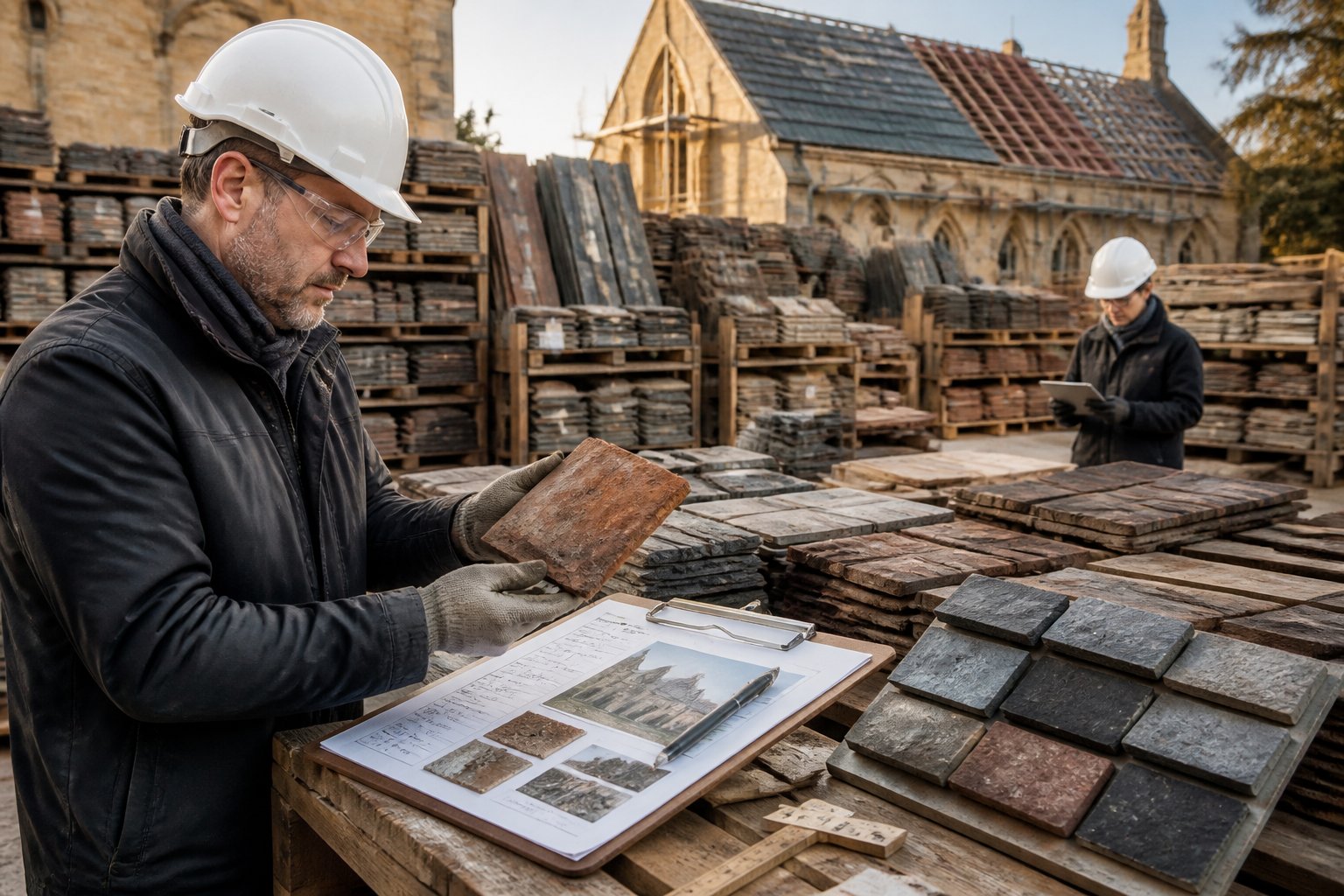
Every piece needs a good inspection for cracks, delamination, and overall soundness. Reclaimed Slate Roofing checks and grades materials so you know which are ready to install, which need some sizing, and which are just for matching or repair.
Documentation is key. Provenance, age, and photos of the source roof let you verify authenticity. Ask for lab or visual inspection notes if you’re serious about appearance and long-term performance.
Types of Reclaimed Roofing Materials
Slate: Dense, natural stone with thin, consistent beds. It shrugs off weather and can last decades if it’s sound. Look for even thickness, good cleft quality, and minimal fissures.
Clay and terracotta tiles: Fired earthenware with color that holds up. Reclaimed clay usually shows surface patina, small chips, and original nail holes—these all affect layout.
Metal and specialty pieces: Copper, lead, and cast-iron—think gutters, ridge caps, custom trims—offer patina and fit for historic projects. Check for corrosion and make sure they’re still solid.
Accessories: Flashing, clips, vintage fasteners—they help match detailing and can be crucial for a true historic look.
Sourcing Authentic Reclaimed Roofing
Buy from suppliers who actually document origins, inspect every piece, and offer graded lots. Ask for photos, test results, and samples before you commit to a big order.
When the delivery arrives, inspect it. Check for breakage, correct grades, and color matches. Keep a small reserve batch for future repairs and pattern matching.
Ask about turnaround and shipping. Reclaimed Slate Roofing usually preps and ships inventory quickly, which can really help on tight schedules.
Designing High-End Homes With Reclaimed Roofing
Reclaimed roofing adds historic texture, long life, and visual heft to luxury homes. Use it to match a period style, create bold contrasts, or just give a new build some instant character.
Architectural Styles That Suit Reclaimed Roofing
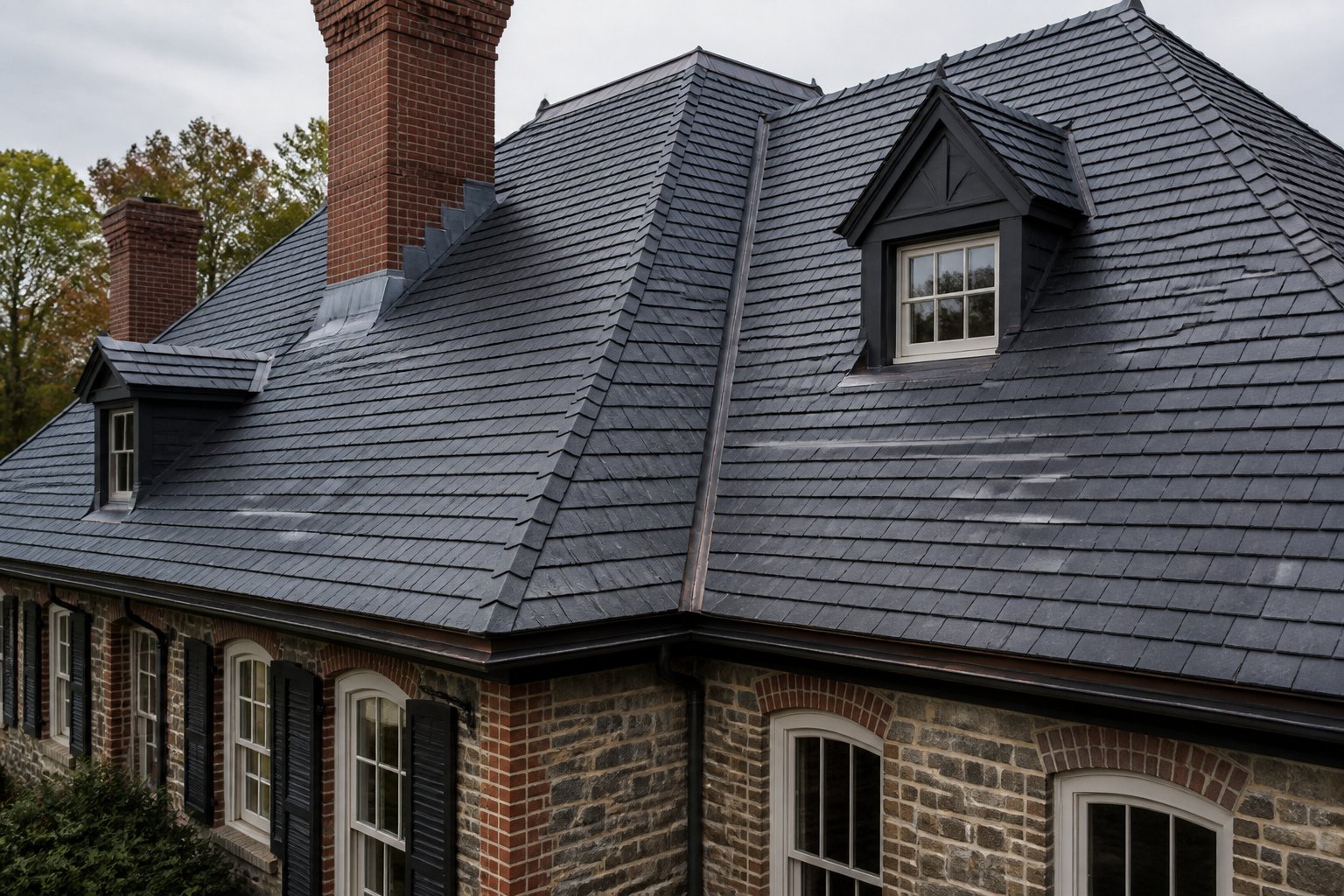
Reclaimed slate and clay tiles shine on traditional and revival styles—think Gothic Revival, Tudor, Colonial, Craftsman, French Provincial. These use steep pitches, complex rooflines, and dormers that show off the natural variation and patina of aged materials.
Go for dark, fine-grain slates on formal stone or brick facades. Pick weathered reds and terracottas for Mediterranean and Spanish-style homes. On steep, multi-plane roofs, reclaimed pieces give you real shadow lines and texture that synthetics just don’t.
Match tile size and coursing to the era. Check samples on-site for color blending. Reclaimed Slate Roofing can supply vetted batches to help you hit the exact look for restorations or high-end new builds.
Customizing Roof Designs
Start by laying out a full-size mock-up of your pattern. Test coursing, overlap, and flashing details before you commit. Reclaimed pieces vary, so plan to sort by color, thickness, and edge condition to get consistent runs.
Specify underlayment and fixing methods that respect the material’s age. Use stainless or copper fasteners and breathable underlay if needed. Detail valleys, hips, and ridges carefully so you don’t have to cut uniquely shaped pieces if you can avoid it.
Try mixing reclaimed accents—like a band of black slate or antique ridge tiles—with new material for durability in high-wear spots. Keep documentation of batches for future repairs so replacements match both visually and physically.
Using Reclaimed Roofing in Luxury Homes
Reclaimed roofing saves materials and brings a rare, authentic look that can seriously boost a home's value. It also offers long service life if you pick and install it right.
Environmental Sustainability
Choosing reclaimed slate or clay means you’re not demanding new quarried stone and fired clay. You skip the mining and kiln emissions tied to new production, and you keep solid materials out of landfills.
These pieces have already lasted decades, so reusing them cuts the embodied carbon of your project. When you buy from vetted suppliers, each tile gets inspected and cleaned so you end up with sound material at a lower environmental cost.
If you’re tracking sustainability for certifications or owner reporting, reclaimed roofing gives you real benefits: less raw material extraction, fewer transport and manufacturing emissions, and a direct drop in construction waste.
Unique Aesthetic Appeal
Reclaimed roofing brings the color variation, weathering, and texture that modern copies just can’t. You get natural patina, hand-cut edges, and rare hues like antique purples or mottled greens that really add character.
Using authentic reclaimed tiles lets you match historic profiles on restorations or create a bespoke look for new builds. Architects love the visual depth that comes from mixed vintages and genuine aging.
For visible details—ridges, valleys, dormers—reclaimed pieces usually need less modification than synthetics to get a period-accurate finish. That can save time on custom matching and keeps the visual integrity of high-end projects.
Long-Term Durability
Slate and fired-clay tiles from old buildings often last 75–150 years when the substrate and flashing are right. Reclaimed roofing gives you proven materials that have already survived real weather.
Buyers should always insist on grading and inspection. Good selection weeds out cracked or spalled pieces so you only install sound material. Professional installation and modern underlayment extend performance and meet code.
With maintenance—regular inspections, quick replacement of damaged tiles, and good flashing—reclaimed roofs deliver the same longevity and low life-cycle cost that makes slate so attractive for luxury homes. Reclaimed Slate Roofing supplies vetted pieces ready to install, so you dodge hidden defects and keep the authentic look.
What To Check On
Reclaimed roofing adds character but brings its own hurdles. You’ll need to plan for careful quality checks, skilled installation, and making sure you meet local rules to avoid headaches.
Quality Assessment
Inspect every piece before you order or install. Look for cracks, hairline fractures, and old repair marks. Check thickness and cleavage; uneven thickness can lead to lumpy laying and wasted tiles.
Ask for graded lots and sample pieces. Match color, size, and weathering to your roof or design palette. Keep 10–20% extra for breakage and future repairs.
Document provenance when you can. It helps confirm age and performance. If your supplier like Reclaimed Slate Roofing provides inspection and cleaning records, use them to cut down risk.
Installation Complexities
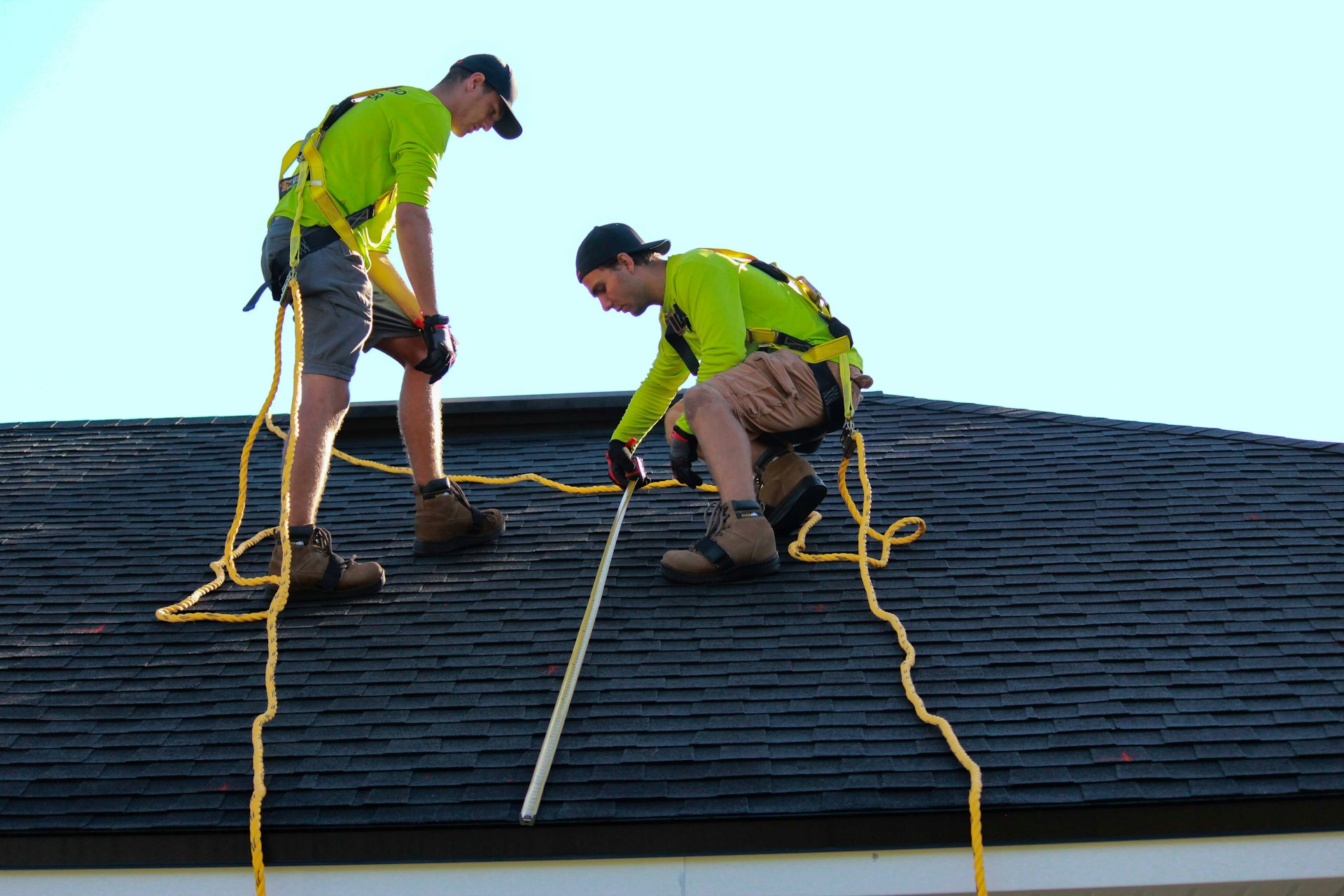
Reclaimed slate and clay often vary in size and weight, so you’ll need custom cutting and staggered courses. Use experienced roofers who know reclaimed materials; rookies can break tiles and cause leaks.
Prep the roof deck and underlayment for heavier loads. Old slates can be heavier than modern synthetics and might need beefed-up framing or extra fasteners.
Labor takes longer. Templating, fitting, and on-site tweaks add hours compared to new, uniform tiles. Factor that into your schedule and budget.
Regulatory Compliance
Check local codes for reclaimed material use and historic district rules—some require specific profiles or nail types. Get permits early. Some places want proof that materials are reclaimed and structurally sound.
Insurance and warranty issues can pop up. Double-check with your insurer that reclaimed materials don’t void coverage. Get your contractor’s written sign-off and a clear warranty for labor and materials.
Keep chain-of-custody and inspection records handy. They speed up permit approval and help with any disputes about origin or quality.
Cost Factors and Return on Investment
Reclaimed roofing costs depend on slate condition, roof complexity, and labor skill. You’ll want to balance upfront spend against long-term durability and resale perks.
Initial Investment Versus New Materials
Reclaimed slate often costs more per square foot than synthetic or asphalt. You’re paying for rare colors, hand-hewn shapes, and materials with real durability. Handling and installation labor cost more too—contractors need to sort, fit, and sometimes trim every piece.
Roof complexity matters: steep pitches, valleys, custom details all mean more labor and scaffolding. Budget for underlayment, flashing, and fasteners that actually suit reclaimed slate. Salvaged pieces lower raw material costs but add prep work like cleaning and inspection. If you order from Reclaimed Slate Roofing, most shipments go out quickly, but plan for careful delivery and staging.
Property Value Enhancement
A reclaimed slate roof shouts quality and authenticity—buyers in the high-end market notice. Appraisers and architects often value original or historic-looking materials, which can boost curb appeal and perceived home quality.
Look for payback through higher sale price or faster listing, especially in historic districts or luxury areas. ROI varies by market, but factors that help include documented provenance, matched roof sections, and pro installation. Keep records of material origin, install details, and maintenance to support higher value during sale talks.
Maintaining and Preserving Reclaimed Roofs
Keep your roof watertight, replace damaged pieces fast, and protect flashings and valleys from debris. Regular checks and timely pro repairs stretch the life of reclaimed slate and clay.
Routine Maintenance Tips
Check your roof twice a year—spring and fall—and after big storms. Walk the perimeter with binoculars or hire a roofer for a closer look. Watch for cracked, slipped, or missing slates and tiles, and look at nail corrosion.
Clear gutters, valleys, and around chimneys monthly during leaf season. Remove moss and organic gunk with a soft brush and a 50:50 water-vinegar rinse; don’t power wash. Trim nearby trees to cut shade and falling debris that keep things damp.
Replace broken pieces quickly to stop leaks. Use matching reclaimed tiles if you can to keep the look and load right. Keep a small stash of spare reclaimed pieces from your supplier for quick fixes.
Professional Restoration Techniques
Hire a roofer who knows reclaimed materials for major repairs. They’ll check slate thickness, cleavage, and nail-hold quality before reuse. Well-matched pieces reduce stress on surrounding tiles.
Repoint lead or copper flashings and reset valley liners with solder or mechanically fastened pans as needed. Use stainless or copper nails—zinc or galvanized can fail under old slate. Upgrade underlayment with breathable felt or modern synthetics rated for slate to improve moisture control.
For large sections, partial re-lays can preserve the original patina while bringing in new reclaimed material. Inspect, clean, and grade every piece before install—this helps avoid hidden fractures and uneven wear. If you’re sourcing materials, Reclaimed Slate Roofing can supply vetted, job-ready pieces for restorations.
Choosing reclaimed roofing for a luxury home isn’t just a design decision—it’s an investment in authenticity, sustainability, and long-term performance. When you source the right materials and work with teams who understand historic products, you end up with a roof that elevates the entire residence and stands the test of time.
If you’re planning a custom build, restoring a historic property, or simply want a roof with rare character, our team at Reclaimed Slate Roofing is here to help. We hand-inspect, sort, and ship architect-grade reclaimed slate and clay tiles every day, making it easier for builders, designers, and homeowners to get the quality and consistency high-end projects demand.
Whether you need a full matched batch, hard-to-find profiles, or guidance on selecting the right reclaimed material, we’re ready to support your project from first inquiry to final delivery.
Reach out anytime to request samples, check inventory, or get expert help sourcing premium reclaimed roofing for your next luxury build. Your roof is one of the most defining features of your home - make it one with real history, proven durability, and unmatched style.
Frequently Asked Questions
Reclaimed roofing can bump up upfront costs but might lower expenses over time, thanks to durability, scarcity, and resale value. It adds character, can help with preservation rules, and may change your maintenance needs or insurance.
How does the cost of reclaimed roofing compare to traditional roofing materials?
Reclaimed slate and clay cost more per square foot than your typical asphalt shingles.
You’ll pay extra for inspection, cleaning, and picking out the good stuff.
Labor costs more too, since installers need experience with old materials and have to handle them carefully.
But over the years, reclaimed materials often outlast the cheaper options, which can mean a lower lifetime cost.
What are the benefits of using reclaimed materials for roofing in luxury homes?
You get authentic historic character—there’s just no way to fake it with new products.
The materials show weathering, color shifts, and textures that really suit high-end designs.
Reclaimed roofing is sustainable. You’re reusing durable materials and cutting down on new quarrying.
You can meet preservation standards for restored properties and draw in buyers who care about authenticity.
What should one consider before purchasing a home with reclaimed roofing?
Get a roof inspection to check for cracked, delaminated, or loose pieces.
Ask for records of repairs and find out if the installer has experience with reclaimed materials.
Check building codes and preservation rules that might affect future work.
Don’t forget to verify insurance—some carriers want special endorsements or charge higher premiums.
How does the inclusion of a reclaimed roof impact the overall value of a high-end home?
A solid reclaimed roof can boost curb appeal and attract buyers looking for authenticity.
Appraisers may give higher value to original or period-appropriate roofing on historic or luxury homes.
If the roof needs a lot of work, buyers will factor that into their offers.
Keep records of where the slate came from, inspections, and recent repairs to support higher valuations.
What architectural designs are best suited for incorporating reclaimed roofing?
Traditional styles—Victorian, Tudor, Colonial Revival, Arts & Crafts—really shine with reclaimed slate or clay.
Restorations and homes with steep pitches benefit most from authentic reclaimed material.
Contemporary projects can use reclaimed pieces here and there—dormers, accents, or small roof areas—to add texture.
What maintenance considerations are important for homes with reclaimed roofing?
Check your roof every year or two—maybe three at most—to catch any slipped or cracked pieces, and to see if the underlayment's starting to give out. It's smart to call in contractors who actually know their way around reclaimed slate or clay. Honestly, a botched repair can ruin tiles you might not find again.
Stay on top of gutters and flashings; clean them out, and swap out any underlayment that's gone bad before it leads to bigger problems. If you need replacement pieces, try to get your hands on properly vetted reclaimed material—companies like Reclaimed Slate Roofing actually inspect and prep their stock for reuse, which makes your life a lot easier.