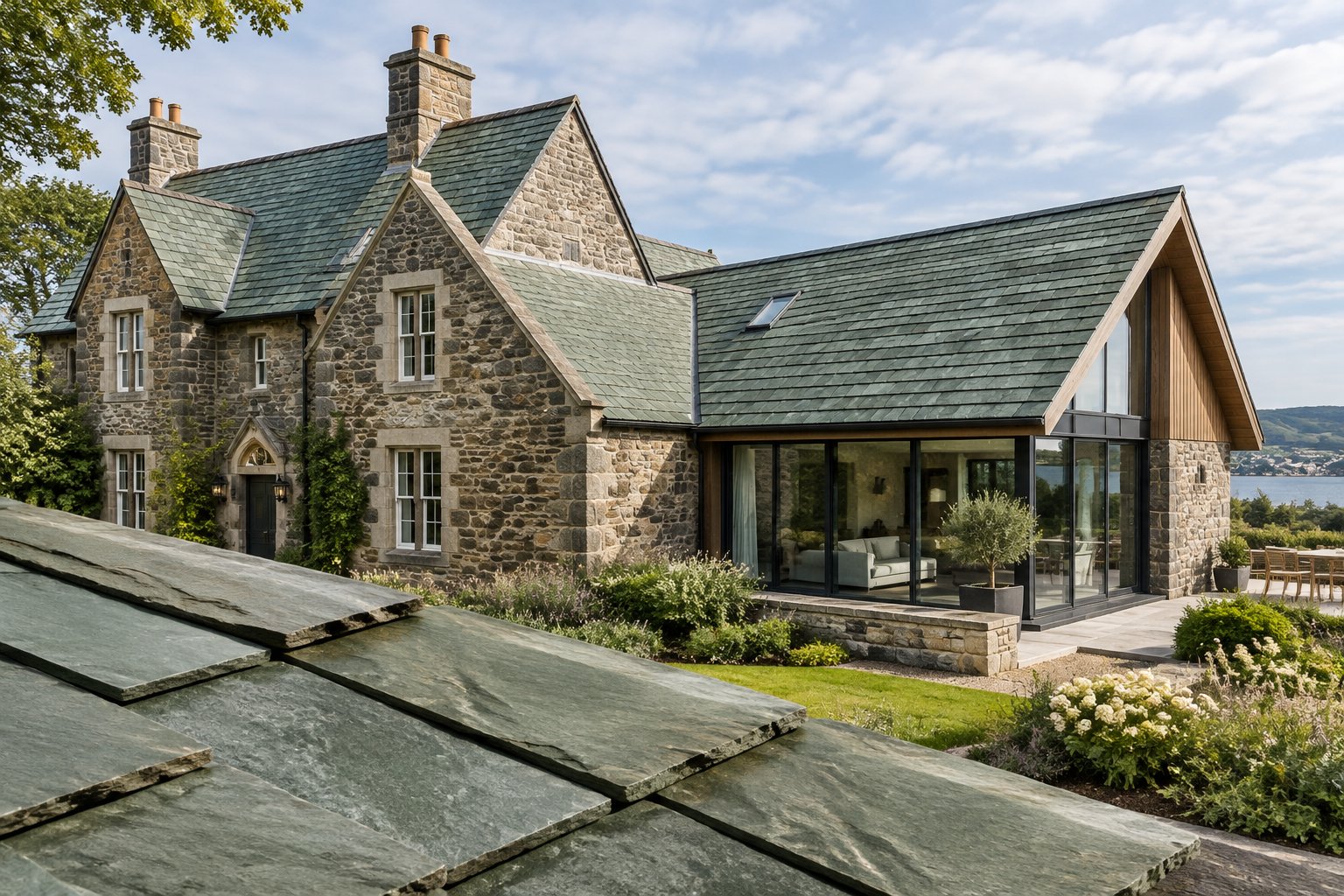
Synthetic slate roofing tiles combine authentic stone aesthetics with modern performance. Made from engineered polymers and composites, they mimic slate’s layered depth and fine grain while staying lightweight and affordable.
Reclaimed Slate Roofing helps professionals and homeowners evaluate when synthetic slate is the right balance of cost, structure, and longevity. Each tile provides strength, weather resistance, and visual richness without the structural burden of natural stone.
This article covers how synthetic slate is made, what drives its performance and cost, leading brands, installation details, and sustainability factors that make it a practical choice for today’s homes.
What Are Synthetic Slate Roofing Tiles?
Synthetic slate roofing tiles are man-made roof coverings designed to look like real slate. They come in lighter, more affordable forms than quarried slate and suit a wide range of house styles and budgets.
Materials and Construction
Synthetic slate tiles use several base materials, including polymer composites, recycled rubber and plastic, fiber cement, and metal stamped to mimic slate texture. Manufacturers mold polymer and rubber blends with ridges and grain patterns to match natural slate.
Fiber cement panels mix cellulose fibers with cement for a flatter, stone-like look, while metal tiles are thin, durable, and painted with stone-like finishes.
Manufacturers add UV inhibitors, colorfast coatings, and impact modifiers to resist sun fade, cracking, and hail. Installers attach individual tiles or interlocking panels to standard roof decking and underlayment. The lighter weight means your roof usually needs no extra framing.
Synthetic vs Natural Slate Roof
Synthetic slate copies the look of real slate without the stone weight and cost. Natural slate tiles are quarried stone that can last 100 years or more, but weigh heavily and require skilled installers.
Synthetic slate tiles typically cost much less up front and weigh about one-quarter to one-third as much, so you avoid expensive structural reinforcement. Real slate resists fire and weather very well, while synthetic options vary by material.
Many offer Class 4 impact ratings and fire-resistant cores, but not all match stone for longevity. Expect warranties from 30 to 50 years on quality synthetic slate, compared with much longer life for natural slate. You trade some long-term permanence for lower cost and easier installation.
Popular Uses and Applications
Use synthetic slate on homes that need the upscale look of slate without the extra cost. It suits steep roofs, historic-look renovations, and modern houses where weight limits matter. Contractors often choose faux slate for roof replacements because it installs faster and needs less structural work.
Synthetic slate also works for dormers, gables, and accent roofs where appearance matters. Some municipal or HOA rules allow faux slate if it matches appearance standards. In windy, coastal, or hail-prone areas, choose synthetic products rated for impact and wind uplift for lasting protection.
Why Choose Synthetic Slate Roofing?
Synthetic slate gives you the look of real slate with lower weight, easier installation, and often lower cost. You get strong weather resistance, options for recycled materials, and a product that fits older homes without major structural changes.
Advantages of Synthetic Slate
You get the classic slate appearance without quarrying stone. Synthetic slate roof tiles are made from polymers, rubber, or composite mixes that mimic color and texture.
They weigh far less than natural slate, so your roof structure usually needs no reinforcement. Installation is faster and safer because tiles resist cracking during handling. Many brands offer warranties from 30 to 50 years, lowering long-term costs compared with asphalt shingles.
Synthetic roofing comes in many sizes and colors, letting you match architectural styles and replace damaged tiles easily. Quality products resist hail, wind, and UV fading well.
Drawbacks and Limitations
Synthetic slate is not as fireproof as natural slate; check fire ratings before you buy. Some lower-cost options can look less realistic up close, so inspect samples or photos from finished projects.
Longevity varies by material and manufacturer. While many products last decades, cheap composites may degrade sooner in extreme sun or heat. Repairs are easier, but matching older batches can be hard if the maker discontinues a style.
Cost sits between asphalt shingles and real slate. You’ll pay more upfront than asphalt, but less than natural slate. Also, verify installer experience—wrong nailing or underlayment can cause leaks or shorten life.
Environmental Impact and Sustainability
Some synthetic slate tiles use recycled rubber or plastics, reducing landfill waste and cutting the need for new raw materials compared with mined slate.
Manufacturing still uses energy and polymers, so compare brands for recycled content and low-VOC claims. The lighter weight lowers transportation fuel per roof, and longer life reduces replacement frequency—both lower your carbon footprint.
If you plan to recycle at the end of life, ask the manufacturer about take-back programs. Choosing products with documented recycled content and long warranties gives you a more environmentally friendly roofing choice.
Leading Brands and Top Synthetic Slate Tiles
These brands focus on realism, durability, and warranty support. See which products offer the most realistic slate look, are easiest to install, and what warranties and weight characteristics to expect.
DaVinci Roofscapes
DaVinci Roofscapes makes polymer-based synthetic slate that closely mimics real quarried slate. You get deep texture, natural color variation, and modular sizing that works on steep or complex roofs. Their tiles are lighter than stone, so your roof framing usually needs no reinforcement.
DaVinci offers Class A fire ratings and impact resistance for hail-prone areas. Warranties range from 50 years to lifetime on premium lines, often transferable if you sell the house. Use certified contractors to keep warranty terms valid.
- Material: engineered polymer
- Benefits: realistic look, lighter weight, good impact resistance
- Warranty: long-term or lifetime options, transferable on some products
Brava Roof Tile
Brava Roof Tile produces composite slate and shake tiles molded from real materials for a close visual match. Their tiles are lightweight, which speeds installation and reduces load on your structure.
Brava emphasizes low maintenance and UV-stable colors. Their product line includes slate profiles for historical or modern styles, and many installers value Brava for straightforward flashing and ridge solutions. Warranties are solid, often 50 years or more, with some lines including transferable lifetime protection.
- Material: composite with textured molds
- Benefits: Old World slate appearance, low maintenance
- Warranty: long-term, sometimes transferable
EcoStar Majestic Slate
EcoStar Majestic Slate uses recycled and composite materials to balance aesthetics with environmental aims. You get a convincing slate look with lighter weight and good impact resistance for regions with hail or falling debris.
EcoStar highlights recyclable content and offers robust color stability through UV-resistant finishes. Their Majestic Slate line often comes with a 30–50 year warranty, depending on the product and installer. EcoStar is a strong choice for sustainability and performance.
- Material: recycled composites
- Benefits: eco-friendly content, good durability, and color retention
- Warranty: varies by product, commonly multi-decade coverage
CertainTeed Symphony Slate
CertainTeed Symphony Slate is an asphalt-based synthetic that matches slate’s look while using familiar roofing attachment methods. You get patterned textures and a range of color blends meant to simulate quarried slate at a lower installed cost than stone.
Symphony Slate offers reasonable weight and good wind resistance. CertainTeed’s wide installer network and warranty support make it easy to find qualified help, with warranties often 40–50 years.
Choose this for easier sourcing and a realistic slate alternative without the structural demands of natural slate.
- Material: engineered asphalt/composite
- Benefits: easier sourcing, broad installer network, cost-effective
- Warranty: multi-decade limited warranties available
Cost of Synthetic Slate Roofing Tiles
See costs for materials, labor, and extras that shape the final price. Brand, roof size, and roof complexity are the biggest cost drivers.
Material and Installation Costs
Synthetic slate material prices usually range between $5 and $16 per square foot. Higher-end brands can cost $300–$1,200 per 100 sq ft (per square) for materials. Labor often matches material cost, so installation can double the total price.
A simple 1,500 sq ft roof often costs $14,000–$24,000 installed. Complex roofs with dormers, chimneys, or steep pitches raise installation costs due to extra time and safety needs. Underlayment, flashing, and removing old roofing add $10–$80 per square for underlayment and more if structural repairs are needed.
Get at least three written quotes and ask contractors to itemize material brand, warranty, underlayment, disposal, and permit fees. That helps you compare bids accurately.
Comparison to Natural Slate Roof Cost
Natural slate costs much more per square foot. Real slate typically runs $10–$30 per square foot installed, and premium slate can reach $1,000–$3,000 per square (100 sq ft) installed. Natural slate may require roof reinforcement, adding thousands to installation costs.
Synthetic slate gives the slate look at a fraction of the weight and often at 30–70% lower cost. Lifespan differs: synthetic products last 30–50 years, while natural slate can last 50–200 years. For many homeowners, composite slate hits the sweet spot between aesthetics, lower upfront cost, and reduced structural work.
Long-Term Savings
You can save over time despite a significant upfront bill. Synthetic slate’s lighter weight often avoids costly structural reinforcement. Installation usually goes faster than with real slate, saving on labor.
Maintenance stays low, and synthetic tiles resist impact and freeze-thaw damage well in many climates. Warranties commonly run 30–50 years—check the details for pro-rated terms. Consider lifespan, repair costs, and resale value when calculating cost per year.
Annualized, synthetic slate often costs less than asphalt shingles and much less than natural slate when you include structural upgrades.
Insurance Discounts and Fortified Roof Programs
Some insurers offer discounts for roofs that meet impact or wind resistance standards. Synthetic slate often carries a Class 4 impact rating and wind ratings up to 110–130 mph for certain brands. That can qualify you for lower premiums in wind- or hail-prone areas.
Fortified roof programs, like IBHS FORTIFIED, sometimes require specific installation methods and approved underlayments. If your synthetic slate system meets program criteria, you may get additional insurance savings or eligibility for grants in hurricane zones.
Ask contractors for documentation showing product ratings and installation details, and check with your insurer before ordering to confirm which upgrades will reduce your insurance or qualify for fortified roof discounts.
Installation and Maintenance
Learn how professionals install synthetic slate and what you must do to keep it working well. Review the steps for fitting, care routines, and fixes for common issues to protect your roof and warranty.
Professional Installation Process
Hire a roofer experienced with synthetic slate shingles or composite roofing systems. The crew removes old roofing and inspects the deck for rot or soft spots. They install underlayment rated for synthetic tiles and add flashing at valleys, chimneys, and roof edges.
Installers use corrosion-resistant nails or screws and follow the manufacturer’s layout for overlap and fastening. They set each tile to shed water properly and prevent uplift. Your contractor should show you the product, flashings, starter course, and ridge caps that match the synthetic slate roof.
Ask for proof of Class 4 impact ratings or fire ratings if needed. Get a written warranty covering both materials and labor, and keep documentation of any special accessories used, such as snow guards or metal drip edge.
Maintenance Tips
Check your synthetic slate roof twice a year and after big storms. Walk the perimeter and use binoculars to inspect shingles, flashing, and ridge caps. Look for loose, cracked, or discolored tiles and broken sealants around chimneys and vents.
Keep gutters and downspouts clear so water drains away from the roof edge. Trim overhanging tree branches to avoid abrasion and moss growth. Replace damaged tiles quickly; synthetic slate tiles usually unhook or unscrew from the course above for fast removal.
Use mild detergent and low-pressure rinsing to clean dirt or algae. Avoid pressure washers that can force water under tiles. Hire a licensed roofer for any flashing repairs, fastener replacement, or deck work to protect your warranty.
Common Problems and Solutions
Curling, cracked, or faded tiles often result from low-quality products or poor installation. If a tile curls, check fasteners and re-seat or replace the tile. Replace cracked tiles to stop leaks.
Leaks usually come from failed flashing or improperly sealed penetrations. Replace flashing at valleys, chimneys, and skylights with metal that matches the synthetic slate system. Use compatible sealants recommended by the manufacturer.
If you notice excessive panel movement or wind damage, check the fastening pattern and spacing against the installation guide. For large areas of discoloration or repeated tile failures, contact the manufacturer and installer to document defects and pursue warranty repairs.
Durability and Performance
Synthetic slate tiles give you the look of real slate with less weight and easier care. Quality composite roof tiles resist hail, wind, UV fading, and common causes of slate tile failure.
Weather Resistance and Impact Ratings
Many composite slate roof tiles provide high impact resistance. Look for products with a UL 2218 Class 4 rating—these tiles resist hail and wind-blown debris, reducing repair needs compared to fragile quarried slate.
Composite materials are non-porous, so they resist water absorption and freeze-thaw damage that can crack natural slate tiles.
They handle thermal movement better; manufacturers design keyway gaps or fastening patterns to limit buckling and warping. Always check wind uplift ratings and installation instructions for your roof pitch and climate.
Fire Resistance and Certifications
If fire safety matters to you, choose synthetic slate tiles with a Class A fire rating when installed over the recommended underlayment. Many composite slate roof tile systems meet Class A standards for residential homes.
Check certification labels on product data sheets and look for third-party test reports. Some synthetic slate options also carry FM approvals or ASTM test references. Proper underlayment and correct fastening keep the fire rating valid, so follow the manufacturer's installation guidelines exactly.
ASTM Standards That Define Synthetic Slate Quality
The American Society for Testing and Materials (ASTM) sets strict durability and performance benchmarks for roofing tiles. Standards like ASTM D3161 and D7158 rate shingles for wind resistance and uplift protection.
Manufacturers following ASTM guidelines ensure tiles resist cracking, fading, and moisture intrusion. Verifying ASTM compliance before purchase guarantees quality and helps validate long-term warranty coverage.
Expected Lifespan
Well-made synthetic slate tile systems often carry warranties of 30 to 50 years or more. Actual lifespan depends on material quality, UV stabilizers, installation quality, and local weather exposure.
Composite tiles need only occasional inspection, nail replacement, or flashing repairs. Keep records of the product and installation to help with warranty claims if issues arise.
Bringing Slate Elegance Into the Modern Era
Synthetic slate roofing tiles deliver enduring visual appeal with easier installation, lighter weight, and strong weather performance. They bring classic stone beauty to a broader range of structures while meeting today’s technical and environmental expectations.
Reclaimed Slate Roofing connects professionals with both reclaimed and synthetic slate solutions, ensuring quality sourcing and expert guidance. Each project reflects architectural integrity and practical efficiency.
To find the right balance of design, sustainability, and cost, explore synthetic slate systems from proven manufacturers and request a quote today to build a roof that unites heritage style with modern durability.
Frequently Asked Questions
This section gives clear, practical answers about cost, lifespan, weather performance, maintenance, common problems, and how to pick the right product for your house.
What factors should I consider when choosing the best synthetic slate roofing tiles for my home?
Consider weight, warranty, and material type. Lighter tiles avoid extra roof reinforcement. Check if tiles are polymer, rubber, or recycled plastic. Look at the manufacturer's reputation and reviews. Choose styles and colors that match your home, and confirm local codes and HOA rules.
How long can I expect my synthetic slate roofing to last before needing replacement?
Most synthetic slate roofs last 30–50 years. Some brands offer warranties up to 50 years. Longevity depends on product quality, installation, and local climate.
Are there common problems associated with synthetic slate roofs that I should be aware of?
Low-quality tiles may fade, warp, or crack. Pick products with UV inhibitors and good reviews. Poor installation can lead to leaks or loose tiles, so use experienced installers.
Can you provide a general price range for installing synthetic slate roofing on a typical house?
Installed cost usually ranges from $8–$20 per square foot. For a 2,000–2,500 sq. ft. roof, expect $20,000–$37,500. Prices vary by brand, roof complexity, and local labor rates.
What maintenance requirements should I anticipate with synthetic slate roofing materials?
Maintenance is low. Inspect yearly and after storms for loose or damaged tiles. Keep gutters clean and replace broken tiles promptly to prevent leaks.
How do synthetic slate roofing tiles perform in extreme weather conditions?
High-quality synthetic tiles resist hail impact and handle heavy rain and wind well. Many products use UV stabilizers to limit fading. They weigh much less than natural slate, which reduces structural stress during storms. Always check the wind and impact ratings for the specific product you choose.