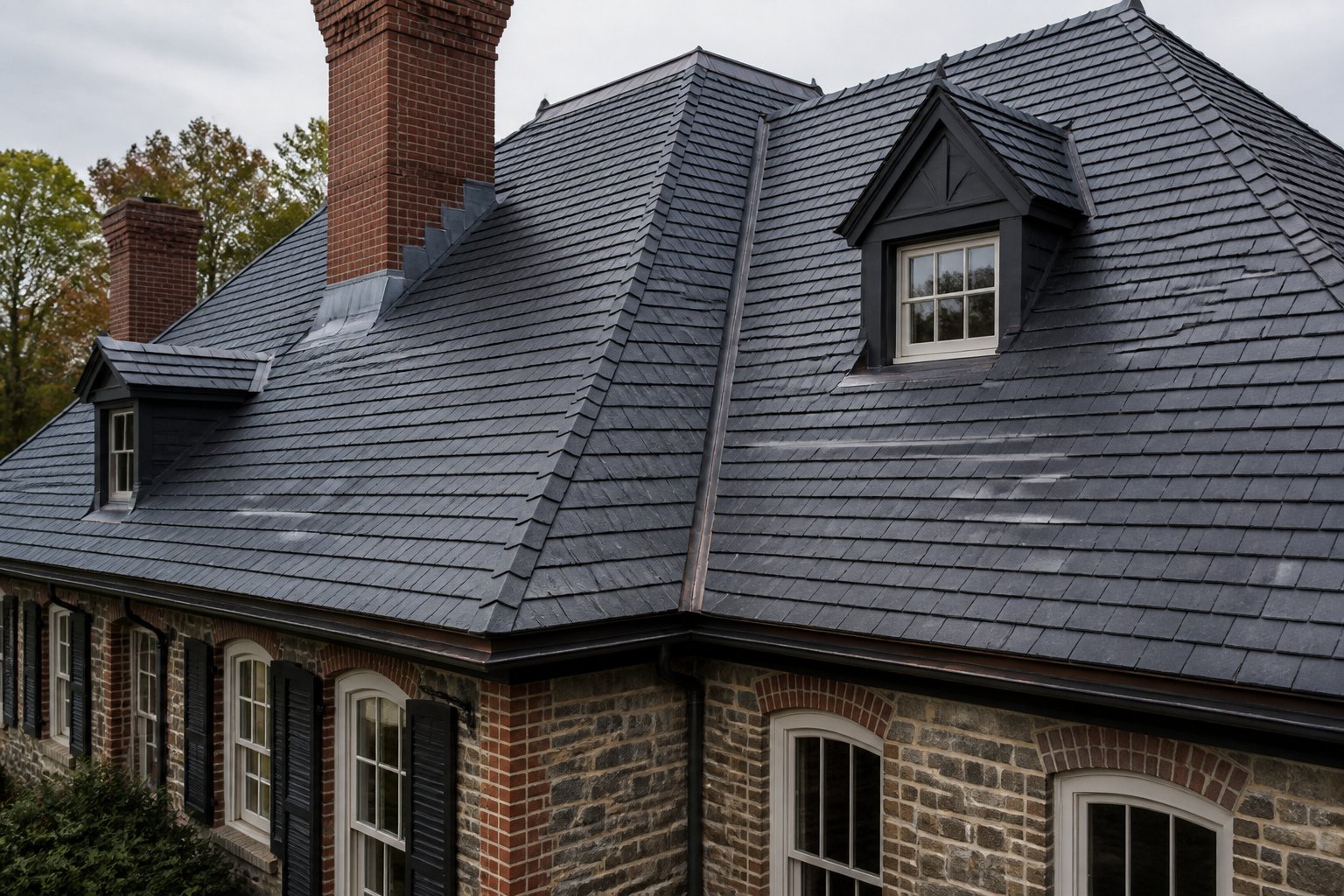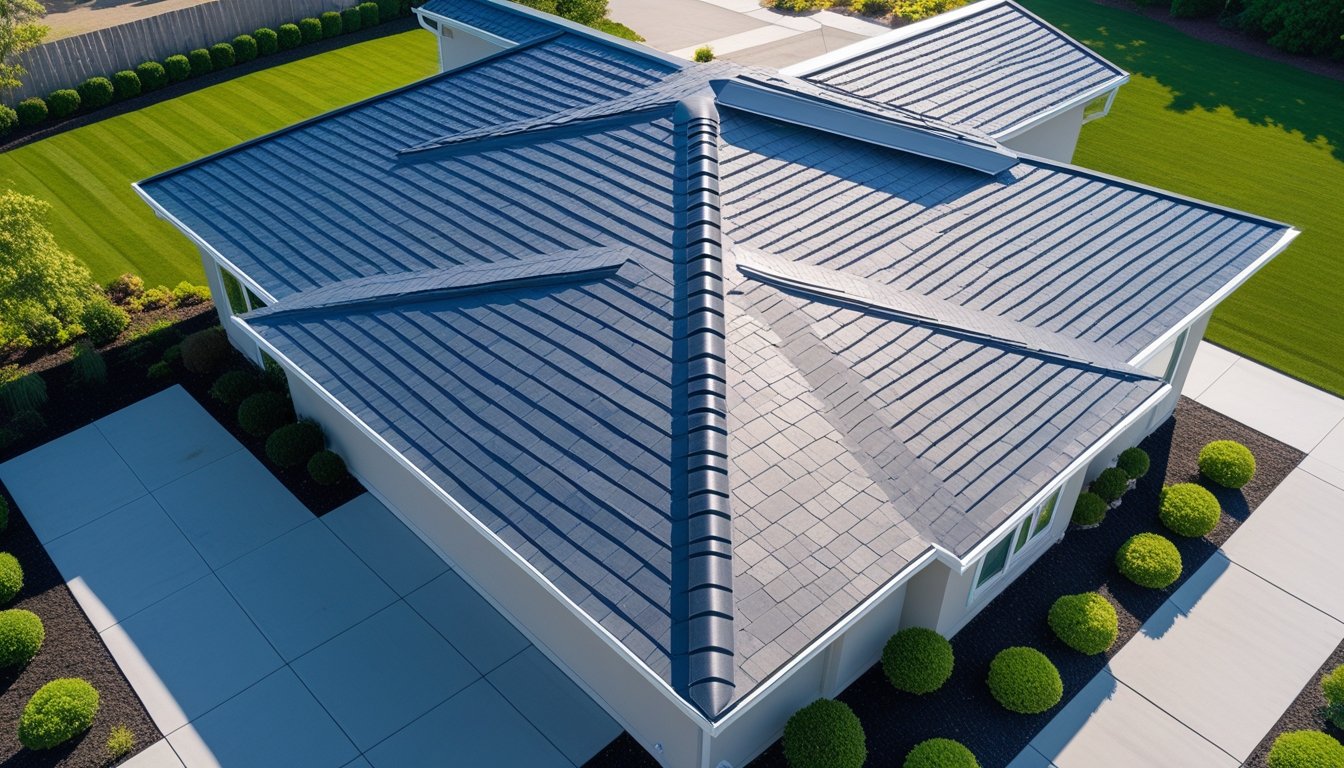
Synthetic slate roofing offers a durable, lightweight alternative to natural stone, giving you long-term performance without added structural load. When you compare options, the best synthetic slate roofing delivers dependable weather resistance, consistent quality, and a clean architectural finish.
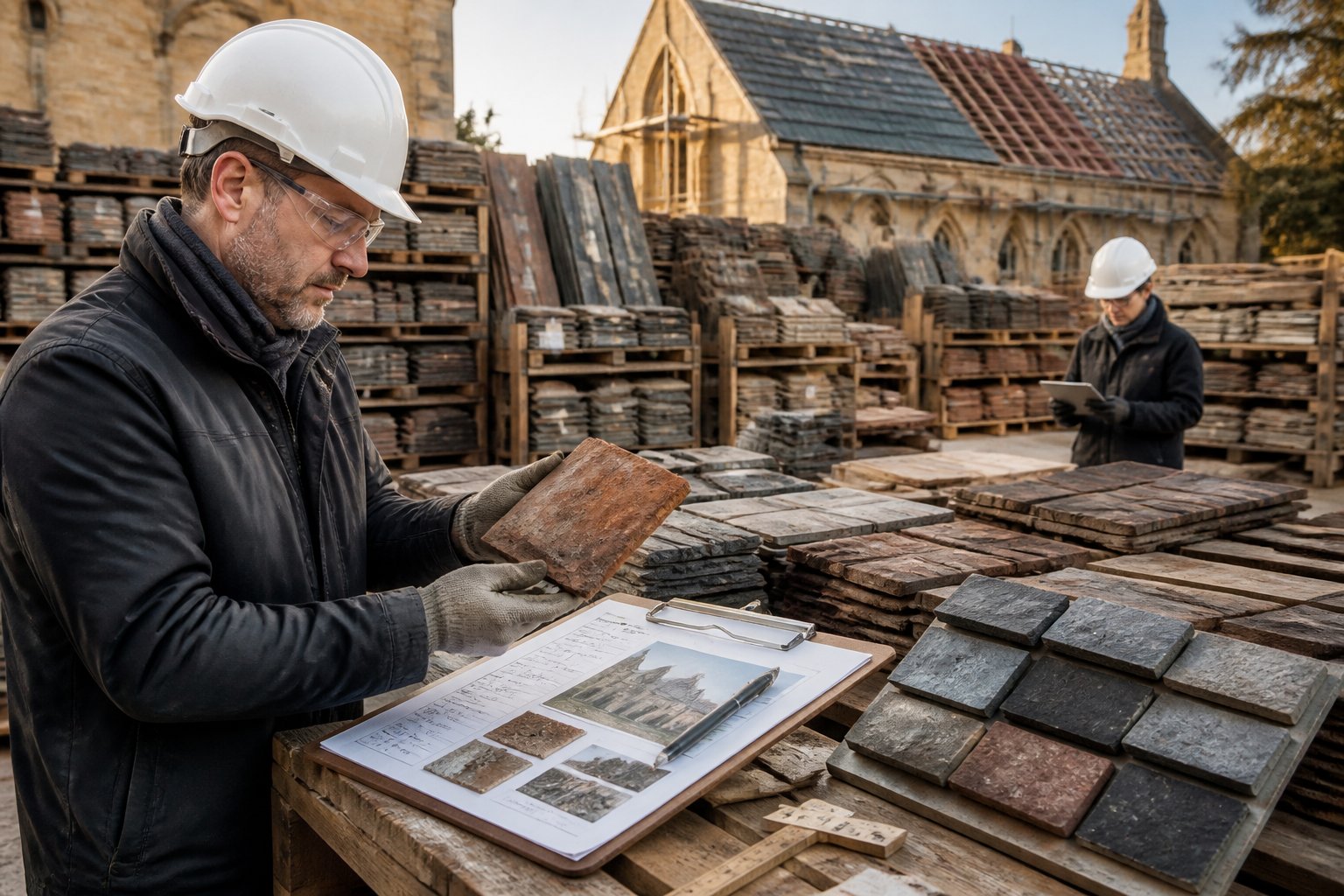
Reclaimed Slate Roofing supplies reclaimed and historic roofing materials every day. We are proud to be a trusted reference point for understanding how synthetic products differ from genuine stone. That context helps you evaluate synthetic solutions with a more informed eye.
In this guide, you’ll learn what defines high-performing synthetic slate, what features matter most, and how to select materials that support durability, efficiency, and style for your project.
What Is Synthetic Slate Roofing?
Synthetic slate roofing looks like real slate but is made from different materials. It offers durability, lighter weight, and simpler installation. Understanding how synthetic slate is made, how it compares to natural slate, and common misconceptions will help you decide if it fits your roofing needs.
Synthetic Slate Materials Explained
Synthetic slate is usually made from plastic, rubber, or a mix of both. Manufacturers mold these materials to mimic the shape, texture, and color of natural slate. Some types include recycled content, making them eco-friendlier.
Synthetic slate weighs less than natural stone, putting less stress on your roof structure. It also handles impacts better and resists cracking, saving you money on repairs. You’ll find synthetic slates with different finishes and colors that imitate everything from new to aged slate.
How Synthetic Slate Differs From Natural Slate
Natural slate is a real stone cut from quarries. It’s heavy, strong, and lasts a very long time when maintained. Natural slate varies in color and shape because it is a natural product.
Synthetic slate, on the other hand, is manufactured for consistency. This lets you get a uniform look across your roof. It is lighter and easier to cut or install, which lowers labor costs. Unlike natural slate, synthetic options usually come with warranties, though they generally don’t last as long as genuine slate.
Common Myths About Synthetic Slate
One myth is that synthetic slate looks fake or cheap. High-quality products from trusted suppliers can closely match real slate. Another myth is that synthetic slate doesn’t last long. Many synthetic slats offer warranties of 30 to 50 years, making them a solid long-term choice.
Some believe synthetic slate requires special maintenance. In reality, it often needs less upkeep than real slate because it doesn’t crack or chip easily. Regular cleaning and inspections will keep it in good shape.
Advantages of Choosing Synthetic Slate Roofing
Synthetic slate roofing offers many benefits that make it a strong alternative to natural slate. It combines durability, energy savings, and eco-friendliness with a genuine look. You get a roof that lasts, looks great, and helps reduce your environmental footprint.
Energy Performance and Roof Assembly Design
According to studies by the Building Science Corporation, roof assemblies perform best when insulation and ventilation work together. That's because they minimize heat buildup under synthetic slate and decrease stress on materials.
According to Building Science Corporation, balanced airflow also limits moisture accumulation that can weaken fasteners or degrade roof decking over time.
They recommend climate-specific design choices so synthetic slate reaches its full service life without unnecessary expansion cycles or trapped humidity.
Durability and Longevity
Synthetic slate uses strong materials like rubber or plastic composites designed to resist cracking, chipping, and fading. It handles impacts from hail or debris better than natural slate. Many synthetic slate roofs come with warranties of 50 years or more.
Because synthetic slate is lighter than real slate, it puts less stress on your roof structure. This makes installation easier and may reduce the need for extra support. Its resistance to moisture also means it won’t warp or degrade easily over time.
Energy Efficiency Benefits
Synthetic slate roofing can help reduce your energy costs by improving insulation. It reflects sunlight better than asphalt shingles, which lowers heat absorption. This keeps your home cooler during hot months and reduces your air conditioning needs.
Some synthetic slates come with special coatings that boost heat reflection or add UV protection. These features help maintain steady indoor temperatures and can lead to savings on your electric bills.
Environmental Impact
Choosing synthetic slate helps reduce waste and the demand for quarrying natural stone. It is often made from recycled materials, which lowers the use of new resources. Because it is lightweight and durable, synthetic slate has a smaller carbon footprint over its lifetime compared to heavy natural slate.
You also avoid the waste and energy associated with cutting and transporting real slate. Synthetic roofing lets you have the look of slate with less impact on the environment.
Aesthetic Appeal
Synthetic slate roofing closely mimics the look of natural slate with detailed textures and colors. It comes in a variety of shades, from deep black to earth tones, allowing you to match your home’s style. Each piece is designed to show slight imperfections that add authentic character.
With synthetic slate, you avoid issues like chipped edges or uneven sizes common with reclaimed natural slate. The consistent shape and finish mean a clean, polished roof. You get all the timeless style of slate without sacrificing uniformity or ease of fitting.
Top Brands for the Best Synthetic Slate Roofing
When choosing synthetic slate roofing, you want materials that look real, last long, and handle weather well. The top brands offer different styles, colors, and performance features, so you can pick the best fit for your home or project.
DaVinci Roofscapes
DaVinci Roofscapes is known for its high-quality synthetic slate that closely mimics the look of natural slate. Their tiles use composite materials designed to resist cracking, fading, and harsh weather.
You get a product that weighs much less than real slate, making installation easier and reducing roof load. DaVinci offers several color options and multiple profiles, including slate and shake looks.
The warranty covers up to 50 years, which gives you peace of mind about durability. These roofs require little maintenance and handle freeze-thaw cycles without damage.
Brava Roof Tile
Brava Roof Tile specializes in lightweight synthetic roofing that looks like natural slate and other stone types. Their product uses recycled materials, which adds an eco-friendly edge.
Brava tiles are hail-resistant and fire-rated, meeting strict building codes. You can arrange tiles in straight or staggered patterns for a custom appearance.
With a weight about 75% lighter than slate, Brava reduces stress on your roof structure. The company offers a 50-year limited warranty covering manufacturing defects.
CertainTeed Symphony
CertainTeed Symphony is a budget-friendly synthetic slate option that still offers good durability and style. Their tiles are molded from ceramic-coated materials, which give a natural slate texture and color variety.
You benefit from ease of installation, as the tiles are designed to interlock tightly and resist wind uplift. The Symphony line also carries a Class A fire rating.
Warranty coverage extends up to 50 years, protecting your investment. This brand is a good fit if you want a solid blend of affordability, appearance, and lasting performance.
Key Features to Look For in Synthetic Slate Shingles
When choosing synthetic slate shingles, focus on how well the product holds up against weather, its fire safety ratings, and how its weight affects installation. These factors impact your roof’s protection, safety, and the ease of putting it on your home.
Weather Resistance
Your roof faces rain, snow, wind, and sun every day. Synthetic slate shingles should resist water absorption to prevent damage like cracking or warping. Choose materials made from polymers designed to withstand wet conditions without degrading.
UV resistance is also important. Sunlight can cause some materials to fade or weaken over time. Good synthetic slates include UV inhibitors for color retention and durability. Wind resistance matters, too. Look for shingles tested to withstand high wind speeds, usually 110 mph or more.
Fire Ratings
Fire safety is critical. Synthetic slate shingles should have a Class A fire rating, the highest standard. This means they resist burning and will limit fire spread on your roof.
Check if the product meets local building codes or insurance requirements. A proper fire rating can reduce risk and might lower your insurance premiums.
Weight and Installation Considerations
One of the big advantages of synthetic slate is weight. It typically weighs much less than natural slate, reducing stress on your roof structure. This can save you money on reinforcement or repairs.
Make sure the shingles are easy to handle and install. Look for interlocking designs and simple fastening systems. These features make installation quicker and reduce labor costs.
Check if the product comes with clear instructions and customer support. Proper installation ensures the roof performs well and lasts longer.
Cost Comparison: Synthetic Slate vs. Natural Slate
Choosing between synthetic and natural slate affects your budget in several ways. You'll want to think about how much you pay upfront, what value the roof holds over time, and the costs of keeping it in good shape.
Upfront Costs
Synthetic slate usually costs less when you first buy and install it. It weighs less, so installation takes less time and requires fewer extra supports. This can lower your labor and material expenses.
Natural slate is more expensive at purchase and installation. It is heavy and delicate, needing skilled roofing experts and extra care to avoid damage during installation. If your budget is tight, synthetic slate can be easier on your wallet early on. But the initial price should match your long-term roofing goals.
Long-Term Value
Natural slate can last over 100 years if installed properly, making it one of the longest-lasting roofing materials you can choose. It adds strong resale value to your home and is resistant to most weather damage.
Synthetic slate has a shorter lifespan, typically 30 to 50 years. It won’t last as long, butit often comes with warranties that cover wear and fading. The lighter weight also means less stress on your home’s structure over time.
Maintenance Expenses
Synthetic slate usually needs less maintenance. It resists cracking, fading, and moss growth, so you won’t spend as much on repairs or cleaning. Its uniform material keeps the color and shape consistent over time.
Natural slate may require more upkeep. Broken tiles can be costly to replace, and because each piece is unique, repairs need matching reclaimed slate or custom work. Over time, maintaining an authentic natural slate roof can add to your expenses.
Installation Process for Synthetic Slate Roofing
Installing synthetic slate roofing involves several clear steps to ensure a durable result. Prepare your roof, decide if you’ll hire a professional or do it yourself, and understand the typical timeline for installation.
Preparation and Inspection
Inspect your roof structure carefully before starting. Check the decking for rot, damage, or warping, and replace any weak boards to create a solid base.
Remove all old roofing materials and debris so the synthetic slate lies flat and attaches securely. Install a high-quality underlayment designed for synthetic slate to protect against moisture and add durability. Use proper flashing around chimneys, vents, and valleys to prevent leaks.
Choose corrosion-resistant fasteners that work with synthetic slate. Follow manufacturer guidelines for spacing and type.
Professional vs. DIY Installation
If you have roofing experience and the right tools, you can install synthetic slate yourself. Although lighter than real slate, synthetic tiles still require careful handling.
Professional roofers bring experience and know how to handle complex roof shapes and ensure proper weatherproofing. Hiring a professional reduces the risk of errors that could cause leaks or void warranties and can save time, especially on large or steep roofs.
If you choose DIY, read the instructions fully and wear safety gear.
Timeline for Installation
Synthetic slate roofing usually installs faster than natural slate. A small to medium roof typically takes 2 to 5 days with a professional crew.
Preparation and inspection on the first day reveal if you need extra repairs. Once ready, synthetic slates go on quickly due to their lighter weight and easy handling. Weather can affect timing, so install on dry days to avoid slipping hazards and moisture issues.
Working with a roofer ensures clear scheduling and efficient delivery.
Maintenance Tips for Synthetic Slate Roofs
Taking care of your synthetic slate roof keeps it strong and looking good for years. Regular checks, gentle cleaning, and prompt repairs help you avoid costly issues.
Regular Inspections
Inspect your roof twice a year, ideally in spring and fall. Look for cracked or loose tiles, missing fasteners, and signs of wear, especially after storms or strong winds.
Use binoculars to check hard-to-reach areas. If you need to walk on the roof, wear soft-soled shoes and step carefully on sturdy areas. Note any damage so you can fix small issues before they grow.
Cleaning Recommendations
Clear leaves, branches, and dirt to prevent water buildup. Use a soft broom or low-pressure hose for cleaning, and avoid harsh chemicals that can damage synthetic materials.
If moss or algae appear, gently scrub with water and mild detergent, then rinse well. Never use pressure washers above 1000 PSI, as high pressure can harm the tiles.
Minor Repair Handling
Repair small cracks or chips with roofing adhesive made for synthetic slate. Replace broken tiles quickly to protect the roof underneath. Keep extra matching tiles from your original installation for future repairs.
If nails or fasteners loosen, tighten them without overdriving to avoid cracking tiles. For larger repairs or if you’re unsure, hire a professional experienced with synthetic slate.
Choosing the Right Synthetic Slate Color and Style
Choosing the right color and style for synthetic slate helps your roof fit your home’s design. Consider popular shades, how the roof matches your house style, and available custom options.
Popular Color Options
Synthetic slate comes in many colors that mimic natural slate. Common choices include black, gray, green, purple, and blends like mottled green with purple tones. Black and gray are classic, while green and purple add unique character.
Subtle color variations help create a natural look and prevent a flat appearance. Some brands offer weathering effects, so colors change slightly over time. For a traditional feel, darker earth tones often work best.
Matching Home Architecture
Your synthetic slate roof should complement your home’s architecture. Colonial or craftsman-style houses look best with darker shades like black or gray. Victorian or eclectic designs can benefit from richer colors like purple or green.
Consider your roof’s slope, trim colors, and exterior materials for a balanced look. Choose a style that fits your neighborhood while standing out for quality. Avoid clashing colors that could hurt curb appeal.
Custom Design Possibilities
Many synthetic slate brands offer custom options, letting you choose unique shapes, textures, or color blends. Mixing slate sizes or using patterns can add visual interest.
Custom colors can closely replicate rare natural slates from historic homes. Since synthetic slate is lighter, you have more design freedom without extra structural work.
Warranty and Longevity of the Best Synthetic Slate Roofing
Most top synthetic slates come with warranties of 30 to 50 years, covering defects and performance. Your roof is protected against cracking, fading, and weather damage for decades.
Synthetic slate mimics natural stone but adds durability, resisting impact, heavy winds, and harsh weather better than real slate. It needs less maintenance over time.
Synthetic slate’s consistent thickness and lighter weight make installation easier, saving time and labor costs. With proper installation, your synthetic slate roof can match or exceed the lifespan suggested by warranties.
A Smarter Path to Long-Lasting Slate Appearance
Synthetic slate roofing gives you a practical way to achieve slate aesthetics with lower weight, simpler installation, and dependable performance. When you evaluate features such as impact resistance, fire ratings, and assembly design, you select materials that deliver consistent results for decades.
Reclaimed Slate Roofing brings deep knowledge of natural and historic materials. We help you understand how synthetic options measure against the characteristics of genuine slate. That perspective supports confident, informed selection across a wide range of projects.
If you’re ready to compare options or begin planning your roof upgrade, reach out today and move forward with clarity and confidence.
Frequently Asked Questions
Synthetic slate roofing offers a strong, lightweight option that looks like natural slate. It is easier to install and costs less upfront. Learn more about its materials, durability, and common concerns before making your choice.
What are the benefits of using synthetic slate roofing?
Synthetic slate is lighter than real slate, reducing stress on your roof structure. It’s easier and faster to install, saving time and labor costs. The material resists cracking and fading better than natural slate and needs less maintenance.
Are there any common issues with synthetic slate roofs that I should be aware of?
Some synthetic slates can become brittle in very cold weather. Poor installation can cause loose shingles or leaks. Over time, lower-quality products may lose color or warp. Always choose products tested for your climate.
How does the cost of synthetic slate roofing compare to traditional slate?
Synthetic slate usually costs less than natural slate in both materials and installation. Traditional slate is expensive because of its weight and the skilled labor required. Synthetic options provide a similar look for a lower price.
What materials are typically used to manufacture synthetic slate roofing?
Most synthetic slates are made from rubber, plastic, or a mix of polymer composites. These materials mimic natural slate’s shape and texture but weigh less. Some products include recycled content for better eco-friendliness.
Can you explain the differences in longevity and durability between synthetic slate and asphalt roofs?
Synthetic slate lasts longer than asphalt, often 40 to 50 years compared to 20 to 30 years for asphalt. It handles weather better and is less likely to crack or curl. Asphalt costs less but may need more repairs and replacement.
What are the installation steps for synthetic slate roofing?
First, remove old roofing if needed and inspect the roof deck. Install underlayment for moisture protection. Lay synthetic slates in rows using nails or clips, following manufacturer guidelines. Finish by flashing around chimneys and edges to prevent leaks.