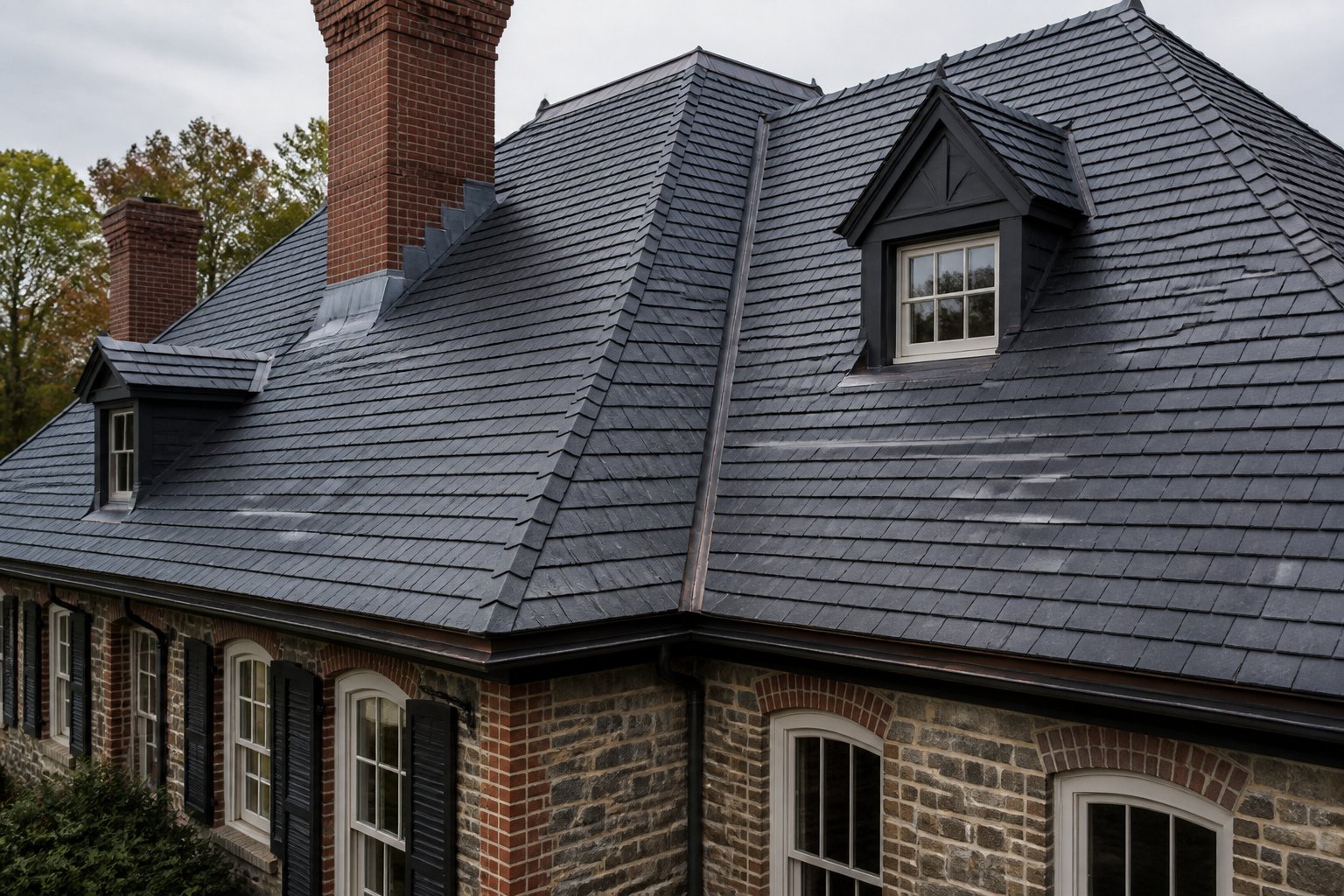
A fully graduated slate roof is one of those details that people notice even if they cannot explain why. Larger, thicker slates at the eaves gradually step up to smaller, lighter pieces near the ridge, creating a roof that feels intentional, balanced, and crafted with care. The pattern adds depth, shifts the visual weight of the roof, and gives your home a look that feels rooted in tradition yet refined enough for modern architecture.
In this guide, you will learn how a fully graduated system is planned, how it differs from standard slate layouts, which slate types installers use, and what to expect during installation. You will also see the practical considerations, including cost and structural needs, so you can decide whether this style fits your project.
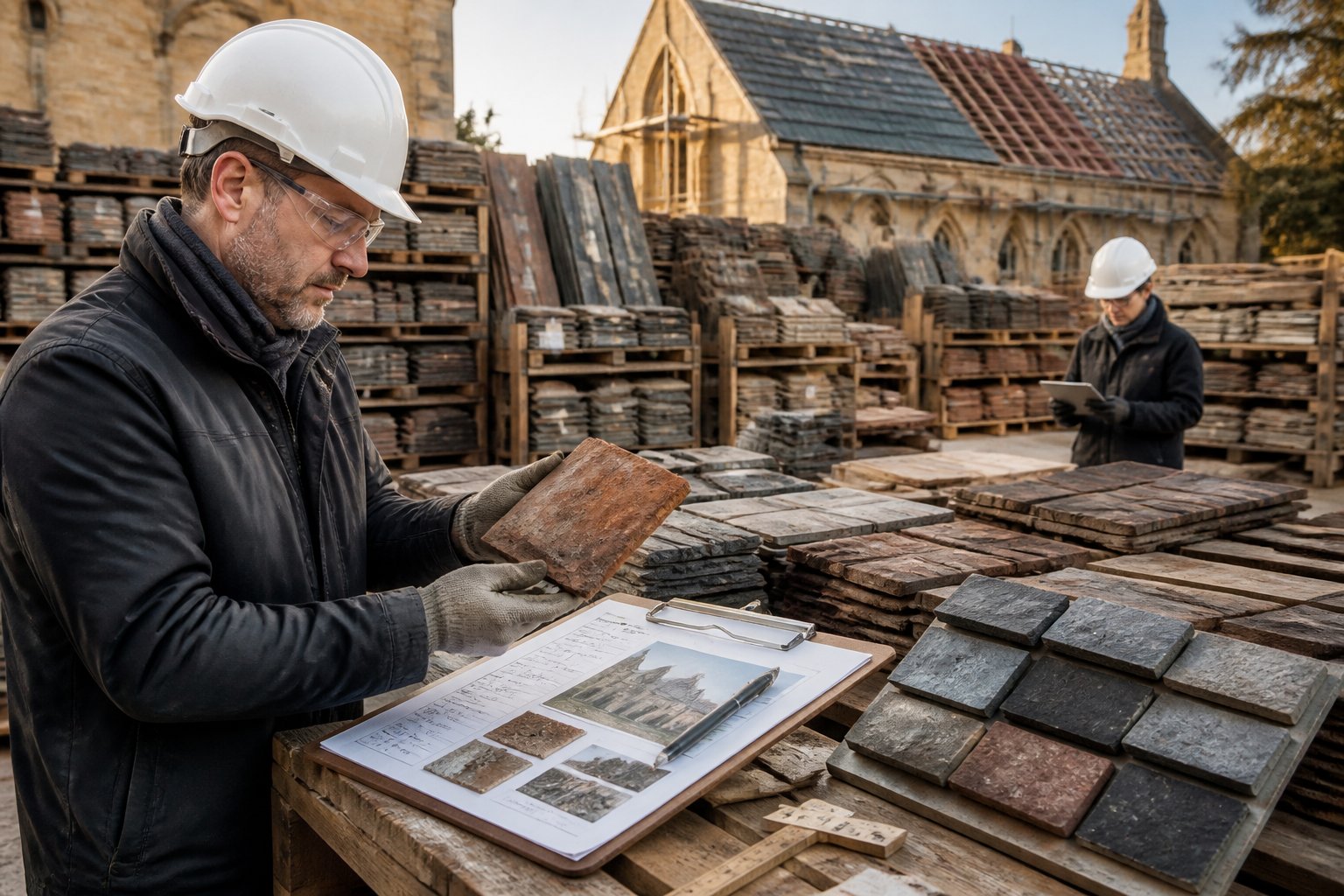
If you are planning a graduated slate roof and want reliable reclaimed materials that are already inspected and ready to ship, Reclaimed Slate Roofing can help you source the right sizes and grades for your layout. Contact us to check current availability.
How Much Does Slate Roofing Cost?
Slate roofing costs more than asphalt, wood, or metal. Material and labor prices are higher, and costs can vary significantly with roof size, slate type, and slate hardness.
Average Slate Roof Cost in 2026
In 2026, installation typically ranges from about $12 to $40 per square foot.
This covers basic synthetic slate at the low end and thick, premium natural slate at the high end. Labor often accounts for 40–60% of the total price because skilled installers are required.
For a typical 1,700–2,000 sq ft roof, expect to pay roughly $21,000 to $46,500.
Smaller or simpler roofs fall toward the low side, while complex, steep, or historic roofs cost more due to increased labor and material needs.
Cost By Roof Size
Slate roof cost scales with roof area, but not perfectly linearly due to tear-off, waste, and minimum crew charges.
Example estimates for common roof sizes:
- 1,000 sq ft: $12,000–$30,000
- 1,700 sq ft: $21,000–$41,000
- 2,000 sq ft: $24,000–$46,500
Larger roofs may offer per-square-foot savings on materials, but total labor hours go up.
Also, expect extra charges for removing old roofing, structural reinforcements, or scaffold rental. Get contractor quotes that list per-square-foot rates and fixed-line items.
Cost By Slate Tile Type
Slate tiles are priced separately from installation. Common types and typical installed price ranges:
- Synthetic composite slate: $8–$13/sq ft installed
- Hybrid (short slate over membrane): $16/sq ft installed
- Natural slate (standard): $18–$38+/sq ft installed
Synthetic slate offers the lowest upfront cost and weighs less.
Hybrid systems reduce material cost and weight but use membranes that shorten life compared to full natural slate. Natural slate tiles vary by origin, finish, and thickness, so compare installed prices and warranty terms.
Cost By Slate Hardness
Slate hardness affects both price and lifespan. Manufacturers grade slate (commonly S1, S2, S3). Expect this pattern:
- S1 (hard slate): highest cost, longest life — $24–$38+/sq ft installed
- S2 (medium): mid-range cost and life — $18–$27/sq ft installed
- S3 (soft): lowest cost but shorter life — rarely used for long-term roofing
Harder slate absorbs less water and can last 75–100+ years, raising upfront cost but lowering lifecycle cost.
Softer slate costs less initially but may need replacement sooner. Ask contractors to show grade, thickness, and expected service life for the slate they propose.
What Makes Slate Roofing Expensive?
Slate roofing costs more due to the price of the stone, skilled labor required for installation, and frequent need for extra structural work before installation. You pay for rare raw material, careful handling, and stronger roof framing when you choose slate tiles.
Material Costs and Sourcing
Natural slate comes from specific quarries, so good-quality tiles often cost more than common roofing products. Imported slate and premium grades run higher per square foot than domestic or reclaimed options. Reclaimed material can save money but may require careful matching for thickness and color.
Slate tiles vary by hardness and thickness. Hard, thick slate lasts longest and carries the highest price. You’ll also pay for matching accessories: underlayment, copper or lead flashing, and specialized fasteners. Transport adds cost because heavy stone ships slowly and sometimes from overseas.
Supply also fluctuates. Some quarries limit production, so rare colors or sizes can carry a premium. If you want long-lasting, natural slate, expect higher material bills than for asphalt or synthetic options.
Specialized Installation Requirements
Craftsmen trained to handle fragile stone and align tiles precisely must install slate. Hire roofers experienced with slate roofing materials to avoid cracked tiles and increased replacement costs.
Labor often makes up half or more of the total cost. Installers use special tools to cut and set slate tiles. They follow techniques that differ from shingle work, so projects take longer. That higher labor cost includes waste control and careful staging to avoid tile damage.
Certifications or long apprenticeships for slate installers limit the pool of qualified workers. If your area has few slate specialists, expect higher bids and possibly longer scheduling waits.
Needed Roof Reinforcement
Slate is heavy—often 800 to 1,500 pounds per square (100 sq ft) for natural slate—so your roof deck and framing may need upgrades. Have an engineer or contractor check your structure before purchasing tiles.
Common reinforcement steps include replacing decking with thicker plywood, adding rafters or joist ties, and strengthening load-bearing walls. These changes add materials and labor costs. In some homes, you might also need new sheathing or modified eaves and gutters to handle the weight and water runoff.
Skipping reinforcement risks sagging or structural damage. Budgeting for these upgrades helps you avoid surprise expenses once installation starts.
Types of Slate Roofing and Their Prices
There are three main choices: natural slate in hard and soft grades, lighter synthetic slate, and hybrid slate that mixes materials. Prices, weight, and lifespan differ significantly, so pick based on your budget and roof structure.
Natural Slate: Hard vs Soft
Natural slate comes from quarries and splits into thin tiles. Hard slate (often called Vermont or Pennsylvania slate) resists water and can last 100+ years. Expect higher costs—commonly $20–$35 per sq ft installed—and heavy weight that may require roof reinforcement.
Soft slate costs less, roughly $15–$25 per sq ft, but it’s more brittle and may need earlier repairs or replacement. Soft slate still looks authentic, but you’ll trade some lifespan and durability for a lower upfront price.
If you choose natural slate, hire a roofer with slate experience. They can match tiles, set proper underlayment, and check if your rafters need strengthening.
Synthetic Slate Options
Synthetic slate mimics real stone using rubber, plastic, or composites. It’s much lighter and usually $8–$15 per sq ft installed, so you avoid reinforcement costs. Installation is faster, and tiles resist cracking from foot traffic.
Synthetic options vary in quality: low-end products can fade or warp over time, while higher-end composites can last 40–70 years. Look for UV-stable materials and a solid warranty. Synthetic slate gives you the look of slate at a fraction of the weight and initial cost.
Hybrid Slate Explained
Hybrid slate blends a synthetic core with a natural slate facing or uses mixed materials to balance cost and appearance. Price sits between synthetic and full natural—often $14–$23 per sq ft installed.
Hybrid tiles reduce weight compared with full natural slate and keep much of the authentic texture. They can be a good middle ground if you want real slate appearance but can’t afford full natural slate or don’t want heavy roofing loads. Ask about manufacturer lifespan and how repairs match original tiles.
Comparing Slate Roofing to Other Materials
Slate costs more up front, weighs much more, and often needs special installation. You pay higher installation and sometimes structural work, but you also get a longer lifespan and distinct appearance that can affect resale value.
Slate vs Asphalt Shingle Costs
Asphalt shingles usually run about $1.50 to $5 per square foot installed, while natural slate commonly costs $15 to $30 per square foot installed. That means your initial slate roof can be 5–20 times more expensive than asphalt for the same area.
Asphalt is lightweight and simple to install, so labor stays low. Slate tiles require skilled installers and sometimes copper flashing and extra bracing, which raises labor and material costs.
If your budget is tight, synthetic slate offers a middle ground at roughly $8–$15 per square foot and gives a slate look with lower weight and labor costs.
Slate vs Metal and Composite Roofs
Metal roofs generally cost $5 to $12 per square foot installed, depending on the metal type. Composite or hybrid products fall between synthetic slate and metal, often $9 to $20 per square foot.
Metal is durable, lighter than slate, and easier to install. Composite options mimic slate texture and can match some longevity claims at lower weight and cost. Slate remains pricier because of quarrying, weight, and specialized installation.
If you want real stone appearance and multi-century life, slate justifies the high price. If you want durability with less cost and engineering, metal or composite may suit your needs better.
Long-Term Value of Slate Roofs
Natural slate can last 75–150+ years if installed correctly. That reduces or eliminates roof replacements you’d otherwise pay for every 20–40 years with asphalt or composites. Over a 100-year span, you may avoid one or more full roof replacements, which changes the lifetime cost math.
Expect higher upfront roof installation cost and possible structural reinforcement fees. But slate adds curb appeal and can increase home value, especially on historic or high-end properties. If you plan to keep your home long term, slate often lowers total lifetime roofing expense despite the steep initial price.
Ways to Manage and Reduce Slate Roof Costs
You can cut costs by choosing the right slate type, balancing upfront price with lifespan, and planning for easier maintenance and repairs. Small choices—reclaimed tiles, synthetic blends, or targeted repairs—have big budget effects.
Choosing Between New, Reclaimed, or Imported Slate
New natural slate gives the longest life but costs the most per square foot. If your roof framing needs reinforcement, factor that cost into any slate roof replacement estimate. Reclaimed slate often matches older roofs and costs less than new quarry slate. It can lower material costs and preserve appearance, but expect extra time and possibly higher labor for sorting and matching tiles.
Imported slate can be cheaper than local premium varieties. Compare thickness, freeze-thaw ratings, and delivery fees, since thin or low-grade imports may need more repairs later. If you consider reclaimed or imported slate, ask contractors about repair experience and the availability of matching tiles for future roof repair costs.
Opting for Synthetic or Hybrid Slate
Synthetic (faux) slate costs much less per square foot than natural slate and weighs less, reducing or eliminating structural reinforcement expenses. Hybrid slate combines a synthetic core with a slate face. That saves money while keeping a close look to natural slate.
Check manufacturer warranties and expected service life—many synthetics last 40–70 years, which affects long-term cost comparisons. Installation is faster and often cheaper, and roof repair costs tend to be lower because the material is lighter and easier to source. For DIY attempts, synthetic tiles are more forgiving, but major installations still need a pro.
Factors Impacting Maintenance and Repair Costs
Your slate roof repair cost depends on tile type, roof pitch, and access. Steep, high, or complex roofs raise labor and safety costs for every visit. Small repairs, like replacing cracked tiles or fixing flashing, often cost much less than full replacement. Get quotes that separate materials from labor so you can shop for matching tiles or specific slate for future repairs.
Regular inspections and targeted repairs extend life and lower total spending. Keep a record of tile types and supplier info to speed up repair work. If you choose heavy natural slate, budget for occasional structural checks and higher repair rates when contractors need special skills.
Lifespan, Durability, and Value of Slate Roofs
Slate roofs offer long service life, strong resistance to weather, and potential value gains that affect long-term cost. You get a durable roof that can outlast multiple generations of asphalt shingles, but it needs correct installation and occasional care.
How Long Does Slate Roofing Last?
Natural slate roof shingles commonly last 75 to 200 years, depending on slate grade and thickness. Higher-grade quarried slate and thicker tiles sit near the top of that range. Synthetic slate products typically last 50 to 100 years.
Installation quality matters. Poor nailing, wrong underlayment, or inadequate flashing can cut decades off a slate roof’s life. Roof slope and local climate also matter: freeze-thaw cycles and heavy hail raise the risk of breakage, while dry climates reduce moisture-related wear.
If you match slate profile and thickness when repairing, you can keep most slate roofs functional for a century or more. Track the quarry source and grade when you install so future repairs use compatible slate shingles.
Maintenance Needs Over Time
Slate roofing needs less frequent maintenance than asphalt, but timely care is important. Inspect your slate roof at least twice a year and after major storms. Look for cracked or slipped slate shingles, loose nails, and corroded flashing.
Avoid walking on slate roof shingles to prevent breakage. Use a qualified roofer for replacements and match slate thickness and size. Clean moss and organic growth gently since, left unchecked, they hold moisture and speed deterioration.
Expect occasional flashing replacement, ridge repointing, and isolated slate swaps. Budget small, periodic repairs rather than frequent large projects. Well-maintained slate roofing often requires far fewer interventions over decades.
Resale and Investment Value
Slate roofs can increase curb appeal and resale value because buyers associate them with durability and historic character. Homes with natural slate shingles often command higher offers in neighborhoods where slate is common.
Consider long-term ownership plans. A high-quality slate roof can reduce lifetime roofing costs by avoiding multiple asphalt replacements. Remember extra upfront cost for materials and for structural assessment if your roof framing needs reinforcement.
When selling, keep documentation: slate source, installation records, and repair history. Buyers and appraisers look for that paper trail, which helps justify higher asking prices and shows you maintained the slate roof shingles properly.
If you decide that a fully graduated slate roof is the right fit for your home, our team at Reclaimed Slate Roofing can help you source authentic reclaimed slate in the sizes and grades your layout requires. Contact us to review current inventory and keep your project on schedule.
Frequently Asked Questions
You’ll find clear numbers and practical reasons about slate roofs below. Expect typical costs, how slate compares to shingles, why it’s less common, per‑square‑foot estimates, cheaper options, and the main cost drivers.
What's the average installation cost for a slate roof?
A full slate roof installation on a 2,000-square-foot house commonly falls between about $19,000 and $52,000. Some sources and projects report averages near $29,000 to $46,000 depending on material and location.
How does the price of slate roofing compare to traditional shingles?
Slate usually costs much more than asphalt shingles. Asphalt shingles often run a few dollars per square foot, while slate materials and labor push total project costs many times higher.
Why might slate roofing be less common in the US?
Slate is heavy and can require structural reinforcement, which adds cost and complexity. Skilled installers are less common and charge more, so many homeowners choose lighter, easier materials.
Can you provide an estimated cost per square foot for slate roofing?
Natural slate typically ranges roughly $9 to $25 per square foot for the material and basic installation. Higher‑end or harder slates can reach $25 or more per square foot, while synthetic options are cheaper.
Are there more affordable alternatives to natural slate roofing?
Yes. Synthetic slate and hybrid slate mimic the look at lower cost. Asphalt shingles and metal roofing are also far less expensive and easier to install.
What factors affect the overall cost of installing a slate roof?
Material type and hardness change price per square foot. Roof size, pitch, and complexity increase labor time and cost. Reinforcing the roof deck, local labor rates, and specialty installation styles also raise the total.