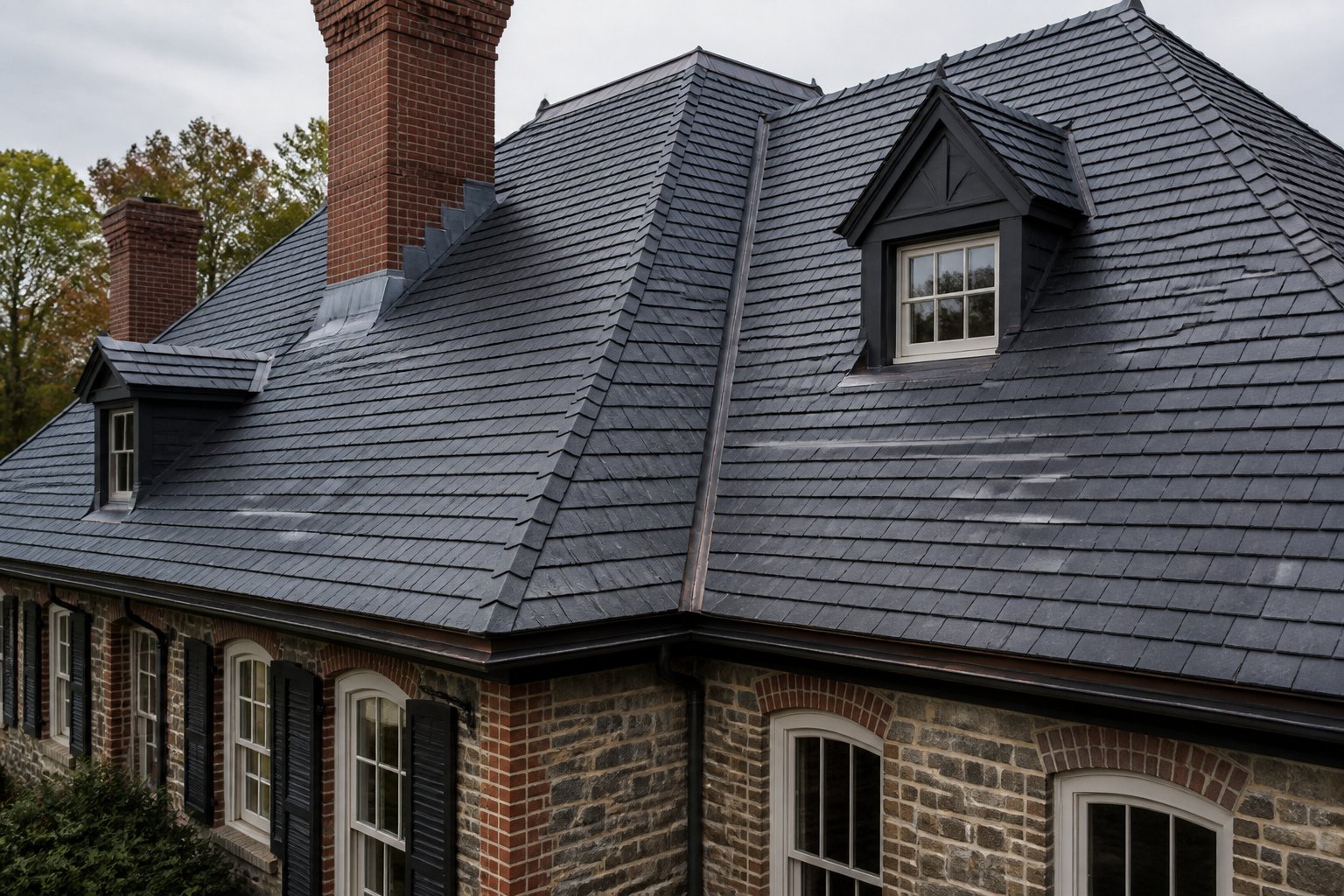
If you want a roof that delivers real longevity, low maintenance, and a look that never dates, slate is one of the strongest materials you can choose. Natural slate offers unmatched durability and a classic, high-end appearance, while modern synthetic slate gives you similar style at a lower cost and weight. The challenge is knowing which option fits your home, your structure, and your long-term budget.
This guide breaks down everything you need to make a confident decision—how natural and synthetic slates differ, which types last the longest, what they cost, and how installation and upkeep compare. By the end, you’ll know exactly which slate option fits your project and why.
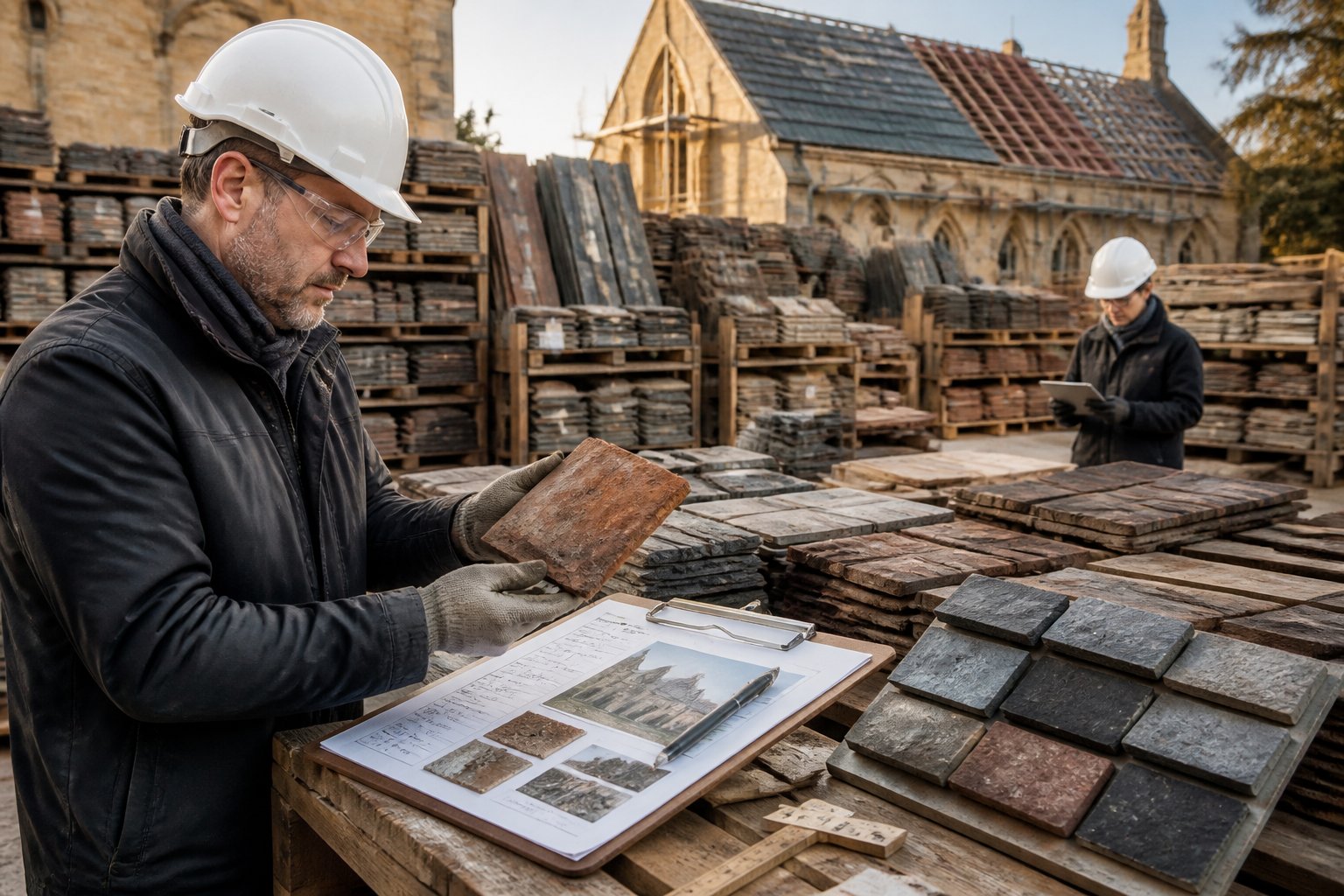
If you’re sourcing authentic reclaimed slate for a restoration or new build, here at Reclaimed Slate Roofing, we supply vetted materials ready to ship fast to your jobsite. Contact us to check our current inventory.
What Makes Slate Roofing the Best Choice?
Slate offers long life, strong fire protection, and a natural look that raises curb appeal. You get a roof that resists fire, lasts decades to centuries, and pairs well with sustainable building choices.
Slate is natural stone, so it resists rot, insects, and most weather damage better than organic or polymer shingles. A properly installed natural slate roof sheds water and snow well, so you avoid repeated leaks and underlayment failures.
Slate comes in many colors and thicknesses, so you can match architectural styles from historic cottages to modern homes. That visual variety often increases resale value.
Slate is heavier than asphalt or composite shingles, so your roof structure must be checked and sometimes reinforced. Installation and repairs require skilled roofers who understand slate fastening and flashing.
Class A Fire Rating and Safety
Natural slate is noncombustible and often contributes to a Class A fire rating for a roof assembly. That rating is the highest on standard tests and means the roof resists severe fire exposure from external sources.
Using slate reduces risk from embers during wildfires and lowers insurance concerns in some areas. You should confirm local codes and insurance incentives, since some insurers offer discounts for Class A materials.
Synthetic slate products can also meet fire standards, but check the manufacturer’s rating. For the best passive safety, choose natural slate or certified noncombustible synthetic options.
Longevity and Durability Compared to Other Roofing Materials
Natural slate typically lasts 75–200 years depending on quarry and grade, far exceeding asphalt (15–30 years) and many composites. You’ll replace an asphalt roof several times in the life of a single slate roof.
Slate resists UV breakdown and temperature cycling better than organic shingles. Harder slates (e.g., Welsh or Vermont grades) break less under foot traffic and hail.
Maintenance needs are lower long term, though damaged slates require matching pieces and skilled repair. Synthetic slate offers longer life than asphalt and is lighter, but it usually doesn't match top-quality natural slate for lifespan.
Types of Slate Roofing
You’ll learn the main choices for slate roofing, how they differ in material and cost, and which one fits common roof needs like lifespan, weight, and maintenance.
Natural Slate Roofing
Natural slate comes from quarries and is real stone you can touch and test. It lasts longest—many natural slate roofs reach 75–100+ years when installed correctly. You’ll see color and texture differences by origin: Welsh slate is dense and long-lived, Spanish slate is widely available and economical, and Brazilian or Canadian slates offer different looks and strengths.
Natural slate is heavy, so your roof structure must support the weight. Installation uses copper or stainless steel fixings and needs a roofer skilled with slate. Repairs are usually simple: replace individual tiles. Expect higher upfront cost but lower long‑term replacement needs.
Synthetic Slate Roofing
Synthetic slate mimics natural slate using polymer, rubber, or fiber‑cement. It weighs less and often costs less to install. You’ll find consistent color, uniform size, and simpler installation that sometimes allows non‑specialist contractors to fit it.
Synthetic slate resists curl and cracking in many climates and can be made from recycled materials. Lifespan ranges 30–60 years depending on product quality. Check fire rating, UV resistance, and warranty length before you buy. For historic homes, synthetic slate can match appearance while reducing weight and expense.
Hard Slate vs. Soft Slate
Hard slate describes dense, fine‑grained natural slates that resist breakage and frost. You’ll see hard slate from places like Wales or some Spanish quarries. It cuts cleanly and holds fastenings well, which reduces maintenance and extends life.
Soft slate is less dense, can be lighter in color, and breaks more easily. It may come from quarries with mudstone deposits or younger geology. Soft slate works on roofs with gentler exposure or where cost matters, but expect more frequent inspections and earlier tile replacement.
When choosing, match slate hardness to your climate and roof pitch. Hard slate suits steep, exposed roofs and freeze–thaw zones. Soft slate fits protected sites or lower budgets but needs a careful installation and may not last as long.
Top Slate Roofing Materials and Tiles
You’ll find options that vary in durability, weight, color, and cost. Pick materials that match your roof’s slope, local climate, and your budget.
Welsh Slate and Its Unique Qualities
Welsh slate is one of the most durable natural slate choices. It resists frost and has a low water absorption rate, so it performs well in wet, cold climates. You can expect tiles to last 75–150 years when installed correctly.
Color ranges include deep gray, blue-gray, and black. The texture is fine-grained and splits into thin, even tiles that lay flat. Because it is dense, Welsh slate is heavier than synthetic alternatives, so check your roof’s structural capacity before choosing it.
You’ll pay more upfront for Welsh slate, but it often reduces long-term maintenance and replacement costs. Look for historic quarries like Penrhyn or Cwt-y-Bugail for consistent quality.
Spanish Slate and International Options
Spanish slate gives you more color variety and is generally less expensive than Welsh slate. Common colors include greens, purples, and mixed hues, which suit Mediterranean and contemporary styles.
Spanish slate tends to be thinner and lighter than Welsh slate. That makes it easier to handle and cheaper to ship. Expect useful lifespans around 50–100 years depending on the quarry and grade.
When importing slate, confirm frost resistance and water absorption specs. Also ask about warranty, grading (A, B, C), and delivered tile dimensions to match your roof pattern and flashing details.
Slate Roof Tiles and Shingles
Slate roof tiles and shingles refer to the finished pieces you install on the roof. Natural slate tiles are hand-split or machine-cut into sizes like 12x6", 14x8", or custom shapes for hips and valleys.
Key factors to compare:
- Thickness/grade (thicker grades last longer)
- Size and exposure (controls overlap and roof coverage)
- Installation method (nails, hooks, or batten systems)
Synthetic slate shingles mimic the look of real stone with lighter weight and lower cost. They can reduce structural upgrades and speed installation. If you choose natural slate tiles, confirm installer experience. Proper nailing, underlayment, and flashing matter as much as the tile you buy.
Modern Alternatives to Traditional Slate
You can get the slate look without the heavy weight, high cost, or special framing. Options include lightweight synthetic tiles, factory-made fiber cement or concrete panels, and metal products that mimic slate texture and color.
Synthetic Slate Tiles and Brands
Synthetic slate tiles copy real slate’s appearance using polymer, rubber, or composite materials. They weigh far less than natural slate, so your roof usually won’t need structural reinforcement. Look for brands like DaVinci Roofscapes and Brava Roof Tile for realistic textures and long warranties.
Benefits include impact and freeze-thaw resistance, color blends that resist fading, and easier installation. Many products use recycled content and come with a 30–50 year material warranty. Installation still matters: follow the manufacturer’s fastening pattern and underlayment recommendations to keep wind and water out.
Maintenance is low. You should inspect after severe storms and clean debris from valleys and gutters. If a tile is damaged, you can replace single pieces instead of reroofing the whole slope.
Fiber Cement Slate and Concrete Slate
Fiber cement and concrete slate give you a durable, fire-resistant roof that looks like slate but costs less. Fiber cement mixes cement, sand, and cellulose fibers into thin, flat tiles that resist rot and insects. Concrete slate is cast in molds to match slate shapes and can be tinted or painted.
These materials are heavier than synthetic but still lighter than natural slate. They offer good wind and hail resistance when properly installed. Expect lower material cost than real slate and a service life commonly from 30 to 50 years depending on climate and maintenance.
You should check for cracking and mortar or fastener corrosion over time. Proper underlayment, flashing, and venting reduce moisture problems. Choose concrete or fiber cement made for roofing—some garden or siding products look similar but lack roof-grade durability.
Metal Slate Options
Metal slate uses stamped or formed metal panels to mimic slate’s lines and texture. Materials include aluminum, steel, or zinc. Metal slate is very lightweight and sheds snow and water well, which helps in cold or wet climates.
Metal panels resist fire, rot, and insects, and many carry long warranties. Look for factory finishes with high UV and corrosion resistance. Installation requires accurate fastening and expansion joints to avoid buckling or noise. You can find metal slate made to resemble traditional slate profiles and color blends, giving you a modern, low-maintenance roof with a classic look.
Slate Roofing Costs and Value
Slate roofs cost more upfront than most roofing types but can last much longer. You’ll most often choose between natural and synthetic slate, and several site and material factors will shape the final price and value you get.
Cost Comparison: Natural vs Synthetic Slate
Natural slate typically costs between about $17 and $40 per square foot installed, depending on grade and thickness. Expect higher-end hard slate (S1, thicker pieces) near the top of that range; soft or thinner slates sit near the bottom. Natural slate for an average 1,700 sq ft roof often runs around $40,000, though prices vary by region.
Synthetic slate runs lower, often $12 to $16 per square foot installed. It looks similar and weighs less, which can reduce structural reinforcement costs. Synthetic warranties commonly cover 30–60 years, while quality natural slate can last 75–100+ years.
Choose natural if you want maximum lifespan and historic accuracy. Choose synthetic if you need lower initial cost, lighter weight, or easier replacement.
Factors Affecting Slate Roof Costs
Material grade and thickness matter. Harder, thicker slates cost more but last longer. Quarry origin and color can also change price.
Roof size, shape, and pitch drive labor costs. Steep or complex roofs raise installation time and risk, adding 20–50% or more. Removal of old roofing typically adds $1–$3 per sq ft.
Local labor rates and contractor expertise affect bids. Slate installation needs specialized skills; certified slate roofers charge a premium. Additional costs include underlayment, flashing (copper or stainless), ridge work, and possible structural reinforcement if your roof framing can’t handle about 8–12+ lbs per sq ft for natural slate.
Long-Term Savings and Return on Investment
Natural slate’s long life lowers lifetime cost. Even if your upfront slate roofing cost is high, you may avoid one or more roof replacements over the house’s lifetime. That cuts future material, labor, and disposal costs.
Maintenance is low for slate, but repairs can be costly if you need matching material or specialized labor. Synthetic slate reduces maintenance and replacement costs compared with asphalt, but it won’t match natural slate’s century-long lifespan.
If you plan to own the home 30–50+ years, natural slate often gives the best return per year of service. If resale value and curb appeal matter, slate roofs can increase buyer interest, especially on older or high-end homes.
Installation and Care for Slate Roofs
You need a strong roof deck, correct underlayment, and skilled installers to get long life from slate. Regular inspections, careful cleaning, and prompt repairs keep slate performing for decades.
Slate Roof Installation Essentials
Start with a structural check. Slate is heavy, so you may need additional rafters or plywood to meet load requirements before any roof installation or replacement.
Install a quality underlayment and ice and water shield at eaves and valleys. Use a breathable synthetic underlayment under the slate to shed water and reduce trapped moisture. Flashing around chimneys, vents, and valleys should be copper or stainless steel to avoid corrosion.
Set slates with copper or stainless-steel nails and space tiles properly for expansion and drainage. Use a straight-bond or head-lap pattern suited to the slate size. Keep a small stock of matching slates for future repairs.
Choosing Experienced Roofing Contractors
Hire slate roofing contractors who can show a portfolio of completed jobs. Ask for references, proof of insurance, and a written warranty covering both materials and workmanship.
Confirm the contractor knows slate-specific techniques such as cutting, bedding flashings, and using copper nails. Ask if they perform structural assessments for roof replacement projects and whether they install ice and water shield where code or climate requires it.
Get at least three bids that itemize materials, labor, and cleanup. Choose contractors who provide a schedule, disposal plan, and a sample of matching slate left on site after completion.
Maintenance and Roof Cleaning Tips
Inspect your roof twice a year and after big storms. Look for slipped, cracked, or missing tiles, and check flashing and nail corrosion. Fix small issues quickly to prevent leaks that harm the roof deck.
Avoid pressure washing. Use soft brushes and low-pressure rinsing to remove moss and debris. Clean gutters and downspouts regularly to prevent water backup under slates.
When replacing individual slates, match thickness and color. Hire a roofing contractor experienced with slate repairs to avoid cracking nearby tiles. Keep a record of repairs and store spare slates in a dry place for future use.
If you’re ready to choose the right slate for your project, our team at Reclaimed Slate Roofing can help you source authentic reclaimed slate that’s inspected, graded, and ready for fast delivery. Reach out to request current stock and keep your roofing timeline on track.
Frequently Asked Questions
Slate roofs offer very long lifespans, strong resistance to fire and rot, and a wide range of colors and finishes. Expect higher upfront cost and low routine maintenance compared with asphalt or wood.
What are the advantages of using slate for my roof?
Slate is a natural stone that resists fire, rot, and insect damage. It adds curb appeal and can raise your home’s resale value.
Slate also helps with energy efficiency by acting as a thermal mass. This can reduce heating and cooling swings in your attic.
How long can I expect a slate roof to last?
High-quality natural slate commonly lasts 75 to 100+ years when installed correctly. Synthetic slate options often last 30 to 50 years, depending on material and brand.
Warranty terms vary, so check the manufacturer and installer guarantees. Proper installation and occasional repairs keep the roof at peak life.
Are there different colors or styles of slate available for roofing?
Yes. Natural slate comes in grays, greens, purples, and rust tones based on quarry source. You can also choose textures from smooth to cleft (rough) finishes.
Sizes and thicknesses vary, letting you pick a look and weight that suit your home. Synthetic slate offers more uniform colors and lighter-weight options.
What is the typical maintenance required for a slate roof?
Inspect the roof every few years and after major storms for cracked or slipped tiles. Replace damaged tiles promptly to prevent leaks and underlayment damage.
Keep gutters clear and remove debris that can trap moisture. Avoid walking on slate unless you hire a roofer trained in slate work.
How does the cost of slate roofing compare to other materials?
Natural slate usually costs significantly more upfront than asphalt or metal. Installed prices commonly range much higher per square foot because of materials and labor.
You pay more initially, but the long service life can lower lifetime replacement costs. Also factor in the need for a qualified installer and any structural upgrades for heavy slate.
Can slate roofs withstand harsh weather conditions?
Natural slate holds up well to rain, snow, and freeze-thaw cycles when properly installed. It is noncombustible and resists wind if tiles are securely fixed.
Very large hail or severe impact can fracture tiles, so check after storms. Work with an experienced contractor to ensure flashing and underlayment protect against leaks.