

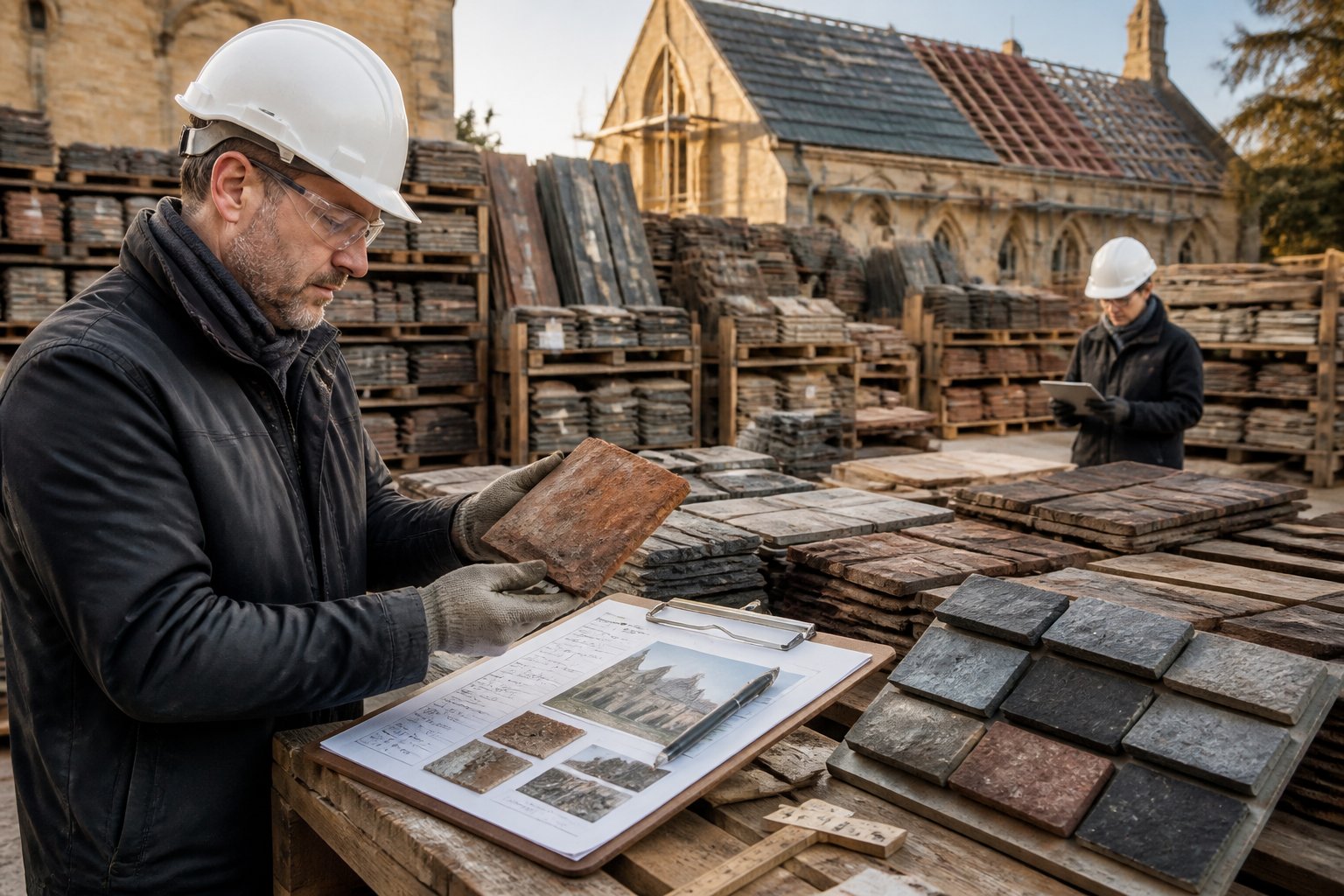
Slate Grading & Quality Standards
How every batch is sorted, sounded, tested and photographed before it is offered for sale.
Our grading process
1. Provenance
We record where the lot came from: building, city, approximate construction date, and quarry origin where it can be identified from the material itself.
2. Sounding
Every piece is rung by hand. A sound slate gives a clear tone; a delaminating or cracked slate gives a dull thud and goes to the reject stack.
3. Culling
We cull for cracks, broken corners, excessive punch damage, delamination and soft spots. Typical yield from an incoming lot is 60–80%.
4. Sorting
Sound slate is sorted by length, then by thickness band, and stacked on edge by colour.
5. Photography
Each pallet is photographed dry and wet so the buyer sees the actual colour range before approval.
6. Crating
Banded on edge in crates built for the weight, with the batch reference on the crate.
Grading standards we reference
ASTM C406 classifies roofing slate by expected service life (S1, S2, S3) on the basis of water absorption, modulus of rupture and resistance to acid. Reclaimed slate cannot be re-certified against the original test data, but the relevant physical properties can be discussed against those criteria, and the material’s documented service history is itself the strongest evidence: a slate that has already given eighty years of service on a roof deck has demonstrated what a laboratory test only predicts.
What we tell you about every batch
Origin
Where the lot came from and, where identifiable, the quarry region.
Size range
Length and the width range actually present in the lot.
Thickness band
Measured, not estimated.
Colour range
Photographed wet and dry, because slate colour shifts considerably when wet.
Yield and condition
How much we culled and why.
Not sure what you need? We’ll walk you through it.
Whether it’s a specific match or a custom project, we’re happy to help.


