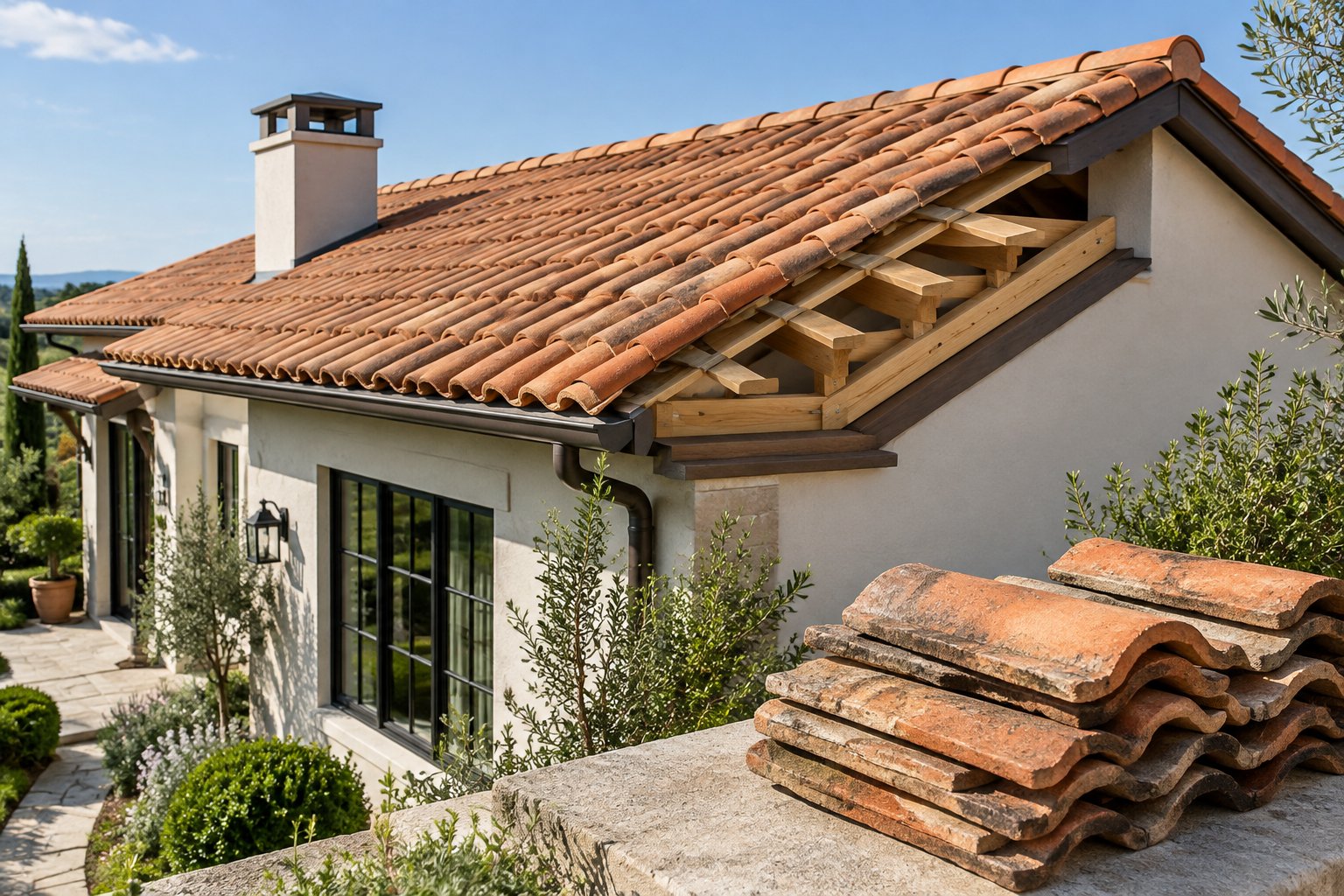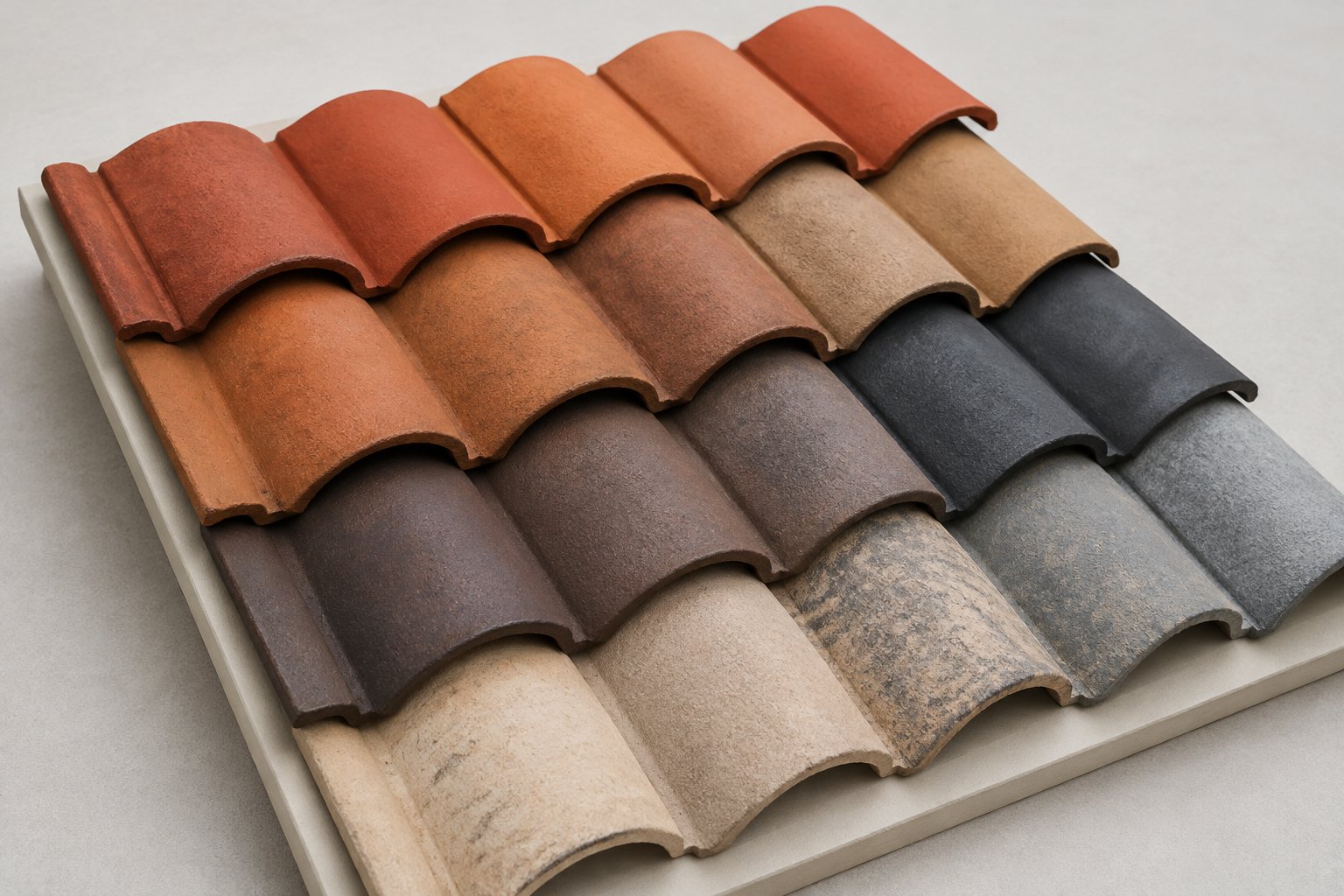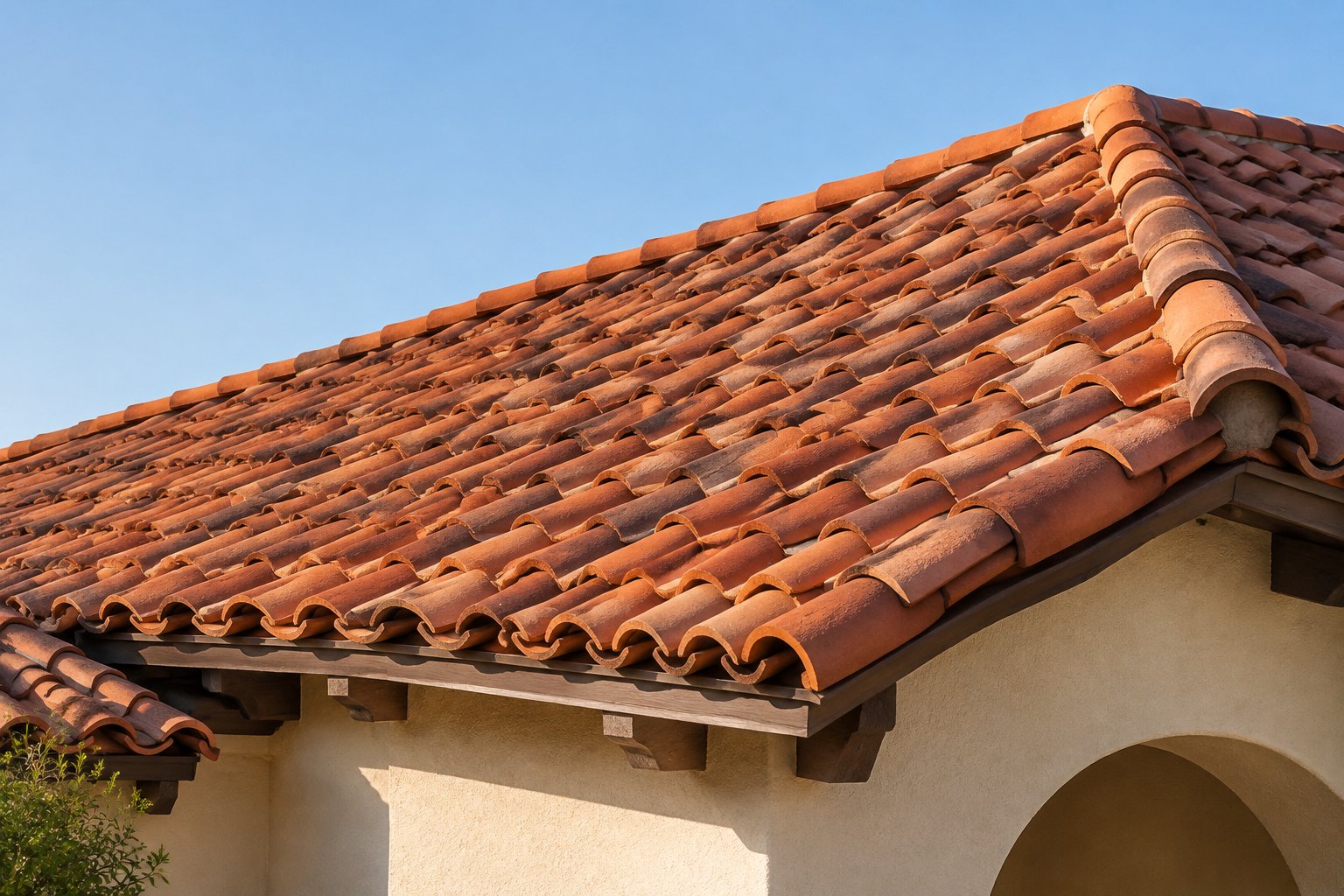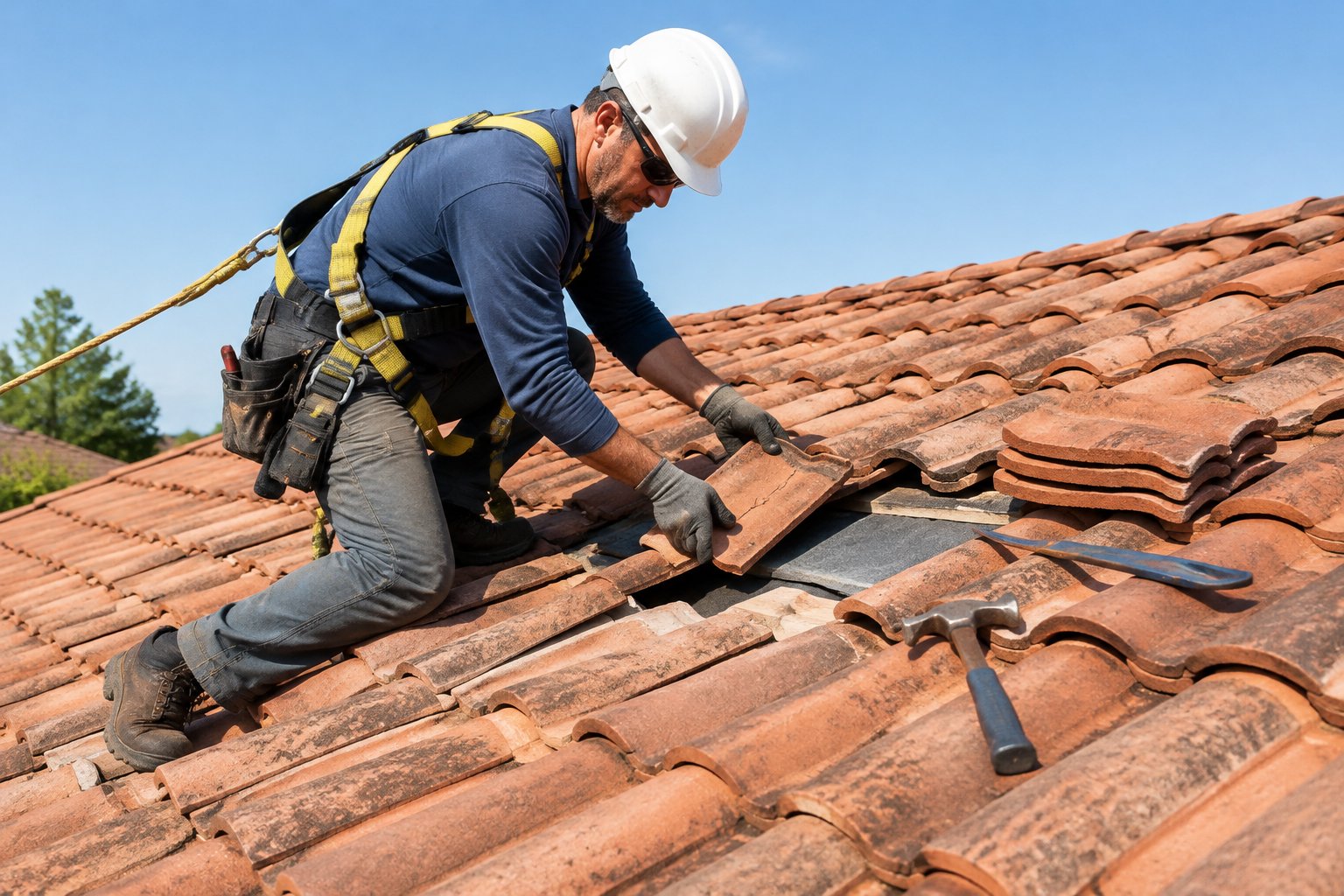
Three things set the cost of a tile roof repair: how hard the roof is to get to, how much tile has to come off, and whether a match exists.
Labor rates give you a baseline. On a period clay roof though, the match is frequently what decides whether the job stays a repair at all or turns into a section replacement. That is the opposite of how most people price these jobs, and it is why so many tile repair budgets come apart halfway through.
Start with the material. Price the labor around it.
How to build the budget
Work in layers: the cost of getting the crew safely onto the roof, the tile and labor for the affected area, and a contingency for whatever is hiding underneath. National averages for tile repair vary so widely by region that they are close to useless as a planning figure. Build from your own line items instead.
Minimum charges and why small jobs cost more than they look
Almost every tile contractor has a minimum for any call that needs roof access. It covers travel, setup, fall protection and getting safely to the work area, and on a small job it can be most of the invoice. Fixing two tiles often costs close to what fixing six would.
Above that minimum, price climbs with area and difficulty. Small repairs tend to be quoted as a lump sum, larger ones per square of 100 square feet, and leak work as time and materials with a cap. Ask which method you are being quoted on, because comparing a lump sum against a per-square rate tells you nothing.
Replacing broken or slipped tiles
Two costs here: the tile, and the labor to get it in without breaking its neighbors.
A slipped tile with a failed fixing is usually the cheapest thing on the list, because it can often be reset or re-fixed with no new material. A cracked tile needs replacing, and that is where the price swings. If the profile is still made, the piece is easy. If it was discontinued in 1938, finding one can cost considerably more than fitting it.
Fixing method matters too. A batten-hung tile with nail holes swaps out quickly. A mud-set barrel tile has to be chipped free and re-bedded. Count the pieces before you ask for a price, because "nine field tiles and two hip pieces" gets you a real quote and "a few broken tiles" does not.
Leaks, flashing and underlayment
A leak repair almost always costs more than replacing a broken tile, because the tile is rarely what leaked. Water travels along battens before it shows inside, so finding the source means lifting tiles across a wider area than the stain suggests, and every tile lifted might break.
Flashing work at valleys, chimneys, walls and penetrations sits in the middle. The metalwork itself is modest. Lifting and relaying the tile around it is what costs.
Underlayment is the most expensive of the three, because it runs under the whole field. A local patch costs roughly what leak work costs. If it has failed across a slope, it stops being a repair and becomes a different job entirely.
Clay against concrete
Labor is similar. The parts are not. A concrete roof laid in recent decades often uses a profile still in production, so new pieces exist. Clay gets harder the older the roof is, because many historic profiles have not been made for generations, and since firing gives clay its color you cannot buy a new tile carrying the weathered tone of an old roof.
Concrete fades at the surface, so new pieces rarely match an aged concrete roof either. On clay, salvaged tile from a similar period and maker is usually the closest you will get, which shifts budget toward sourcing and freight and away from labor.
Why two identical-looking repairs price differently
Because the roof drives the labor, not the tile count. Before you compare quotes, check each one has priced the same access, the same area of lifted tile, and the same allowance for what is underneath.
Access and protecting sound tile
A single-story roof with a clear driveway is cheap to reach. A roof over landscaping, a pool or a tight side yard may need scaffold, a lift or multiple ladder setups, and every setup is time and rental.
Protecting the tile the crew walks over costs money too. Walk boards, foam pads and roof ladders all take time to set. A quote that skips them looks cheaper, right up until the crew cracks six tiles getting to the damage and every one of those needs a match as well.
Pitch, height and complexity
Steeper slopes slow everything down. Past a walkable pitch, crews need anchors, harnesses and roof jacks, and they set far fewer tiles an hour. Height does the same, since a third-story repair takes longer to stage and longer to get material up to.
Complexity is the one people underestimate. Hips, valleys, dormers, turrets and wall junctions all need cut or special pieces, so a repair that touches a valley costs more than the same number of field tiles in the open. Hip starters and ridge caps are also the hardest pieces to find salvaged.
The area you actually have to lift
Visible damage rarely shows the real scope. Reaching one broken tile usually means lifting tiles above and beside it, particularly on interlocking or mud-set profiles, so a six-tile repair can mean handling thirty.
Ask each contractor how many tiles they expect to lift and what breakage rate they have allowed. That number tells you how much spare tile needs to be on site, which is a material cost most quotes leave out.
What is hidden under the tile
Rotted battens, soft sheathing and brittle felt only appear once tile comes off, and they are the biggest unknown in any tile repair. The National Park Service recommends a complete internal and external inspection of structure and covering before setting a clay tile repair program, and a look in the attic before pricing removes a lot of guesswork.
Ask for a written allowance for concealed damage, priced per batten run or per sheet of decking. That keeps a change order from turning into an blank check.
Why the match often decides the budget
On a period clay roof, tile availability settles the repair-or-replace question before labor rates get a look in. Find a match and a small repair stays small. Fail to, and you are choosing between a visible patch and a much larger job.
Discontinued profiles
A great many clay profiles made before the war are simply gone. Plants closed, molds were retired, and local clays gave each works its own color and texture. A new tile with a "similar" profile may not sit in the existing courses, and if it sits higher or lower it leaves gaps that let water in.
On historic buildings, federal guidance favors retaining and preserving roofing material such as clay tile where it defines character. If the project is under local review or tax-credit standards, a poor match may simply not be approved, which makes sourcing a real budget line rather than an afterthought. Salvaged tile is the practical route to a period-correct match.
What a real match involves
More than color. Measure length, width and thickness. Check camber on barrel and S profiles. Look at nail holes, lugs and nibs to see whether the new piece will hang the same way. Photograph the underside for maker's marks.
Color comes last even though it is the most visible thing, because a tile that looks right and does not fit is useless. Take photographs in overcast light and samples from several areas, since a period roof reads as a blend. Our contractor's guide to matching old clay tiles covers the measuring and photography properly.
Pricing salvaged tile and overage
Salvaged prices depend on the batch: profile, quantity, condition and how rare the color is. Freight is a separate line, since tile ships crated and palletized with liftgate or scheduled delivery available.
Order overage with the main batch, not afterwards. Breakage during repair work is normal, and a later order comes off a different building and will weather differently. Ask for enough to cover what you expect to lift plus a margin, and confirm the count against batch photographs before approving anything.
Got a count and a profile? Send them over or request a quote and we will come back with a delivered price and photographs of the actual batch.
Patch, or replace a defined area
Patch when damage is limited and you have compatible tile. Replace a defined area when damage keeps coming back in one place or the layer beneath has failed.
When a patch is right
Isolated damage with sound underlayment underneath: a limb strike, a few tiles cracked by foot traffic, a single slipped course. With matched tile on site the crew swaps the pieces and goes. National guidance favors repair of historic materials ahead of replacement where deterioration is limited.
It only works if the tile matches. If all you can get is a different profile or color, weigh the cost of a permanently visible patch against sourcing salvaged tile properly. Plenty of these jobs are a few dozen pieces, not a pallet.
When repeated failures mean something else
If you have patched the same slope three times, the fourth patch is paying to treat a symptom. Repeated leaks in one valley, slipping across one elevation, or broken tiles along one eave usually share a cause below the surface.
Scope a defined area instead: one valley, one slope, one elevation. Price it as a lift and relay with new underlayment and flashing, reusing the original tile where sound and bringing in salvaged tile for the pieces that break.
Sound tile over failed felt
Clay outlasts underlayment several times over, so this is the most common reason contractors need matched tile at all. The tile comes off and gets stacked, felt and rotten battens are replaced, and the same tile goes back down.
Source the make-up tile and get it on site before stripping starts, or the roof sits open while somebody hunts for a match.
Restoration is a different budget
Restoration scope on a historic building can include documentation, review board submittals, period flashings, and hip and ridge fittings matched to the original. On pre-1978 homes, work disturbing painted trim falls under the EPA's Lead Renovation, Repair and Painting Rule, which adds requirements to the job.
Keep restoration and repair on separate lines. Combined, they make routine repairs look extortionate and hide what the restoration actually costs.
Getting quotes you can compare
A comparable quote separates material, freight, labor and hidden-damage allowances. Without that split, the cheapest bid is usually just the smallest scope.
What to send a supplier
Profile, measured length and width, camber, fixing details, and clear photographs of the weathered face and the underside. Include tiles from more than one area of the roof, a piece count with overage, and the delivery ZIP code. Ask for batch photographs before you confirm anything.
What the contractor should itemise
Access and staging, the number of tiles to lift and relay, the number to replace, flashing and underlayment work, debris removal and cleanup. It should also state who is supplying the replacement tile and who carries the cost of breakage.
If the contractor is supplying tile, ask what tile. A line reading "replacement tile, allowance" with no profile or source gives you no way at all to judge whether the repair will be visible.
Four lines, kept apart
- Material. Matched tile, overage and fittings, per piece or per square.
- Freight. Crated delivery, liftgate, scheduled delivery if needed.
- Labor. Access, lifting, setting, flashing, cleanup.
- Concealed damage. Unit prices for battens, decking and underlayment found during the work.
Buying tile direct at trade pricing and shipping it to site makes the material line visible rather than buried in a contractor allowance. Most of our orders ship within 3 to 7 business days of confirmation, which lets you schedule the crew around the delivery instead of the other way round.
Keep maintenance out of the repair budget
Clearing valleys and gutters, checking flashing and ridge mortar, resetting tiles after storms: that is maintenance and it belongs in an annual line of its own. Mixed into repair costs, it makes a perfectly healthy roof look like it needs constant attention, and it hides the point at which repeated repairs actually do justify a relay.
Confirm the match before you sign for the labor
On a clay roof the match shapes the scope, the schedule and a good share of the cost. Once you know a match exists, you can price a patch or a defined replacement with some confidence. Until then you are guessing.
Measure the tiles, photograph several areas, count what you need plus overage, then get batch photographs and a delivered price to set against your contractor's itemised quote.
We keep salvaged clay and slate at the yard in Baton Rouge, sounded and culled by hand, and ship nationwide. Our reclaimed clay roof tiles are listed with real dimensions so you can check them against your roof first. Call 225-954-8393 for current availability and a delivered price.
Frequently Asked Questions
How much does it cost to fix one roof tile?
Usually close to a contractor's minimum service charge, because access and setup take most of the time. The tile adds little if the profile is common and considerably more if it has to be sourced from salvage. Get local quotes, since minimums vary a lot by market.
Is tile repair priced per tile or per square foot?
Both are used. Small jobs tend to be a lump sum or per tile, larger areas and relay work per square of 100 square feet. Ask which method each contractor is using so you can compare fairly.
Can a tile roof be repaired if the original tile is discontinued?
Yes, with salvaged tile matching profile, size and weathered color. Send measurements and photographs, then approve batch photographs before ordering. A matched salvaged tile hides the repair where a new near-match stays visible permanently.
Can sound clay tiles be reused when the underlayment is replaced?
Yes, and they usually are. Lift, stack and relay over new underlayment. Some tiles break during removal, so have matched make-up tile on site before stripping starts.
Can I estimate repair cost from my home's square footage?
No. It depends on the damaged area, access, pitch and whether matching tile exists, none of which relate to floor area. Count the affected tiles and check the attic for hidden damage instead.