You are matching a tile roof on a deadline. The tiles have weathered for eighty years and the closest new stock looks wrong from the curb.
Here is why. Clay tile color comes from the fired body of the tile, not from a coating, so it lasts the life of the roof and never fades. What does change is the surface. Eighty years of dirt, rain and lichen sit on top of a color that has not moved at all. New tile has the right color for day one. The roof is decades past day one.
That gap is the entire matching problem, and the only reliable way to close it is reclaimed tile from a batch that has aged in a similar way.
The color families on historic roofs
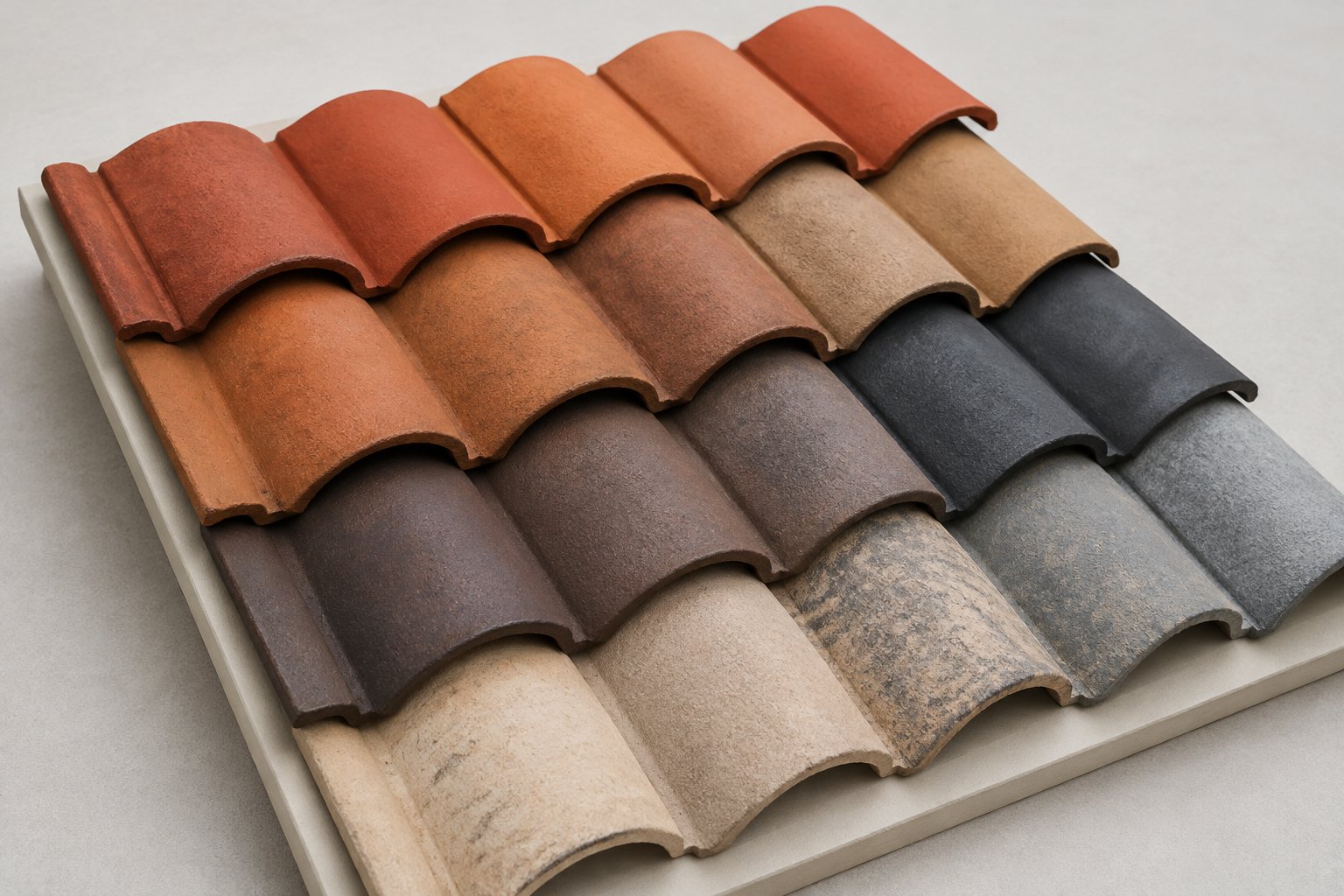
Historic clay roofs fall into four broad families: red, buff, brown, and flashed or smoked. The clay deposit and the kiln produced all of them. No paint was ever involved. Clay tiles were made in a great variety of shapes, colors, profiles, patterns and textures, and early makers used color to distinguish their product.
Knowing which family you are looking at narrows the search fast. A red roof in Florida and a buff roof in Ohio need different source batches even though both get listed as "clay."
Terra cotta and red
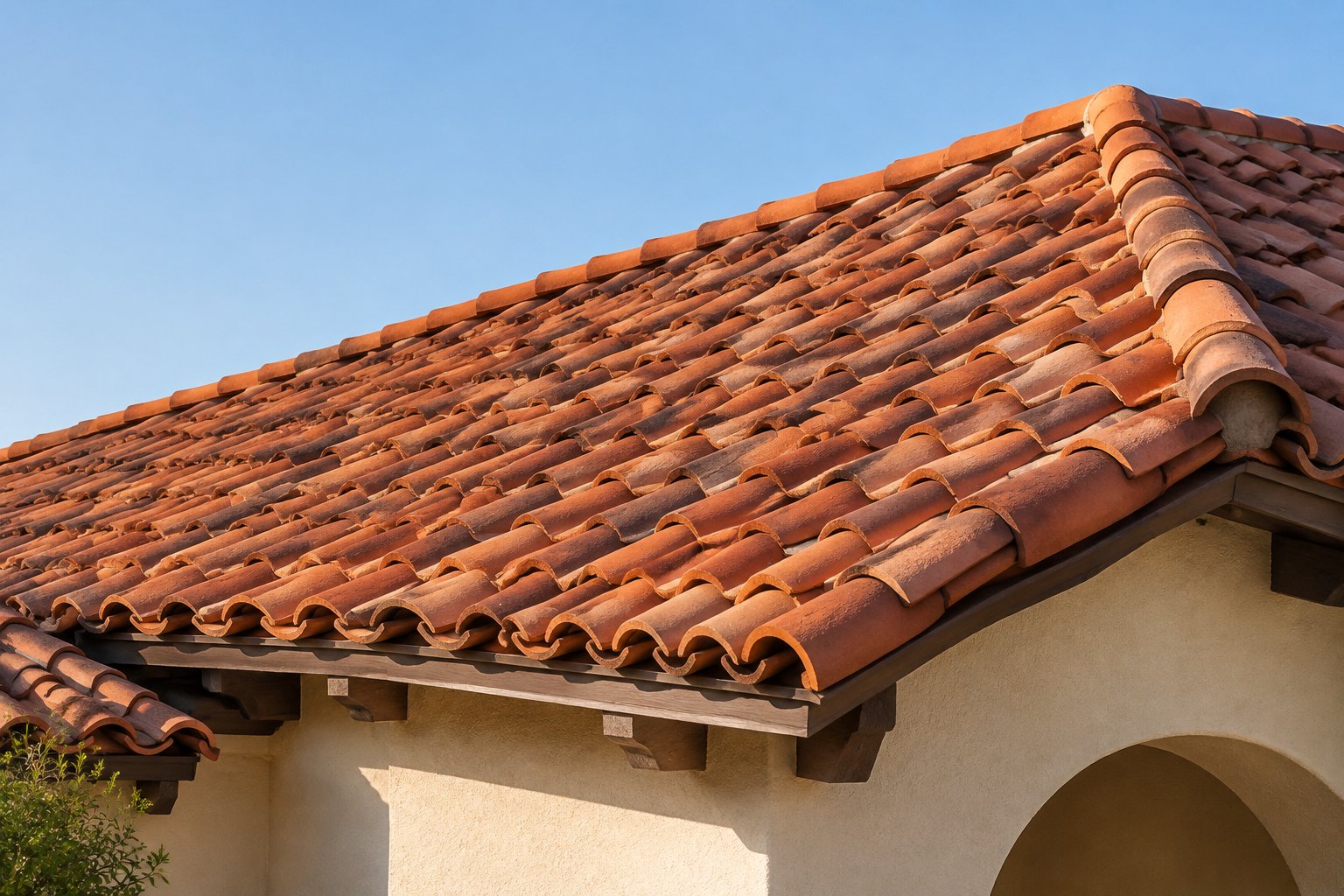
The most common family, running from bright orange-red through salmon to deep brick. Iron in the clay makes the red, and hotter or longer firing pushes it darker. On a weathered roof the face goes duller and browner while the body underneath stays exactly the same red.
Buff and ochre
Buff comes from clay with low iron content, firing to pale cream, sand or straw. Ochre sits at the warmer end with a golden cast. Buff roofs show dirt and biological growth far more clearly than red ones, so an old buff field often reads gray-tan from the street with darker streaks below each overlap. That drift is part of what you are matching.
Brown
Sitting between red and the dark flashed range: russet, chestnut, deep chocolate. Some browns came from particular clay deposits, others from red clay fired under reducing conditions when the kiln operator limited the air. Brown batches look more even from a distance but still vary close up.
Flashed and smoked
Dark patches, edges or ends. On most period roofs these are scattered through a red or brown field rather than grouped. A roof with ten percent dark flashed tile looks completely different from one with none, so as you survey the roof, note roughly how many flashed pieces appear per course. That ratio belongs in the spec.
Why one batch holds so many shades
A historic batch varies because every tile met slightly different clay, heat and air inside the kiln. These roofs were never meant to be one flat color. They read as a blend, and the blend is the thing you are matching.
Clay, heat and position in the kiln
Clay from a single pit is not uniform. Iron, lime and other minerals shift between layers, and each shift changes the fired color.
Firing added more. Periodic kilns had hot and cool zones, so tiles near the fire came out darker and harder while tiles at the cooler edges came out lighter. One kiln load could produce several shades from the same clay on the same day.
What flashing and smoke marks look like
Flashing shows as a darker color on the part of the tile closest to the flame or the passing hot gases, usually a dark end, a shadowed edge, or a cloudy band across the face. Smoke marking creates softer gray or black clouding where the kiln ran with less air.
Both happened during firing, which means both are permanent. They will not wash off, and a modern extruded tile fired in a tunnel kiln will not show them the same way. That alone is often enough to tell new from old at ten paces.
Glazes and engobes sit on top of body color
A glaze is glassy, an engobe is a thin slip of colored clay, and both were applied before firing. Glazed tile in green, blue and other designer colors turns up on specific early twentieth century buildings.
With glazed tile you are matching two things at once: the surface color and the body underneath it. If your replacement has the right glaze over a different body, every chip and broken edge will give it away.
Matching replacement tile to a weathered roof
Document the existing field, pull real samples, and approve a range rather than a single tile. Each step catches a different mistake, and skipping any one of them is how patches end up visible.
Photograph in overcast light
Shoot the roof on a gray day. Direct sun washes out color and throws hard shadows under every tile. Flat light shows the true range.
Photograph every elevation. North slopes carry more growth and look darker. South slopes bleach and dry out. A match built on one slope will be wrong on another.
Take samples from more than one place
Your roofer should pull two or three tiles from different areas: one from the field, one near the eaves, one from a shaded slope if there is one. Use proper access and walk boards, because clay is brittle and every tile broken getting samples is another one you have to find.
Send the tiles themselves, or clear photographs beside a tape measure, so the yard can compare against what is in stock. If you would rather work the other way round, we can send physical samples out to you to hold against the roof.
Compare the weathered face, never a cleaned tile
Match the face that has seen the weather. A scrubbed tile shows a brighter color that no longer exists anywhere on that roof. A broken edge shows raw body color, brighter still.
Leave samples exactly as they came off. If somebody has already cleaned one, set it aside and use it for profile and size checks only.
Approve a range, not a perfect tile
Your roof has a range, so sign off a range. Ask for batch photographs showing a full pallet face rather than one hand-picked piece, and check the batch carries roughly the same mix of light, dark and flashed tiles as the roof does.
Expect variation and actively want it. A batch that is too even will read as a patch however good the color is.
Confirm fit alongside color
Perfect color is worthless if the tile will not lay. Measure length, width and camber, and check nibs, lugs and nail holes. Two-piece barrel and one-piece S-tile do not swap.
Order hip, ridge, rake and eave fittings with the field tile, because those are the hardest pieces to find afterwards. The full process in our contractor's guide to matching old clay tiles covers the measuring in detail.
Got samples and photographs ready? Call 225-954-8393 and we will tell you honestly whether we can match the roof before you commit to anything.
Working the color against the building
Roof color should suit the building's undertones and its history. On a period building, the historic record outranks current taste every time.
Warm and cool undertones
Red, ochre and russet are warm, and they sit well against cream stucco, warm limestone and buff brick. Cooler, grayer weathered tile works better with gray stone or cool white walls.
Look at wall and roof together in the same overcast light you used for the photographs. A tile that looks right on a pallet can fight with pink-toned stucco the moment it goes up.
Start from what the building had
Mediterranean, Spanish Colonial Revival and Mission buildings each have their own common tile colors, but the specific building beats the general rule. Old photographs, permit records, and tile surviving on outbuildings or hidden under later additions will tell you the original.
On a reroof, Spanish barrel clay tiles from a weathered batch keep the blended look those styles depend on. Gray, black, white and bright glazed tiles all exist and all belong to particular buildings and periods. Glazed green suits some Prairie and Arts and Crafts work. On a Mission bungalow it looks like a mistake.
Do not paint tile to fix color
Painting or coating tile to change its color is a poor answer that creates a maintenance problem forever. Federal rehabilitation guidance specifically advises against applying paint or other coatings to roofing material which has historically been uncoated. Source the right fired color instead.
Clear the review before you order
Historic commissions and HOAs frequently review roof color. Get the requirement in writing early, because some boards want physical samples and others want photographs of the full batch. Submit batch photographs and samples as part of the package, and on federal tax credit work expect reviewers to look for materials consistent with the building's historic character.
One note on color and heat
Lighter tile tends to reflect more sun, but visible lightness is not a solar reflectance rating. Reflectance includes near-infrared light your eye cannot see, so two tiles that look identical can behave differently. A pale buff tile is not automatically a cool roof.
If cooling performance is written into the spec, ask for tested reflectance and emittance figures and sort it out early, because reclaimed batches do not arrive with lab data. Worth knowing too that barrel and S-tile profiles leave an air gap under the tile that moves heat away before it reaches the deck, so the assembly does a good deal of the work regardless of color. For most restoration jobs the goal is a correct match and the roof handles the heat.
Choose the batch that matches the weathered character
Work the match in order. Photograph each slope in flat light. Pull samples from several areas. Compare against the weathered face. Approve a range carrying the same mix of flashed and dark pieces as the roof. Confirm profile, size and fittings. Add overage for breakage before anything comes off.
Do that and the repair disappears. Skip a step and it will be visible from the street for the next fifty years.
Our reclaimed clay roof tiles are sounded and culled by hand, and we send batch photographs for approval before anything ships, so you see the real range rather than a sales photograph. On full historic roof restoration work we will talk the match through with you properly. Stock and counts vary by batch, so call 225-954-8393 to check availability and get a delivered price.
Frequently Asked Questions
What is the most common clay roof tile color?
Red and terra cotta, used widely on Spanish Colonial, Mission and Mediterranean buildings. Buff and brown blends are also common, and preference varies a good deal by region.
Do clay tiles fade, or just weather?
They weather. The color runs through the fired body, so what changes is the surface as dirt, lichen and mineral build-up darken it. Glazed tile can wear at the surface, but the body color stays put.
Can new clay tile match an old terracotta roof?
Rarely, and not straight away. New tile starts with a bright fresh face while the roof has decades of surface weathering on it. Reclaimed tile from a similar era and region gets you far closer.
Are white, gray and black clay tiles available?
Yes, mostly as glazed or specially fired products. They suit some modern designs and particular historic periods. On a historic roof, only use them if the records show the building had that color.
Should the roof be lighter or darker than the house?
Most clay roofs read darker than the walls, which grounds the building visually. Warm red or brown over pale stucco is the classic pairing. On a historic building, follow the original before anything else.