A slate repair price comes down to two things: getting onto the roof, and finding slate that fits what is already up there.
You pay a minimum charge to put a crew and equipment on the roof, then labor per slate, then material. With common gray or black slate in a standard size, labor is usually the bigger number. With a rare color, a discontinued size, or a heavily weathered roof, sourcing the match can cost more than the installation does.
What follows is how to read a repair quote line by line, where the hidden work turns up, and how to tell when forty broken slates mean forty replacements rather than a new roof.
Budgeting a localized repair
Treat it as a fixed trip cost plus a per-slate charge, with material priced separately. That structure holds whether you have three broken slates or thirty. Pitch, height and the match are what move the number.
What published benchmarks leave out
Online repair figures give you a starting range, but check what sits inside them. Some cover labor only. Some include a common replacement slate. Very few include staging, flashing work, or the hunt for a rare color.
That is why two quotes can look wildly apart. One has priced a lift and matched slate, the other assumes a ladder and whatever happens to be on the truck. Before comparing anything, ask each contractor to separate access, labor per slate, and material per slate.
Why a one-slate job still carries a minimum
One broken slate still needs a crew, a vehicle, ladders or a lift, safety gear and a ripper. Setup takes as long for one slate as for five, which is why most slate contractors charge a minimum for any visit at all.
So bundle the work. Find one broken slate and you should survey the whole roof from the ground and check the attic for every cracked, slipped or missing piece before anyone books a date. Fixing them all in one visit spreads that minimum across more slates. Three separate trips for three separate leaks costs far more than one planned one.
Per slate, not per square foot
Scattered repairs do not behave like uniform work. Replacing a slate near the eave on a low pitch is a short job. Replacing one near the ridge on a steep turret is not, even though a square-foot rate treats them identically.
Per-square-foot pricing makes sense when you are stripping and relaying a defined section, which is closer to installation than repair. For a handful of slates, ask for a per-slate price with access charged separately, so you can see what happens to the bill if the roofer finds more damage once they are up close.
What replacing a few slates actually involves
Precise hand work: cut the old fixings, slide the broken slate out, fit a match without disturbing its neighbors. It rewards skill rather than speed, and a careless repair breaks two slates for every one it replaces.
Getting the broken slate out
The ripper is a long flat bar with a hooked end. It slides under the broken slate, hooks the nail shank, and cuts the nail when the handle is pulled or struck. Two nails hold each slate, hidden under the course above, and the ripper is the only clean way to reach them.
The slates either side are what is at risk. The roofer has to work from below or from a roof ladder without kneeling on sound slate, and old slate with weakened edges cracks under surprisingly light pressure. If you are hiring, ask how the crew will access the roof and what they intend to stand on. The answer tells you most of what you need to know about breakage risk.
Hook fixing against re-punching and nailing
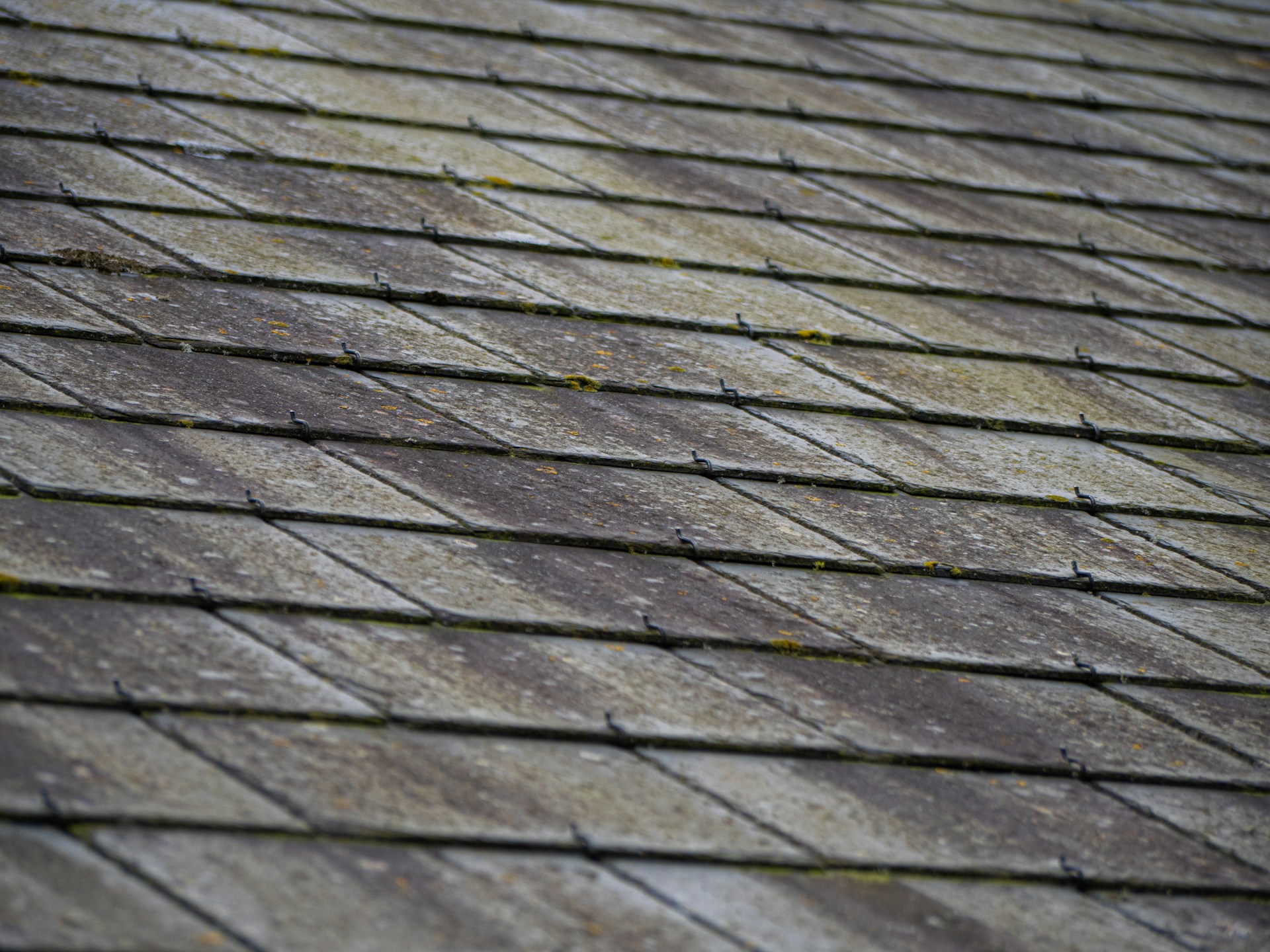
Two common methods. A hook is a stainless or copper wire nailed into the deck or batten in the gap between slates, holding the new slate at its bottom edge. Fast and secure, but the hook is visible at the butt, and some review boards object to that on landmark work.
The alternative is to re-punch the new slate, nail it through the joint of the course above, and slide a copper or lead bib under the overlying slates to cover the nail head. Invisible from the ground, and slower. On a historic roof under review, expect to be asked for concealed fixings. On a rear elevation or a utility building, hooks are usually the sensible economy.
Match thickness and size before color
The replacement has to sit flat and line up with its course, which means the same length, a close width and near enough the same thickness. Too thick and it tilts and lifts the slates above. Too thin and it sits low and catches water. Too short and it never reaches the headlap, leaving a path straight through.
Measure before you order. Length and thickness off a removed slate tell you most of it, and the exposure confirms the fit. Color comes after that, though on many roofs it is what decides whether the repair is visible. Our guide to replacing broken slate with matching authentic slate goes through the fit check in more detail.
Why pitch, height and hidden damage push the bill up
Access is frequently the largest line on a repair quote, and hidden damage is the one that arrives after you have signed.
Access and staging
On a low, gentle roof a roofer works off a ladder and a roof hook. On a steep mansard, a three-story church or a turret, you are into scaffolding, a lift, or a full fall-protection setup. Slate needs a minimum pitch of about 4 inches of rise per 12 inches of run to shed water, and plenty of historic slate roofs run a great deal steeper than that.
Staging costs the same whether the crew replaces two slates or twenty. A lift booked for the day costs the same either way, so cost per slate climbs sharply on a hard-to-reach roof. Ask for staging to be priced separately so you can see exactly what access is adding.
Scattered damage against concentrated damage
Ten broken slates in one valley cost less than ten spread across four elevations. One setup, one ladder position, one work area, against moving equipment and starting again each time.
When you review a quote, look at a roof plan with the damage marked on it. If the breaks are spread out, ask whether the contractor priced per location or per slate, because a per-slate price that ignores location either starts too low and climbs, or carries padding to cover the unknown.
What turns up once slates come off
The broken slate is often a symptom. A leak at a chimney usually means failed step flashing. Slates slipping across a whole elevation means corroded nails, and nails corrode when they stay wet over the long term, so leaks higher up or moisture in the attic cause failures some distance from where water appears.
Once slates are off, the crew may find rotted sheathing, failed battens or worn felt. None of that can be priced from the ground, so a good quote lists it as a possible add-on with unit prices for sheathing or flashing. That way you are not negotiating mid-job with the roof open.
Where you are, and when
Slate repair is specialist work and some markets simply do not have a slate crew nearby, so you may be paying travel time from another city. Older Northeast and Mid-Atlantic cities have more slate roofs and more crews competing for the work, and it shows in the rates.
Season matters too. After a major storm, crews book up and prices rise. If the repair is not urgent, scheduling it in a slower month usually costs less and buys you time to source a proper match.
When the match costs more than the labor
When the existing slate is rare, out of production, or weathered in a way new stock cannot copy. On those roofs the material sets the budget, and a poor match is visible for the rest of the roof's life.
Rare colors and discontinued sizes
Gray and black in common sizes are straightforward. Mottled greens and purples, semi-weathering greens that have drifted toward buff, and reds from closed quarries are not. A mottled green and purple field needs a match for both the color mix and the age.
Sizes cause as much trouble. Many historic roofs use lengths or thicknesses nobody cuts any more, and Victorian roofs often used different colored slates to create decorative patterns that substitutes cannot reproduce. On those roofs, reclaimed slate is usually the only way to match size, color and surface wear at the same time.
Send good information up front
A wrong match wastes freight and time. Photograph the roof in overcast light from several angles, and include a close-up of the removed slate's face alongside a freshly broken edge, because the two are often different colors entirely.
Measure length, width and thickness, and note the exposure. If the match looks close, take samples before committing to a full order, and hold them against the roof rather than against a slate lying on the ground. Light changes color more than people expect.
Get the slate on site before the crew
If slates break during removal, or the roofer finds more damage up close, you want spare stock already there. A crew standing about waiting for material is an expensive way to run a repair.
We confirm reclaimed orders against batch photographs before anything ships, crate and palletize, and usually turn orders round in 3 to 7 business days with liftgate and scheduled delivery available. Reclaimed slate is sold as final sale, so review the batch properly and order a sensible overage.
Not sure a match exists for your roof? Call 225-954-8393 with the dimensions and we will tell you straight away rather than after you have booked a crew.
Repair the slates, or replace the elevation
Repair when the slate itself is sound and damage is limited. Replace an elevation only when most of the slate on that face has actually failed. The deciding factor is the condition of the slate across the roof, not the number of broken pieces.
Forty missing slates usually means forty slates
If the rest of the roof rings clear when tapped and shows no flaking, it may well have decades left. Natural slate roofs last 60 to 125 years or longer depending on the slate and the setting.
Federal preservation guidance recommends repairing historic slate roofs wherever possible, and for damaged or missing slates says replacement in kind to match the existing is always the preferred treatment. Some contractors push full replacement because it is a far bigger job. Before accepting that advice, ask for a slate-by-slate count and a sounding test.
When a single elevation has genuinely gone
Slates fail by elevation more often than people realize. A south or west-facing slope takes more sun and weather and can wear out while the north side is barely touched. Widespread flaking, soft slates or heavy breakage on one face can justify replacing that face while the others stay.
You still need a close match where new meets old at hips and ridges, because a whole face of fresh slate beside a weathered one reads as a patch from every angle. Sound slates stripped off the failed face are also worth keeping to repair the other elevations.
Failed nails against failed slate
If slates are slipping across the roof but the ones on the ground are hard and whole, the nails have failed. Strip the roof, keep the slate, relay it with new copper or stainless nails, and buy matched slate only to cover breakage.
If the slate itself feels soft, flakes, or cracks across the field, it has reached the end of its life and the roof needs new slate. Telling those two apart is the single most valuable thing an inspection does on an old slate roof, and it is the difference between a relay and a replacement.
Make the quotes comparable
- Access and staging
- Labor per slate, with the fixing method named
- Material per slate, with the match source named
- Unit prices for flashing, sheathing and felt if found
- Overage slate held on site
That list makes bids comparable and heads off repeat trips. If the first crew runs out of matched slate or misses damaged flashing, a second mobilization is another minimum charge. Plan the work once, with stock already on hand.
Confirm the match before you set the budget
Labor rates and access charges are easy to quote. Material is the variable that stalls a job or leaves a visible patch, so settle it first.
Measure a removed slate, photograph the roof in even light, and confirm a match exists before anybody books a crew. With matched slate on site, a repair of a few dozen pieces keeps a sound roof in service for decades. Without it, you are choosing between a visible patch and pressure to replace a roof that does not need replacing.
We supply the matching slate. We do not carry out repairs, inspections or installations, so we have nothing to gain from talking you into a bigger scope. Have a look at what we hold for slate roof repairs, or send us a slate and let our matching service do the work. Call 225-954-8393 for current availability and a delivered price.
Frequently Asked Questions
How much does it cost to replace one slate?
Close to what replacing several costs, because the minimum trip charge covers setup, access and labor. The final figure depends on height, pitch and how hard the slate is to match. Bundle all known damage into one visit to spread that minimum.
Can I estimate slate repair cost per square foot?
Not reliably for scattered repairs, since the work varies slate by slate. Per-slate pricing with access charged separately gives a far more accurate quote. Square-foot rates only work when a crew is stripping and relaying a defined section.
Is it worth repairing a slate roof over 100 years old?
Usually yes, if the slate still rings clear and shows no widespread flaking. Plenty of slate roofs outlast their nails, so an old roof with slipping slates often needs fixings and a relay rather than new material. Get the slate tested before accepting a replacement quote.
Will an online cost calculator account for staging and matching?
No. Both depend entirely on the specific roof, and calculators work from labor and common-material averages. For a real number you need itemised quotes for access and a material price against an actual batch.
What should I send to get a price on matching slate?
Length, width and thickness of a removed slate, the exposure, and the number you need including overage. Add photographs of the roof in overcast light plus close-ups of the face and a broken edge.