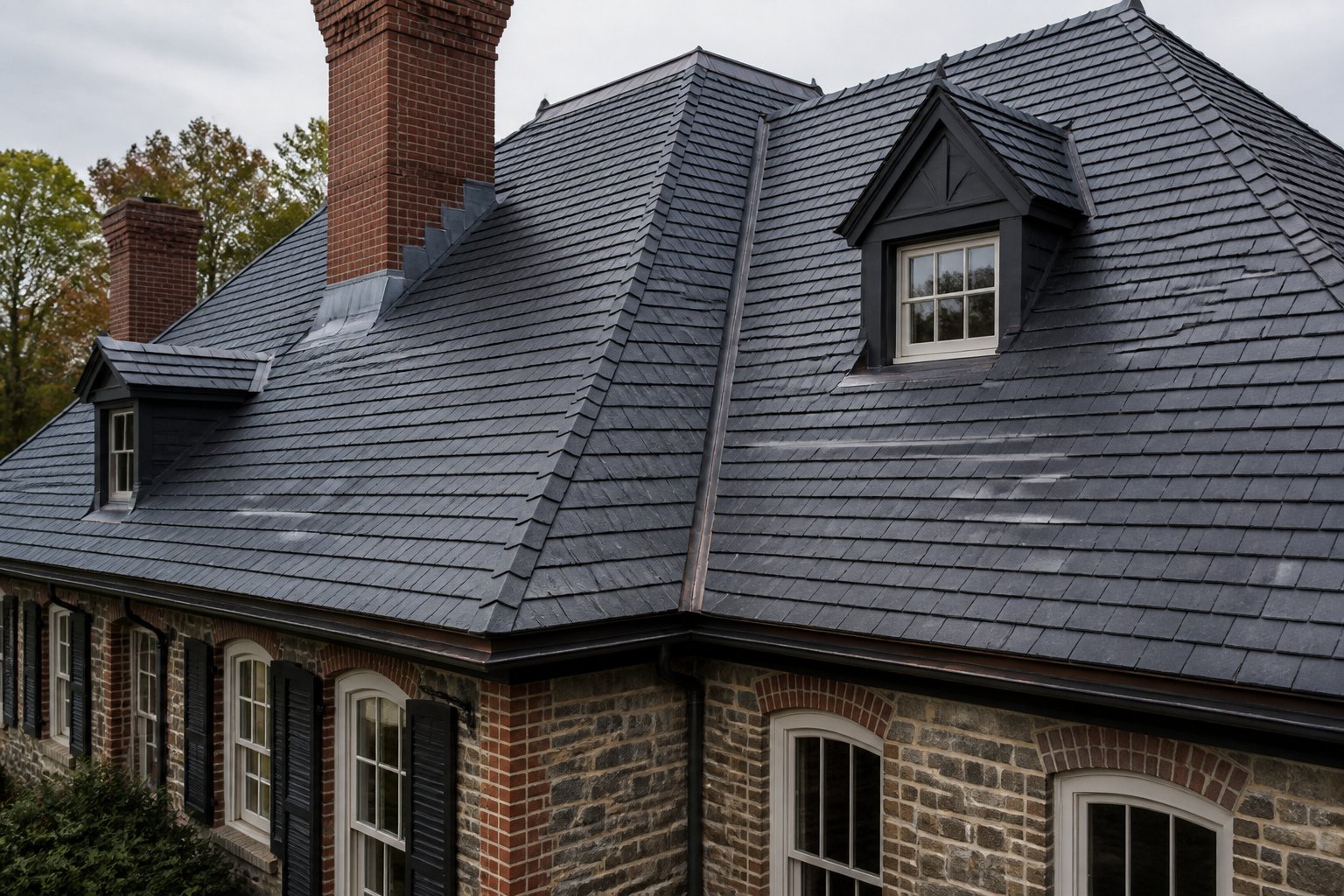
When you spot a cracked slate on a roof that is otherwise sound, it is not just a cosmetic problem. Water sneaks in fast, and once it reaches the underlayment or decking, you are dealing with far more than a tile swap.
For contractors handling historic or high-end slate roofs, replacing broken slate roof tiles is rarely the hard part. The real challenge is finding a piece that fits what is already there: the right size, thickness, color, and texture.
Reclaimed Slate Roofing supplies authentic salvaged slate in 20-inch, 18-inch, and 16-inch formats, usually in random widths, in colors like Purple, Grey, Buckingham Black, and Mottled Green with Purple.
Each piece is hand-inspected before shipping, and most orders move within 2 to 5 business days. Reclaimed material from the same era almost always blends in better than anything new.
In this guide, you will find how to judge whether a spot repair is worth it, how to measure and match your slate before ordering, how to remove and reset a damaged piece cleanly, and how to source reclaimed slate on a tight timeline. It is written for contractors who want field-ready answers.
When a Broken Slate Calls for Repair Instead of Replacement
One cracked slate does not mean the whole roof has to come off. On most natural slate roofs, especially hard slate, the rest of the field can have decades left. The question is whether this is a one-off or a sign the system is failing.
Hand-inspected salvaged slate is usually ready to ship quickly, so spot repairs do not stall waiting on material. Matching one or a few tiles from reclaimed stock is often faster and more precise than ordering new.
How to Judge Whether Spot Repairs Are Still Practical
Count the damaged and missing slates across the slope. National Park Service guidance on historic slate roof maintenance notes that when fewer than 20 percent of the slates on a slope are cracked, delaminated, or displaced, spot repairs are usually the right call.
Check the roof pitch and how water drains near the damage. Steeper roofs shed water faster, so a missing slate on an 8:12 pitch is less urgent than one on a 4:12, though neither should sit long. If scaffolding is already up for another trade, handle the slate repair then.
Common Failure Signs Around a Damaged Tile
Do not just look at the obvious crack. Tap the tiles next to it with your knuckle or a small hammer. A dull thud instead of a clear ring usually means internal fractures or delamination. If the edges flake when you press them, that slate is getting soft and will not last much longer.
Other red flags: water stains under the decking, mineral buildup around nail holes, and daylight through joints that should have headlap. These clues tell you whether you are patching one tile or planning a bigger repair.
Why Nail Fatigue and Slipped Slates Matter
Old nails are a common reason slates slip, even when the stone looks fine. Copper or iron nails corrode over time, and the slate loses its grip. A slipped slate is not broken, but it leaves the underlayment and lower courses exposed.
If you are pulling several slipped slates back into place, check the nearby nails. If most are the same age and showing rust, consider re-nailing or a fuller re-slating job rather than a patch.
How to Match Existing Tiles Before You Order
Getting a replacement slate to fit is not as simple as picking a color. You need to match size, exposure, thickness, headlap, texture, and that weathered look. Miss any one,e and the repair stands out and may not keep water out.
Salvaged slate from old structures matches far closer than synthetic or new slate, because it has already weathered the same decades. Random-width formats in the common color families cover most historic American roofs.
Measuring Size, Exposure, Thickness, and Headlap
Take an intact slate next to the damaged one and measure its exposed length and full length. The slate field guide from the National Slate Association defines exposure as the visible part of a slate, found by subtracting the headlap from the total length and dividing by two. Most roofs use a 3-inch headlap, but check yours, especially on lower pitches.
Reading Color, Patina, and Surface Texture
Take a loose or broken piece and look at it in daylight. Slate color shifts with its minerals and quarry. What looks grey under clouds can read blue-grey or green-grey in the sun.
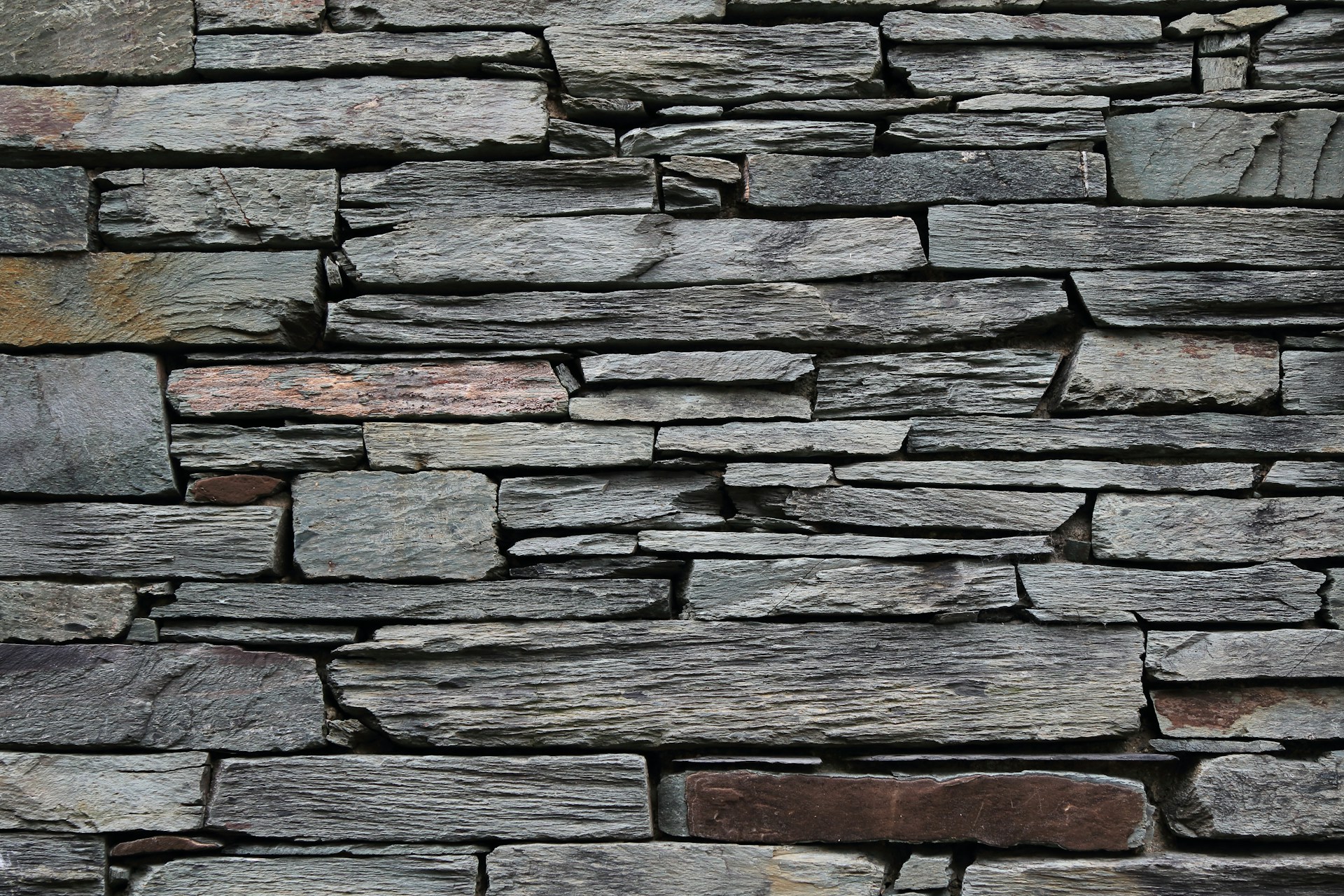
Feel the surface. Real reclaimed slate keeps its texture and patina, so there is nothing to clean or fake. Compare your tile to known quarry samples and color families before you commit to a batch.
Using Reclaimed Inventory to Find a Closer Historic Match
New slate comes off the saw fresh and even, which rarely blends with a roof that is 75 years old. Reclaimed inventory, pulled from buildings of a similar era, already carries the same weathering and color changes, so it usually matches better.
When you review batch photos in a sourcing reclaimed slate guide, set them side by side with your sample. Watch grain direction, surface roughness, and edge profile. ASTM C406 rates slate by service life (S1 for 75-plus years), and most reclaimed hard slate from historic roofs meets or beats that standard.
Removing and Resetting the Slate Cleanly
The match matters most, but a repair only holds if the old slate comes out and the new one goes back in without disturbing the surrounding course. A few essentials cover most single-slate repairs.
Removing the Damaged Piece
Slide a slate ripper flat under the broken tile until the hook catches a nail, then drive the handle with firm blows in line with the roof so the nail cuts or pulls without prying the slate above.
Work one nail at a time, and if one will not budge, come at it from the other side. Slip thin copper shims between the damaged slate and its neighbors to absorb force and protect the good tiles. With the slate out, check the battens, decking, and underlayment for rot or tears, and fix any soft spots before resetting.
Fastening the Replacement: Nail-and-Bib or Slate Hook
How you fasten the new slate decides how long the repair lasts. The proven method is a copper nail covered by a copper bib. A stainless steel slate hook is the faster option when you cannot reach the nail line above.
For the nail-and-bib method, slide the slate into place, drill a hole through the face at the joint in the course above, drive a copper nail, then slide a 3-by-8-inch copper bib over the head so water cannot track down the hole.
Avoid face-nailing: an exposed nail head with no bib is a built-in leak point, and sealant over it breaks down within a few years. Reclaimed stock, often slightly thinner, slides in easily for this kind of repair.
Sourcing Authentic Reclaimed Slate on a Tight Timeline
Your crew is ready, the damaged slate is out, and you need the right replacement before the weather turns. Sourcing natural slate for a repair is not like grabbing stock roofing. You need a specific size, color, and thickness from a changing supply of salvaged material.
Calling Reclaimed Slate Roofing at 225-954-8393 gets you a quick read on what is in stock. Most orders ship within 2 to 5 business days, crated and palletized for jobsite delivery.
Formats and Colors Commonly Needed for Repair Work
Most slate roof repairs in the U.S. use a handful of standard sizes and color groups. Here is what usually matches older American roofs:
- 20" x random width: typical on pre-1920 institutional and residential roofs
- 18" x random width: widely used in the Northeast and Mid-Atlantic
- 16" x random width: found on smaller homes and dormers
- Colors: Grey, Buckingham Black, Purple, Mottled Green with Purple, Semi-Weathering Green
If you are unsure what you need, a reclaimed slate pricing guide helps you budget before finalizing the order.
Verifying the Batch Before You Commit
Before you sign off on a shipment, compare batch photos with your sample tile. Make sure you check:
- Thickness range, both nominal and actual
- Color consistency across the batch
- Surface texture, smooth split or rough
- Any pre-drilled nail holes and their spacing
- Total piece count versus your square footage, plus 10 percent for waste
Since all reclaimed slate orders are final sale, double-checking the match before shipping saves headaches on site.
Freight Planning for Jobsite Delivery
Time delivery with your project schedule. Specify whether you need liftgate service and whether the site can take a full pallet drop. Give the driver a number to call 30 minutes out so your crew can prep the drop zone.
Check every crate as soon as it arrives. If the packaging looks damaged, note it on the bill of lading and photograph it before signing. Report any freight damage within 48 hours to start a carrier claim.
Getting a Durable Repair That Still Looks Original
A repair that reads as a patch ruins a historic or high-end roof. You want the finished job to shed water, resist wind, and disappear into the existing field. That takes the right material, the right technique, and a little planning.
Salvaged slate with natural patina blends into a weathered roof far better than a fresh piece. Reusing sound historic material also keeps it out of the landfill, which can support LEED goals.
Blending Reclaimed Pieces into Weathered Fields
Even reclaimed slate can look slightly different, since it weathered elsewhere. Put the closest color matches in the most visible spots. If you are swapping several tiles on one slope, trim random-width pieces to your existing widths, keep at least a 3-inch joint offset, and let the natural variation help everything blend.
Avoiding Shortcuts That Create Future Leaks
Do not use roofing cement as a primary fastener or to seal over a cracked slate. It traps moisture and fails fast. Always use a bib with any face-nailed repair, and never mix metals that corrode together, like copper nails with galvanized bibs. Match your fastener metals to the expected life of the roof.
What Trade Buyers Should Have Ready Before Calling
Before you call to source replacement slate, get these details together:
- Measurements: length, width, thickness, and exposure of your current slate
- Color description or a photo taken in daylight
- Quantity needed, including 10 percent extra for cuts and breakage
- Delivery address and any site access restrictions
- Project timeline, including when your crew will be ready to receive material
Having this ready makes the call go faster. A where to buy slate sourcing guide covers what to look for in a supplier before you commit.
Frequently Asked Questions
Replacing broken slate roof tiles raises practical questions, especially on a historic roof that has seen 75 or 100 years of weather. These are the ones contractors and project managers ask most about sourcing and fitting slate for repairs.
Can You Swap Out a Single Slate Without Disturbing the Surrounding Courses?
Yes. An experienced roofer can remove and replace a single slate using a slate ripper to cut the original nails, without lifting or moving the courses above or below. The trick is steady force along the nail, not against the tiles around it.
What's the Correct Method to Fix a New Slate in Place When You Can't Re-Nail Through the Original Holes?
Go with the nail-and-bib method. Slide the new slate into place, drill a hole through the face at the joint in the course above, drive a copper nail, then cover it with a bent copper bib to keep water out. If that is not possible, a stainless steel slate hook can hold the piece without putting a hole in the face.
How Do You Match Reclaimed Slate for Thickness, Color, and Patina so the Repair Disappears on a Heritage Roof?
Use a caliper to measure the existing slate's thickness, snap a daylight photo for color, and compare it with batch photos from your supplier. Reclaimed slate from the same period shows natural weathering that new slate cannot fake, so it usually blends in better.
What's the Typical Cost Range to Replace One Damaged Slate, Including Access, Labor, and Sourcing?
Most single-slate repairs run between $250 and $700, depending on how tough the roof is to access, slate availability, and your region. The slate itself is usually a small part of the total; most of the cost is labor and setup. Steep or high roofs that need scaffolding can push the price higher.
Is It Possible to Carry Out a Slate Repair From Inside the Loft, or Does It Always Need External Access?
Sometimes you can make a temporary patch from inside the attic by sliding a sheet of copper or lead under the gap. That is a stopgap, not a real repair. Proper slate replacement, with nail-and-bib installation and correct alignment, always needs access from outside on the roof.
A Repair Built to Last and Blend In
Replacing broken slate roof tiles goes smoothly when the right piece is ready and waiting. The hard part is finding slate that matches the size, thickness, color, and patina already on the roof. Genuine reclaimed slate, salvaged from buildings of a similar age, gives you the closest match and the longest service life.
With your measurements and color in hand, call Reclaimed Slate Roofing at 225-954-8393 to check availability and get a quote for your project. Still working out the details? Browse the current slate roofing inventory to see what sizes, colors, and formats are shipping now.