You have reclaimed slate landing on an active job, and the fixings will decide whether it stays on the roof for another century. The stone is rarely the thing that fails first.
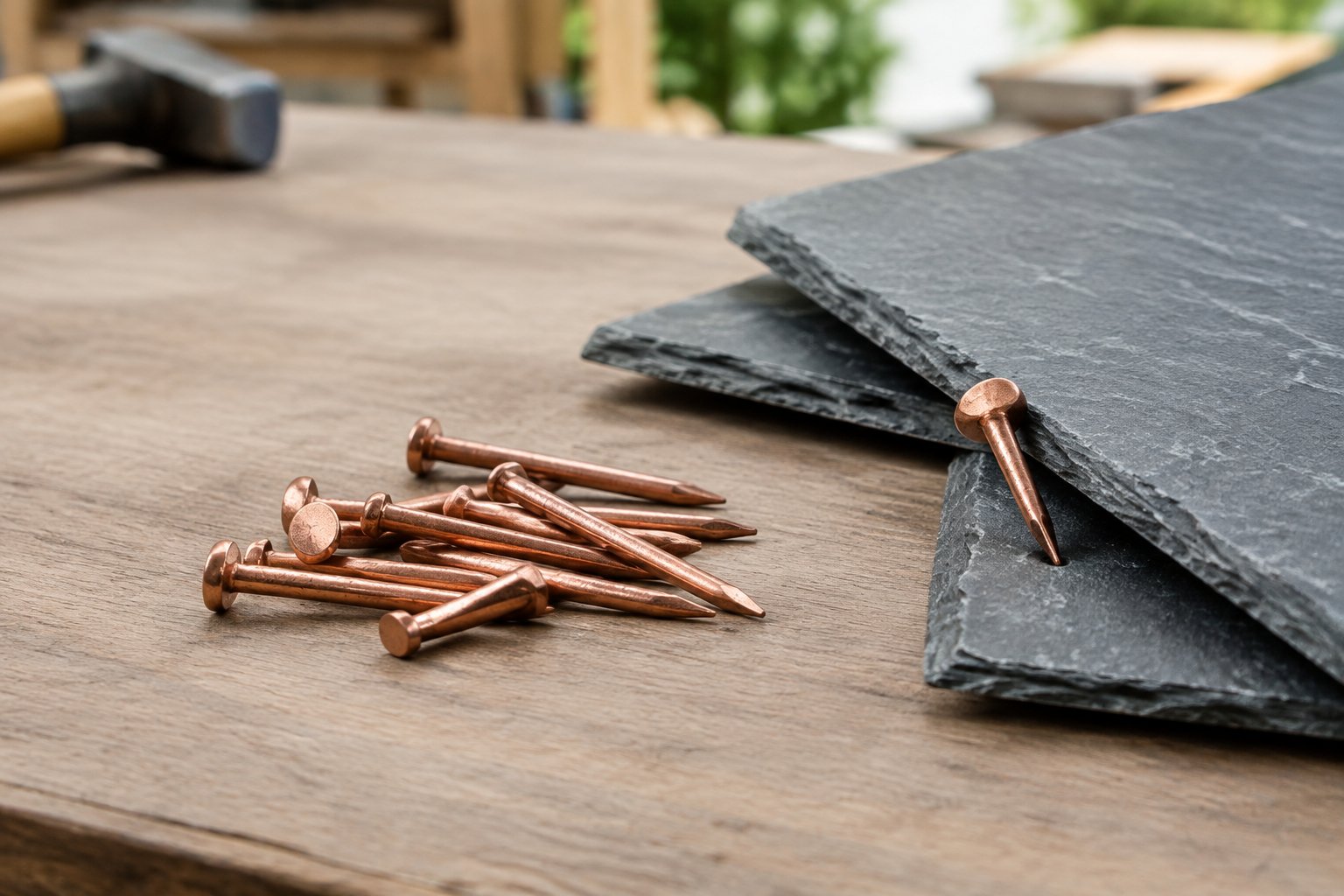
Specify solid copper, large-head, smooth-shank slating nails, sized at roughly twice the slate thickness plus one inch, and drive them until the head sits snug against the slate without clamping it. Copper lasts as long as good slate, and a smooth shank lets a slater pull and replace one piece in forty years without wrecking its neighbors. That second point matters more on reclaimed work than on anything else, because the slate on the pallet has already done one tour and is worth protecting.
Copper or galvanized steel
Copper is the standard because it outlasts everything else in the assembly. Plain or galvanized steel nails fail decades before the stone does, and when they go, they take sound slate with them.
What a 100-year roof asks of a fastener
The National Park Service puts slate roofs at 60 to 125 years or longer depending on the stone, and notes some running as long as 150 years. Galvanized steel carries a thin zinc coating, and once moisture and time have worn through it, the steel rusts along the nail line.
Copper develops a stable surface layer as it weathers and holds its strength in damp conditions under slate for generations. Fixing stone rated for 75 to 100 years and more with a nail rated for 30 just moves the roof's end date to the nail, and our notes on what determines reclaimed slate service life are worth reading alongside this when you are weighing the stone against the rest of the assembly.
What happens when the fixing goes first
Steel nails rust through, slates start slipping, and the stone is still perfectly sound. Roofers call it nail sickness, and it condemns more good slate roofs than weathering does.
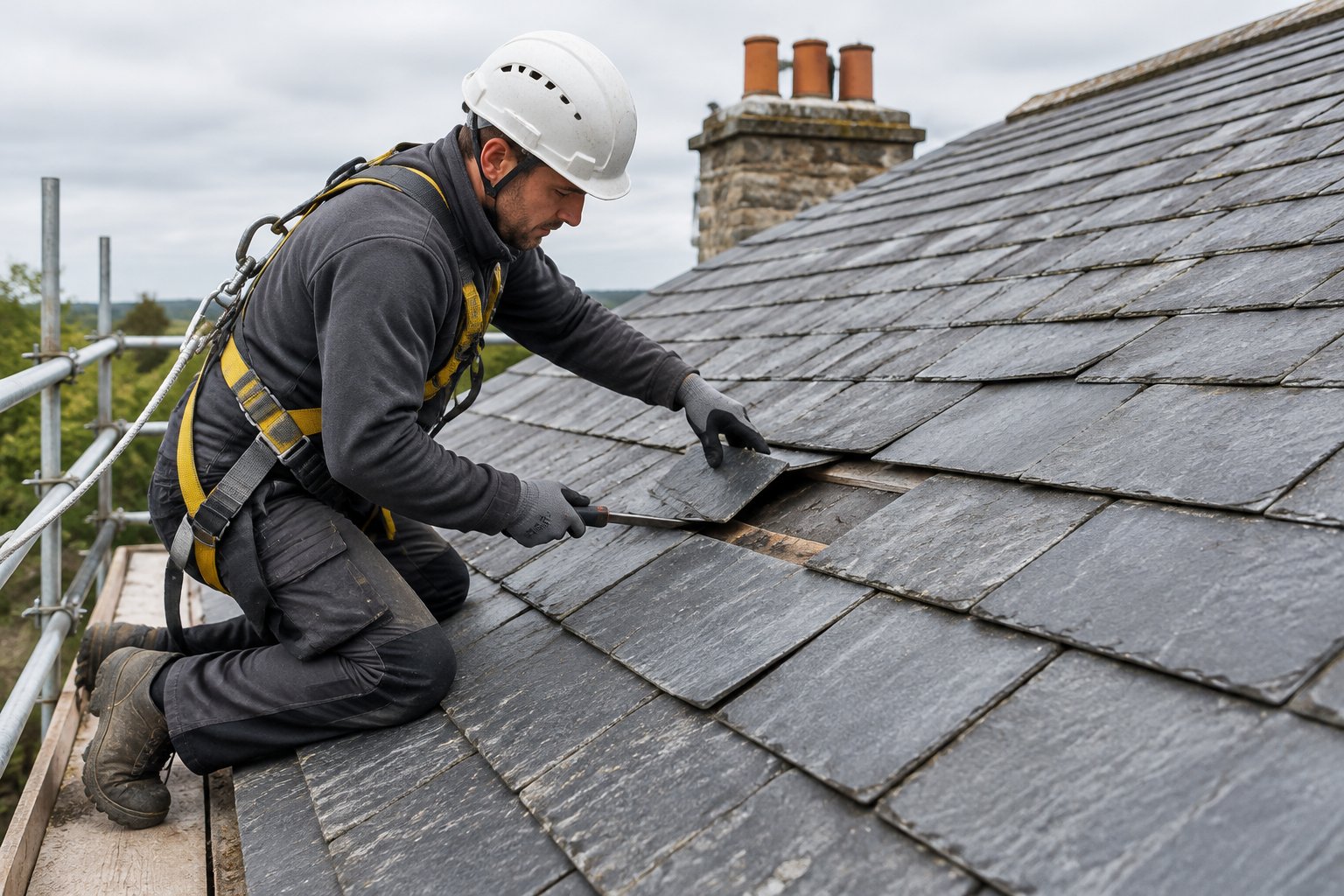
Repairing a failed nail risks the slate around it. The slater has to cut or pull the fixing and lift nearby pieces, and anything they touch can crack. On a reclaimed roof, replacing what cracks means finding the color and size again. Cheap nails charge you twice, once when they fail and once in lost slate during the repair.
Where stainless makes sense
Type 304 or 316 stainless roofing nails are an accepted alternative, with better corrosion resistance than steel and more stiffness than copper. That stiffness earns its keep driving into dense hardwood decking or old hard sheathing, where copper nails bend.
Stainless also suits jobs with stainless flashing, or a spec calling for a harder fastener under high wind. Type 316 is the one to use near salt air. On a historic restoration, copper stays the period-correct answer and plenty of review boards expect it. Choose stainless where the substrate or the exposure demands it, and keep it away from copper flashing for the reasons below.
What belongs in the specification
Metal, head size, shank type, gauge, length. Leave any of those out and the supply house will substitute something else, usually something cheaper.
Solid copper, broad head, correct gauge
Write "solid copper" into the spec. Copper-plated and copper-coated steel nails look identical in the box and fail like steel the moment the plating wears. Ask for a mill or supplier data sheet if there is any doubt at all.
Large heads spread the load around the hole, and a typical slating nail head runs about 3/8 inch across, which stops the slate pulling over the nail. Copper slating nails use a heavier gauge than common roofing nails to make up for copper's softness, so check the gauge on the data sheet, particularly if the deck is hard.
Why smooth shanks, not ring shanks
Smooth-shank solid copper is the traditional choice. It passes cleanly through prepunched holes and into the wood without splitting thin sheathing boards.
It also makes the next repair possible. During slate roof repairs, a ripper hooks the nail and cuts or pulls it. Ring-shank and annular nails grip hard enough to tear the slate or the deck on the way out, while a smooth shank releases with less force and lets the slater take one piece and leave the rest alone. They hold perfectly well in solid wood decking, which is why slate roofs have used them for well over a century.
Keep the metals compatible
Copper nails with copper flashing. Where dissimilar metals touch in the presence of water, the less noble one corrodes faster, which is galvanic corrosion, and steel or galvanized nails driven through or near copper flashing rot out fast.
Stainless and copper sit closer together on the galvanic scale and some crews pair them, but most specifiers keep them separate. Where the valleys, step flashing and ridge are copper, use copper nails to hold the slate around them. Name a fastener for each metal in the details so nobody on the crew mixes stock out of the nearest bucket.
Ordering slate and want the fixings on the same pallet? Call 225-954-8393 and we will quote both together.
Sizing for the slate and the substrate
Length comes out of two measurements: how thick the slate is, and how far the nail has to reach into the deck or batten.
Twice the thickness plus an inch
The nail passes through the slate being fixed and lands where it overlaps the course below, so it usually crosses two layers of stone, with the extra inch going into the wood.
For 1/4-inch slate that gives 1.5 inches. For 3/8-inch, 1.75 inches. For 1/2-inch, 2 inches. Reclaimed slate varies in thickness within a single batch, so measure several pieces and size for the thicker ones. A short nail pulls out. A long nail costs a few cents more in copper.
Check what the nail is going into
The formula assumes solid wood decking of about 3/4 inch or more. Thin board sheathing, old planks, battens over counter battens and plywood all behave differently, so look before you order.
Aim for solid penetration into sound wood without the point breaking through into a living space where it can be seen or catch somebody. On battens, the nail has to land in the center. Where there are added layers such as insulation board or thick underlayment, add their thickness to the length. Settle the decking question before the nails are ordered rather than after.
Expect to use more than one length
Copper slating nails for reclaimed work generally run 1.25 to 2.5 inches. Shorter for thin slate on solid decks, longer for thick slate, hips, ridges and anywhere extra layers stack up.
Field slate might take 1.5 or 1.75 inch, while starter courses, hips and ridge pieces need longer because there is more material under the head. Keep a small quantity of the next size up on site for the thicker pieces in a mixed batch, because that is exactly the moment a crew starts improvising.
Placement and driving
Placement and driving depth decide whether the slate sits flat and keeps water out. The right metal in the wrong place still fails.
Setting the nail line
Two nails per slate. The NPS records slate being fixed to wooden sheathing with two nails driven through prepunched holes, sitting in the upper half of the slate so the course above covers them, with the headlap extending below the nail line.
Keep the holes far enough in from the side edges to avoid splitting, usually 1 to 1.5 inches on most sizes, and clear of the joint in the course below. A nail in a joint hands water a direct route to the wood. Have the crew mark a consistent nail line across each course so the holes land where the headlap calculation assumed they would.
Reusing the holes that came with the slate
Reclaimed slate arrives holed from its first roof. Check each piece: where the old holes suit your exposure and headlap, reuse them.
Where they do not, punch new ones and make sure the old holes finish up inside the covered area. Old holes left exposed, or sitting too close to new ones, weaken the slate. Put cracked pieces and pieces with oversized holes aside as cutting stock. Our guidance on preparing reclaimed slate for installation covers sorting by thickness and hole pattern before anybody climbs a ladder.
Snug, not clamped, not proud
Drive until the head just touches the slate. The slate should hang on the nail. Drive the head down hard and it clamps the stone under tension, and then thermal movement, foot traffic or a bit of settling cracks it at the hole.
A head left standing proud causes the opposite problem: it presses into the slate above, cracking that piece or lifting it off flat. Train the crew to stop just short of the final light tap, then check each course by running a hand across it.
Why bad fixings surface years later
A nail too close to a joint lets a little water reach the deck in every storm. The wood rots around it slowly and the fixing loosens. A clamped slate looks fine on handover day and cracks in the first hard winter. Holes set too low leave nails weathering in the open, and even copper gives up eventually.
Correcting any of it means lifting finished courses, which puts sound slate at risk. All of these are cheap to get right on the way up and expensive to revisit.
Working out the order
Count the nails first, then convert to pounds using the figures for the nail you are actually buying. Guessing by weight is how jobs run short on a Friday.
Start from the slate count. Pieces per square run roughly 275 for 16-inch slate, 225 for 18-inch, 170 for 20-inch and 115 for 24-inch at standard headlap. Multiply by two, then allow for the extras: starters, hips, ridges and cut pieces around valleys all take more. Add an allowance for bent and dropped nails, and expect that allowance to be larger with copper because it is softer. Count by length as well as in total, since field, starter and ridge nails differ.
Then ask your supplier for the count per pound for that exact nail. Copper is denser than steel, so a pound holds fewer nails than you might assume, and the number per pound moves with length, gauge and head size. Divide and round up. Never borrow a count from another brand's chart, because two suppliers' 1.5-inch copper nails can differ in both gauge and weight.
Compare delivered prices rather than unit prices. Copper is heavy and freight is a real part of the cost.
Match the fixings to the slate
Solid copper, broad heads, smooth shanks. Twice the slate thickness plus one inch, checked against the deck or batten. Holes under the headlap and away from the joints. Each nail snug, with the slate left free to hang. Copper nails with copper flashing, stainless where the substrate or salt exposure calls for it.
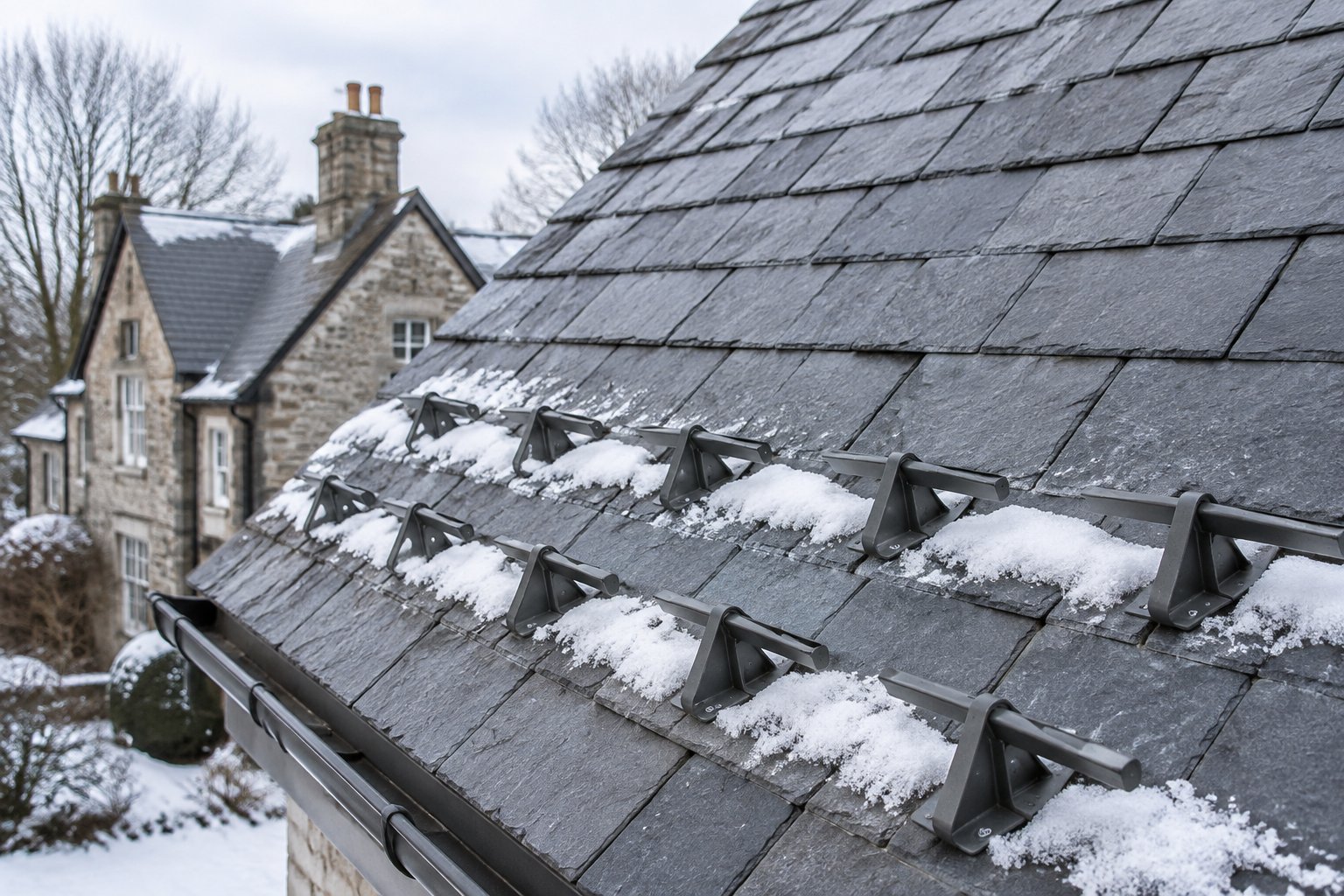
Order the fixings with the slate. Getting nails, copper flashing and the rest of the slate roofing accessories such as hooks and snow guards on one shipment means fewer deliveries and nothing missing on the morning the crew is ready to start. We hold them alongside our reclaimed slate, and orders typically ship 3 to 7 business days after confirmation.
Call 225-954-8393 for current availability and a delivered price on reclaimed slate and fixings.
Frequently Asked Questions
Do you have to use copper nails for slate?
You have to use a nail that lasts as long as the slate, and copper is the standard answer. Stainless roofing nails work well too. Galvanized and plain steel corrode decades before good slate wears out.
What size copper nails do I need for reclaimed slate?
Twice the slate thickness plus one inch, which puts most jobs between 1.25 and 2.5 inches. Measure several pieces from your batch and size for the thicker ones, and add length for thick decking, extra layers, hips and ridges.
Can copper-plated roofing nails replace solid copper?
No. They have a steel core that rusts as soon as the thin plating wears through. Specify solid copper and confirm it on the product data.
Where do you buy copper slating nails? Do home improvement stores carry them?
Big-box stores rarely stock solid copper slating nails in the gauges and lengths slate work needs. Roofing supply houses and slate suppliers carry them. We supply fixings with slate orders, so call 225-954-8393 to check stock.
How much do copper slate roofing nails cost?
It moves with copper markets, nail length, gauge and freight, so ask for a current quote. Copper costs more per pound than steel, and nails are still a small share of a slate roof's total cost. Call 225-954-8393 for a delivered price.