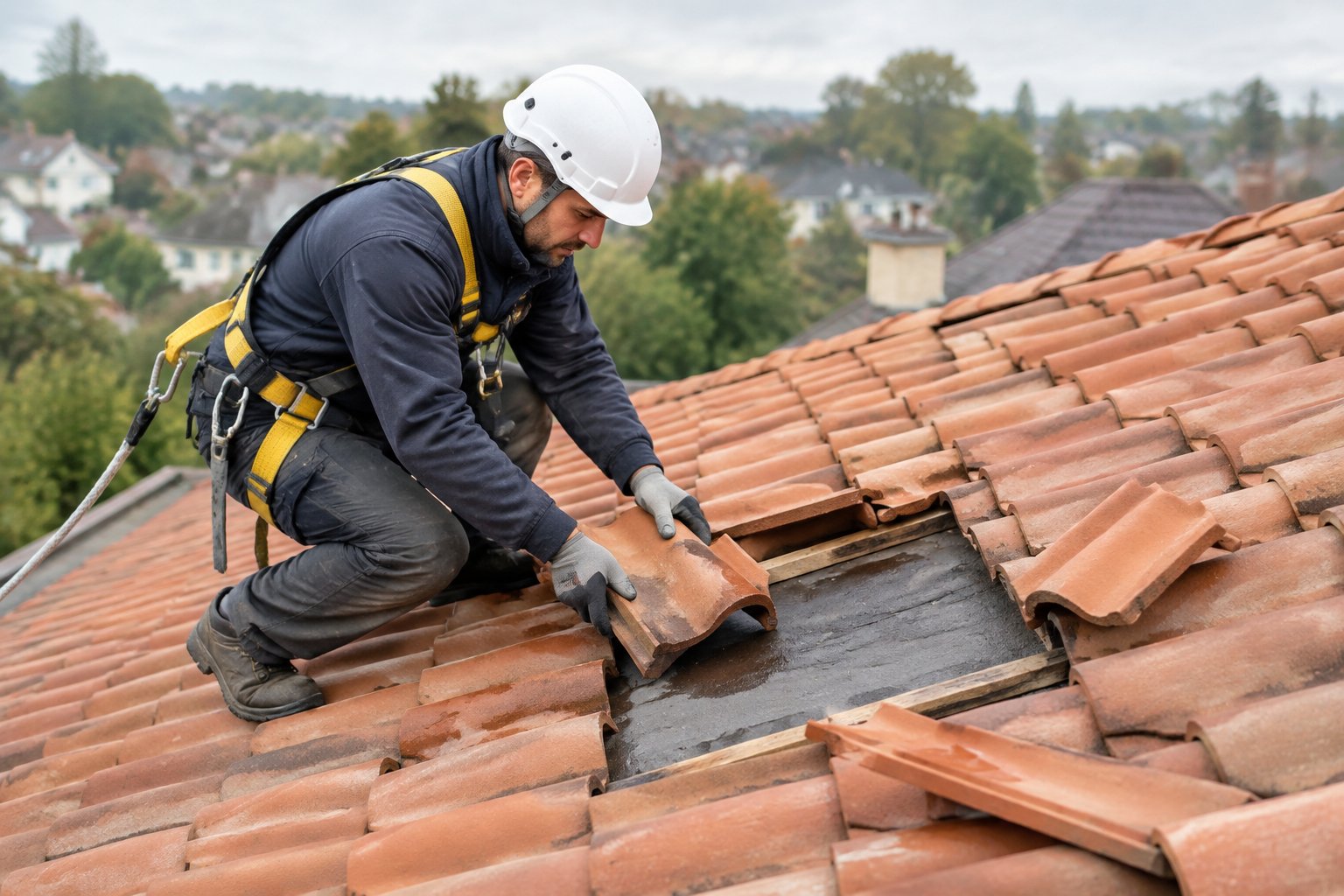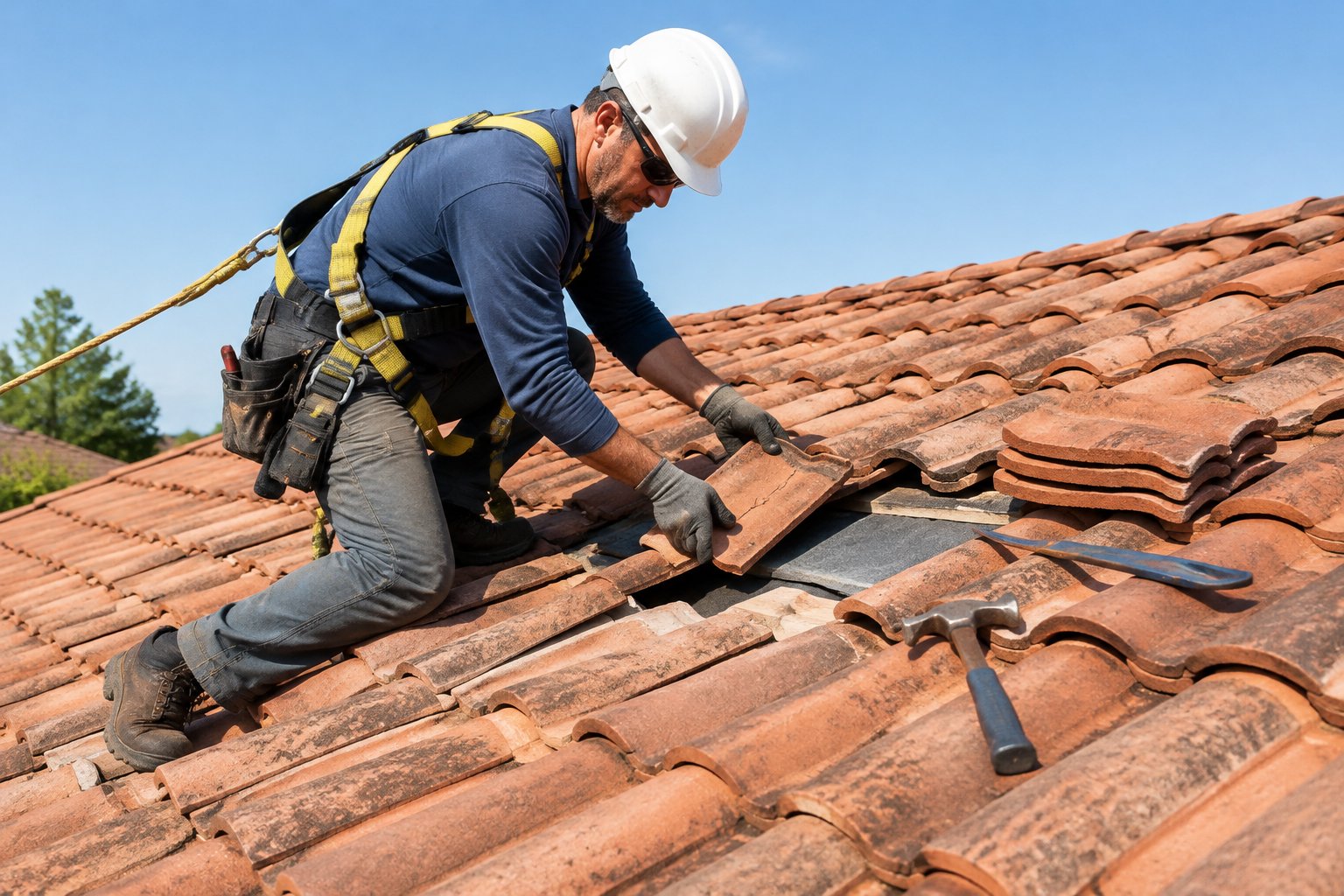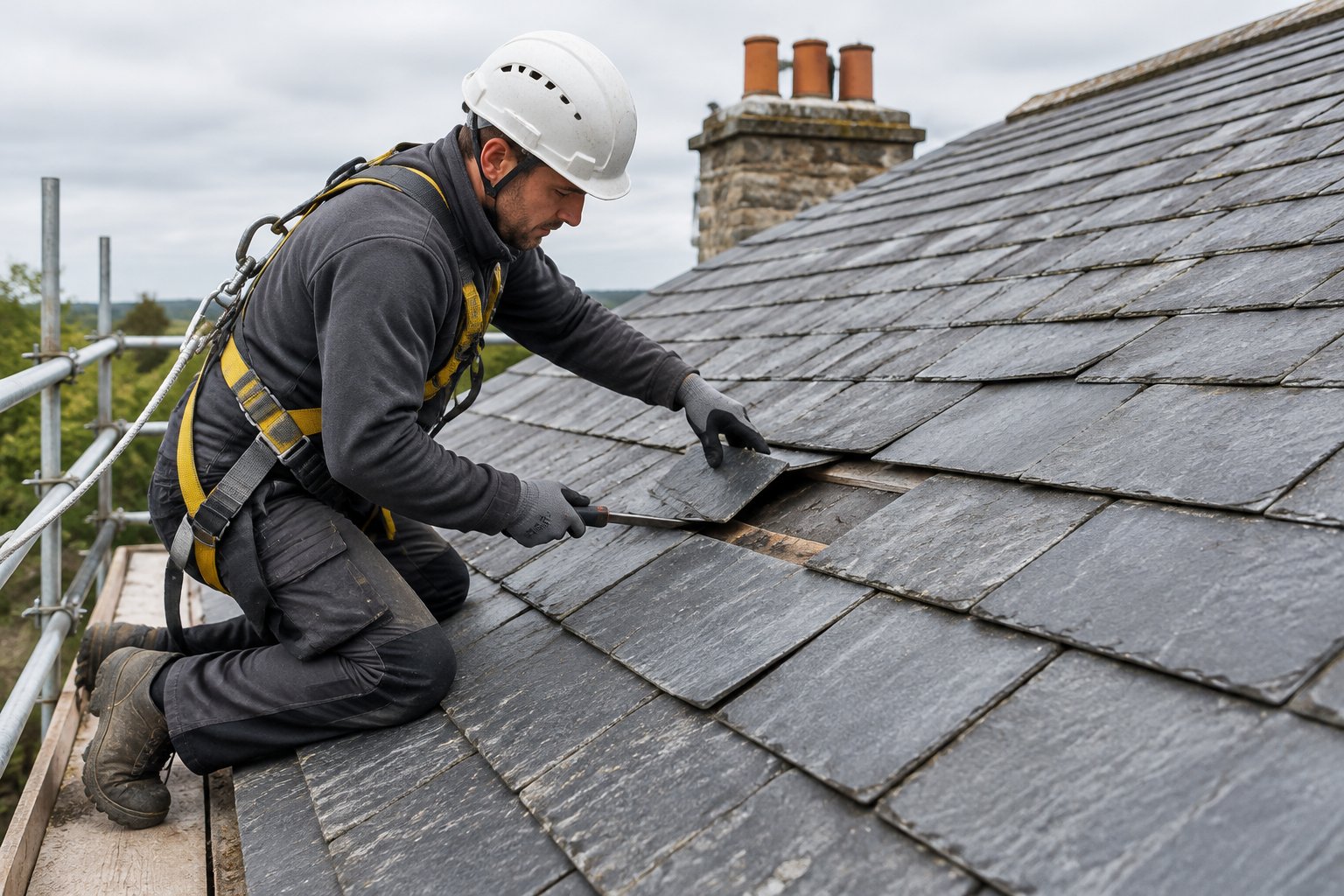
A slate roof is shedding slates and somebody has already said the words "full replacement."
Before that order goes in, check the nails. Nail sickness is a fixing failure, not a slate failure. The nails corrode and let go while the slate itself stays perfectly sound. The right answer is to strip the roof, keep the good slate, and relay it on copper or stainless nails, buying matched salvaged slate only to cover breakage and culls.
This is one of the most common ways a sound slate roof gets condemned, and once you can tell fixing failure from material failure you can defend a repair-and-relay scope to an owner, an insurer or a review board.
Why the nails go first
Because metal wears out far faster than stone. Good slate gives 75 to 100 years and hard grades considerably more. A plain steel nail in a damp roof can rust through in a fraction of that, and when the nail goes the slate slides out of its course with nothing whatsoever wrong with it.
That gap between slate life and fixing life is the thing to understand about these roofs. The stone sets the ceiling. The weakest component underneath it sets the actual end date, and that component is usually the nail.
Ferrous and under-specified nails
A great many older American slate roofs went on with iron or steel nails, and some period specifications called for coated steel. One specification for a French roof called for slate nailed with galvanized nails and tin flashing at hips and valleys. Galvanized coatings are thin, and once the zinc has gone the steel core rusts quickly.
Undersized nails make it worse. A short or thin nail has less metal to lose before it snaps and less grip in the deck to begin with. A nail that was barely adequate on day one has no reserve left after forty winters.
Moisture sitting at the nail line
Each slate has two fixing holes near the head, tucked under the course above. Water that gets past the laps, or condensation coming up from the attic side, collects exactly there. The shank stays damp for long stretches and rusts where nobody can see it.
Poor ventilation compounds it. Warm wet air from the house condenses on the cold underside of the deck, and board sheathing holds that moisture against the nail. You end up with rust working from above and below in the same spot.
Mixed metals
Put two different metals together in the presence of water and the less noble one corrodes faster. On a slate roof that happens when a past repair mixed steel nails with copper flashing, or copper nails with galvanized components. The steel loses, and it loses quickly.
One metal family should run through the whole roof. Copper nails with copper flashing, stainless with stainless. Mixing them during a repair starts a fresh round of fixing failure years before anyone is expecting it.
Telling fixing failure from failed slate
Look at the pattern of the damage and the condition of what has come down. Fixing failure shows as scattered slips across the roof with whole slates that ring true. Failed slate shows as soft, flaking or broken pieces. The two call for opposite responses, so the diagnosis has to come first.
Slips across several slopes
Nail sickness spreads. The original crew used the same nails everywhere, so they wear out at roughly the same rate, and you see slipped slates on several slopes, often a few inches out of line, with gaps where some have gone completely.
A single damaged patch tells a different story. A cluster of broken slates under a tree limb, or around a chimney where people have been walking, is impact or foot traffic and a local repair. Slips spread across the field point at the fixings.
Check what is lying in the gutter
Pick slates up off the ground and look at the nail holes. Rust rings around the holes, or broken nail shanks still sitting in them, tell you the nail failed. The slate around the holes is usually clean and intact.
Rust streaks running below the nail line are another sign, as are nail heads and fragments in the gutters. Whole slates on the ground and ruined nails in the roof is the signature of the thing.
Then check the slate anyway
Tap a sample with a hammer. Sound slate rings clear, failing slate gives a dull thud. Look for delamination where layers peel off the face, crumbling around the holes, and soft edges that break under thumb pressure.
Check the holes too. Worn oval holes or cracks reaching the edge make a slate harder to reuse, though you can often punch new holes elsewhere in the piece. Our guide to evaluating reclaimed slate quality covers the same sounding and culling checks that apply to slate coming off your own roof.
Get it confirmed properly
A slate roofer should verify the diagnosis with proper access, lifting a few slates in several areas to look at the nails and then going into the attic to check the underside of the deck. Rusted nail tips coming through the sheathing are obvious from below once you know to look.
They should also check deck boards, battens and underlayment, since rot, broken boards or sagging rafters change the scope. On pre-1978 buildings, factor in the EPA Lead Renovation, Repair and Painting Rule where painted trim and flashings are disturbed.
Repair, or strip and relay
Repair when a few slates have slipped. Strip and relay when the nails have failed across the roof. The middle ground is where good slate gets thrown away, because a contractor facing widespread slipping will often price a new roof when the existing slate would do another lifetime.
The National Park Service recommends repairing historic slate roofs rather than replacing them wherever possible, and nail sickness is the textbook case for it.
Isolated failures
A handful of slips in one area with everything else holding firm is a spot repair. The roofer takes the broken nail out with a ripper and refixes with a copper or stainless hook, or with a nail and a copper bib over the hole. Routine slate roof repair work.
The catch is that one slip is often the first of many. If the nails coming out are badly rusted, assume the rest are not far behind. Spot repairs buy time, but plan for the bigger job rather than being surprised by it.
When it is roof-wide
Once slips appear on several slopes and the pulled nails are wasted, repeated spot repairs stop being good value. Every visit puts feet on the roof and breaks more slate, the costs stack up, and the roof keeps losing slates between visits.
At that point, assess nails, deck, underlayment and flashings together. One planned job can put every layer under the slate right at the same time, and you only have to pay for access once.
Salvage the slate, fix everything underneath
A strip and relay starts with careful removal. Each slate comes off, gets sorted by size and condition, and goes onto pallets stacked on edge. Sound slate goes back up. Cracked, soft or delaminated pieces get culled.
With the roof open, deal with anything that would force a second strip later. Replace rotted boards, check the framing can carry the load, and install new underlayment and flashings in copper or another long-life metal. It is the same sequence as a full historic roof restoration, just driven by the nails rather than the slate.
Relay on the right fixings
Copper or stainless nails sized for the slate thickness and the deck. Large-head slating nails long enough to pass through the slate and well into the sheathing, driven until the head sits flush without pulling the slate tight. Nail it too hard and the slate cracks. Leave it loose and it rattles.
Keep the headlap consistent with the original layout and reuse old holes where they line up. Where they do not, punch new ones from the back so the face is not spalled.
Foam and adhesives are not a fix
Spray foam on the underside of the deck gets sold as a cure for slipping slates. It traps moisture against the boards and nails and glues the slate to the deck, so any later repair breaks the slate around it. Most salvage buyers will refuse foamed slate outright, which also destroys its resale value.
Roofing cement dabbed under slipped slates fails the same way. It hardens, cracks and lets go within a few seasons. A loose slate needs a metal fixing that will last as long as the stone.
Diagnosed nail sickness and need makeup slate before the strip? Call 225-954-8393 with your sizes and thickness and we will tell you what we have.
Matching slate for the relay
Record what is on the roof before it comes off, then buy salvaged slate that agrees on size, thickness, color and weathering. Even a careful strip loses slate to breakage and culling, and the makeup pieces have to disappear into the field so the relay reads as one roof rather than a repair.
The NPS recommends replacing slate in kind to match the existing where it cannot be saved, and on a relay that standard applies to every makeup piece you bring in.
Document before anything moves
Measure several slates from different slopes and record length, width and thickness. Note the exposure, and whether the roof is graduated with larger slates at the eaves running smaller toward the ridge. Compare what you have against standard reclaimed slate sizes so you know what to ask for.
Photograph in overcast light, close up and from a distance. Note the weathered face color and the color of a freshly broken edge separately, because they differ, sometimes dramatically. Semi-weathering slate shifts color over decades, so a fresh piece will never match an old field.
Work out how much you will lose
Three sources of loss: slate that breaks during removal, slate culled for delamination or worn holes, and slate that breaks when re-punched or laid. The total depends on the age and hardness of the slate and the skill of the crew, and older softer slate loses more.
Sound a sample before stripping and count the failures. That gives you a working cull rate. Add a breakage allowance on top, then enough again to cover starters, hips and edges cut from field slate. Running short halfway through a relay leaves the deck open to weather, which is the one outcome worth paying to avoid.
Get it approved and delivered before the strip
Have the makeup slate on site before the first slate comes off. Ask for batch photographs and compare them against your own photographs and measurements rather than against a description.
We send batch photographs for approval before anything ships, and all sales are final once confirmed, so that approval step is where fit and color get settled. We ship nationwide crated and palletized, usually 3 to 7 business days after confirmation, with liftgate and scheduled delivery available so the slate arrives when the scaffold does.
Replace the fixings, keep the slate
Slips across several slopes, whole slates on the ground, rusted nail stubs in the holes. Sound a sample and check the attic to confirm, and if the slate rings true the roof has decades left in it.
Local failure means refixing those slates. Roof-wide failure means stripping, repairing the deck, underlayment and flashings, and relaying the original slate on copper or stainless nails. Buy matched slate only for breakage and culls, and have it waiting before stripping starts.
We supply matching slate and do not install or repair roofs, so there is no bigger job we are steering you toward. Have a look at what we hold in reclaimed slate, then call 225-954-8393 with your sizes, thickness and photos for current availability and a delivered price.
Frequently Asked Questions
What are the signs of nail sickness?
Slipped or missing slates across several areas of the roof with the fallen slates still whole. Look for rust rings around nail holes, broken nail shanks, rust streaks below the nail line, and nail fragments in the gutters.
Can nails fail while the slate looks intact?
Yes, and that is the defining feature of it. Steel and galvanized nails rust out long before hard slate does, so the stone can be in excellent condition while the fixings holding it have gone entirely.
Does nail sickness mean the whole roof needs replacing?
No. It means the whole roof needs new fixings, which means stripping and relaying the existing slate. Only slate that is cracked, soft or delaminated actually needs replacing.
Can the original slate be reused?
Most of it, usually. Sound each slate and check for delamination and damaged holes. Reuse what is sound, re-punching where the old holes no longer line up.
Are copper or stainless nails suitable for relaying reclaimed slate?
Yes, both resist corrosion and will last as long as good slate. Pick one metal and match it to the flashings so you are not setting up galvanic corrosion for the next generation.