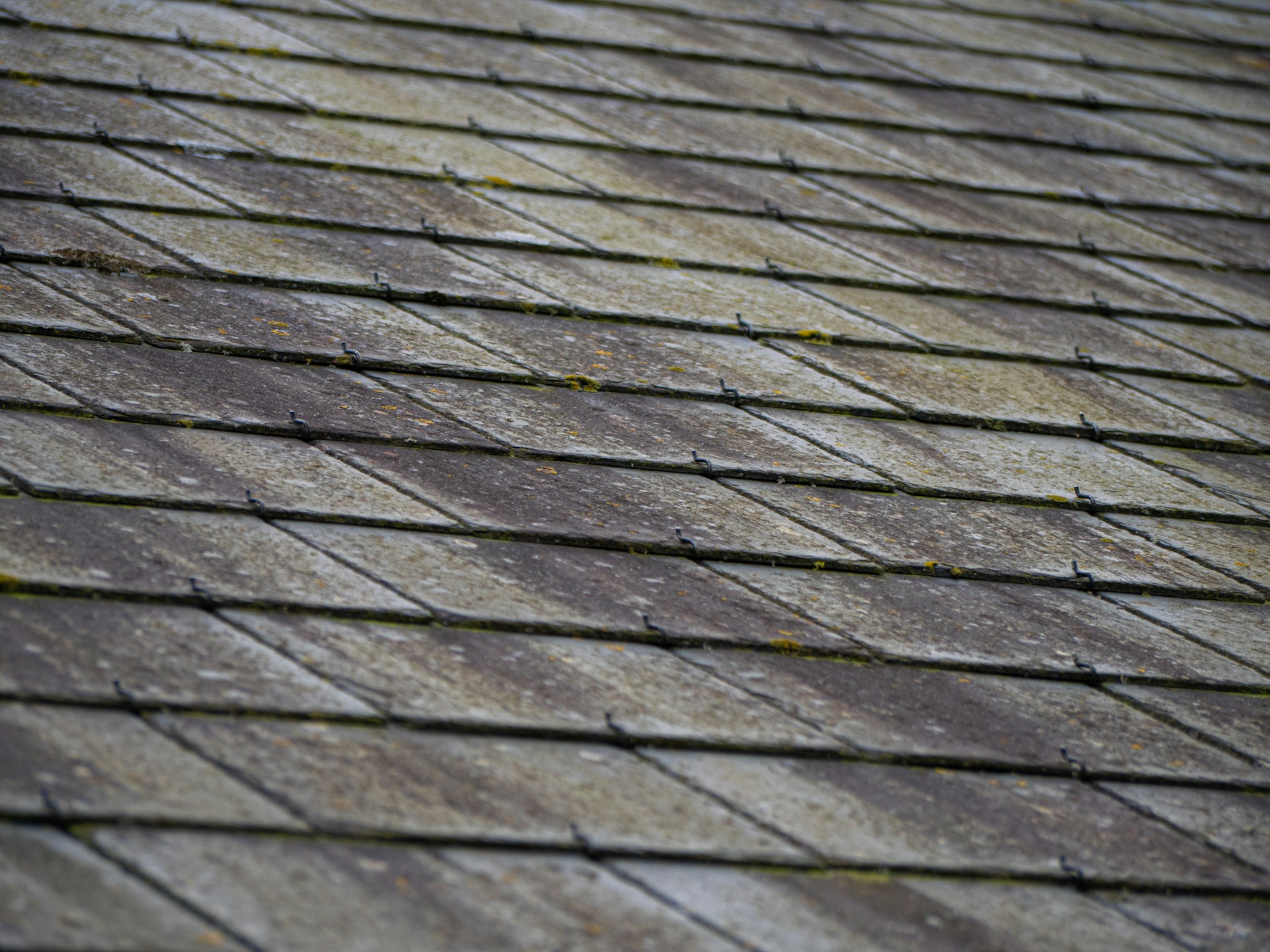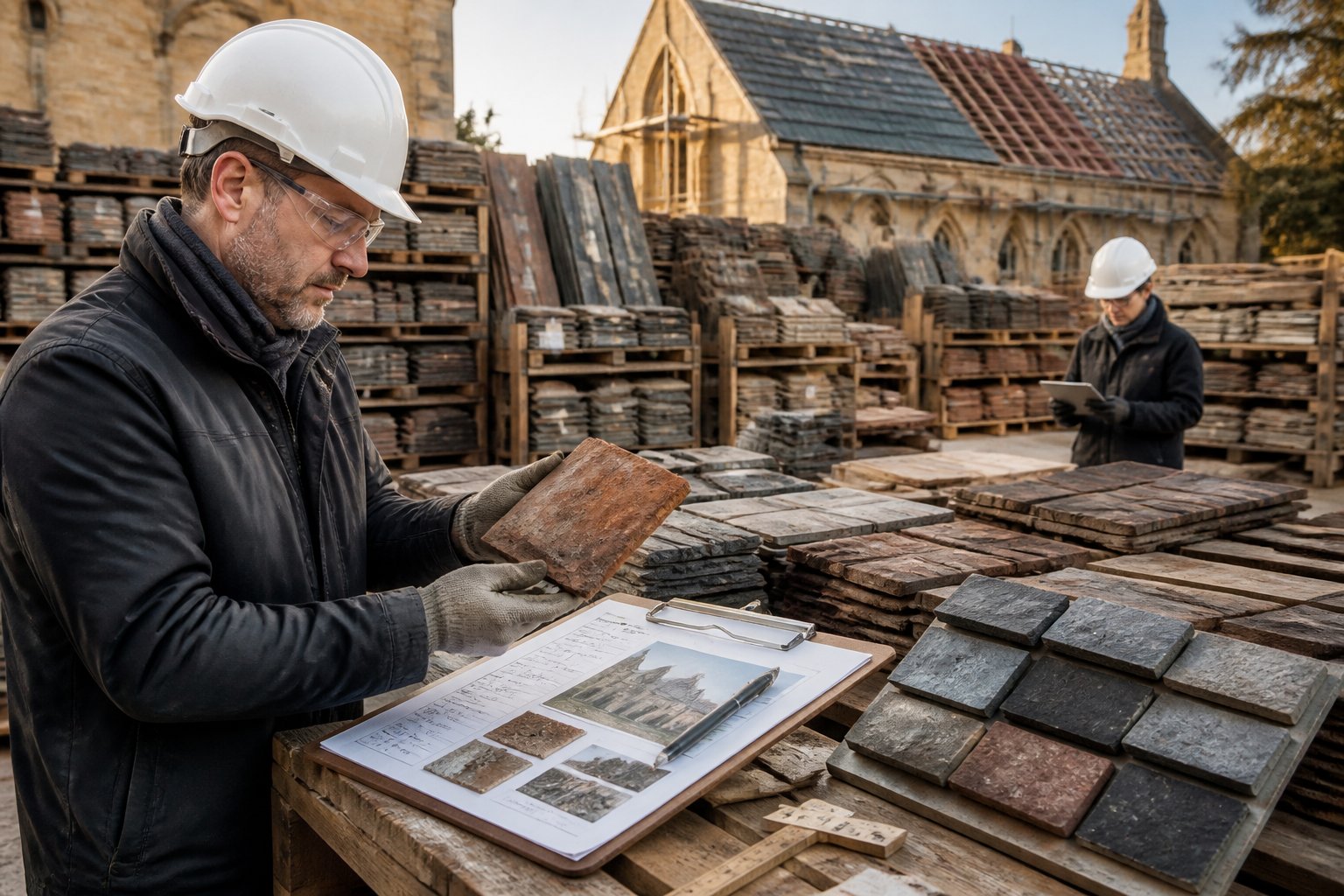
You have a 1908 slate roof with a failed valley, and the owner wants the repair invisible. The existing slate is a mottled green with purple flecking, 18 inches long, and thicker than anything sold new today. A big-box order will not fix that. Knowing how reclaimed roofing is sourced is what separates a supplier who can actually match that slate from one who will sell you a near-miss and call it close enough.
Reclaimed Slate Roofing works the salvage side of that problem daily, pulling authentic reclaimed materials off historic teardowns before the dumpster gets them.
That includes Buckingham Black from Virginia quarry stock, Semi Weathering Green, Purple, Grey, and Barrel Clay Roof Tiles in random widths at 20-inch, 18-inch, and 16-inch lengths. Every piece is hand-inspected and culled before it ever gets crated.
This guide follows salvaged roofing from a condemned building to a pallet on your job site and flags what to check at each step.
You will see how recoverable roofs are spotted, how slate and clay come off without hidden damage, how lots are sounded and sorted, and how freight gets planned around your crew. The audience is contractors, general contractors, and architects who need to trust a supplier's process before they spec it.
How Reclaimed Roofing Is Sourced From Historic Sites
The supply chain starts on a demolition schedule, not in a warehouse. Someone has to spot a recoverable roof, negotiate access, and get crews up there before the excavator arrives.
Most authentic salvage comes from churches, schools, courthouses, mills, and large homes built between roughly 1870 and 1940. These structures carried heavy, high-grade material because that was the standard of the day. The roofs often outlived the buildings under them. This is exactly why reclaimed roofing tiles from these sites still have decades of service left.
Identifying Recoverable Roofs Before Demolition or Teardown
Time is the constraint. Once a teardown permit is issued, the window to recover salvaged slate or reclaimed clay tile is often measured in days, not weeks.
A recoverable roof usually shows a few clear signs from the ground and from the attic:
- Tight, even courses with minimal slipped or missing pieces
- Sound decking with no widespread sag or rot at the eaves
- Original nailing rather than repeated face-nailed repairs
- Consistent color and thickness across the field, not a patchwork of past fixes
Roofs that fail these checks may still yield partial lots. However, the recovery rate drops sharply.
Documenting Provenance and Material History
Provenance is the record of where material came from and what it was. It matters because architects writing restoration specs often need to state origin, and because origin predicts weathering behavior. Documented provenance is also what makes reclaimed materials for historic roofs defensible under preservation review.
Good documentation captures the building name or address, approximate construction date, quarry region if known, and the original course exposure. Photographing the roof in place before removal gives you a reference for how the material actually looked as a system. That record follows the lot through inspection and into the batch photos you review before approval.
Separating Reclaimed Material From Recycled or Manufactured Products
Reclaimed is not the same as recycled. Reclaimed roofing products are removed intact and reused in their original form, with the original surface untouched. Recycled material gets crushed or reprocessed into something new. Manufactured composites imitate the look but carry none of the history or the geology.
Salvage yards and architectural salvage dealers sometimes mix these categories on the same rack, so ask directly whether a piece was removed from a roof or made to resemble one. That distinction shapes everything about how the material must be handled during removal.
Recovery Practices That Protect Slate and Clay Tile
A slate that survived 120 years on a roof can be destroyed in one careless afternoon. The removal technique determines how much of a lot actually makes it to resale.
Recovery crews work from the ridge down, pulling nails with a slate ripper rather than prying pieces free. Prying loads the slate against its own bedding planes and starts cracks you will not see until the piece is on the roof again. Material comes down by hand or by conveyor. Then it goes straight onto pallets in single, stacked-on-edge rows.
Careful Removal of Slate Roofing Without Creating Hidden Damage
The most common recovery damage is invisible at first glance. A hairline crack from a dropped bundle passes a visual check and fails a sounding test later.
Slate is stacked on edge, never flat in tall piles, because flat stacking concentrates weight on the corners. Nail holes take special care since a slate with a blown-out hole cannot be re-hung on the original punch. Crews handling antique slate roofing keep bundles small and move them often rather than building tall stacks on a live deck.
Salvaging Barrel Clay Roof Tiles and Other Fragile Profiles
Curved clay is less forgiving than flat slate. Barrel and mission profiles concentrate stress at the crown, so a tile that gets stepped on cracks along its length.
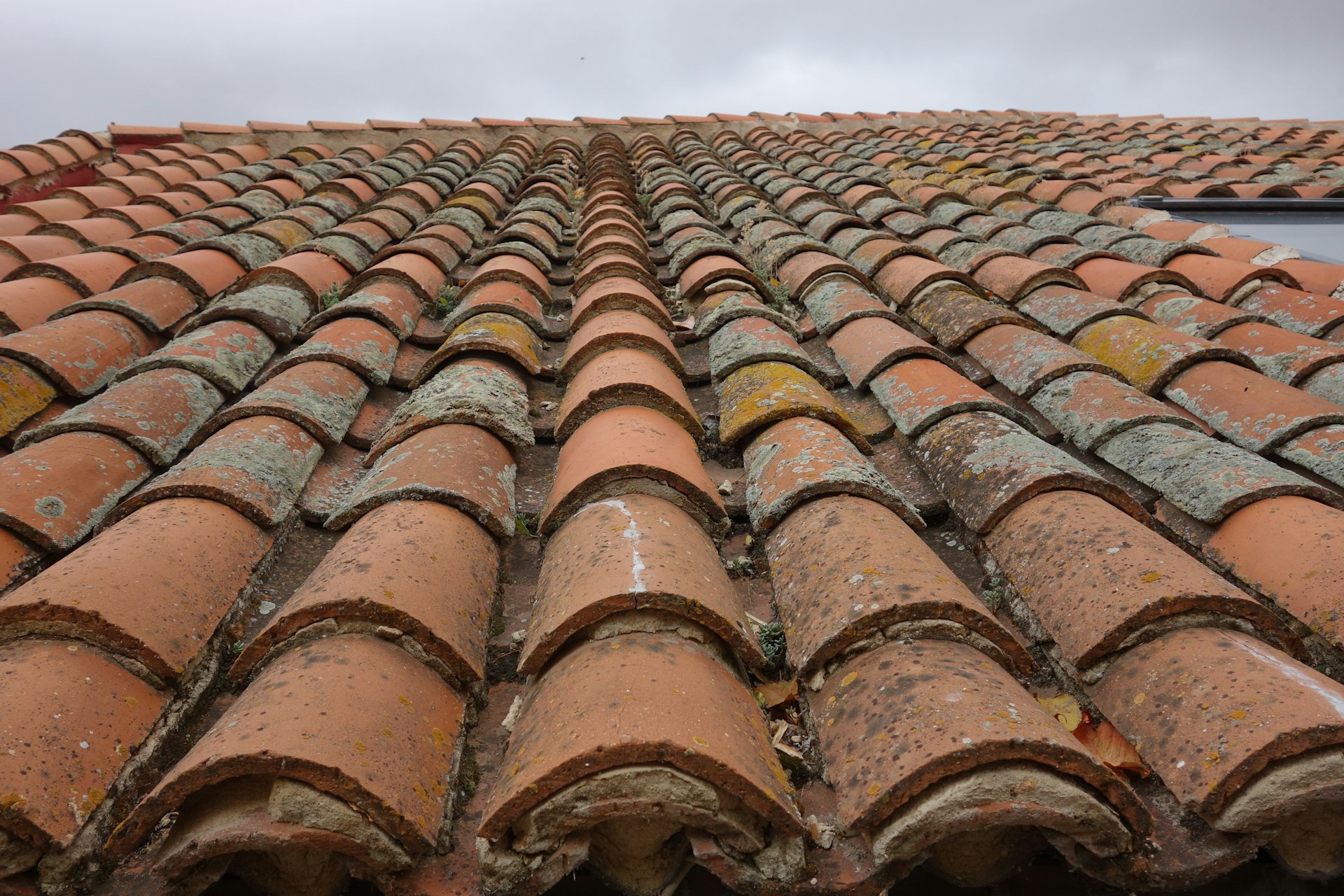
Mortar-set tiles have to be freed from bedding without hammering the tile face. Crews chip the mortar off after removal, on the ground, where a controlled strike does less harm. The National Park Service preservation guidance on historic clay tile roofs notes how much the shape and profile variety of clay tiles contribute to a building's character. This is why matching curvature later depends on careful recovery now.
Handling Hazardous Materials and Site-Safety Requirements
Old roofs come with old coatings. Lead paint on flashings, asbestos in underlayment felts or cement ridge caps, and unstable decking all show up on pre-1980 buildings.
Recovery has to follow local building codes and abatement rules before any material moves. Suspect layers get tested and, when needed, removed by licensed abatement crews first. Clean, documented handling at this stage is what allows the lot to move on to inspection with confidence.
Inspection, Sounding, and Culling Before Resale
Salvage arrives dirty, mixed, and unsorted. What separates a usable lot from a pallet of liability is the grading work that happens after recovery.
Sounding is the core test. A piece is held at one corner and tapped, and a clear ring means the stone is sound. A dull thud means delamination inside the piece, even if the face looks perfect. Every slate gets this treatment by hand, one at a time.
Checking Slate for Delamination, Cracks, and Nail-Hole Failure
Delamination shows as flaking layers on the surface or soft spots at the exposed edge. Weathering and patina are fine and expected. Powdery separation is not.
Inspectors also check for:
- Hairline cracks running from the nail holes toward the head
- Broken or elongated nail holes that will not hold a fastener
- Deep pitting on the weather face that signals softening
- Chipped tails that shorten usable exposure
Pieces that fail go to the cull pile. That rejection rate is normal on real salvage and is a sign the grading is honest.
Evaluating Clay Tile for Breakage, Distortion, and Compatible Curvature
Clay is graded differently. Fired tile can warp in the kiln or shift over a century of thermal cycling, so curvature varies even within one original roof.
Tiles are nested against each other to confirm they stack cleanly. A tile that rocks or leaves a gap will not lay flat and will telegraph across a field. Cracks are checked by flexing lightly and listening, since fired clay also rings when struck.
Sorting Lots by Slate Size, Thickness, and Condition
Sorted stock is what makes a lot specifiable. Material gets separated by length, by thickness range, and by color family before it is offered.
Thickness matters more than most buyers expect. A 3/8-inch salvaged slate will not sit flush against a 1/4-inch course, and the shadow line will show. Sorting by these variables is what allows an accurate match to an existing roof.
Matching Salvaged Lots to Restoration and Design Specifications
Matching is where sourcing meets the drawing set. The material has to satisfy both the eye and the dimensions already on the roof. Reclaimed lots are never uniform, and that is the point. The goal is a color range that reads correctly at 40 feet, not a set of identical pieces.
Using Batch Photos to Approve Color Range and Surface Character
Batch photos show the actual lot, laid out and photographed before crating. You see the spread of tone, the weathering, and the surface texture as they exist.
Review them in daylight and compare against photos of the existing roof taken at the same angle. Approving the range in advance is far better than discovering it on a pallet, where a mismatch has already cost you the freight.
Selecting Semi Weathering Green, Purple, Mottled Green With Purple, Grey, Black, and Buckingham Black Slate
Color choice is really a geology choice. Vermont and New York quarries produced Semi Weathering Green, Purple, and Mottled Green, each aging differently in sun and rain.
Grey and black reclaimed slate hold tone with minimal shift, which suits both restorations and modern builds. Buckingham Black slate from Virginia is prized for its mica sparkle and stability. Genuine reclaimed stock of it is rare. Availability of rare slate roof tiles moves with what comes off recent teardowns.
Confirming 20-Inch Random, 18-Inch Random, and 16-Inch Random Formats
Random width means widths vary within a fixed length. That is how these roofs were originally laid. It is what keeps the pattern authentic. Confirm the length format first, then exposure and headlap. A 20-inch random will not substitute for an 18-inch course without redesigning the layout.
Planning Quantity Buffers for Repairs, Full Roofs, and Future Attic Stock
Order more than the takeoff. Waste, breakage, and hip and valley cuts eat into a lot, fast.
- Full roofs: add 10 to 15 percent over net square footage
- Repairs and patches: add at least 25 percent, since small lots offer no second chance
- Attic stock: set aside one to two squares for future maintenance
Once quantity and format are locked, the lot is ready to be packed for transit, which, on a heavy slate order, is a real part of the job rather than an afterthought.
Freight Planning for Job-Site-Ready Reclaimed Materials
Slate weighs roughly 800 to 1,000 pounds per square foot. Freight planning is not an afterthought on a reclaimed order. It is part of the specification. Every approved lot gets crated and palletized before it leaves. Loose stacking is how good material becomes gravel in transit.
Crating, Palletizing, and Protecting Mixed Salvaged Inventory
Slate is banded on the edge in wooden crates, with the tallest pieces supported so nothing leans. Clay tiles are nested and separated so curved faces do not grind together.
Pallets are weighed and labeled by size and color so your crew can stage material without opening every crate. Mixed lots are separated by format. This prevents an 18-inch bundle from disappearing into a 20-inch pile on the ground.
Coordinating Nationwide Delivery Around Active Roofing Crews
Job-site delivery only works if the truck and the crew arrive in the same week. Liftgate service and scheduled delivery windows are available on request, and both should be confirmed at order time.
Tracking and delivery details go out before the truck rolls. Most orders ship within 2 to 5 business days after confirmation. This lets you sequence material against tear-off instead of guessing.
Confirming Availability, Final Approval, and Delivery Requirements
Reclaimed inventory changes as salvage comes in. Confirm current stock before a spec is finalized, not after.
Approve batch photos, lock quantity and format, then confirm site access, truck size limits, and unloading equipment. Inspect crates at delivery and report any freight damage within 48 hours so a carrier claim can be opened.
Putting Authentic Salvage to Work on the Next Roof
Reuse keeps a durable material in service instead of sending it to a landfill. That is a practical outcome, not a slogan.
Why Reuse Supports Sustainable Construction Without Compromising Performance
The embodied carbon in a slate was spent a century ago. Reusing it avoids new quarrying, new processing, and new freight from a quarry to a mill.
The Environmental Protection Agency's guidance on construction and demolition materials points to diversion from landfills as a core goal. Roofing salvage does exactly that.
Performance does not suffer, since sound reclaimed slate routinely carries 75 to 100 or more years of remaining life. The broader case for eco-friendly reclaimed roofing rests on that combination of reuse and longevity.
When to Confirm Current Inventory Before Finalizing a Specification
Call before the spec goes out, not after the bid closes. Salvaged stock is finite by definition. Formats like Buckingham Black or Barrel Clay Roof Tiles come and go with what is recovered.
If you are matching a historic roof or writing a restoration spec, call Reclaimed Slate Roofing at 225-954-8393 and ask what came off recent teardowns in the size and color you need. You get real stock and real pricing, not catalog guesswork. You can also browse current salvaged inventory at reclaimedslateroofing.com to see what is moving now.
Frequently Asked Questions
Where Does Authentic Reclaimed Slate Roofing Come From?
It comes off real roofs, usually churches, schools, courthouses, and large homes built between the 1870s and 1940s. Quarry origins include Vermont, New York, Pennsylvania, and Virginia. Ask any supplier to name the building type and region behind a lot.
How Are Historic Slate and Clay Roof Tiles Salvaged for Reuse?
Crews work top-down, pulling nails with a slate ripper instead of prying pieces loose. Material is stacked on edge in small bundles and lowered by hand or conveyor. Mortar on clay tile is removed on the ground after the tile is off the deck.
What Types of Buildings Supply Reclaimed Roofing Materials?
Institutional and civic buildings supply the largest lots, since they were roofed with heavy, high-grade material. Mills, rectories, and estate homes contribute smaller batches. Demolition and teardown schedules determine what becomes available in any given month.
How Is Reclaimed Slate Hand-Inspected Before It Is Sold?
Each piece is sounded by tapping it and listening for a clear ring, which confirms the stone is not delaminated. Inspectors check nail holes, edges, pitting, and hairline cracks. Anything that fails is culled before the lot is sorted.
Can Reclaimed Roofing Be Sourced From Historic Structures in the United States?
Yes. Domestic salvage supplies the most authentic reclaimed stock in the American market, drawn from historic buildings across the Northeast, Mid-Atlantic, and Midwest. Material ships nationwide by freight, crated and palletized for job-site delivery.
How Do Contractors Verify the Origin and Condition of Salvaged Roof Tile?
Ask for provenance details, batch photos of the actual lot, and confirmation that pieces were sounded and culled. Compare photos against your existing roof in daylight. Then confirm length, format, thickness, and quantity before approving the order.