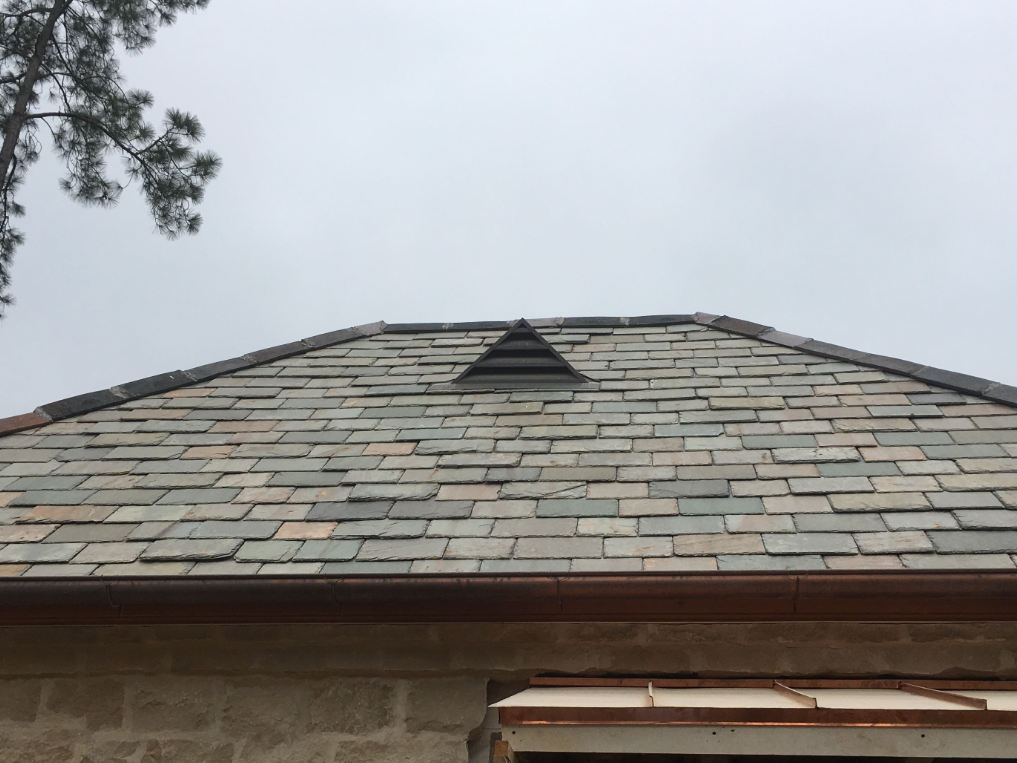
Reclaimed slate patterns play a key role in how a roof looks and performs. Layout choices such as graduated, random, and standard coursed patterns affect material quantities, installation time, and overall appearance. Selecting the right pattern helps balance authenticity, cost, and efficiency on site.
This article covers common slate patterns, layout options, installation considerations, and long-term maintenance. The focus is on practical decisions that keep projects consistent, efficient, and aligned with historic or high-end design goals.
Reclaimed Slate Roofing supplies reclaimed slate that is inspected, cleaned, and sorted for reuse. Materials are prepared by size, thickness, and color, making it easier to execute pattern layouts accurately and maintain consistency across the roof.
Reclaimed Slate
Reclaimed slate comes from old roofs and historic buildings. It brings proven durability, unique colors, and a character that new materials just can’t fake.
What Makes Slate Reclaimed
Reclaimed slate is pulled off older buildings, usually during renovations or demolitions. Each piece has its own marks—patina, nail holes, weathering—that show its age and help it blend with other historic materials.
You’ll find a range of sizes, thicknesses, and colors. Suppliers sort and grade each slate by soundness and appearance. They toss broken tiles and group usable ones by grade so installation goes smoother.
Handling really matters. You want pieces that are cleaned and de-nailed—otherwise, you’re just adding work on site. If authenticity is important for your project, ask for documentation about the slate’s origin.
Benefits of Using Reclaimed Slate
You get longevity that’s hard to beat. Plenty of reclaimed slates have already survived 50–100 years of weather.
Reclaimed slate helps you match existing historic roofs. The color variations and wear blend right in, which is huge for restorations and high-end projects.
You’re also reducing waste and embodied carbon by reusing material. For contractors, reclaimed slate can be a smart, cost-effective option compared to hunting down rare new cuts or custom orders.
Sourcing Reclaimed Slate Responsibly
Reliable sourcing is critical when working with patterned slate layouts. You need consistent material, clear batch information, and preparation that reduces sorting on site. That keeps installation efficient and ensures patterns read correctly across the roof.
Verified Materials and Batch Consistency
Reclaimed Slate Roofing sources reclaimed slate from architectural demolition and historic structures. Each batch is inspected, cleaned, and sorted by size, thickness, and color before shipment. This ensures materials arrive consistent and ready for layout-specific installations such as graduated or random patterns.
Batch identification allows contractors to maintain uniformity across large roof areas and simplifies future repairs or extensions.
Preparation and Quality Control
All slate is de-nailed, cleaned, and vetted for structural integrity before shipping. Defective or inconsistent pieces are removed during sorting, so installers are working with reliable material from the start.
Prepared batches reduce time spent handling and organizing slate on site. This is especially important for pattern work, where consistency in size and thickness directly affects the final appearance.
Efficient Ordering and Delivery
Materials are packaged in secure, palletized loads to prevent breakage during transit. Orders are shipped with clear timelines and delivered directly to jobsites, helping projects stay on schedule.
Builder-direct pricing and consistent supply make it easier to plan larger pattern-based installations without delays or unexpected material variation.
Popular Reclaimed Slate Patterns
These layouts show how reclaimed slate can create strong lines, manage water, and fit historic profiles. Choose a pattern that suits your roof pitch, slate sizes, and the building’s vibe.
Running Bond Layout
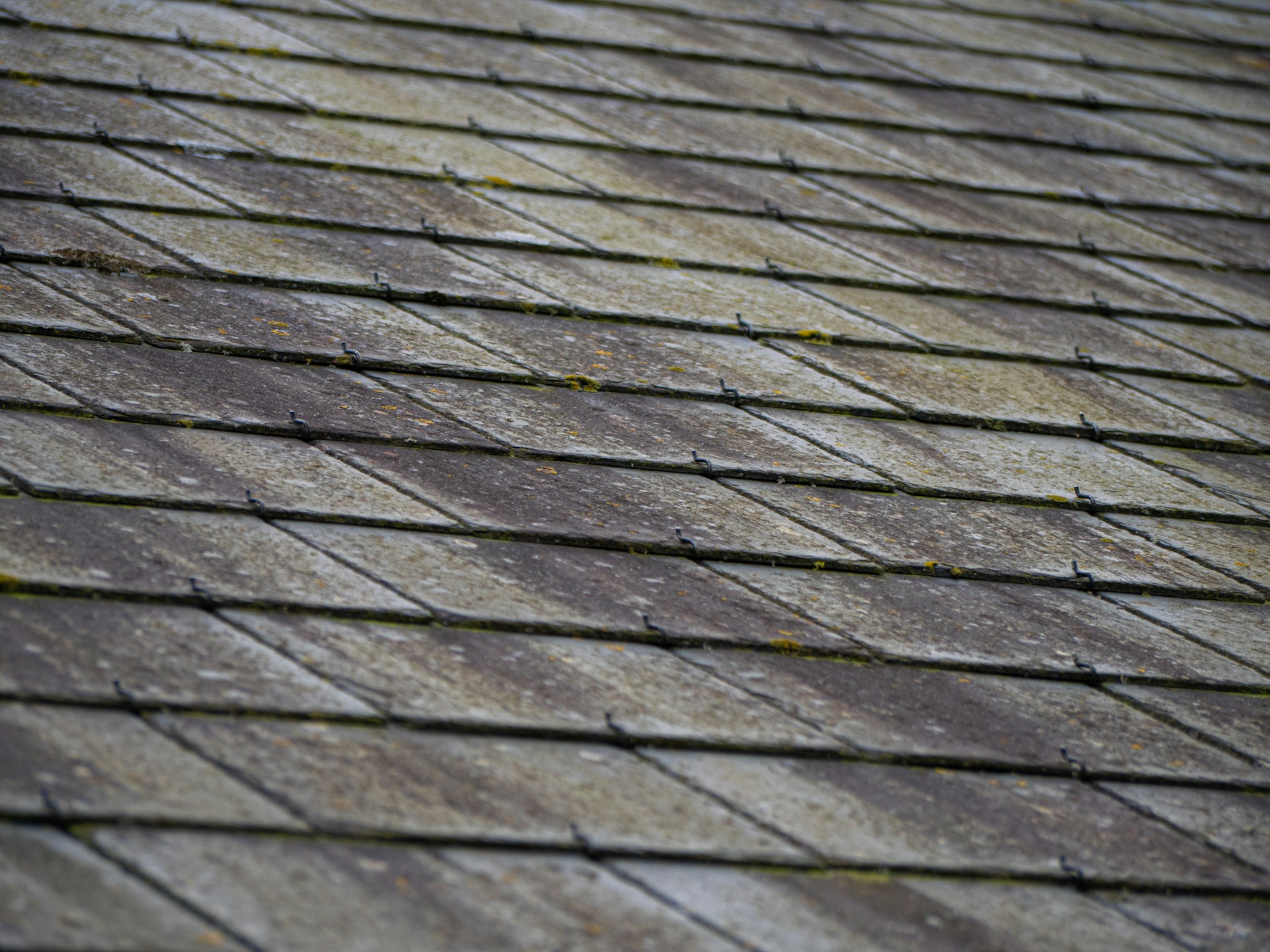
Running bond uses staggered rows, where each slate covers the joint below it by about half. This forms straight horizontal lines that work well on simple gable roofs and traditional homes. Mixed widths from reclaimed batches fit right in, but keep the headlap (usually 3–4 inches) consistent for proper water shedding.
Installers like running bond because it’s quick and doesn’t waste much slate. It works with the random lengths you get in reclaimed lots. When you’ve got color variation, lay out pieces so the tones spread evenly.
For repairs, running bond is forgiving. You can swap in slates from the same batch and keep the look. Reclaimed Slate Roofing can supply sorted lots if you need consistent sizes.
Herringbone Arrangement
Herringbone sets slates at 45° angles to make a zigzag V-shaped pattern. It’s bold and decorative, so people usually use it on smaller roof planes, dormers, or as a feature, not across a whole big roof. You’ll need extra labor and careful cuts here.
This pattern works best on steep slopes, helping water run off fast. Use uniform slate sizes or have someone cut reclaimed pieces to match. Expect more waste and a longer install compared to running bond.
Herringbone really shows off reclaimed slate’s color and texture. Lay out a dry run on the ground to check the rhythm and color mix before you start nailing things down.
Basket Weave Design
Basket weave alternates pairs of horizontal and vertical slates, making a woven, blocky look. It fits historic restorations or custom homes that want something different. You need slates with consistent dimensions, so expect to sort and trim reclaimed pieces.
This layout needs careful flashing at valleys and edges because vertical joints can trap debris. Use copper or lead step flashings and make sure every joint has proper headlap. Skilled roofers often use basket weave for porches, smaller roofs, or accent spots where you can see the pattern up close.
Plan for more labor and picky piece matching. Ask suppliers for sorted, gauge-matched reclaimed slates to save time and hassle.
Creative Layout Ideas for Reclaimed Slate
Here are some ways to use different slate sizes, colors, and edges to create interest and maybe even save a little on material. Each idea focuses on pattern, install tips, and what you’ll see once it’s up.
Random Module Patterns
Random module mixes widths and lengths with no strict order. Start by sorting slates into size groups (say, 6x12, 8x16, 10x18). Lay the bigger pieces low on the roof and smaller ones near the ridge—it balances weight and looks more natural.
Keep headlap steady—usually 3–4 inches—so you stay watertight. Stagger vertical joints so seams don’t line up. That keeps water out and makes the roof stronger.
Expect a lively, old-school look that hides imperfect edges and color shifts. You’ll use up offcuts and odd sizes, but plan your flashing and ventilation. Before starting, check each batch for thickness and usable lengths.
Brickwork Variations
Brickwork-lay puts slates in offset rows, like bricks. Pick a main module (maybe 8x16) and shift each course by half the width. You get clean lines and easier cutting at the edges.
You can mix things up by alternating course heights—one tall, one short—to add texture while keeping the lines straight. Use slates of the same thickness so nailing and headlap stay predictable. Don’t use mortar—slate roofs aren’t masonry.
This layout suits tighter budgets since repeating modules mean less waste. It looks more formal and regular than random module. When using reclaimed pieces, match colors and edges within each course to keep the pattern sharp. Reclaimed Slate Roofing can help source matching modules if you need them.
Design Considerations for Slate Patterns
Slate pattern choices affect roof performance, curb appeal, and installation time. Think about scale, color mix, and how sizes play with roof shapes and details.
Choosing the Right Pattern for Your Space
Pick something that fits your roof pitch and the building’s style. For steep, tall roofs, go with longer, narrow slates or linear coursing to emphasize height. On lower or wider roofs, use broader courses or staggered patterns so things don’t look heavy.
Consider roof features like dormers, valleys, and chimneys. Simpler patterns make cutting and flashing easier around obstacles. More complex layouts need skilled hands and extra slate for waste.
Work with what you’ve got. Reclaimed pieces vary, so pick a pattern that fits your batch—it’ll save time and material.
Mixing Sizes and Colors
Keep your palette limited and your size mix under control for a unified look. Use two or three slate sizes and stick to a consistent ratio—maybe 60% medium, 30% small, 10% large—for balance.
Match color tones to the building—warm grays with brick, blue-grays with cooler trim. Group similar shades instead of scattering them randomly; otherwise, the roof can look patchy. If you want contrast, add a band or a field of different slates, not just random specks.
Label and sort slates before you start. It speeds up the job and helps you stick to your design.
Balancing Texture and Visual Weight
Texture changes how heavy a roof feels from the street. Rough, weathered slates look heavier—pair them with lighter trim or smaller courses so they don’t overpower the house.
Keep grout lines and course heights steady for a lighter look. Wide or irregular courses add texture but can make the roof seem bulky.
Think about sun direction and viewing angles. South-facing sides show more color when the sun’s out, so maybe keep those patterns simpler. If you’re buying from Reclaimed Slate Roofing, check finish and thickness so your texture differences look intentional.
Installation Tips and Best Practices
Prep the roof deck, snap reference lines, and sort your slates by size and color before you start. Spend time here—your layout and roof performance depend on it.
Preparing the Surface
Strip off old roofing, nails, and junk until the deck is smooth. Replace any bad sheathing with plywood or OSB of the same thickness.
Put down a high-quality underlayment for your climate. Use breathable felt or synthetic, run it up the slope with 2–4 inch overlaps. Seal around vents and chimneys with flashing and a good sealant.
Install a drip edge and starter course. Nail the starter slate or flashing at 6–8 inches on center. Watch your nail patterns—too tight, and you’ll crack reclaimed pieces.
Keep your tools and fasteners clean and rust-free. Use copper or stainless nails. Store slates flat and covered on site to avoid warping or stains.
Ensuring Pattern Consistency
Sort slates by size, thickness, and color before laying. Work from your main pattern reference—stagger joints and keep headlap steady, usually 3–4 inches.
Snap chalk lines every few courses to keep things straight. Check alignment as you go; small mistakes add up on a steep roof. Use a gauge or template for exposure and headlap.
Blend slates from different crates as you go to avoid stripes. If you’ve got slates with more patina or chips, use them on less-visible areas and save the best for ridges and eaves.
Take photos and notes as you go. It’s handy if the job stretches over several days.
Handling Irregular Edges
Trim odd-shaped slates with a punch or nippers for hips, valleys, and eaves. Score and snap thin pieces carefully; thicker or older slates might need a hammer and wedge.
Fit irregular edges with custom cuts, not by forcing pieces. Use solid, bigger slates near eaves and gutters to avoid breakage. Where cuts leave thin tails, back them up with copper or stainless clips.
Install step or valley flashings before you set slates in those spots. Dress slates into the flashing so water runs off cleanly. For ragged edges, a thin bead of sealant under the slate can help—just don’t overdo it.
If you need a precise replacement, look for reclaimed pieces with the same gauge and color. Reclaimed Slate Roofing can help with that.
Common Applications of Reclaimed Slate Patterns
Reclaimed slate works inside and out. It brings authentic texture, durability, and historic character to floors and outdoor spaces.
Indoor Flooring Ideas
Try reclaimed slate for entryways, kitchens, mudrooms, or bathrooms—places that see a lot of wear and need water resistance. Go for larger rectangular tiles in running bond for a clean, classic look that hides grout lines and is easy to keep up. For a more historic vibe, mix random-width pieces in a broken-bond pattern; it’s visually interesting and pairs well with wide-plank oak or period trim.
Seal reclaimed slate with a good penetrating sealer made for natural stone. That helps cut down on stains but keeps the natural surface look. Set tiles on cement backer board with thinset mortar and grout joints of 1/8"–3/8", depending on tile size. You can even use slate over radiant floor heating—its thermal mass holds heat and keeps rooms cozy.
Outdoor Patios and Pathways
Try laying reclaimed slate for patios, steps, and garden paths if you want a surface that's tough, slip-resistant, and just gets better with age. For patios on the ground, go with thicker pieces—three-quarters of an inch or more. Irregular flagstones work great for winding paths. I like the dry-laid method: slate on compacted crusher-run with sand in the joints. It drains well and, if something shifts, you can fix it without too much hassle.
If you want a more formal patio, set the slate in a modular grid with even joints, using a concrete mortar bed for extra stability. For paths, leave the joints a bit wider and fill them with polymeric sand or pea gravel—this lets things move a little and keeps weeds at bay. Only bother sealing if you really need to cut down on algae; otherwise, just let the slate weather for that authentic patina. If you're picky about matching color and size, Reclaimed Slate Roofing can help source the right pieces.
Maintaining Reclaimed Slate Patterns
Set up a routine for checking things over. Only walk on the roof if you know what you're doing and have the right safety gear—or honestly, just hire someone who does. Slate tiles can be pretty fragile.
Clean with care. Stick to low-pressure rinsing and soft brushes so you don't mess up the pattern or loosen anything.
When you spot a broken slate, swap it out with a matched piece. Keep some spare reclaimed tiles from your original batch on hand. That way, repairs blend in and you keep the look consistent.
Pay attention to mortar and flashing, especially where patterns meet hips and valleys. Repoint with matching materials and check the flashings every season to keep water out and tiles in place.
Before you do any work, document your layout. Snap photos, mark courses, and keep notes so you can put everything back together the right way after repairs or partial re-roofs.
Use the right fasteners and techniques. Nail size, spacing, and how deep you set them all matter for keeping things lined up and lasting.
If you need rare cuts or hard-to-find pieces, consider professional sourcing. Reclaimed Slate Roofing can track down what you need to keep historic patterns looking authentic.
Keep a basic log of your maintenance. Jot down dates, what you found, and what you used. That way, anyone working on the roof later knows the story.
Eco-Friendly and Sustainable Design
Reclaimed slate just makes sense if you care about waste and energy use. You're giving old materials a new life instead of buying freshly mined stone.
There's something about reclaimed slate that keeps your roof's historic character intact. Each tile has its own patina and quirks—new stuff just can't fake that, and your project ends up looking real and lasting longer.
Aim for layouts that don't need a lot of cutting. Simple running-bond or staggered patterns use more whole slates, so you waste less and save time.
You get lower embodied carbon and keep stuff out of landfills. Plus, reclaimed slate tends to last longer than the cheap alternatives, so you won't be re-roofing every decade.
Always check your materials before starting. Make sure everything's clean, solid, and ready to go—no one likes surprises halfway through a job.
If you go with a trusted supplier, you get vetted materials and steady delivery. Reclaimed Slate Roofing inspects and preps each piece, so you can actually stick to your schedule.
Quick tips:
- Go for full-width courses to cut down on waste.
- Match slate sizes when you can—it makes laying out way easier.
- Store your materials right on site so nothing gets chipped or broken.
All this helps you build a roof that's not just sustainable, but also looks good and honors the building's history.
Reclaimed slate patterns combine performance with visual impact. When layouts are planned around consistent sizing, grading, and installation methods, they deliver both durability and a finished look that aligns with historic and high-end design goals.
Pattern work depends on material quality and preparation. Uniform thickness, sorted sizes, and clean batches reduce installation time and keep layouts consistent across the roof. This is especially important for complex patterns where variation can disrupt alignment and water shedding.
Reclaimed Slate Roofing supplies reclaimed slate that is inspected, cleaned, and sorted for reuse. Materials are prepared for accurate pattern execution and shipped directly to jobsites, helping contractors maintain efficiency and consistency.
With the right sourcing and planning, reclaimed slate patterns become a practical solution that supports long-term performance while preserving the character and detail that make these roofs stand out.
Frequently Asked Questions
Got questions about using reclaimed slate or keeping up a slate roof? Here are some answers—covering landscaping, crafts, decor, roof problems, quality checks, and cleaning without wrecking things.
How can I creatively incorporate old slate tiles into my landscaping design?
Use whole slates as stepping stones in your garden path. Space them out a bit and fill the gaps with sand or gravel—better drainage, fewer trips.
If you like a more rustic look, break up slate for a mosaic patio or a dry riverbed feature. The dark color pops against greenery and wood.
Stack thinner slates for low retaining walls, edging, or raised beds. If you need fasteners, use stainless steel or copper so you don't get ugly stains.
What are some popular craft projects using slate?
Make coasters from small squares of slate—seal the edges, slap some felt pads underneath, and you're good.
For something a bit more personal, turn flat slates into house numbers or address plaques. Engrave, paint, whatever suits you. Drill a couple holes for easy mounting.
Chalkboard signs are fun too. Give the slate a coat of primer or slate paint, and you've got a reusable sign for your patio or front door. Just wipe clean with a damp cloth.
What are the best ways to repurpose slate roof tiles for home decor?
Thin slates make cool framed art or wall panels—mix up the sizes for some texture. Use hidden clips or French cleats for a cleaner look.
Bigger slates work as countertops for small tables or console tops. Just make sure the base is sturdy and seal the seams to keep water out.
You can also cut pieces for plant saucers, candle holders, or bookends. Seal any sharp or broken edges, both for looks and safety.
What are the most common issues faced with slate roofing?
Tiles can break or slip after storms, foot traffic, or if they weren't installed right. Always use matched slates for replacements to keep things watertight.
Flashings around chimneys, valleys, and other roof features tend to fail first. Check and fix them regularly to avoid leaks and rot.
Old underlayment or fasteners might give out over time. Look for rusted nails, torn felt, or soft decking, and sort those out before you start swapping slates.
How do I determine the quality of reclaimed slates for my project?
Check each slate for hairline cracks, breaks, or signs it's starting to flake apart. Skip any with thick salt deposits or active crumbling.
Pay attention to thickness, size, and where the slate came from. The best stuff is dense and usually from known historic roofs—ask for photos or samples if you're not sure.
And make sure everything's been cleaned and sorted. Reclaimed Slate Roofing takes care of this, pulling out debris and grading the slates so you know what you're getting.
What effect does vinegar have on slate, and how can it be used in cleaning or maintenance?
Vinegar’s pretty acidic, so if you use it full strength on natural slate, it’ll likely dull or even etch the surface—especially on finished or polished pieces. That’s why you shouldn’t put undiluted vinegar anywhere near those.
If you’re dealing with light mineral stains on unsealed slate, you might try a mild vinegar mix (think one part vinegar to ten parts water). Still, it’s smart to test out a small, out-of-sight spot first, just in case.
After cleaning, rinse the slate really well with clean water and dry it off. When it comes to slate roofing, skip household acids altogether. Stick with products made for natural stone—those do a better job at protecting the surface and any sealants you’ve used.