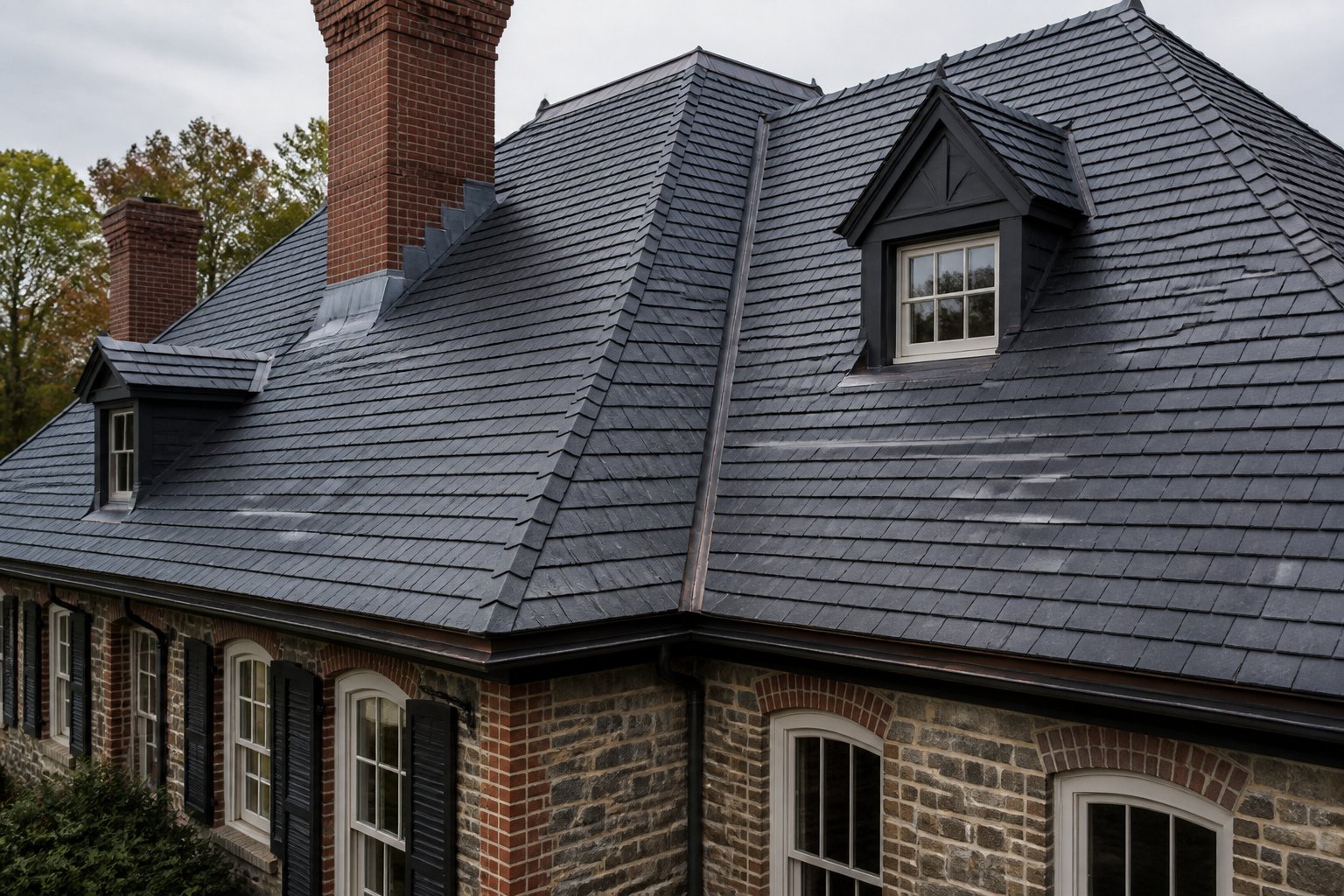
You are standing on a scaffold on a 1904 estate, holding a cracked tile that does not match anything in a standard catalog. It is dense, dark blue-black, and it still glitters slightly in the sun after 120 years on the roof. That glitter is the tell. What you are holding is almost certainly Buckingham slate, quarried in Virginia. The wrong replacement will show from the street for the rest of the building's life.
Reclaimed Slate Roofing exists for exactly this moment. Genuine Buckingham Black is salvaged, hand-inspected, and sounded before it ships, which matters when you need real Virginia stone rather than a coated look-alike.
Inventory of this variety moves in and out, so availability is confirmed by phone rather than promised in a catalog.
In this guide, you will discover what makes this stone geologically different, why its quarry origin drives color stability, how it performs over decades, and how to match it on an existing roof. It is written for the contractor pricing a repair, the architect writing a spec, and the owner who wants the roof done once.
What Sets Buckingham Slate Apart
Most roofing slate fades. This one does not. The reason sits in its mineral makeup rather than in any surface treatment.
Blue-Black Color, Natural Cleft, and Mica Luster
The color reads as deep blue-black, not flat charcoal. Under direct light, you see a faint silver sparkle from mica flakes locked in the stone. That sparkle is a fingerprint of the material and cannot be faked with pigment or coating.
The natural cleft surface adds a second layer of character. Splitting follows the stone's own grain, so each piece carries slight ridges and shadow lines. On a large roof plane, that texture keeps the surface from looking printed or repetitive.
Hardness, Low Absorption, and Unfading Performance
This is a hard, dense natural stone with very low water absorption. According to the National Park Service overview of slate as a roofing material, durability comes from high strength, low porosity, and low absorption. Carbon content produces black coloring.
That combination earns it the classification of unfading slate. It holds its tone through decades of sun, rain, and freeze cycles instead of drifting toward brown or buff.
How It Differs From Other Roofing Slate Varieties
Set it beside other varieties, and the differences show fast:
- Semi-weathering green: starts green, then develops buff and tan streaks over time
- Purple slate: carries hematite tones that shift subtly with exposure
- Mottled green with purple: blends both, giving a busy, varied roof field
- Buckingham Black: stays blue-black with mica luster and almost no color drift
That color stability traces directly to where the stone came out of the ground, which is exactly why its Virginia origin deserves a closer look.
Virginia Origin and Historic Architectural Use
Geology is local. The specific belt of slate that produces this stone runs through central Virginia. No other deposit reproduces it exactly.
Buckingham County and Arvonia Quarrying Heritage
Quarrying centers on Buckingham County, Virginia, near the community of Arvonia. Welsh quarrymen settled the area in the 1800s and named it after Arvon in Wales, bringing splitting techniques with them.
The deposit itself is far older than the industry built on it. Commercial extraction there has run for well over 150 years. That is why so many East Coast landmark roofs share the same material.
Why Source Geology Matters for Color Stability
Color in slate comes from minerals, not finish. Because the Arvonia beds are low in the iron carbonates that cause bleaching, the stone resists the streaking that shows up on softer varieties.
This is why a specification that simply says "black slate" is not enough on a heritage job. Two black slates from different regions can weather in opposite directions on the same roof.
Landmark Roofs and Long-Term Provenance
Virginia slate has covered high-profile buildings for generations, including work at Ford's Theatre in Washington and The Dakota in New York. Those roofs are useful reference points because they show the stone under a century of real weather.
Provenance also affects resale and review. On a designated historic property, a reviewer will ask where the replacement stone came from, and a documented Virginia origin answers that question cleanly. Origin explains the color; performance explains the price.
How Buckingham Slate Performs on a Roof
Field performance is where this stone justifies itself on roofing projects. It handles the things that destroy cheaper coverings.
Weathering, Freeze-Thaw Exposure, and Water Resistance
Low absorption means less water enters the stone, so there is less water inside to freeze and expand. That is the core reason dense roofing slate survives northern winters while softer stone spalls and flakes.
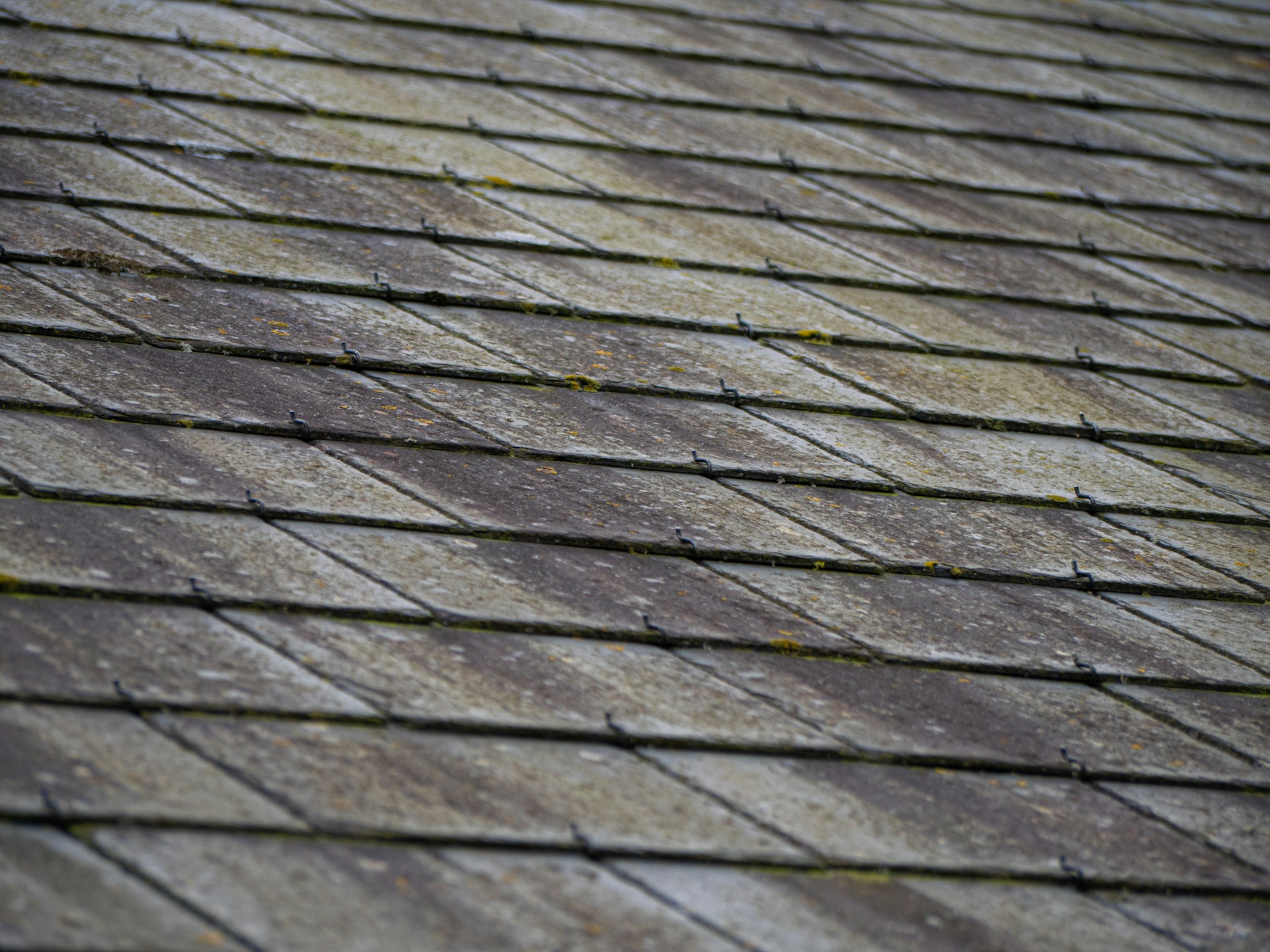
Weathered slate roof tiles pulled from century-old buildings often show only surface dulling and slight edge wear. The body of the tile stays sound. That is exactly what makes reuse practical.
Fire Resistance and Long Service Life
Natural slate does not burn. That matters on rural properties, on buildings with wood-burning appliances, and anywhere ember exposure is a real risk.
Service life for a correctly installed natural slate roof commonly runs 75 to 100 years or more. Fasteners and flashings usually fail first. That is why the National Park Service brief on repairing historic slate roofs stresses repair over wholesale replacement.
When to Specify It for Restoration or New Construction
Specify it when:
- You are patching or restoring an existing Virginia black slate roof
- The building is under historic review and needs like-for-like material
- A new build calls for a dark, permanent roof with genuine stone texture
- The owner plans to hold the property long-term and wants one roof, not three
On restoration work, the specification is only half the job. Matching that material to the existing roof is the other half, and it is where careful jobs still go wrong.
Matching Historic Roofs With Reclaimed Material
A patch fails visually long before it fails structurally. Size, thickness, and exposure have to line up before color even enters the conversation.
Confirming Size, Thickness, and Nail-Hole Placement
Pull a sound tile from the roof and measure it precisely. Record the length, width, thickness, and the distance from the head to each nail hole.
Thickness is the detail people skip. A tile that is an eighth of an inch thicker will sit high, break the coursing shadow line, and telegraph across the plane. Exposure and headlap must also match the original layout. Otherwise, water paths change.
Evaluating Patina and Color Variation on Existing Roofs
Antique slate roofing rarely reads as one flat color. Older roofs carry surface dulling, lichen, and slight tonal drift that new stone cannot copy.
Photograph the roof in overcast light and again in direct sun. Shoot the north slope and the south slope separately. Sun exposure changes the patina considerably on the same building.
Why Rare Slate Roof Tiles Require Batch Review
Rare slate roof tiles come from finite salvage lots, so no two batches are identical. Reviewing batch photos before purchase is how you avoid a crate that does not blend.
Good matching practice includes:
- A measured sample tile from the existing roof
- Photos of both the field and the ridge courses
- Confirmed quantity plus overage for breakage
- Written approval of batch photos before the order ships
Once the match criteria are set, the real challenge becomes finding the stone, because genuine reclaimed Buckingham slate cannot simply be reordered from a shelf.
Sourcing and Specifying Authentic Reclaimed Inventory
Genuine reclaimed Buckingham slate does not sit in warehouses waiting for orders. It appears when a historic roof comes off. It moves quickly.
Why Genuine Buckingham Black Is Difficult to Find
Standard suppliers stock what they can reorder. Salvaged Virginia black stone cannot be reordered, so most distributors substitute coated or synthetic products that lose their finish within a decade.
Volume is the other constraint. A single teardown might yield enough for a repair, but not for a full 40-square roof. Large jobs often require combining lots or waiting for the right salvage.
Reviewing Batch Photos and Hand-Inspected Condition
Every piece worth buying has been hand-sounded, a simple tap test that reveals hidden cracks by sound. Culling removes delaminated and undersized pieces before packing.
At Reclaimed Slate Roofing, reclaimed Buckingham Black slate is offered in 20-inch, 18-inch, and 16-inch random widths with original patina left intact, alongside other reclaimed black slate formats. Availability shifts as salvage lots come and go, so confirm current stock before writing it into a bid.
Planning Quantity, Overage, Freight, and Job-Site Delivery
Order overage. Between installation breakage and future repairs, ten to fifteen percent extra is normal on slate work. Salvage lots rarely repeat.
Freight is straightforward when it is planned early. Orders ship crated and palletized nationwide, with liftgate service available, and most move within 2 to 5 business days after confirmation. The last step is timing that request against your actual project schedule.
Plan the Material Review Before Work Begins
Sourcing reclaimed slate goes smoothly when the documentation exists before the call. It stalls when it does not.
Document Existing Roof Conditions Before Requesting Material
Start with a survey. Note roof area by slope, existing tile dimensions, exposure, condition of flashings, and how many tiles are already missing or broken.
Bring one intact sample tile down safely if you can. A physical sample beats every photo, and it settles thickness questions in seconds that a photo will always leave open.
Confirm Variable Inventory and Delivery Requirements
Virginia slate inventory changes as salvage jobs come and go. Confirm the format, color, and quantity available on the day you are pricing, not from an older listing.
Then confirm the site logistics: delivery address, access width, whether a liftgate is needed, and who signs for the crates. Inspect on arrival and report freight damage within 48 hours.
Request Pricing and Availability for Active Projects
Have your numbers ready when you reach out:
- Total squares and slope breakdown
- Tile size, thickness, and exposure
- Target color and any tolerance for variation
- Delivery date window and site access notes
That level of detail turns a vague inquiry into a firm quote, and it gets you accurate availability on the first call instead of the third.
Getting the Right Virginia Black Slate on Your Roof
Buckingham Slate earns its reputation honestly. Dense stone, blue-black color that holds, mica luster, and a Virginia origin that reviewers and owners both recognize. On a heritage roof, matching that material is not a preference; it is the difference between a repair that disappears and one that everyone notices.
If you are matching an existing roof, planning a restoration, or specifying a dark natural slate for a new heritage build, the practical move is to confirm what is actually available before you commit numbers to a bid. Salvage lots are finite, and formats vary, so the answer changes month to month.
Call Reclaimed Slate Roofing directly at 225-954-8393 to check what is in stock and get real pricing, or browse current salvaged inventory at reclaimedslateroofing.com. Most orders ship within 2 to 5 business days, crated and job-site ready.
Frequently Asked Questions
What Is Buckingham Slate, and Where Is It Quarried in Virginia?
It is a hard, dense blue-black roofing slate quarried in Buckingham County, Virginia, near Arvonia. Welsh quarrymen developed the district in the 1800s. It remains one of the best-known unfading slate deposits in the United States.
How Much Does Buckingham Slate Cost for a Roofing Project?
Pricing depends on size, thickness, quantity, and current salvage availability rather than a fixed list rate. Reclaimed material is generally more affordable than newly quarried stone of the same origin. A reclaimed slate price guide helps set expectations before you call for a quote.
Is Buckingham Black Slate Suitable for a Long-Lasting Heritage Roof?
Yes. Its low absorption, hardness, and fire resistance support service lives of 75 to 100 years or more when installed with sound fasteners and flashings. Many original Virginia slate roofs from the early 1900s are still in service today.
What Sizes and Thicknesses Are Available for Buckingham Slate Roof Tiles?
Reclaimed stock is commonly offered in 20-inch, 18-inch, and 16-inch random widths. Thickness varies by original quarry run and building. This is why measuring a sample from your existing roof matters before ordering.
Can Reclaimed Buckingham Slate Be Matched to an Existing Historic Roof?
Often, yes, provided you supply dimensions, thickness, exposure, and photos of the existing roof. Reviewing batch photos before shipment is the standard step. Guidance on historic slate tile matching walks through the process in detail.
How Does Buckingham Slate Compare With Other Virginia Slate in Color, Durability, and Weathering?
It holds its blue-black tone with minimal fading, while semi-weathering varieties develop buff and tan streaks over time. Both can be durable. For a stable dark roof, unfading Virginia black stone is the more predictable specification. Practical sourcing notes appear in this rundown of reclaimed slate sourcing tips.