You have a slate roof to repair this week. You need replacement pieces that match and fixings that last, and you need to get the job done without breaking the slates either side of the one you are replacing.
Hooks are the right fixing for replacing single slates in a sound roof, and for relaying salvaged slate whose old nail holes do not line up with the new batten or deck gauge. Specify stainless steel or copper, sized for the slate's thickness and the roof's exposure. Nailing is still the usual choice for a full new install, but on a repair a hook keeps you from disturbing slate that was doing nothing wrong.
When a hook is the right answer
When you cannot nail a replacement without lifting or breaking the sound slates around it. In practice that means two situations: single-slate repairs in an otherwise healthy roof, and relays where salvaged slate's old holes have stopped being useful.
How a hook holds the slate
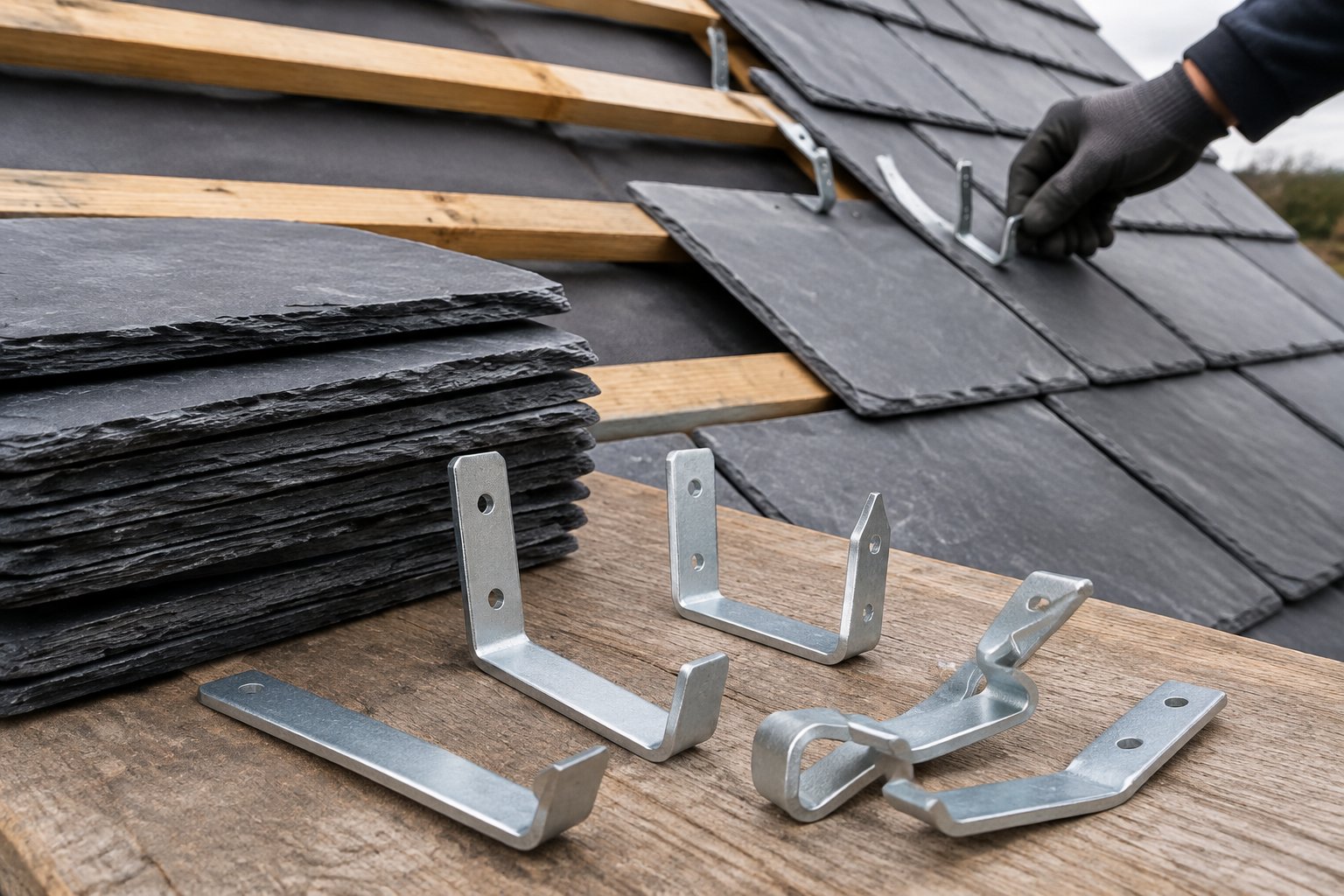
A slate hook is a strip of stiff wire or flat metal with a point or nail hole at the top and a J-shaped bend at the bottom. The top fixes through the joint between two slates in the course below, into the deck or batten. The replacement slides up into place, then drops until its butt rests in the J.
The hook carries the weight from below. No nail passes through the replacement, so no new holes get punched in old material. The slate is held at its head by friction and headlap, and the hook stops it sliding down. The hook itself sits in the side joint of the slates below, out of the main path of runoff, with only the bent tip showing at the butt.
Single replacements where re-punching is impractical
On a sound roof, the course above covers the broken slate's nail line, so nailing a replacement the usual way means lifting two or three slates above it. On old brittle slate, that is exactly where the extra breakage happens.
With a hook, the crew cuts the broken slate's nails out with a ripper, fixes the hook through the open joint, and slides the new slate in from below with nothing above it moving at all. That is why hooks live on the truck of anybody doing slate roof repairs on a field that still has decades left in it.
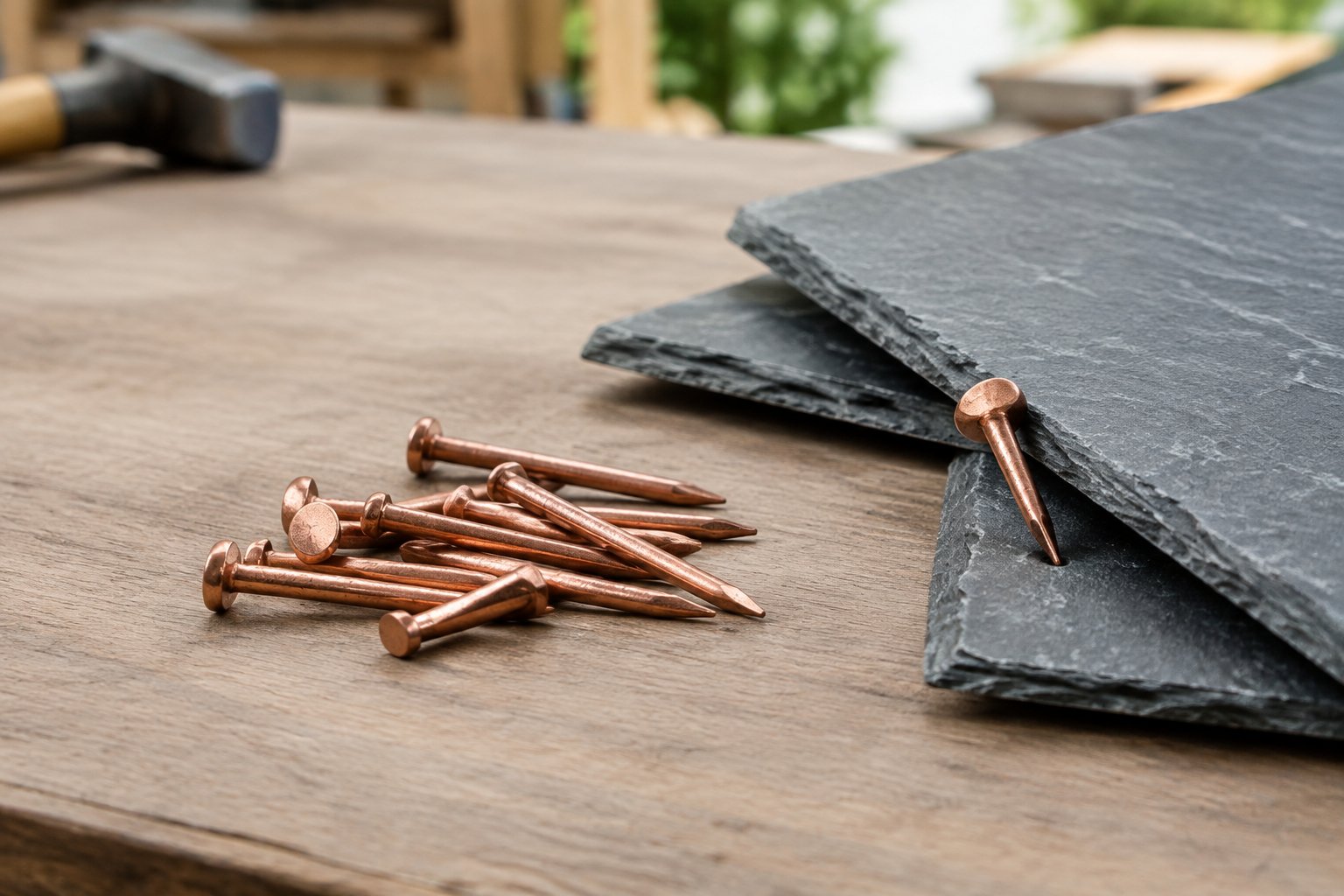
Re-punching a replacement and fixing it with a nail and a copper bib still works where the slate is thick enough to take a new hole cleanly and the crew can reach the fixing point. When either of those is missing, use a hook.
Relays where the old holes no longer line up
Salvaged slate arrives holed for its first roof's exposure and headlap, and on a new deck or batten layout those holes routinely land in the wrong place.
You can re-punch, but every new hole costs a little strength and risks a break. On a large relay, hooks let you set the slate at the correct gauge without depending on the old holes at all, and the old holes finish up under the headlap where they do no harm, provided the course above covers them properly.
Hooks against nailing and re-punching
Nailing is the stronger and less visible fixing on most American roofs. Hooks trade a small visible metal tip for less disturbance and lower breakage risk. Access, slate condition and whether a review board will look at the roof decide which you use.
Access and breakage
Nailing needs access to the nail line, so somebody lifts the course above or works a stripped section. On a steep roof with soft or weathered slate, every lifted slate is a candidate for cracking, and every crack is another slate to order and another match to find.
Hooks confine the work to one slate. That suits high elevations, tight staging, and roofs where the field slate is near the end of its life, and it means fewer spares on site.
Re-punching makes sense where the slate is thick and hard and the surrounding field tolerates handling. A well-placed copper nail through solid slate is a durable fixing. If the slate rings clear and splits cleanly, re-punching will serve.
Visible fixings and historic review
The hook stays visible. On a dark roof, bright stainless or new copper catches the light along the butt line, and on a low pitch viewed from the street a run of them reads as small metal flecks.
On listed and landmark buildings that can draw an objection. The National Park Service holds that historic slate roofs should be repaired rather than replaced whenever possible, with replacement in kind to match the existing as the preferred treatment, and reviewers often extend that thinking to visible fixings. Some boards accept black-coated stainless hooks on rear or low-visibility slopes and require nails on street-facing elevations.
Ask before ordering. A short note with a sample hook and elevation photographs settles it early, which is considerably cheaper than settling it after the scaffold is up.
European practice, American habit
In France and Spain, crews hook entire roofs, hanging slates on battens with no nails at all, and those systems rely on a tight batten gauge and slate of even thickness.
In the US, new work is still nailed, while hooks are used widely for repairs and partial relays. Full roofs on hooks are less common here, and where you do it, follow the hook maker's system instructions rather than improvising from repair practice.
Specifying material and size
Stainless for strength and corrosion resistance on most jobs. Copper where it matches existing copper fixings and flashing. Then size the hook to the slate's thickness and the roof's exposure.
Stainless or copper
Stainless is stiffer than copper and resists bending open under the snow and ice loads that pull on a slate butt. On coastal jobs, ask for marine-grade.
Copper is softer and easy to bend by hand, and it weathers to a dark brown that blends with most slates. It suits roofs already using copper nails and copper flashing, which keeps a single metal in the water path.
Keep both away from galvanized steel and aluminum anywhere water runs from one metal onto another. The whole assembly should age together, because a hook that rusts out in twenty years puts a hundred-year slate on the ground.
Hook geometry
Two dimensions decide the hook:
- Length. This sets where the butt lands, and it has to place the replacement at the same exposure as its neighbors with full headlap over the course two below.
- Bend depth. The J has to hold the slate's full thickness. Too shallow and the slate can ride out. Too deep and it rocks.
Measure the length and thickness of several existing slates before ordering, and size the bend for the thicker end of the batch, since reclaimed slate varies piece to piece. Exposure is slate length minus headlap, divided by two. A 3-inch headlap is common, but match whatever the roof has.
Pitch comes into it too. Slate wants a minimum of about 4 inches of rise per 12 inches of run to shed properly, and lower pitches need more headlap, which changes the hook length you need.
Repair hooks and full systems
Repair hooks are individual pieces, often with a pointed shank driven into the deck. Full-roof systems use hooks set to a fixed batten gauge, sometimes with a second hold at the slate head, designed and tested as a set.
Do not hang a whole roof on repair hooks unless the maker rates them for it. For a full relay on hooks, put the system, the batten size and the gauge in the specification, and settle it early enough that the slate batch and the hook system are chosen against each other rather than in sequence.
Not sure which hook suits your slate? Send the slate thickness, length and existing headlap and we will tell you. Call 225-954-8393.
What makes a hooked slate secure
The hook sits in solid wood, the slate lies flat, and the surrounding laps stay intact. Miss any one of those and the slate slips or cracks inside a few seasons.
Sound wood
The shank has to enter sound sheathing or the middle of a batten, so probe the wood through the joint before driving it. Soft, wet or split wood will not hold a hook under load.
Where the wood has gone, a hook does not solve the problem and nothing else will either until the slates come off and the deck is repaired. On older roofs with sagging or decayed framing, that needs looking at before any patching starts.
Drive the hook so it sits tight against the slate below without standing proud, because a raised shank props the replacement up and leaves a gap for wind to work on.
Bed it flat
The replacement has to lie flat across its full width on the course below. Bridging a high spot, a stray nail head or a thick neighbor puts the load on two points, and then a footstep nearby or a snow load finishes it.
Feel the bed with your hand before sliding the slate in, and use the ripper to take old nail stubs out completely. Where the replacement is thicker than its neighbors, pick a thinner piece out of the batch rather than packing it with shims.
Close the J around the butt with gentle pressure. Squeezing the hook hard against the face stresses the edge. Bend until it holds snugly, then stop.
Keep the laps
The replacement must cover the joint in the course below by at least the roof's original side lap, because a narrow slate leaves that joint open and puts running water straight onto the hook.
Match the field's headlap as well. A replacement shorter than the original will not reach far enough under the course above, which leaves a leak path at the head that no amount of hook does anything about. Slide the slate fully home before setting the hook.
Then check the slates either side of the repair by hand, because ripping nails out loosens neighbors and finding one now saves a second trip up the roof in six months.
Before you order
The slate match takes the most care, and a poor match shows even when the hook work is faultless.
Match the slate properly
Measure length, width and thickness on several slates from different slopes, and photograph the roof in overcast light. Note whether the slate is unfading or semi-weathering, because fresh semi-weathering slate will not match material that has been aging for eighty years.
Match the weathered face, never a broken edge, since the two show completely different colors. Our notes on replacing broken slate with matched authentic slate go further into sizing. For dark roofs, a dense black such as Buckingham Black is often the closest match available, and for rarer colors and sizes our custom sourcing is usually the route to a true one. We send batch photographs before any order is confirmed.
Hook specification and quantities
Write down the metal, length, bend depth and finish. Black-coated stainless where visibility matters, bright stainless or plain copper where the slope is out of view.
Order more hooks than the slate count. Some bend during installation and the odd slate cracks and needs another. Pack sizes vary between makers, so check the count per pack rather than assuming.
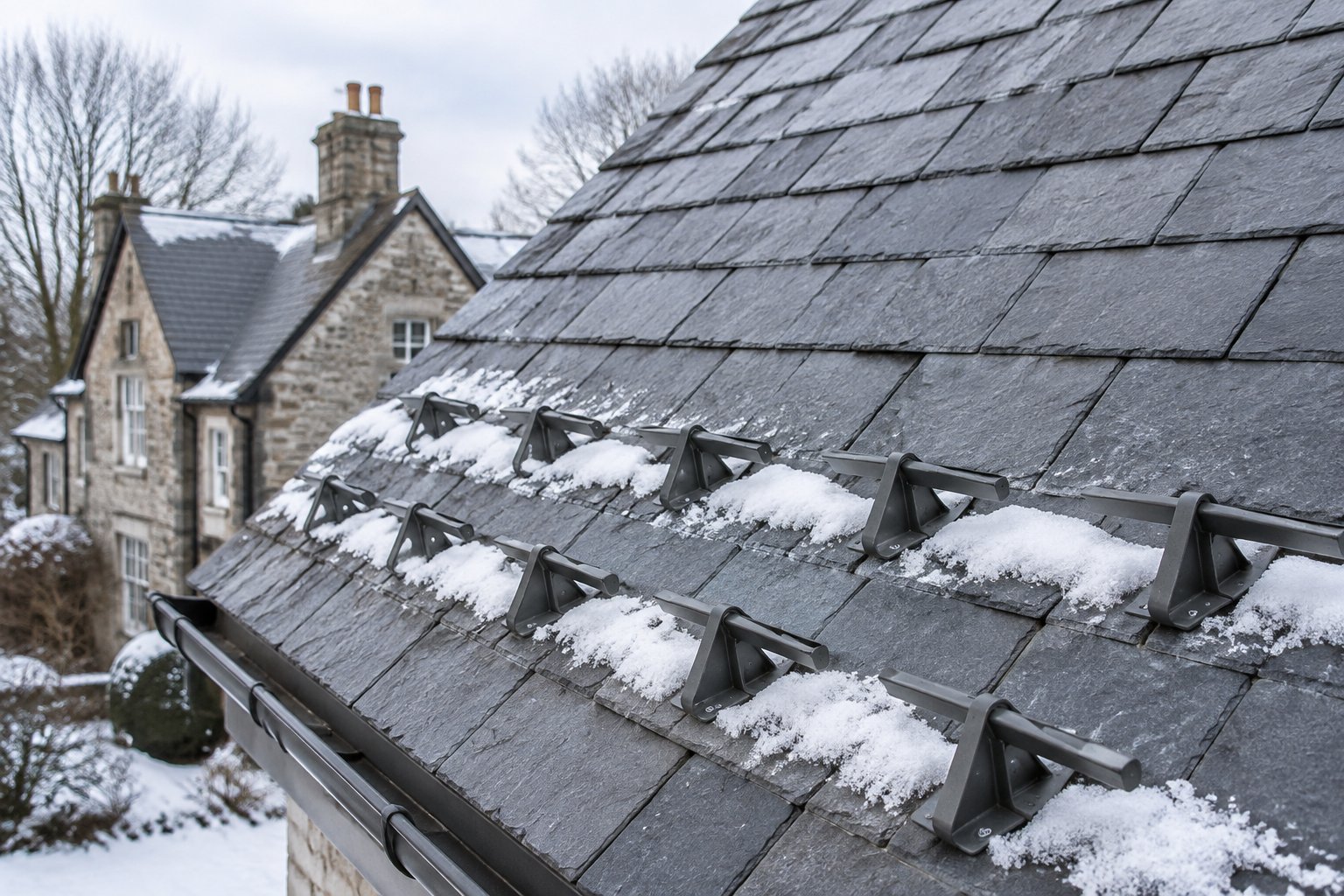
Have the hooks arrive with the slate. We stock them as part of our slate roofing accessories alongside copper nails and snow guards, so the fixings and the stone travel on one delivery.
Timing
Get the replacement slate on site before the crew starts pulling broken pieces, because once the slates are off the roof stays open until the match arrives. Our orders typically ship 3 to 7 business days after confirmation, crated and palletized, with liftgate service and scheduled delivery on request. Inspect the crates on arrival and report freight damage within 48 hours, since reclaimed slate sales are final.
Stock depends on the batch, so check availability in your size and color before you set a start date rather than after.
Match the fixing to the slate and the roof
Use hooks where they let you keep sound slate in place: single repairs in a healthy field, relays where old holes no longer suit the gauge. Use nails where the roof is already open, the slate is thick and hard, or a review board will be looking at every butt line. On landmark work, clear the hook finish with the board first.
Stainless for strength and coastal exposure, copper to match existing copper work. Size to the roof's exposure, with the J deep enough for the thickest pieces in the batch. Drive into sound wood, bed each slate flat, keep full lap over every joint.
A hook can only hold the slate you give it. We supply hand-inspected, sounded and culled reclaimed slate and the fixings to go with it, builder-direct, and we supply material rather than installing it. Call 225-954-8393 for current availability and a delivered price on matched slate and hooks for your job.
Frequently Asked Questions
What size slate hooks do I need?
A length that sets the slate at the roof's existing exposure, with a bend deep enough for the slate's thickness. Measure several slates on the roof, work exposure as length minus headlap divided by two, and size the bend for the thicker pieces in your batch.
Can slate hooks be used with reclaimed slate?
Yes, and that is one of their main advantages, because they need no new holes and the old ones stay hidden under the headlap above. Check the batch matches the roof's thickness so each slate seats flat in the hook.
Do slate hooks show on the finished roof?
A small tip of each one shows at the butt. Black-coated stainless is hardest to see on dark slate. Copper darkens over time, though new bright copper stands out at first.
Can you screw into slate instead of using a hook?
No. A screw through the exposed face leaves an open hole for water and puts the slate under stress, which cracks it. Use a hook, or a nail through the joint with a copper bib over it.
Can hooks fix widespread slipping caused by failed nails?
No. Slates slipping across large areas means the nails have gone, and hooking each one individually leaves the rest of the failing fixings and the deck untouched. The proper repair is to strip the roof, save the sound slate and relay it on copper or stainless fixings, buying matched slate only to cover breakage.