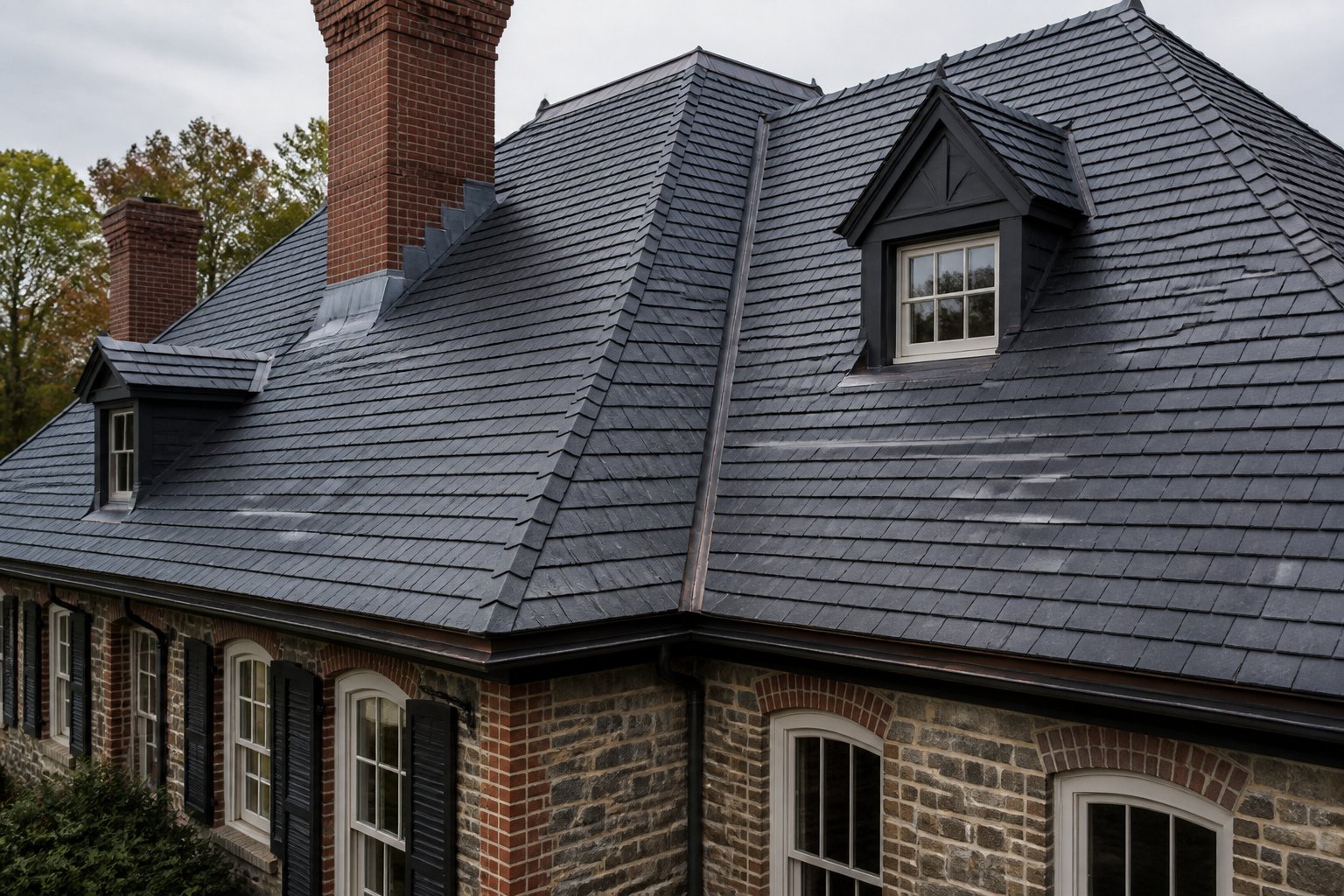
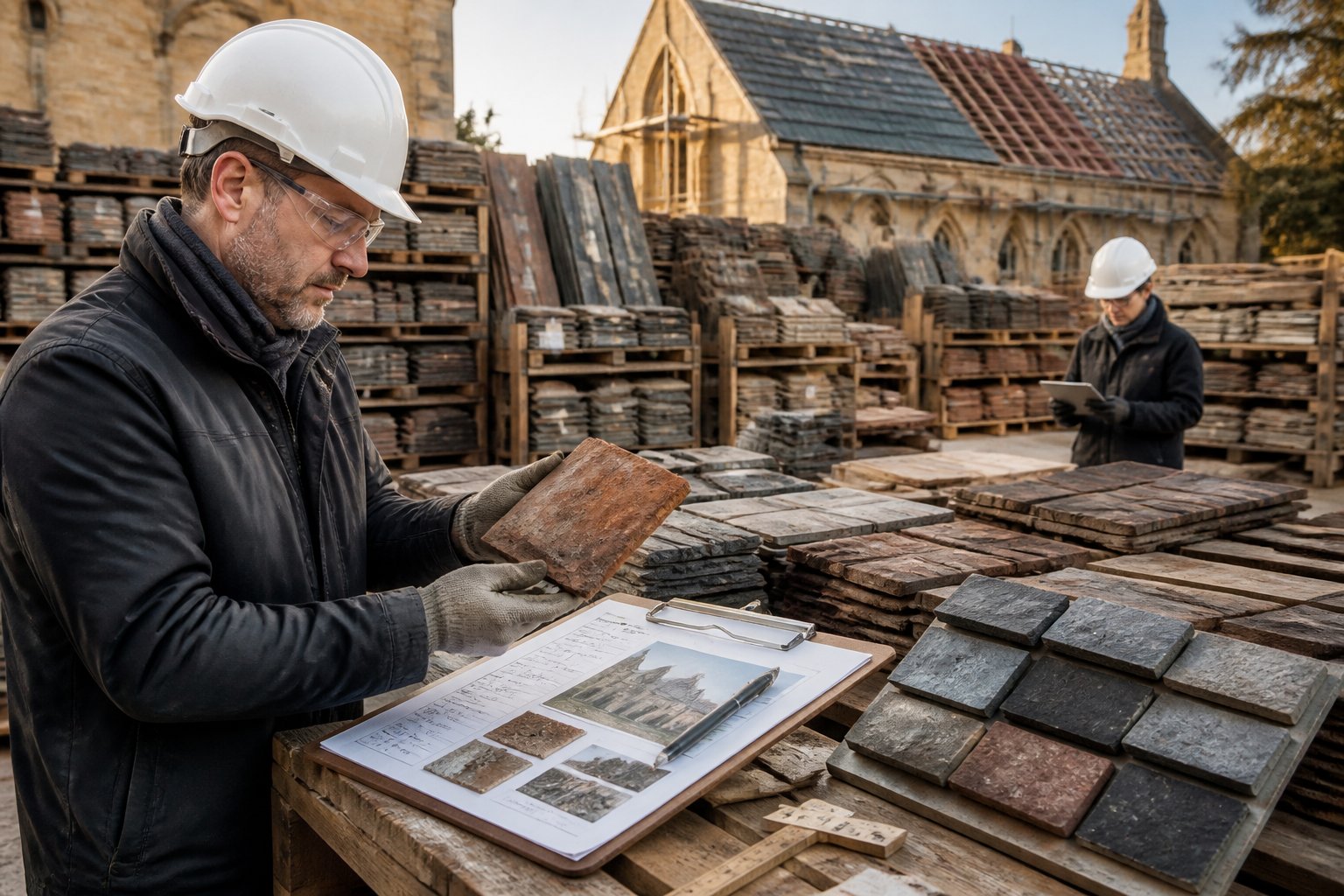
Finding real antique slate for a custom project does not need to slow you down. The key is working with reclaimed material that has already been inspected and vetted. You get the character of historic roofing without the risk of inconsistent quality or hidden defects.
This guide covers how to identify genuine antique slate, choose the right colors and sizes for your design, and source materials without disrupting your timeline or budget. You will also get practical guidance on working with suppliers, handling and storing slate, and planning for custom cuts or finishes.
If speed matters or you want consistent, proven material, Reclaimed Slate Roofing simplifies the process with pre-vetted inventory and direct-to-jobsite delivery.
Antique Slate
Antique slate changes depending on its age, quarry, and previous use. Let’s get into how to spot the real stuff, the types you’ll run into, and the surface quirks that give each tile its own personality.
When you hear “antique slate,” think slate quarried and used decades—or even centuries—ago. Original cut marks, nail holes, and weathering from years of service are good signs you’re looking at the real deal, not a modern knockoff.
If you can, check where it came from. Demolition records or details from historic projects help confirm age. Some suppliers, like Reclaimed Slate Roofing, actually inspect and document their batches, which makes your life easier when you need to match or spec for a project.
Durability’s key. Slate that survived years on a roof is usually still tough, but expect some variation in thickness, worn edges, and the odd chip. You’ll want to sort by grade to balance looks with performance.
Types of Antique Slate
You’ll usually find a few main types: regional quarry slate, hand-split roofing slate, and machine-cut slates from later industrial eras. Each brings its own thickness, size, and edge profile.
Regional slate stands out with its unique color and grain, tied to the original quarry. Hand-split slate comes with irregular, tapered edges—perfect for restoration jobs that need to look authentic. Machine-cut slate is more uniform, which helps if you want tidy coverage with that old-school vibe.
Sometimes you’ll spot unusual colors—purple, grey, black—or fancy shapes like fish-scale or scalloped slates. If you’re after a specific look, order extra so you can sort and match on site.
Patina
Patina is the slate’s story. Expect weathered surfaces, lichen stains, and those soft, faded colors you just can’t fake. All of this adds visual interest and proves the slate’s been around.
Check for micro-cracks and old repairs. Lots of antique slates have patched nail slots or small fixes—normal stuff, but it’ll influence where you use them. Save your best pieces for areas that take the most weather, like ridges and valleys.
It’s worth planning how you’ll clean and stabilize the slate. Gentle cleaning keeps the patina but gets rid of loose gunk. Some suppliers, like Reclaimed Slate Roofing, already do this, so you get pieces ready to install or finish.
How To Find Authentic Antique Slate
You’ll want to see real signs of age, clear origin, and proof the slate’s reclaimed and prepped for reuse. Focus on surface wear, tool marks, and any documentation about where it came from.
Visual Signs of Age
Old slate shows its years—uneven weathering, soft edges, fine crazing, maybe some delamination, and mineral streaks that match the region’s historic roofs. Colors tend to fade or mix, so don’t expect perfect uniformity.
Nail holes and patches tell a story, too. Hand-cut or older slates often have irregular holes, while machine-cut ones look more precise. Flip a tile over—bedding planes and uneven thickness are good signs it’s truly old.
Bring a flashlight and a magnet when you inspect. The magnet helps you spot any sneaky modern fasteners. Take photos from a few angles so you can compare batches and track condition.
Testing Provenance
Ask for provenance paperwork before you buy. Demolition records, salvage manifests, or even photos of the slate still on the original building help confirm age. This can really matter if you’re restoring something historic.
If you need to check durability, request a simple bend or drop test from a roofer. For more technical jobs, lab results on water absorption or freeze-thaw resistance can be handy.
Shipping records and lot numbers let you trace pieces back to where they came from. That’s a big help if you ever need to prove authenticity for permits or picky clients.
Recognizing Reclaimed Slate
Reclaimed slate’s been cleaned up and sorted for reuse. Expect minor chip repairs, grouped thicknesses, and labels for size and color. Good suppliers sort slates into matching gauges and note where they came from.
Look for signs of professional prep: washed surfaces, old mortar gone, and repaired nail holes if needed. You should be able to use reclaimed pieces without a ton of extra work.
If a supplier offers delivery documentation and a return policy, that’s a good sign. Reclaimed Slate Roofing, for example, inspects and cleans their batches so you get builder-grade antique slate that’s ready to go.
Sourcing Antique Slate for Custom Projects
When you are sourcing antique slate, the goal is simple. Get material that is authentic, consistent, and ready to install. At Reclaimed Slate Roofing, every slate is reclaimed from historic structures, then inspected, cleaned, and sorted before it ever reaches a pallet. You know exactly what you are getting, and it arrives ready for the jobsite.
We focus on clear sourcing, reliable grading, and fast delivery. That keeps your project moving and removes guesswork from ordering.
Where Our Antique Slate Comes From
Our inventory starts at architectural demolition sites and historic buildings across the United States. We recover full-sized slate in natural tones like purple, green, and gray. These are not reproductions. They are original materials with proven longevity.
Every batch is documented and photographed. You can review origin details and see exactly how the slate looks before you commit. Materials are then cleaned, sorted by size and thickness, and palletized for efficient shipping.
If you are working with a specific color range or need a consistent look across a large roof, early reservation is key. Rare cuts and colors move quickly, especially for restoration work.
How We Verify Quality
Quality control is built into every step. Each piece is inspected for thickness, durability, and structural integrity. Damaged or unusable slate is removed from inventory. What remains is job-ready material that meets professional standards.
We check for:
- Consistent thickness and clean cleavage
- Minimal breakage and structural soundness
- Surface condition and weathering suitability
You also get clear policies on shipping, damage, and returns. Lead times are defined upfront so you can plan your schedule with confidence. Most orders ship within a few business days and arrive directly at your jobsite.
Choosing the Right Slate for Your Project
Pick slate that works for your roof’s slope, weight limits, and the look you’re after. Focus on type, condition, and exact sizing to avoid headaches and extra costs.
Matching Slate Types to Project Needs
Think about natural, engineered, and reclaimed slate based on what your project needs. Natural slate lasts ages and comes in all sorts of colors, but it’s heavier and needs beefier rafters. Engineered slate is lighter and more uniform, which can be a lifesaver for tricky framing or tighter budgets. Reclaimed slate brings real patina and color variety—often the best match for historic roofs.
Try to match the grain and color to nearby materials. For historic work, look for reclaimed pieces with similar cleavage and wear. For new roofs, pick thickness and grade based on wind and warranty needs.
Evaluating Slate Condition
Inspect each tile for cracks, delamination, or old repairs. Give them a tap—if it sounds hollow, it might have internal breaks. Look for even thickness and solid nail holes.
Ask the supplier about origin and testing. Request batch photos and cleaning documentation. If you’re buying reclaimed slate, count on some wear—plan on a 5–10% overage for cuts and waste.
Stone Measurements and Sizing
Measure the actual length, width, and thickness—not just what’s on the label. Note the exposure (what you’ll see once it’s installed) and headlap to figure out how many you need per square. Reclaimed pieces vary a lot, so make a list of the sizes you want (like 8x16, 10x20 inches) before ordering.
Here’s a quick checklist:
- Count slates per square for each size.
- Add 5–10% for waste, and 10–20% more if you’re matching colors.
- Check that shipping lots are consistent to avoid color shifts.
If you’re working with Reclaimed Slate Roofing, ask for photos of pallets and lots to make sure sizes and colors match before they ship.
Transporting and Storing Antique Slate
Plan for careful handling, weather protection, and secure stacking so your slate arrives in one piece and stays usable. Use padded supports, tarps, and dry storage to prevent chips, stains, and mold.
Handling and Protection Tips
Always lift slate by the edges—never slide them together. For big pieces, use two people and carry them on edge to avoid cracks.
Wrap fragile or weirdly shaped pieces in blankets or cardboard. Use edge protectors and nylon straps on bundles. Mark crates “FRAGILE” and note which side is up.
Check each tile before loading. Leave behind any with active delamination or loose layers. Keep a simple damage log with photos to track any issues.
Wear rubber-soled boots and gloves with cut-resistant liners. You’ll avoid slips and keep hand oils and grit from scratching the slate.
Short-Term and Long-Term Storage
For short-term storage, pick a flat, well-ventilated spot on site. Stack slate on treated timber battens, spaced 12–18 inches apart, to keep tiles flat and off the ground.
For longer storage, use a dry, covered area with temperature control if you can swing it. Pallets go on shelves or racks, and layers get separated with foam or cardboard to stop scratching.
Keep older, more delicate pieces on top so you don’t have to move heavy bundles to get to them. Use your oldest stock first to avoid moisture damage and staining.
Cover stacks with breathable tarps—plastic traps condensation, which is bad news. Toss in desiccant packs if it’s humid.
Transportation Considerations
Pick a truck that fits your haul—flatbed or enclosed van, depending on distance and weather. If rain’s in the forecast or you’re driving far, go with an enclosed option. Always strap down bundles using ratchet straps and pad the corners so nothing gets gouged.
For odd-shaped or valuable batches, build timber crates that fit the slate tightly. Screw them shut and staple a moisture barrier inside the lid. It’s a bit of extra work, but it pays off.
Try to plan routes that skip rough roads, sharp turns, or anything that’ll rattle the load. Keep speeds moderate over bumps. Tell drivers to avoid “jumping” the truck on ramps—sounds obvious, but it happens.
If you’re ordering from Reclaimed Slate Roofing, double-check the packing list and ask for photos before they ship. Once it arrives, have someone on-site inspect and sign off right away to record the condition.
Customizing Antique Slate for Unique Projects
Antique slate can become just about anything you want—if you’re willing to put in the effort. Cutting, finishing, and grading let you dial in the look and durability for your project.
Common Uses in Modern Design
You’ll see antique slate on full roofs, accent bands, dormers, and shed porches. Big, random-width pieces work for main roof fields; tuck smaller ones on dormers or transitions to keep things visually balanced.
Mix up colors and textures for patterns—herringbone, graduated courses, contrast borders. If you know what you want, specify sizes and grades early so sellers can sort batches for you. Modern underlayment and flashing pair well with reclaimed slate on new builds, so you get code compliance and that classic look.
List of practical uses:
- Full restoration roofs with like-for-like tiles
- Accent courses and ridge detailing
- Wall cladding, fireplace surrounds, and paving in dry areas
Expert Restoration Techniques
Start by checking each slate for soundness and water absorption. Only swap out what’s shot; save the best pieces for visible spots and use the rest where they won’t show.
Cut slates with a diamond blade or water-cooled scorer—less chance of cracking. Dress the edges by hand for a clean look. When you’re re-laying, stick to the original coursing and nail patterns. Use copper or stainless-steel nails, and always go with a breathable underlay to avoid trapping moisture.
Repair tips:
- Match thickness and face size to existing slates
- Use as little mortar as possible on eaves and ridges so things can move
- Note where you place unique pieces—makes future repairs easier
Working With Stone Craftspeople
Hire roofers and stoneworkers who’ve actually worked with slate before. Ask for photos of past jobs and references from similar projects.
Give them clear specs: slate sizes, weathering expectations, and how many visible pieces need to be top-notch. Schedule a pre-install material inspection so you can handle sorting and cutting before the roofing crew shows up.
Questions to ask tradespeople:
- How do you secure thin vs. thick slates?
- What flashing details do you use with reclaimed materials?
- Can you make a small mock-up for approval before the full install?
Source Antique Slate With Confidence
Finding real antique slate should not slow your project down. When the material is properly reclaimed, inspected, and sorted, you get proven durability with the character only historic roofing can offer.
The process comes down to a few fundamentals. Verify the source. Check condition and consistency. Order the right quantity and grade for your scope. Plan for handling, storage, and installation before the material arrives. When these steps are handled upfront, you avoid delays, reduce waste, and keep the job moving.
Antique slate is not uniform. Expect variation in thickness, color, and edge detail. That variation is the value. It is what makes restoration work accurate and new builds stand out. The key is controlling that variation through proper sorting, batching, and planning.
For contractors and architects working on tight timelines, sourcing matters as much as installation. Reclaimed Slate Roofing supplies authentic, reclaimed slate that is cleaned, vetted, and palletized for immediate use. Orders ship quickly and arrive ready for the jobsite, so you can stay focused on the build instead of chasing material.
If your project requires real slate with proven performance, start with material you can trust.
Frequently Asked Questions
Here’s where you’ll find info on buying authentic reclaimed slate, what to inspect, regional sources, and how to use antique clay tiles in new builds. It covers dealer checks, material tests, and steps to confirm age and durability.
How do I find reputable dealers for reclaimed roofing slate?
Look for dealers who actually inspect, clean, and grade every piece. Ask for photos, batch reports, and references from contractors who’ve used their slate.
Check their delivery terms and lead times. Fast shipping and jobsite delivery help keep your project moving.
Reclaimed Slate Roofing is one source worth asking about—they handle vetting and ship nationwide.
What should I look for when selecting antique slate for renovation projects?
Check for consistent thickness and straightness so the slate fits your roof pattern. Focus on pieces with few fissures and solid nail holes.
Match color, texture, and size to your existing tiles. Keep some extras for repairs down the line.
Can I purchase old slate roof tiles for a custom building design?
Absolutely. You can buy reclaimed slate in full batches or mixed lots for a more varied look. Specify the sizes and edge profiles you want for your layout.
Order extra material to cover cuts and waste. You’ll often get unique shapes in reclaimed lots—great for accents.
Are there specific regions or outlets that specialize in selling durable slate?
Areas with lots of historic buildings—think Northeastern U.S. or parts of Europe—are known for high-quality, weather-tested slate.
Dealers who pull from architectural demolition sites and inspect their stock usually offer the best batches.
What are the best practices for incorporating antique clay roof tiles in new constructions?
Test tile strength and frost resistance before you install. Use modern underlayment and flashing to meet today’s code and performance standards.
Hire roofers who know reclaimed materials. They’ll adjust batten spacing and fastenings to fit those older tile profiles.
How do I verify the quality and authenticity of slate when buying for restoration purposes?
Ask about provenance—where the slate actually came from, and see if there are any historical records or photos. Get the dealer to share a condition report that covers thickness, breakage rate, and any visible repairs.
If you can, try out a sample right there to see how it fits and weathers. Before committing to the whole batch, take a look at the delivery yourself to make sure the pieces are consistent. Sometimes, it’s the only way to really know what you’re getting.