A broken tile in your hand and a catalog that has nothing like it is where most of these decisions start. Maybe you are patching a slate roof without leaving an obvious scar, or writing a spec for a new build the client wants to read as old. Either way, the choice between the different types of roof tiles decides how the finished roof ages, performs, and holds value for the next century.
Roof tiles are not one product. They are a family of roofing materials with very different weights, profiles, service lives, and installation rules.
A barrel clay tile roof behaves nothing like a slate tile roof. A concrete plain tile behaves nothing like either one. Get the match wrong on a heritage building, and the repair announces itself from the street.
What follows compares the tile roofing categories side by side, shows where reclaimed slate and clay outperform the alternatives, and walks through specifying material that actually fits your existing roof. You will also see what to check before you order and what to ask when a supplier's lot is variable.
It is written for contractors, architects, and owners who want the roof to look right in twenty years, not just on delivery day.
How Tile Systems Differ by Material, Profile, and Installation
Two roofs can use the same tile material and still perform very differently. The profile, the fixing method, and the deck underneath do most of the work.
Comparing Different Types of Roof Tiles by Material and Profile
Roof tile materials break into a few clear families: natural slate, fired clay, concrete, metal, composite, and wood. Profile is the second variable. A flat plain tile lies in overlapping courses, while a curved barrel tile creates deep shadow lines and channels water fast.
Interlocking roof tiles change the math again. As the National Park Service notes in its overview of historic clay roofing tiles, mated ridges and grooves cut the required overlap, which lowers total roof weight and framing demand.
How Roof Pitch, Weight, and Underlayment Affect Tile Selection
Roof pitch drives the shortlist before color ever enters the conversation. Most tile roofing wants a pitch of 4:12 or steeper. Some barrel systems want more.
Weight matters just as much. Slate and clay commonly run 700 to 1,200 pounds per square, so the framing has to carry it. Underlayment is the quiet hero here, since the tile sheds water and the underlayment catches what gets past.
Weather Resistance, Fire Performance, and Service Life
Natural slate and fired clay both offer strong weather resistance and Class A fire performance. Neither burns nor rots, and neither softens in a heat wave.
Service life separates them from everything else:
- Natural slate: 75 to 100+ years, often longer on well-maintained roofs
- Clay tile: 60 to 100 years, with color that does not fade
- Concrete tile: 40 to 60 years, with gradual color loss
- Asphalt shingles: 15 to 30 years
Once lifespan enters the picture, natural stone earns a closer look, and reclaimed slate is where that conversation usually starts.
Natural and Reclaimed Slate for Heritage and High-End Roofs
Slate is a metamorphic rock split along natural cleavage planes. That is why a slate roof tile can sit outside for a century and still ring solid when you tap it.
Why Natural Slate Remains a Long-Life Roofing Material
Durability comes down to the stone itself, how it was split, how it was installed, and how it was maintained. The National Park Service brief on slate roof repair identifies those same four factors.
Good slate absorbs very little water. That low absorption is why freeze-thaw cycles do not shatter it the way they crack softer stone.
Reclaimed Slate for Historic Repairs and Full Roof Replacements
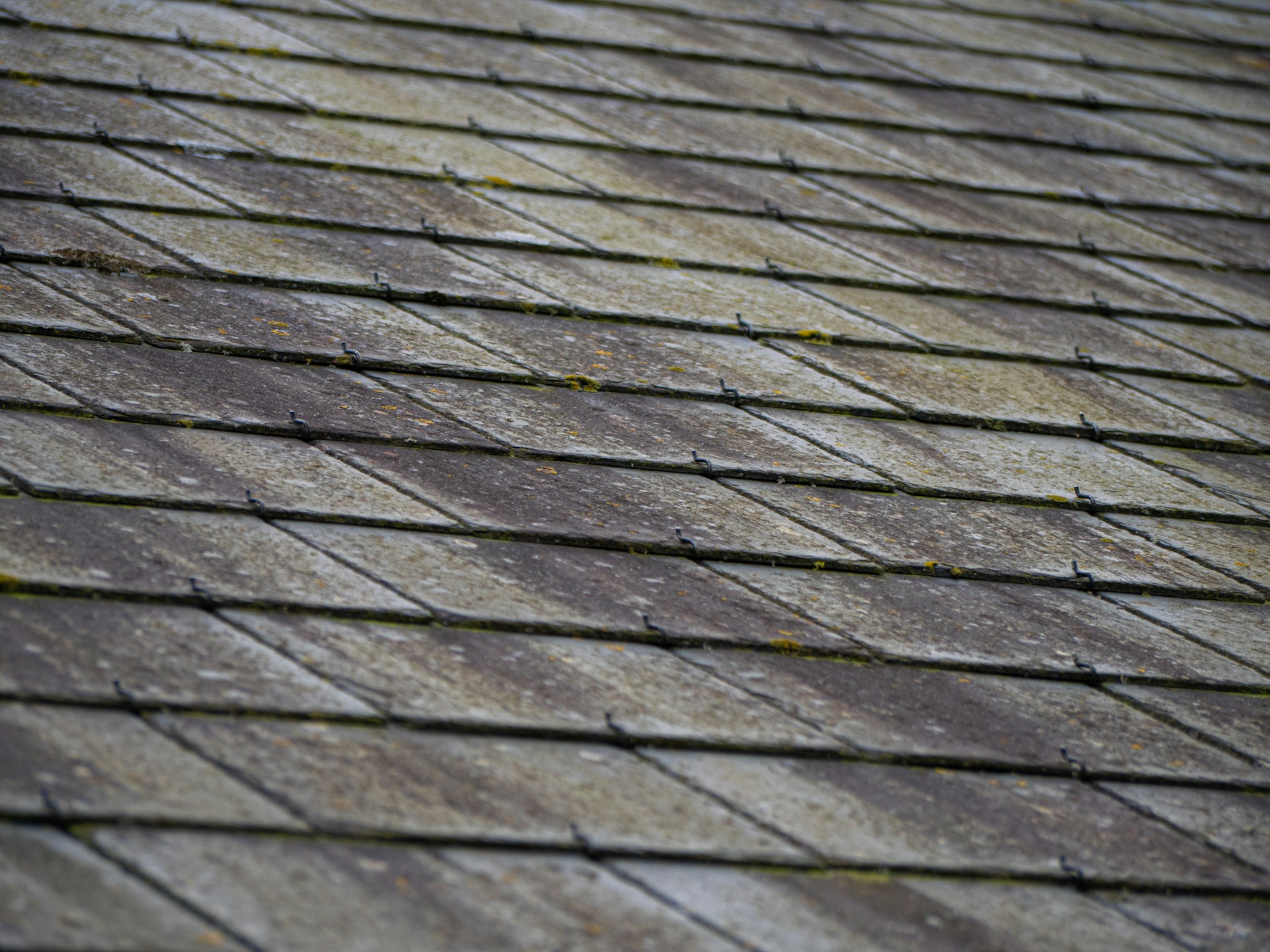
Salvaged slate arrives already weathered. It has been through decades of sun and rain, so what is left has proven itself. That is a real advantage in a repair where new stone would sit bright against aged neighbors.
Reclaimed slate also works for full replacements when a client wants the roof to read as original. Guidance on reclaimed materials for historic roofs covers how salvaged stock fits preservation work.
Slate Colors, Patina, and Random-Width Formats
Reclaimed slate is sold in 20-inch random, 18-inch random, and 16-inch random widths. Random width is how historic roofs were laid. It is why a modern uniform roof can look flat by comparison.
Color variants include Semi Weathering Green, Purple, Mottled Green with Purple, Grey, and black slate tiles with the original surface left uncleaned.
When to Specify Black, Grey, Green, Purple, or Buckingham, Black Slate
Grey suits most traditional and transitional work. Black gives a sharp contrast against limestone, brick, or light siding. Purple and Semi Weathering Green belong on Northeastern restorations where those tones are original to the region.
Buckingham Black slate from Virginia holds its color unusually well and is prized on high-end and landmark roofs. It is scarce, so availability shifts. Clay opens a different design vocabulary entirely.
Clay Tile Profiles for Traditional and Mediterranean Architecture
Fired clay has covered roofs since Roman times, and the shapes have barely changed. Color comes from the clay body itself, not a coating, so it does not wash out.
Types of Clay Tile Roofs and Their Restoration Uses
The main types of clay tile roofs are split by curvature: flat plain tiles, single-curve pantiles, double-curve mission and barrel tiles, and low-profile Roman tiles. Each belongs to a regional building tradition.
Matching that tradition matters in restoration work. A Spanish Colonial roof re-covered in flat plain tiles loses the shadow depth that defines the style.
Reclaimed Terra Cotta Roof Tiles for Aged Color and Patina
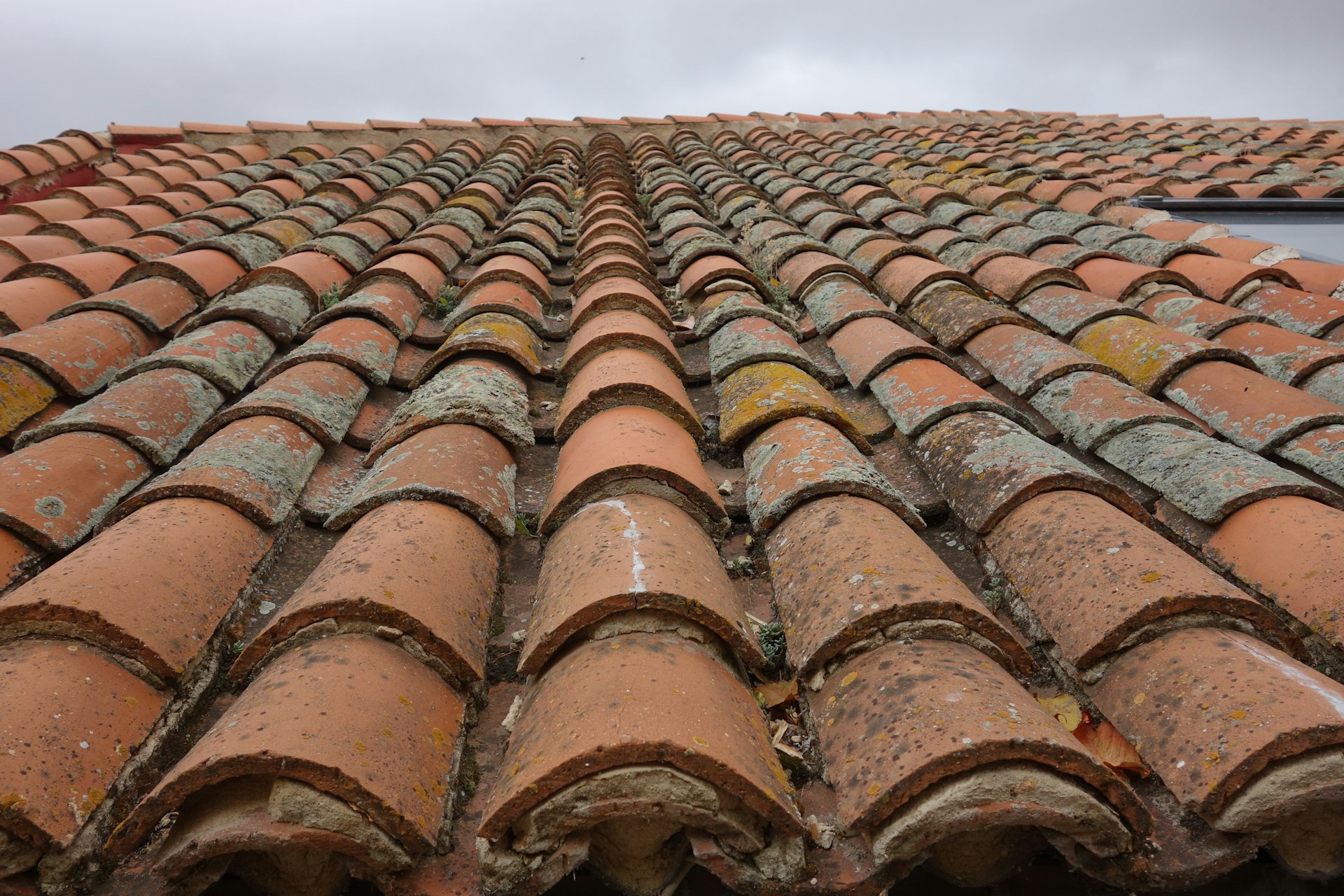
Reclaimed terra cotta roof tiles bring warm orange-red tones softened by decades of weathering. Many carry lichen, mineral streaking, and slight color drift across the lot.
That variation is the point. New terra cotta arrives uniform. Uniform is exactly what a hundred-year-old roof is not.
Reclaimed Mission Roof Tiles for Spanish Colonial Rooflines
Mission tiles are tapered half-cylinders laid in alternating cap-and-pan courses. The taper lets tiles nest and shed water down deep channels.
Reclaimed mission roof tiles are the credible choice for Spanish Colonial and Mediterranean Revival restorations, where the roofline is the building's signature feature.
Reclaimed Barrel Roof Tiles for Curved, Layered Roof Assemblies
Barrel clay roof tiles use a consistent half-round curve rather than a taper. They create strong, repeating shadow lines across the slope.
When sourcing reclaimed barrel roof tiles, check for:
- Consistent curvature across the lot so courses sit flat
- Sound tiles with no hairline cracks or delamination
- Color range that reads as intentional variation, not mismatch
- Enough overage for cuts, hips, and future repairs
Plain Tiles, Pantiles, Roman Tiles, and Interlocking Clay Pantiles
Clay plain tiles are small flat rectangles, usually double-lapped, common on English vernacular and Arts and Crafts roofs. Pantiles use a shallow S-curve and lay in a single lap.
Roman tiles combine a flat pan with a raised roll. Interlocking clay pantiles add side and head locks for tighter joints on exposed sites. Practical advice on sourcing authentic reclaimed clay helps when the profile is unusual. Other materials solve different problems.
Concrete, Metal, Composite, Wood, and Solar Alternatives
Not every project calls for stone or fired clay. Budget, structure, and energy goals all push some buyers toward other roof tile types.
Concrete Roof Tiles and Concrete Plain Tiles
Concrete tiles copy clay profiles at a lower cost. They are heavy, often heavier than clay, and the pigment sits in the mix rather than the material. Concrete plain tiles work on tract housing and value-driven builds. On a heritage roof, they usually read as too regular, too crisp, and too modern.
Metal Roof Tiles and Tile-Look Metal Roofing
Metal roof tiles are stamped steel or aluminum panels shaped to mimic tile. A metal tile roof weighs a fraction of a clay tile. This suits framing that cannot take a load. Metal roofing performs well in wildfire zones and high-wind coastal areas. Up close, the pressed profile rarely fools anyone.
Composite and Synthetic Roof Tiles
Composite roof tiles use polymer blends molded from real slate. They are light and consistent, but the molds repeat across the roof. Ultraviolet exposure also dulls them over time. A comparison of synthetic slate roofing tiles covers where the differences show.
Cedar Shakes and Shake Roof Tiles
Cedar shakes offer natural texture and silver aging. Shake roof tiles need treatment for fire codes and regular maintenance in damp climates.
Solar Roof Tiles for Integrated Energy Production
Solar roof tiles replace conventional tiles with photovoltaic units. Cost per square is high, and repair means working with an electrician. For listed or historic buildings, visual impact is a real constraint. Specification is where all of this gets decided.
Specifying Tile for Restoration, Repair, and New Construction
The spec is where a good material choice either survives or gets value-engineered into asphalt shingles. Precision at this stage protects the whole project.
Matching Existing Tile Dimensions, Exposure, Thickness, and Color
Pull three or four sample tiles off the existing roof before ordering anything. Measure length, width, thickness, and hole placement, then calculate the exposure on the slope.
Photograph the samples in daylight, dry and wet. A historic slate matching guide walks through the comparison step by step.
Structural Review and Installation Requirements for Heavy Tile
Have an engineer confirm the deck and framing before you commit to slate or clay. Rafter spacing, batten condition, and fastener type all need review. Copper or stainless fasteners are standard on slate. Galvanized nails fail long before the stone does.
Balancing Historic Accuracy, Budget, Maintenance, and Curb Appeal
Reclaimed material often costs less than new premium slate while delivering better character. Maintenance stays low when flashings are detailed correctly.
Curb appeal follows from getting the profile, color, and exposure right together. Budget belongs in that same early conversation, before a value-engineering pass quietly swaps the spec for something cheaper.
When Reclaimed Materials Offer the Most Credible Match
For a roof built before 1950, salvaged stock from the same era is usually the closest match available. Confirming that stock is real is the next step.
Confirming Authentic Reclaimed Material for Your Project
Reclaimed inventory is finite and lot-specific. That is why the buying process runs on photos and phone calls. Not a checkout button.
Reviewing Batch Photos, Tile Counts, and Condition Before Ordering
Ask for batch photos of the actual lot, not catalog images. Confirm piece count, size format, and condition before approving. Reclaimed orders are typically final sale. The approval step carries weight. Reclaimed slate sourcing tips cover what to ask.
Planning Freight Delivery and Job-Site Handling
Slate and clay ship crated and palletized. Confirm liftgate needs, delivery window, and whether the site can take a full-size truck, then inspect the crates on arrival and report any freight damage within 48 hours.
Checking Variable Slate and Barrel Clay Tile Availability
Rare formats move fast. Buckingham Black, Purple, and Mottled Green with Purple are not always on hand. Barrel clay lots vary by salvage. Call with your square footage, exposure, and target color range. Most orders ship within 2 to 5 business days once confirmed.
Frequently Asked Questions
What Are the Most Common Roof Tile Materials Used on Residential and Heritage Roofs?
Natural slate, fired clay, and concrete cover most tile roofs in the United States. Heritage buildings lean heavily on slate and clay because those materials were original to the period and still perform.
What Type of Roof Tile Is Best for a Historic Restoration Project?
Reclaimed slate or salvaged clay from a similar era gives the most credible result. Age-matched material already carries the patina and dimensional variation that new products cannot reproduce.
How Can I Identify Whether Existing Roof Tiles Are Clay, Concrete, Slate, or Composite?
Slate splits into visible layers and rings when tapped. Clay is fired through with consistent color at the break. Concrete shows a grey aggregate core, and composite feels light and flexes slightly.
What Is the Most Popular Roof Tile Profile, and Where Is It Typically Used?
The barrel or mission profile is the most recognized clay format. It is common in Spanish Colonial and Mediterranean homes across the Southwest and Florida. Flat slate remains dominant on Northeastern and Mid-Atlantic historic roofs.
How Do Clay, Concrete, and Natural Slate Tiles Compare in Cost and Service Life?
Concrete is the lowest upfront cost with roughly 40 to 60 years of life. Clay costs more and lasts 60 to 100 years. Natural slate carries the highest material cost and often lasts for 100 years.
Which Roof Tile Types Are Suitable for Low-Pitch and Steep-Pitch Roofs?
Interlocking and low-profile tiles handle shallower pitches better because of tighter joints. Slate and deep barrel clay perform best on steeper slopes where water sheds quickly, and wind uplift is managed with proper fastening.
Match the Material to the Building, Not the Budget
The difference between a repair that disappears and one that stands out comes down to material honesty. Profile, exposure, thickness, and weathering have to line up with what is already on the building.
If you are matching a historic roof or specifying a heritage build, work from real lot photos and real dimensions before committing. Reclaimed Slate Roofing keeps Semi Weathering Green, Purple, Mottled Green with Purple, Grey, Black, and Buckingham Black slate in 20-inch, 18-inch, and 16-inch random formats. Barrel Clay Roof Tiles are available as salvage allows.
Call 225-954-8393 with your square footage, exposure, and target color range, and we will tell you what is actually on hand and what it costs. You can also browse current salvaged inventory at reclaimedslateroofing.com. Most orders leave within 2 to 5 business days on coordinated job-site freight.