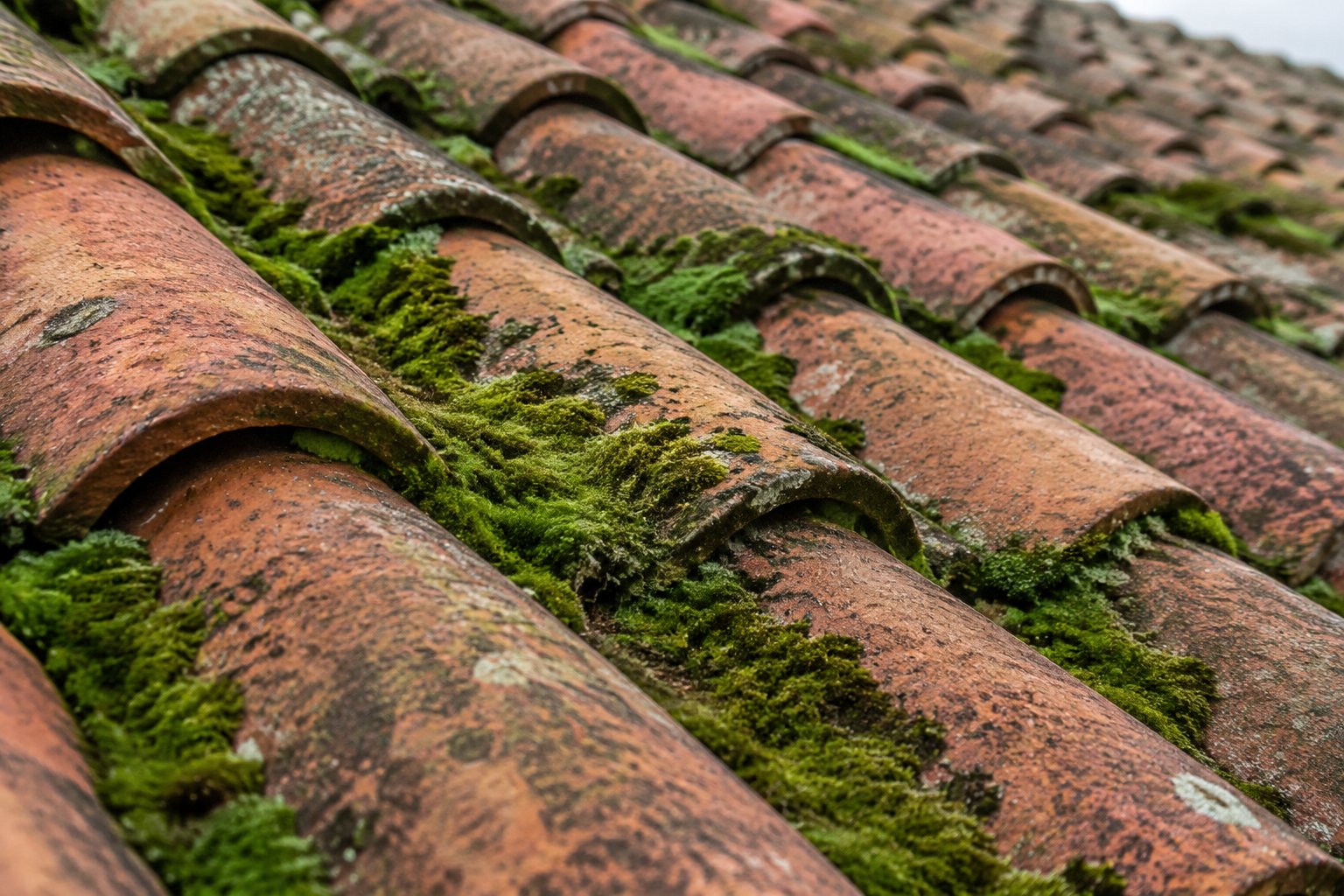
The roof has moss, lichen or dark streaks, and somebody wants it to look clean. On a period roof, or on new work laid with salvaged slate, satisfying that request can do more damage than the growth ever would.
Clear debris from valleys and gutters by hand. Remove only the moss that traps water or blocks drainage, with a soft brush and plain water or a mild slate-safe cleaner. Never pressure wash. The weathered surface and the color drift built up over decades are a large part of what the roof is worth, and once they are off, there is nowhere to buy that surface back.
What needs cleaning and what should be left
Most growth on slate is cosmetic. The first job is separating it from growth that holds water. Slate is dense and a well-laid roof lasts 60 to 125 years or longer depending on the stone and the workmanship. Lichen and light staining do not meaningfully shorten that. Thick moss in the wrong place does.
Why pressure washing is the wrong starting point
It is one of the most common ways a sound slate roof gets damaged during cleaning. The jet drives water up and under the courses, past the headlap, onto the underlayment and the deck. Slate sheds by overlap and gravity, laid for rain falling down the slope, so a spray aimed sideways or upward reaches places rain never does.
The jet also erodes the slate's weathered skin, opening the surface on softer or older stone and accelerating flaking. It strips lichen and patina unevenly, leaving blotches of clean slate beside aged slate, which is worse to look at than the moss was. On a roof with corroded nails, the force alone lifts and shifts slates. The National Park Service warns against abrasive cleaning on historic buildings for precisely this reason: the damage to the original surface is permanent.
Telling patina from moisture-holding growth
Patina is the color shift, the soft weathering and the thin crust of lichen built up over decades. It lies flat on the slate and dries quickly after rain. Leave it. On a restoration it is what makes the roof read as period-correct.
Moisture-holding growth behaves differently. Thick moss cushions stay damp for days after rain, bridge the gaps between slates, pack the keyways and build up at the butt edges, with clumps collecting in valleys and gutters. That growth wicks water up under the courses, holds it against the nails and feeds freeze-thaw damage in cold climates. Mark those areas. The rest of the roof stays as it is.
Inspect before you plan anything
Ground level with binoculars first, then from a ladder at the eaves, then the attic. Look for slipped or missing slates, flaking faces, rust stains below the nail lines and daylight through the deck. Gutters holding slate chips or nail fragments point at failing fixings.
Check the flashings at chimneys, walls and valleys, and note anywhere water pools or backs up. Slate wants a minimum pitch of about 4 inches of rise per 12 inches of run to shed properly, so look hard at low-pitch areas and dormer cheeks.
What you find decides the job. A roof with sound slate and sound fixings can be cleaned. A roof with failing fixings needs repair first, and cleaning it beforehand just breaks slate for nothing.
Tools and cleaners that suit natural slate
Soft brushes, low-pressure water, and a mild cleaner tested on a small area first. Anything harsher trades a cleaner look for lost surface.
Brushes and water
A soft-bristle brush, natural or nylon, on a long handle so you can reach from staging or a roof ladder. Brush downslope following the lap, so nothing gets pushed under a course. Dry moss often comes away with the brush and a plastic scraper alone, which is the gentlest method there is.
For water, a garden hose with a fan nozzle or a low-pressure pump sprayer, aimed down the slope. Wet the area, work it with the brush, rinse. Stone conservators work to the same rule, using only soft brushes and gentle cleaners such as water or a non-ionic cleaner at neutral pH, never wire brushes or power washers.
When a cleaner is justified
Only when water and a brush will not shift growth that is holding moisture. Start with a mild pH-neutral detergent in water. If that fails, move to a cleaner sold for stone, and only where the label lists slate or natural stone and you can see what is in it.
Test on a small patch of a less visible slope at the label strength, rinse, and let it dry completely before judging it, watching for color change, bleaching or chalky residue. Biocidal products work slowly, so give the test patch real time rather than treating the whole roof on a first impression.
Flashings, metals and planting
Everything you put on the slate ends up on the flashings, in the gutters and in the beds below. Copper valleys, lead flashings and soldered seams react to some chemicals, so check the label for metal compatibility before anything goes on near them.
Wet the planting first, cover it, and rinse it afterwards. Point downspouts away from beds or catch the runoff. Where the roof drains to a cistern, a pond or a storm drain feeding a creek, follow the label's disposal rules rather than hoping.
What not to reach for
Acids attack carbonate in the slate along with the mortar at ridges and hips and the metal flashings. Wire brushes scratch the surface and leave steel fragments that rust into orange stains. Bleach and other salt-heavy cleaners leave residues that recrystallise inside the stone and break it down from within.
Homemade mixes are the worst option available, because you cannot know their strength, what residue they leave, or whether the result repeats on the next slope. Use something with a readable label and test it.
Found slates that need replacing? Send measurements and overcast-light photographs and we will tell you what we can match. Call 225-954-8393.
A controlled sequence for sound slate
Access, drainage, targeted treatment, final check, in that order.
Access without walking the field
Roof ladders hooked over the ridge, scaffold at the eaves, or a lift for high or steep slopes, all set up before anybody touches the roof. Foot traffic cracks slate, particularly thin or weathered slate, and on a period roof every broken piece needs a matched replacement found and delivered.
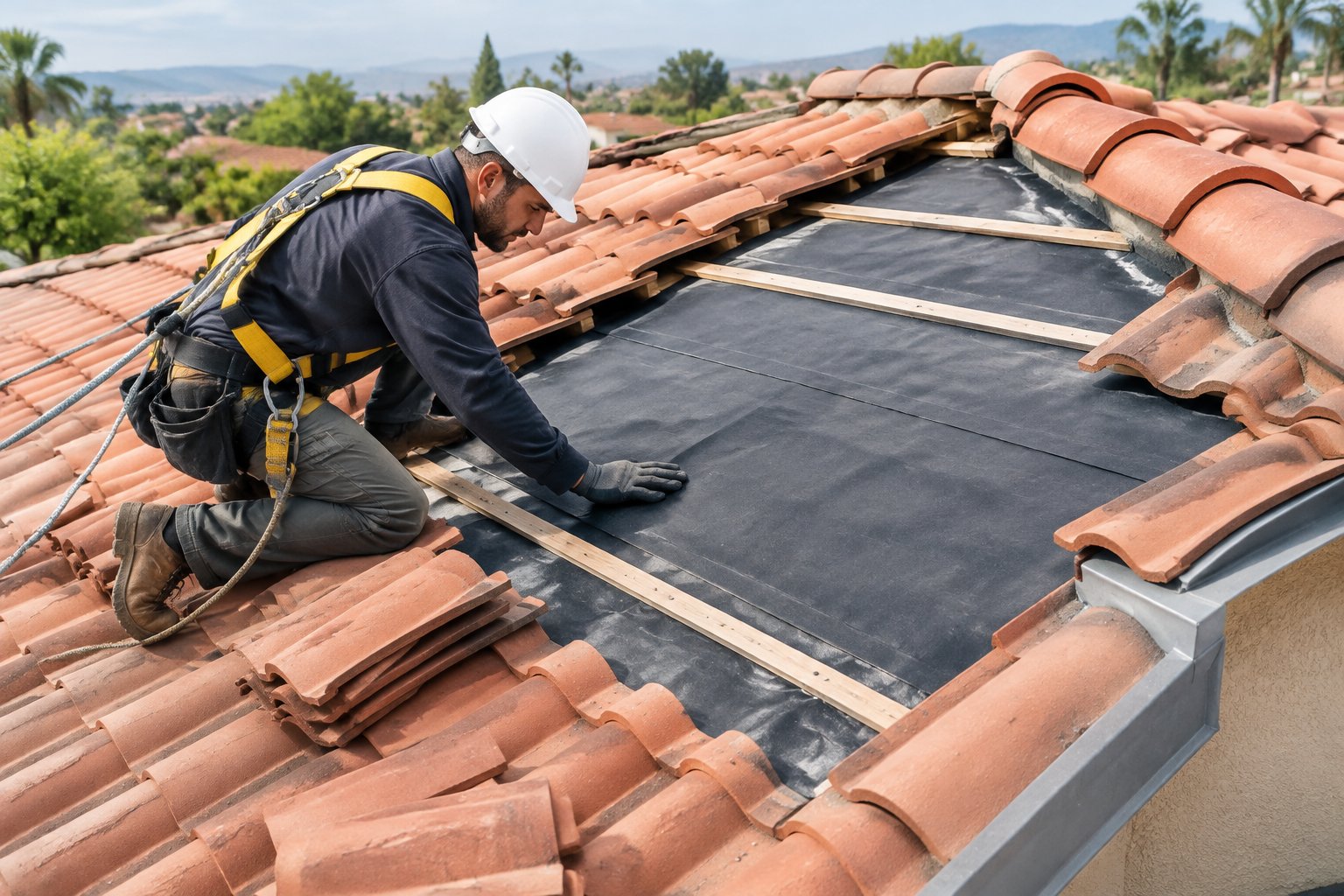
Work from the ladder or staging and move it as you go. Stay off wet, icy or cold slate, and do not wet the roof at all if the temperature may drop below freezing inside 48 hours, because water in the joints and any existing cracks will expand. Fall protection belongs in the plan from the first day, not the first scare.
Clear the low points first
Leaves, twigs and moss clumps out of the valleys by hand or with a plastic scoop. Gutters emptied, downspouts flushed, outlets and leader heads confirmed flowing.
That step alone resolves a great many slate roof water problems. A blocked valley pushes water sideways under the courses and a full gutter backs it up under the eave slates, and clearing those paths usually matters more than anything you do to the field.
Treat only what you marked
Go back to the areas noted during the inspection. Brush off the thick cushions, the moss packed into keyways and the growth bridging between slates, and leave the flat lichen and weathered color everywhere else.
Work in small sections: clear, rinse, step back and look before moving on. You are aiming for an even roof that still looks its age, because a few brightly scrubbed patches read from the ground and pull the eye straight to every repair.
Rinse properly
Where a cleaner is used, follow the label for dilution, dwell time and rinsing, and do not mix it stronger to save time. Apply from the top of the treated area and let it work down.
Rinse at low pressure aimed down the slope, keeping the flow moving to the gutter so nothing sits in the laps, and rinse the flashings and gutters too so no cleaner is left standing on metal.
Recheck once it is dry
Come back when the roof has dried out. Run water down each valley and watch it reach the outlet. Look again for slate that has shifted, cracked or started flaking, because clearing growth regularly uncovers damage the moss was hiding.
Record what you find with photographs and locations. That becomes the baseline for the next visit and feeds straight into a maintenance plan that protects slate service life.
Limiting regrowth without over-cleaning
Moss comes back where shade and moisture let it, so prevention means changing those conditions. Every scrub takes a little more surface, so fixing the cause means fewer cleanings over the roof's life.
North-facing slopes and anything under trees grow the most. Have an arborist trim branches hanging over the roof, since more sun and airflow let the slate dry between rains and dry slate holds moss poorly. Clear leaves and needles from valleys and gutters on a schedule, particularly after autumn leaf drop, because organic debris holds water and gives moss somewhere to root.
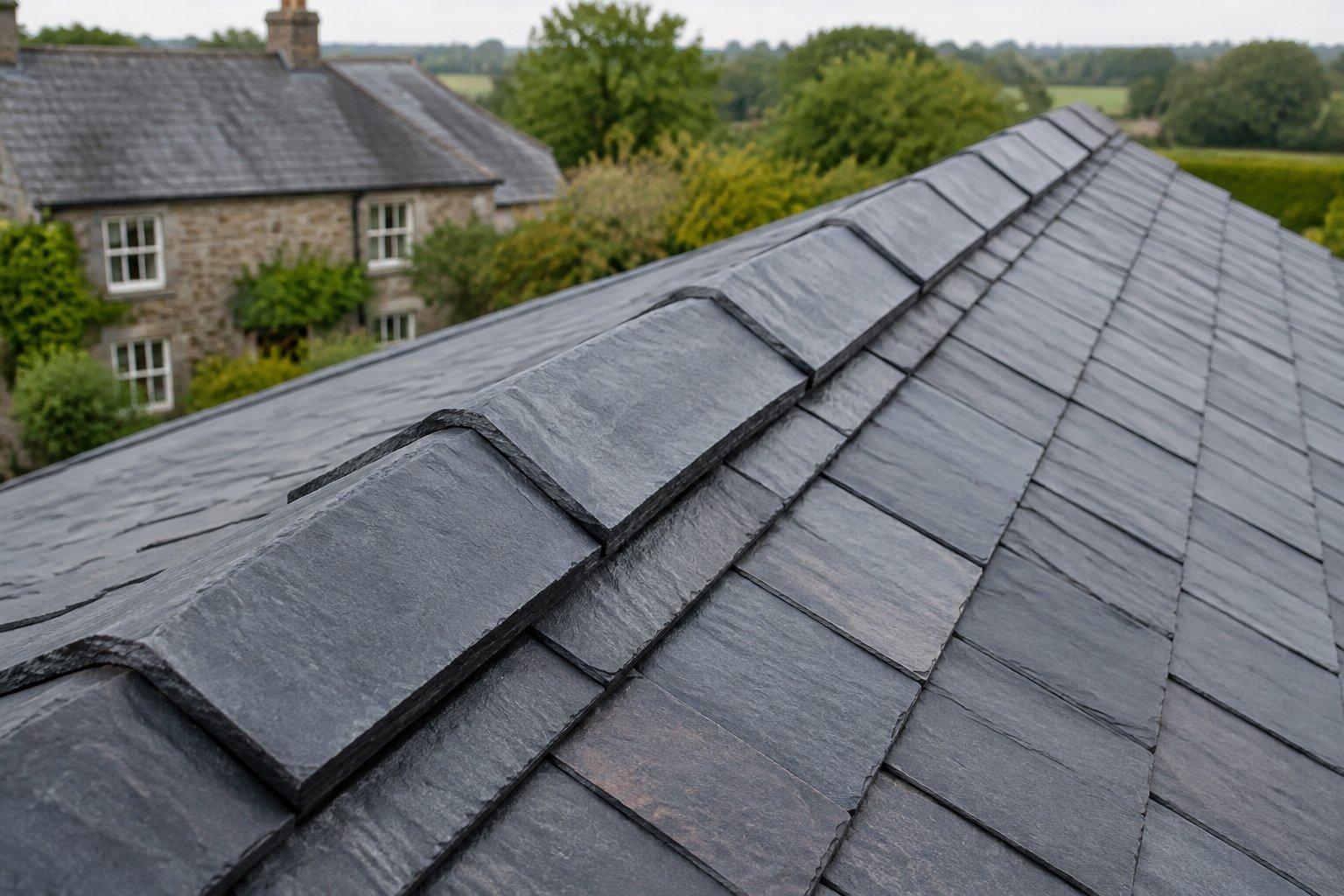
Zinc or copper strips near the ridge release metal ions into the runoff and slow growth below them, which buys long-term prevention with no repeat chemical treatment. Fix them through the slate joints or under the ridge with compatible fasteners and avoid new holes through sound slate. Do not put zinc and copper on the same roof, keep zinc away from copper flashings, and check what sits below copper, which stains lighter trim over time. The effect fades down a long slope and will not reach every course.
Then let the roof set the schedule. Inspect yearly and after major storms, and clean only where growth holds water or blocks drainage. A roof that drains well and dries fast can go many years between cleanings, while a damp shaded slope needs more attention, and that difference is normal rather than a fault.
When it is a repair, not a cleaning
Cleaning fixes neither failing slate nor a nail that has rusted through. Where the inspection turns up material or fixing problems, those come first.
Delamination and slipping are different diagnoses
Delamination is the slate itself giving up. The face splits into thin layers, flakes off, or turns soft and powdery, and it sounds dull when tapped. It is near the end of its life and no cleaner brings it back.
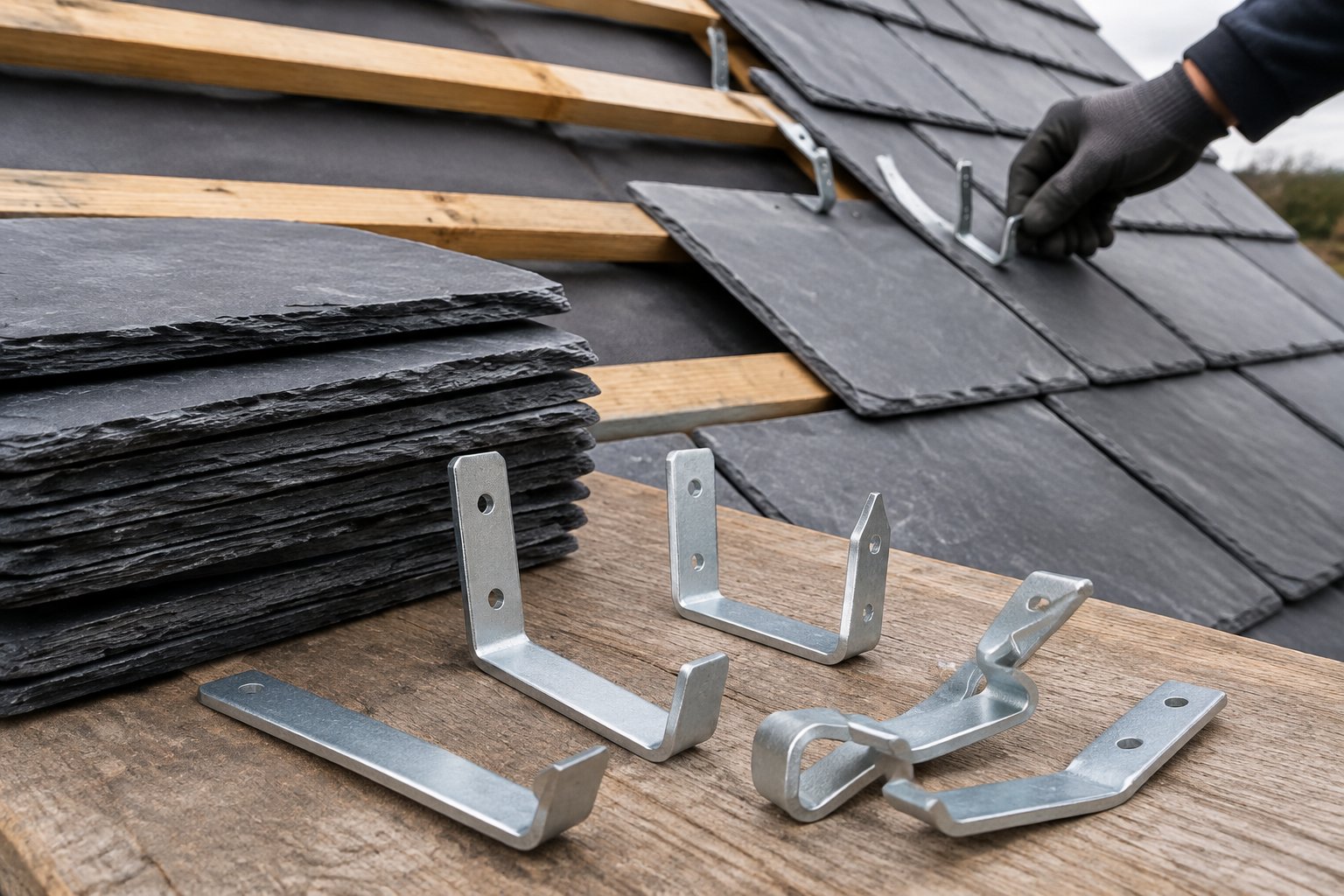
Slipping is the fixings giving up. The slate is sound and corroded nails are letting pieces slide out of position across the roof. Slates in the gutter with clean hard edges, plus rust staining below the nail line, are the tell. The repair is new fasteners in copper or stainless, and in many cases the original slate goes straight back up. Treating the two conditions the same way produces the wrong repair and sometimes an unnecessary new roof, so settle which one you have before anybody prices slate roof repairs.
When to bring in a slate specialist
Where the slate is thin and weathered, fixings are failing across several slopes, or moss covers enough area to hide the condition underneath. Steep pitches and tall buildings also need staging and experience a general cleaning crew will not have.
A specialist can work on slate without breaking it, and can tell you whether the roof needs a handful of repairs or a strip and relay. On a historic building they can also work to the Secretary of the Interior's guidance to retain and preserve roofing material such as slate where it defines the building's character.
Match any replacements to the weathered field
Measure length, width and thickness, and photograph the roof in overcast light from several areas. Break a damaged piece and compare the fresh edge against the weathered face, which will not be the same color.
New quarry slate will not match a roof that has weathered for eighty years. The drift is largest in semi-weathering stone: semi-weathering green slate moves toward buff and tan across decades, so only aged material sits right beside it. Reclaimed slate carries that same weathering already, which is the whole reason it works here, and our slate matching service will work from a physical sample rather than a color name.
Preserve the patina and keep water moving
A slate roof stays healthy when the water drains and the stone stays intact. Keep valleys, gutters and outlets clear. Remove moss only where it holds water or blocks flow. Soft brush, low-pressure water, a tested cleaner with a readable label. Leave the lichen and the weathered color alone.
No pressure washers, no acids, no wire brushes, no homemade mixes. Control the shade, use zinc or copper if it suits the building, and let the roof's condition set the cleaning interval. Where slates flake or slip, repair first and match the replacements to the weathered field, which is how a historic roof restoration keeps its character for another few decades.
We supply hand-inspected, sounded and culled reclaimed slate for this work, with batch photographs sent for approval and most orders shipping 3 to 7 business days after confirmation. We supply material and do not perform the repair. Call 225-954-8393 for current availability and a delivered price.
Frequently Asked Questions
Does moss always have to come off a slate roof?
No. Thin flat growth that dries quickly after rain is cosmetic and can stay. Remove moss that forms thick cushions, packs the joints between slates, or blocks valleys and gutters, because that growth holds water against the roof.
What does vinegar do to slate?
It is an acid, so it can etch slates containing carbonate minerals and dull the weathered surface, and it attacks mortar at ridges and hips along with some flashings. Use plain water or a pH-neutral slate-safe cleaner.
Does WD-40 clean slate safely?
No. It is a lubricant, and it leaves an oily film that darkens slate, attracts dirt and makes the surface dangerous for anyone working up there. Keep it off slate entirely.
Are spray-and-forget cleaners suitable for historic slate?
Some are, but test a small patch first for color change and residue, check the label for stone and metal compatibility, protect the planting below, and give the product time to work before judging it. Avoid bleach-based and salt-heavy products.
What affects the cost of professional slate roof cleaning?
Access, height, pitch and the area actually needing treatment. Steep or tall roofs need staging or lifts, which adds time and labor, and any damage the work uncovers adds materials and repair on top.