You are choosing a roof for a building that has to last, and the material affects the structure, the schedule, the budget and whether a review board signs off.
For steep-slope roofs on historic buildings, high-end homes and new builds intended to stand for a century, natural slate is the stronger choice. It runs past 100 years against 40 to 70 for quality metal, it repairs one piece at a time, and it passes historic review where metal is often refused. Metal wins on weight, installation speed and low-slope capability, and on some projects those advantages settle it outright.
One note on scope: this compares natural slate with conventional metal, meaning standing seam panels and plain metal shingles. Stamped metal made to imitate slate is a different conversation, and our notes on metal slate roofing shingles cover why it falls short on heritage roofs.
Which material fits the project's priorities
Slate suits projects where service life, repairability and architectural continuity come first. Metal suits projects where weight, slope or schedule sets the limit. Most jobs have one constraint that decides it before price comes into the room, so find that constraint first.
The trade-offs side by side
- Service life. Hard slate, 100 years and beyond. Quality metal, 40 to 70 depending on gauge, coating and climate.
- Weight. Slate is heavy and may need a framing review on a reroof. Metal is among the lightest steep-slope options there is.
- Minimum slope. Slate needs a steep roof. Some standing seam panels run on near-flat roofs.
- Repair. Slate goes back one piece at a time. Metal damage usually means a full panel or a visible patch.
- Install speed. A standard crew puts metal on quickly. Slate takes longer and needs a trained slater.
- Historic review. Slate matches slate. Boards routinely deny metal where it replaces slate.
- Aging. Slate keeps its color or weathers predictably. Metal finishes chalk and fade over decades.
When continuity decides it
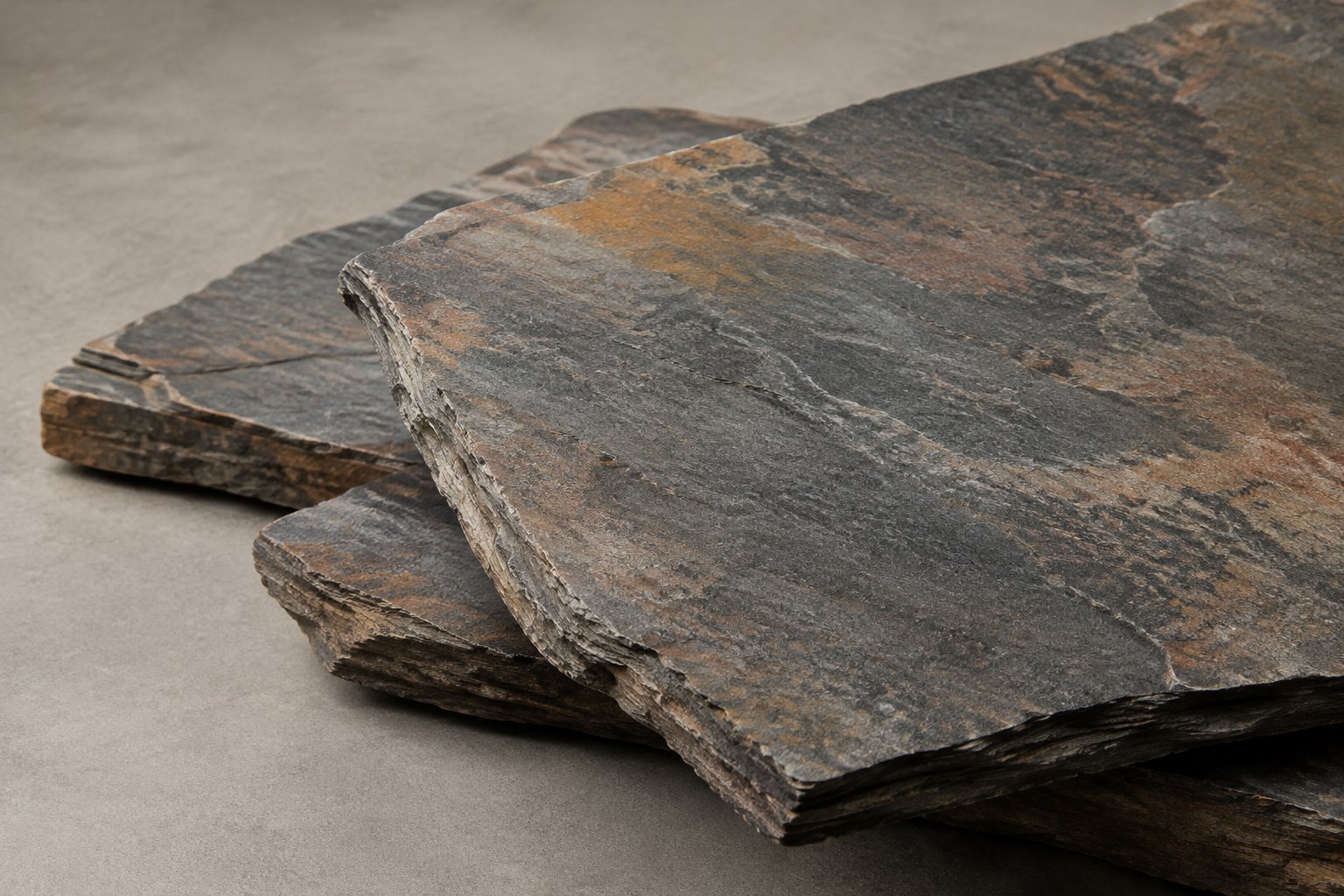
Slate is the answer when the building was designed around it. Gothic Revival, Tudor, Second Empire mansards and most Victorian styles depend on slate's texture, thickness and color variation at the roofline, and even a close color in metal changes how the building reads from the street.
Continuity matters just as much on additions and partial work. Extend a slate roof over a new wing, or rebuild one elevation, and the new section has to sit beside stone that has weathered for eighty or a hundred years. Reclaimed slate from the same quarry region gets there. No metal profile does.
Where metal has the practical edge
Light framing, low-slope sections and fast-track schedules. A crew can run standing seam across a porch roof at 2:12 where slate would leak. Metal covers a structure that would otherwise need new rafters to carry stone, and it closes a building in within days.
Metal shingles and panels also suit agricultural, industrial and modern buildings where the design called for a metal finish from the start. If the architecture is metal, specify metal. Slate belongs on buildings where it suits the style and the owner wants a roof that outlasts the mortgage several times over.
Lifespan and lifetime cost
Slate costs more to install and less to own, because one slate roof outlasts two or three metal roofs. The gap at bid time narrows or reverses once every replacement across the building's life is counted.
100 years against 40 to 70
The National Park Service puts slate roof service life at 60 to 125 years or longer depending on the stone, and for the hardest slates cites as long as 150 years.
Quality metal commonly runs 40 to 70 years, with panel gauge, metal type, coating system and exposure all moving that figure. Coastal salt air and heavy industry shorten it. Copper sits at the top of the metal range and costs a great deal more than painted steel.
What an installed estimate leaves out
It covers material, labor, tear-off, underlayment, flashing and disposal for one roof. It does not cover the next one. So comparing a slate bid against a metal bid on day one compares one hundred-year roof against the first of two or three.
Labor and flashing are a large share of any steep-slope bid. The NPS notes that labor, flashing and tear-off costs are equal in both cases when comparing natural slate against a substitute, which means the material line moves the total far less than most owners assume. The same holds here: flashing, staging and tear-off do not get cheaper because the field material is metal.
Run both over the same century
Across a hundred years, the slate roof needs periodic flashing work, attention to the underlayment where the roof uses a deck system, and the occasional broken slate replaced. The metal roof needs fastener and sealant checks, probably coating renewal on painted steel, and at least one full replacement, with a second likely in a harsh climate.
Every metal replacement brings another round of tear-off, staging, disposal and flashing, plus the disruption to whoever is using the building. To price this properly, put the replacement years on a timeline and carry the full installed cost at each one. That calculation is what usually changes an owner's mind, and it is worth doing in front of them.
Reclaimed slate needs a remaining-life assessment
Reclaimed slate has already served one term, so the live question is how much is left. That depends on the quarry, the hardness of the stone and how carefully it was handled during removal. Hard slates from good quarries serve a second full term. Soft slates that were nearly finished the first time cannot.
Which is why culling is the whole job. Sound every piece, because a good one rings and a failing one thuds, and check the edges for delamination so the weak pieces never reach a pallet. Ask any supplier for the quarry region and batch photographs, then match the stone to your design life rather than to a price.
Working out whether slate is feasible on your building? Send the roof area, pitch and framing details and call 225-954-8393.
Weight, pitch and installation
These can rule slate out before cost or appearance gets a hearing, so check them before the bid stage.
Compare assembly loads
A natural slate roof commonly runs 800 to 1,500 lb per square depending on thickness and size, with thick graduated roofs at the top of that. Standing seam steel weighs a small fraction as much, and that difference alone decides whether slate works on a lightly framed building.
Compare full assembly loads rather than the stone on its own, including deck, underlayment and local snow load. A building that originally carried slate was usually framed for it, though rot, notched rafters and past alterations all reduce capacity. Before specifying slate for a building that has only carried asphalt, get an engineer to look at the framing.
Slope limits and headlap
Slate needs a steep slope. Standard 3-inch headlap works on common residential pitches, lower pitches need more headlap to keep wind-driven water out, and below about 4:12 slate is not a sound choice at all. On very steep roofs and mansards, headlap can come down slightly.
Metal slope limits vary by product, with some mechanically seamed standing seam panels rated for near-flat roofs while snap-lock panels and metal shingles need more slope. Check the panel maker's published minimum rather than assuming. On a building with mixed slopes, a slate main roof with metal on a low-slope porch or dormer is a traditional and entirely appropriate combination.
Speed, access and specialist labor
A general roofing crew puts metal on faster. Slate takes longer and needs a contractor who knows slating: nail placement, hole punching, headlap layout, copper flashing. A crew that lays slate like asphalt will build a roof that fails early, and that is the single biggest risk on a slate job.
Plan staging and access around the slower pace, and order the breakage overage before work starts so nobody has to stop and hunt for matches with the roof open.
Weather, fire and noise
Both systems handle weather and fire well when the full assembly is detailed correctly. The differences show up in hail, noise and thermal movement.
Hail damage against tested impact ratings
A Class 4 impact rating comes from a lab test where ice or steel balls hit a sample. It describes that test, not what your roof looks like after a storm. Metal panels with Class 4 ratings can stay perfectly watertight and still carry permanent dents, and many insurers treat dents as cosmetic and exclude them.
Hard dense slate takes hail that destroys asphalt. Large hail cracks individual slates, and soft or weathered slate is more vulnerable. When that happens you replace the broken pieces. When metal dents, you live with the dents or replace panels.
Fire performance is an assembly
Slate is stone and does not burn. Metal does not burn either. But a Class A rating applies to a tested assembly of covering, underlayment and deck together, so ask for the listed assembly and make sure your underlayment and deck match it.
Some Class A listings for metal depend on one specific underlayment. With slate, the stone itself carries most of the protection. In wildfire zones, check the ridge vents, eave closures and gutter details as well, since embers get in through gaps rather than through the covering.
Wind, snow and drainage
Slate's wind performance comes from correct nailing, headlap and starter courses. Metal's comes from clip spacing, seam type and edge details. Both fail at the edges first, so the eaves, rakes and ridges are where the detailing has to be right.
Snow behaves differently on each. It slides off metal in sheets, which is a hazard over an entry or walkway and hard on gutters. Slate holds snow longer and releases it in smaller amounts, though a slate roof over a walkway still wants snow guards. In heavy snow country, slate selection for a cold climate comes down to the stone's resistance to freeze-thaw.
Noise, heat and movement
Rain and hail are louder on metal, particularly over open framing or skip sheathing, and a solid deck with insulation brings that down. Slate's mass dampens sound without any added layers.
Heat works differently too. Light metal finishes reflect well, and in air-conditioned homes cool roofs can cut peak cooling demand by 11 to 27%, while slate's mass slows heat transfer through the day. Metal also expands and contracts, which is why standing seam systems use floating clips, and poor clip design brings oil-canning, fastener wear and noise. Slate pieces move independently and simply do not have that problem.
Aging, repairability and historic requirements
Slate ages in place and repairs one piece at a time. Metal finishes shift over decades and damage usually means panel work. That difference shapes every repair and every review-board decision across the roof's life.
Patina against finish change
Slate's color is the stone. Unfading slates keep their quarry color and semi-weathering slates change in predictable ways over decades, and a weathered slate roof holds several tones at once, which is part of its character.
Painted metal ages as the coating chalks and fades, so a replacement panel fitted twenty years later will not match the roof around it. Copper and zinc develop their own patina, which is why they appear on historic roofs, and they cost a great deal more than painted steel.
One slate against one panel
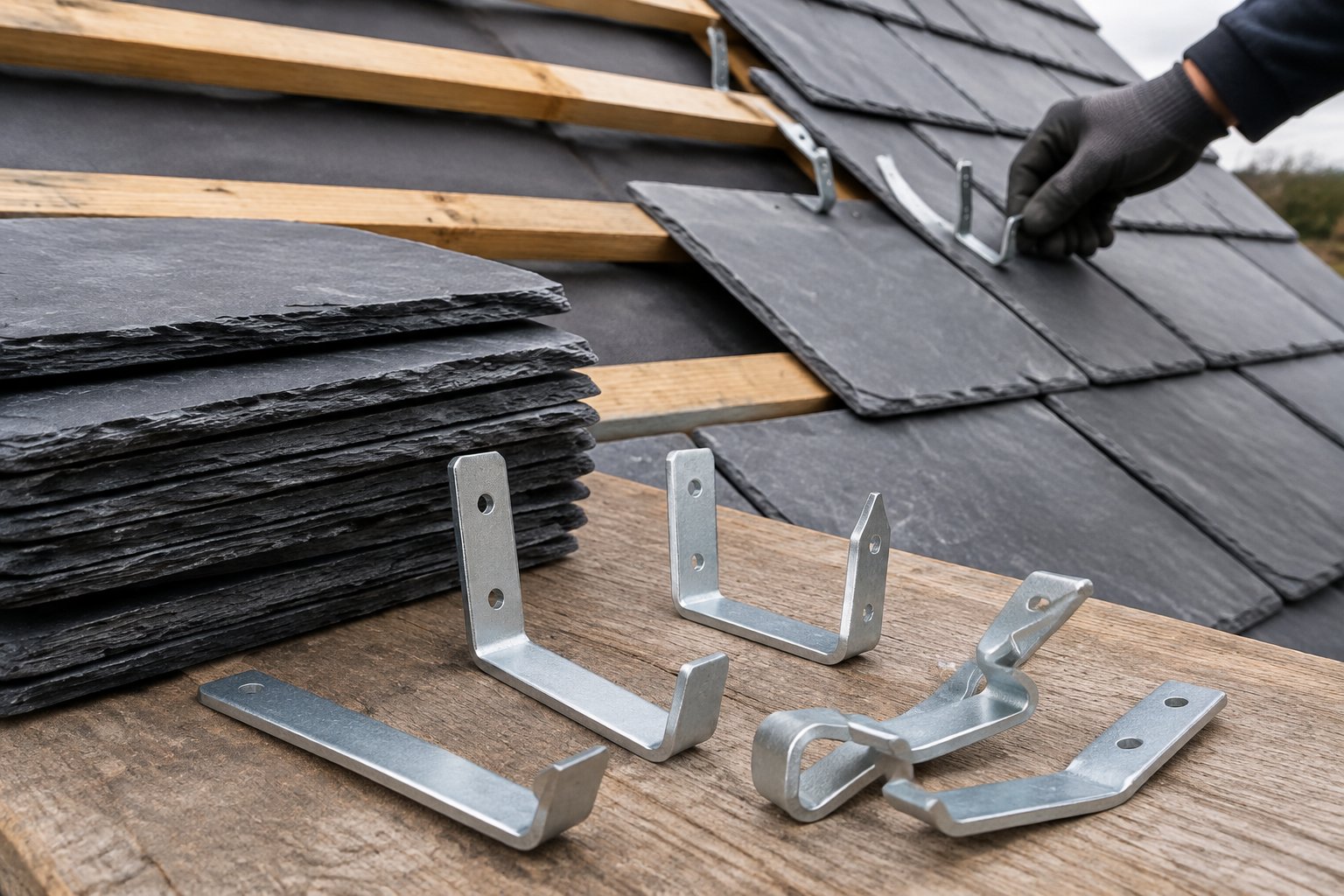
Slate repairs stay local. A slater takes the broken piece out with a ripper, slides a match in, and secures it with a hook or a copper bib, with the rest of the roof untouched. The hard part is finding a slate matching in size, thickness and color, which is exactly where reclaimed stock earns its place on slate roof repairs.
Metal repairs are harder to hide, because a punctured or badly dented standing seam panel runs eave to ridge and a clean repair means pulling the whole panel. Patches and sealant work after a fashion, and they show and need attention again later.
Slipping slates are not failed slates
When nails corrode and fail while the stone stays sound, slates slip across the roof and the pieces on the ground are whole, usually with rust staining around the nail line. That condition, known in the trade as nail sickness, is the most common reason a perfectly good slate roof gets condemned.
The right response is to strip the roof, salvage the sound slate and relay it on copper or stainless nails, buying matched reclaimed slate only for what broke during the work. Replacing that roof with metal throws away stone with decades left in it, so base the decision on a slate-by-slate assessment rather than a look at some slipped pieces from the driveway.
Check review requirements before changing material
Replacing slate with metal on a listed building or in a historic district normally needs approval. The Secretary of the Interior's Standards are adopted at the Federal, State and local levels and favor repair and in-kind replacement of character-defining roofs, and boards commonly reject metal on buildings designed for slate.
Metal has its own legitimate place in historic work. The NPS notes that metal roofing dates from the 18th century, including tin-plate, copper and zinc. If the building started with metal, in-kind metal is correct. If it started with slate, plan on slate, and on historic roof restoration work that is usually also the route that keeps a tax credit application intact.
Choose for fit and for the long term
Slate where the building's style, design life and review requirements call for stone. Metal where weight, low slope or a metal design idiom sets the limit.
Slate brings a century of service, piece-by-piece repairs, fire resistance from the material itself, and a fit for historic and high-end work, and it asks for adequate framing, a slope of about 4:12 or steeper and a trained slater. Metal is light, fast and good on low slopes, lasts 40 to 70 years, and its repairs tend to show.
Where slate is the right call, the next decisions are quarry, color, size and batch. Our specification support covers fit and color matching before you order, and we hold reclaimed slate hand-inspected, sounded and culled before crating, at builder-direct pricing, shipping typically 3 to 7 business days after confirmation. We supply material only and your roofing contractor handles installation.
Call 225-954-8393 for current availability and a delivered price.
Frequently Asked Questions
Is slate better than metal on a historic building?
Where the building originally had slate, yes. Review standards favor in-kind replacement and boards commonly reject metal on a slate-era design. Where the building originally had metal, in-kind metal is the right treatment.
What should you plan for with a natural slate roof?
Weight first, then finding a trained slater. A building that has not carried slate before needs a framing review, and the upfront cost runs above metal. Across the full service life, slate usually comes out the cheaper of the two, which is the figure worth putting in front of an owner.
How does a 2,000 square foot metal roof compare with slate?
That is 20 squares, and installed prices for both vary widely by region, pitch and complexity, so get local bids for each. Expect the slate bid to be higher on day one. Run it over 100 years with each metal replacement priced in and the gap narrows or reverses.
Can sound slate be reused instead of going to metal?
Yes. Where the slates ring when tapped and show no delamination, a crew can strip the roof and relay the same slate on new copper or stainless nails, with matched reclaimed slate covering what breaks during the work. Call 225-954-8393 to check availability for your size and color.
Can standing seam metal go on a roof too low-pitched for slate?
Yes. Some standing seam panels are rated well below the slopes slate can handle, including near-flat roofs. On a building with mixed slopes, slate on the main roof with metal on low porches or dormers is traditional and entirely appropriate.