Three weeks from a tear-off on a 1912 brick foursquare, the owner wants a lower-carbon roof that still looks right. The specification calls for slate, but the budget spreadsheet keeps pushing back with synthetic and metal options wearing green marketing labels. Choosing between them is where most sustainable roofing materials decisions actually get made, and where the numbers matter more than the brochure.
The honest answer is that a "green" label tells you very little. What tells you a lot is embodied carbon, service life, and whether the material can be recovered and reused when the roof finally comes off. A slate that already survived 110 years on a Pennsylvania rowhouse has zero new manufacturing energy behind it. A newly extruded composite panel does not.
The sections ahead show how to run a lifecycle test on any roof assembly, why salvaged slate and clay tile outperform most manufactured alternatives, how metal, asphalt, membrane, and wood systems compare, and how to match roof design to climate and building type. It is built for the builder pricing a job on Friday and the architect writing the spec on Monday.
The Lifecycle Test for Sustainable Roofing Materials
A roof's environmental impact splits into three buckets: the carbon spent making it, the energy it affects while in service, and what happens when it comes off. Most product marketing only talks about the middle bucket.
Run all three, and the ranking of sustainable roofing materials shifts quickly. A product with modest thermal claims but a 100-year life often beats a high-performance product replaced three times in the same period.
Embodied Carbon Roofing and Circular Economy Building Materials
Embodied carbon is the greenhouse gas emissions tied to extraction, manufacturing, and transport. Quarrying, kiln firing, and metal smelting are all energy intensive, and much of that energy still comes from fossil fuels.
Salvaged material sidesteps almost all of it. The quarry work, the splitting, the firing: that carbon was spent decades ago. Research on the embodied carbon of construction materials shows that natural, low-processing materials can meaningfully cut a project's total embodied footprint.
That is the core of circular economy building materials. Keep the material in service rather than sending it to a landfill and pulling a replacement out of the ground.
Why Roof Lifespan Matters More Than a Green Label
Divide embodied carbon by years of service, and the picture clarifies. A 20-year asphalt roof carries its full carbon load four times across an 80-year building horizon. A natural slate roof carries it once.
Lifecycle cost follows the same math. Tear-offs mean labor, disposal fees, scaffolding, and disruption every replacement cycle.
Energy Performance, Maintenance, and End-of-Life Recovery
Operational energy still matters, especially in cooling-dominated climates. But it is only one input, and roof color, ventilation, and attic insulation often influence it more than the material itself.
Ask four questions of any product before you specify it:
- How many years of real service life, not warranty years?
- Can it be repaired piece by piece, or does damage force a full replacement?
- Is it recyclable roofing at end of life, or landfill only?
- Does it contain recycled materials, and at what percentage?
Materials that pass all four are rare. Slate and clay tile pass all four, which is why they deserve a closer look.
Why Reclaimed Slate and Clay Tile Lead on Material Reuse
Natural slate and fired clay are two of the few roofing products that outlive the building cycle they were installed for. That single fact drives most of their sustainability case. Neither material degrades in the way organic or petroleum-based products do. Slate is a metamorphic stone. Clay tile is fired earth. Both simply weather.
Salvaged Slate's 100-Plus-Year Service Potential
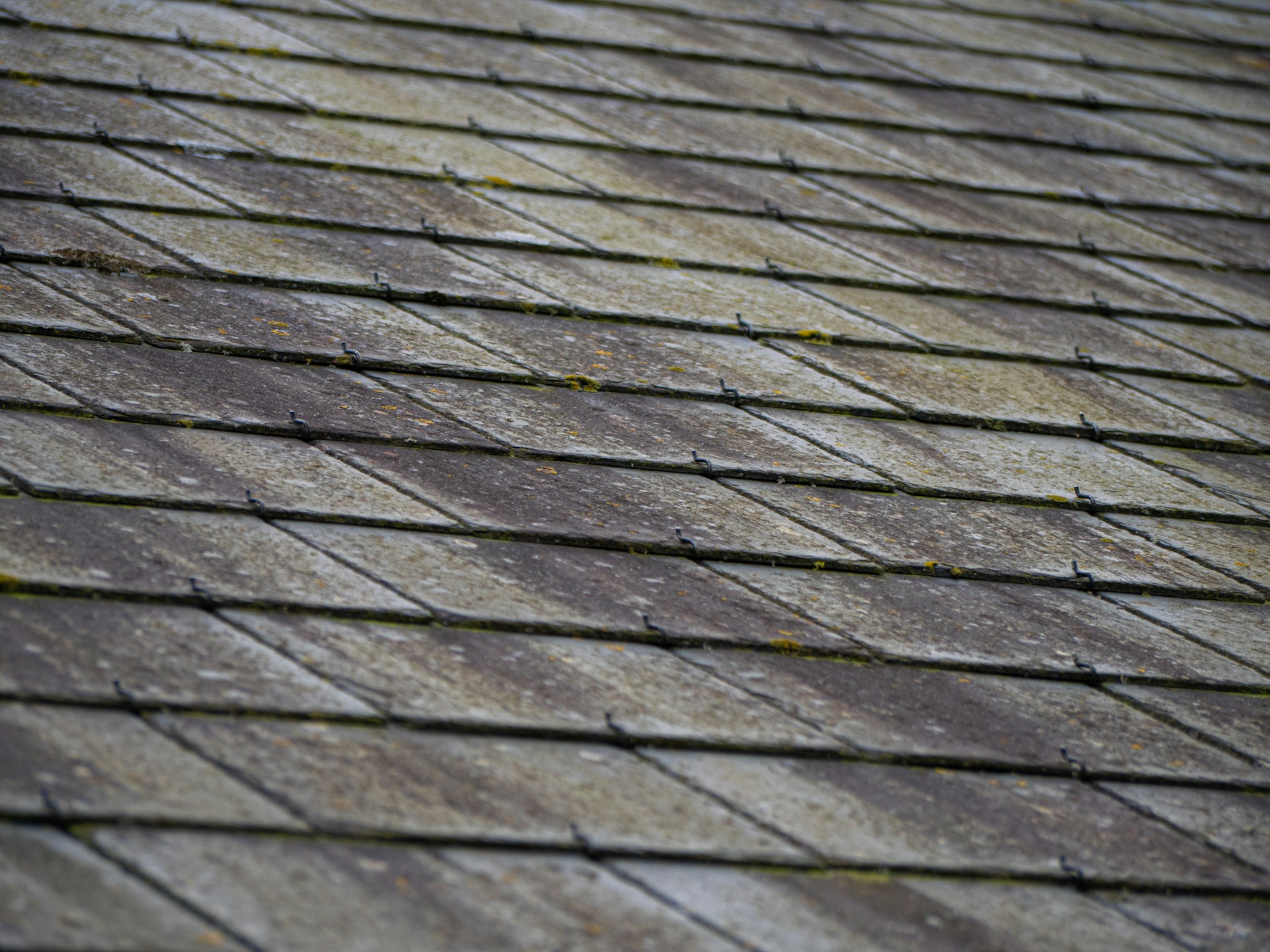
Quality natural slate tiles routinely deliver 75 to 100-plus years, and Historic England notes that a well-maintained stone slate roof can last at least a century. Many salvaged slates still hold decades of remaining life when they come off a building.
That remaining life is the product. Reclaimed Buckingham Black slate, quarried in Virginia and known for its hard, dense grain, is a good example of stone that comes off a roof still sound.
Reclaimed Clay Tiles and the Carbon Already Invested
Clay tile roofs demand high kiln temperatures to produce. That firing energy is a one-time cost, and reusing the tile spreads it across a second full service life.
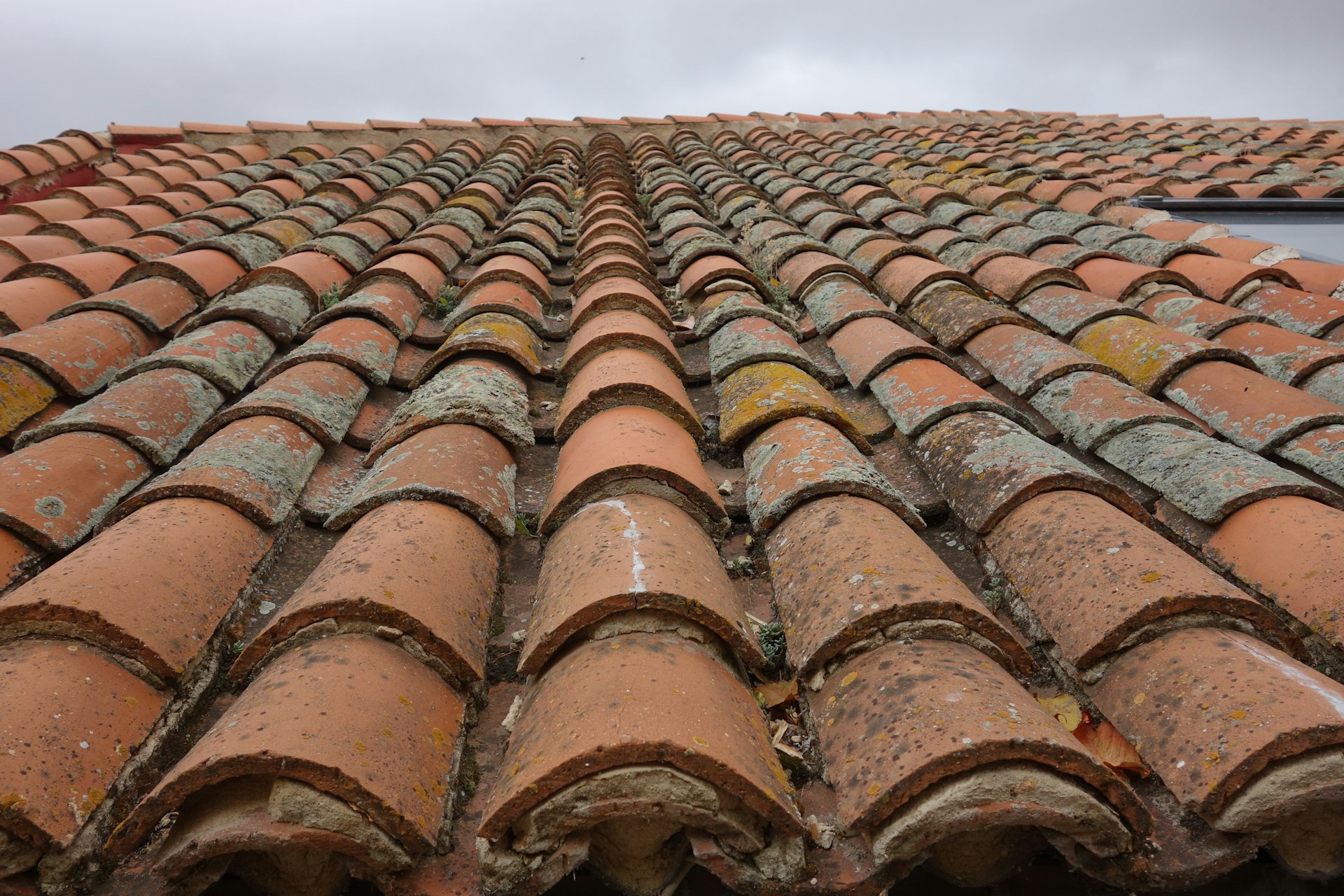
Salvaged barrel clay roof tiles carry color variation and surface weathering that new production cannot match. Their shapes, textures, and firing give historic clay roofs a distinctive character that no fresh extrusion reproduces.
Authenticity, Patina, and Structural Screening Before Reuse
Reuse only works if the material is screened properly. Each piece should be hand-inspected, sounded for internal cracks, and culled if it rings dull or shows delamination.
Reclaimed Slate Roofing handles that screening before crating, so what arrives is job-site ready rather than a pile the crew has to sort. Practical guidance on reclaimed slate sourcing covers what to confirm before you commit.
Once you trust the screening, the next question is how these materials stack up against the systems your client is probably also pricing.
How Other Roof Systems Compare on Carbon, Energy, and Waste
Every alternative system has a legitimate use case. The problem is that marketing rarely states where those cases end, so here is where each one actually earns its keep.
Metal Roofing and Metal Roofs
Metal roofs perform well: 40 to 70 years, high recycled content, and fully recyclable at end of life. Steel and aluminum production carries heavy upfront carbon emissions, though.
On commercial roofing and low-slope work, standing seam metal is often the strongest new-manufactured choice. On a heritage residential elevation, it changes the building's character.
Asphalt Shingles, Cool Asphalt Shingles, and Shingle Recycling
Asphalt shingles are petroleum products with 15- to 25-year service lives. They generate roughly 11 million tons of tear-off waste in the United States annually.
Cool asphalt shingles improve solar reflectance and reduce cooling loads. Shingle recycling into road asphalt exists but is not available in every market. They fit the budget for new construction, not restoration.
Recycled Composite, Rubber, and Single-Ply Membrane Systems
Recycled composite shingles and rubber roofing made from recycled tires divert waste, which is real. Service lives typically run 30 to 50 years, and most are not recyclable again after use.
Ethylene propylene diene terpolymer (EPDM) rubber membrane remains the workhorse synthetic waterproof membrane for flat roofs. It is the right tool for low-slope commercial decks and the wrong tool for a steep slate elevation. A closer look at synthetic slate roofing tiles explains why the visual comparison rarely holds up over time.
Wood Shingles and Wood Shakes From Managed Forests
Wood shingles and wood shakes from certified managed forests are renewable and store carbon. Expect 25 to 40 years, with fire ratings and maintenance as the practical limits.
They suit specific regional styles well. They do not solve the durability problem that drives most long-life specifications, which is where roof design and climate come in.
Match Roof Design to Climate, Energy Goals, and Building Type
Material choice is half the decision. The other half is how the assembly handles sun, water, and load in your specific climate zone, where two identical slate roofs can perform very differently depending on the ventilation and insulation behind them.
Cool Roof Strategies, Solar Reflectance, and Ventilation
Cool roofs use reflective roofing surfaces or roof coatings to cut heat gain. The Cool Roof Rating Council (CRRC) and Energy Star publish tested solar reflectance values you can specify against.
Roof ventilation does quiet work here. Good airflow under the deck lowers attic temperatures, reduces cooling costs, and extends underlayment life.
Solar Panels, Solar Tiles, and Solar Roofing Integration
Photovoltaic panels pair best with roofs that will outlast the array. Mounting solar energy hardware on a roof due for replacement in 12 years wastes both investments. Slate complicates penetrations but supports long-term solar roofing plans well because the deck stays sound. Solar tiles remain a newer option with shorter track records.
Green Roofs for Stormwater and Urban Heat Management
Vegetated roofs handle stormwater management and improve air quality on flat roofs. The EPA reports that green roofs reduce heat islands by cooling surfaces through shade and evaporation.
They require structural capacity and ongoing maintenance. Living roofs suit urban commercial buildings far better than sloped residential roofs.
Structural Load, Roof Slope, and Thermal Insulation Considerations
Slate weighs roughly 800 to 1,500 pounds per square foot. Confirm framing capacity early, especially on older structures.
Check these before finalizing:
- Roof slope: slate generally needs a 4:12 minimum
- Rafter sizing and deck condition
- Thermal insulation depth and air sealing at the ceiling plane
- Flashing metal compatibility with a 100-year material
Get those right, and the specification work becomes straightforward, with fewer surprises once the material is on the deck.
Specify Salvaged Material Without Guesswork
Salvaged material moves differently than catalog product. Quantities are finite, batches vary, and lead times depend on what came off recent demolitions, so handle it like any other trade purchase, with clear questions and documented answers.
Verify Salvage Origin, Batch Consistency, and Inspection Practices
Ask where the material was removed from and when. A supplier who cannot name the origin region or building type is reselling blind. Request batch photos before confirming, and compare color, thickness, and weathering against the existing roof in daylight before you approve.
Plan Quantities, Freight, and Job-Site Handling
Order 10 to 15 percent overage for cuts, breakage, and future repairs. Reclaimed stock rarely reappears in the same batch. Confirm crating, palletizing, and liftgate service in advance. Most reclaimed slate orders ship within 2 to 5 business days once confirmed. Freight scheduling should be coordinated with your crew.
Use Reclaimed Materials in Green Building Documentation
Reclaimed materials support Leadership in Energy and Environmental Design (LEED) Materials and Resources credit paths tied to reuse and waste diversion. The EPA's guidance on reusing construction and demolition materials reinforces the diversion case.
Keep invoices, origin notes, and photos for the file. Documentation is what turns an environmentally friendly roofing choice into a countable credit.
Source Authentic Slate and Clay Tile for the Next Project
Rare formats matter in matching jobs. Grey and black reclaimed slate in 20-inch, 18-inch, and 16-inch by random widths covers most historic American roof patterns. A quick call to 225-954-8393 confirms which of those formats are on hand and what they cost for your quantities.
Frequently Asked Questions
What Are the Most Environmentally Responsible Roofing Options for a Long-Service-Life Roof?
Reclaimed slate and salvaged clay tile lead because they require no new manufacturing energy and last 75 to 100-plus years. New natural slate and recyclable metal follow. Products replaced every 20 years rarely compete on total carbon.
How Does Reclaimed Slate Compare With New Metal, Clay Tile, and Asphalt Shingles in Cost and Lifespan?
Reclaimed slate costs more upfront than asphalt but often prices below new quarried slate. Over 80 years, one slate roof replaces roughly four asphalt roofs. Metal sits between them on both cost and service life.
Is Reclaimed Slate Suitable for a Modern New-Build Roof as Well as a Heritage Restoration?
Yes. Black slate with its deep tone and natural texture works well against light stone, metal trim, and contemporary siding. The benefits of reclaimed roofing apply equally to new construction seeking authentic character.
What Should Contractors Inspect Before Specifying Salvaged Slate or Clay Roof Tile?
Sound each piece for a clear ring. Check thickness consistency and look for delamination or nail-hole damage. Confirm the supplier hand-inspects and culls before crating. Review batch photos against the existing roof.
What Alternatives to Asphalt Shingles Provide a Durable, Lower-Waste Roofing System?
Reclaimed slate, salvaged clay tile, standing seam metal, and concrete tile all outlast asphalt significantly. Slate and clay add repairability, since individual pieces can be replaced without disturbing the field.
How Much Does a Reclaimed Slate Roof Cost, Including Sorting, Freight, and Installation?
Material, freight, and installation vary by size, color, and region. Sorting and culling are handled before shipment. This reduces crew labor on site. The reclaimed slate price guide breaks down the components.
The Roof That Does Not Need Replacing Is the Greenest One
Sustainability in roofing comes down to a simple test: how long does it last, and what did it cost the planet to make? Material that already exists, already survived a century, and still rings sound wins that test outright.
Whether you are matching a historic elevation, planning a full restoration, or specifying authentic character on a new heritage build, salvaged slate and clay tile give you a defensible answer on carbon and a roof that will outlive the mortgage.
Call Reclaimed Slate Roofing at 225-954-8393 to check availability and get real pricing, or browse current salvaged inventory at reclaimedslateroofing.com. Most orders ship within 2 to 5 business days on palletized freight.