You are specifying a French-profile clay roof for a luxury residential build or a historically sensitive restoration, and you need tiles with authentic aged character that no factory can reproduce. The challenge is sourcing.
Genuine reclaimed French clay roof tiles are scarce in the North American market. Most of what circulates under the "French clay" label is either new production stamped to imitate age or imported material with no verified provenance.
If you are writing a spec or pricing a job that calls for real barrel or flat-profile clay with original patina, you need a supplier who deals in verified salvage, not catalog replicas.
Reclaimed Slate Roofing is a direct-source supplier of hand-inspected reclaimed clay tile and slate from historic structures, offering builder-direct pricing and nationwide freight delivery.
Their barrel clay tile inventory carries the kind of aged surface character, color variation, and hand-formed texture that reproduction lines consistently fail to match. They stock it for immediate shipping rather than multi-week lead times.
In this guide, you will find how to source and verify authentic salvaged clay tile and what profile traits define the French clay aesthetic.
You will also see why reclaimed clay outperforms modern reproductions on high-end work, how to evaluate tile quality before purchase, and how to plan quantities and delivery for your job site. Every detail here is written for the contractor or architect who needs sourcing reclaimed clay specifics, not filler.
How to Source Authentic Reclaimed French Clay Roof Tiles
Start your sourcing by confirming the supply chain: where the tiles were removed, what building they came from, and whether the supplier performs hands-on quality inspection or simply resells bulk salvage.
Genuine reclaimed roof tiles carry documentation or batch-level detail about their origin structure and removal conditions. Mass-market alternatives rely on vague descriptors like "antique style" or "Old World look."
What Separates Genuine Salvage From New Lookalikes
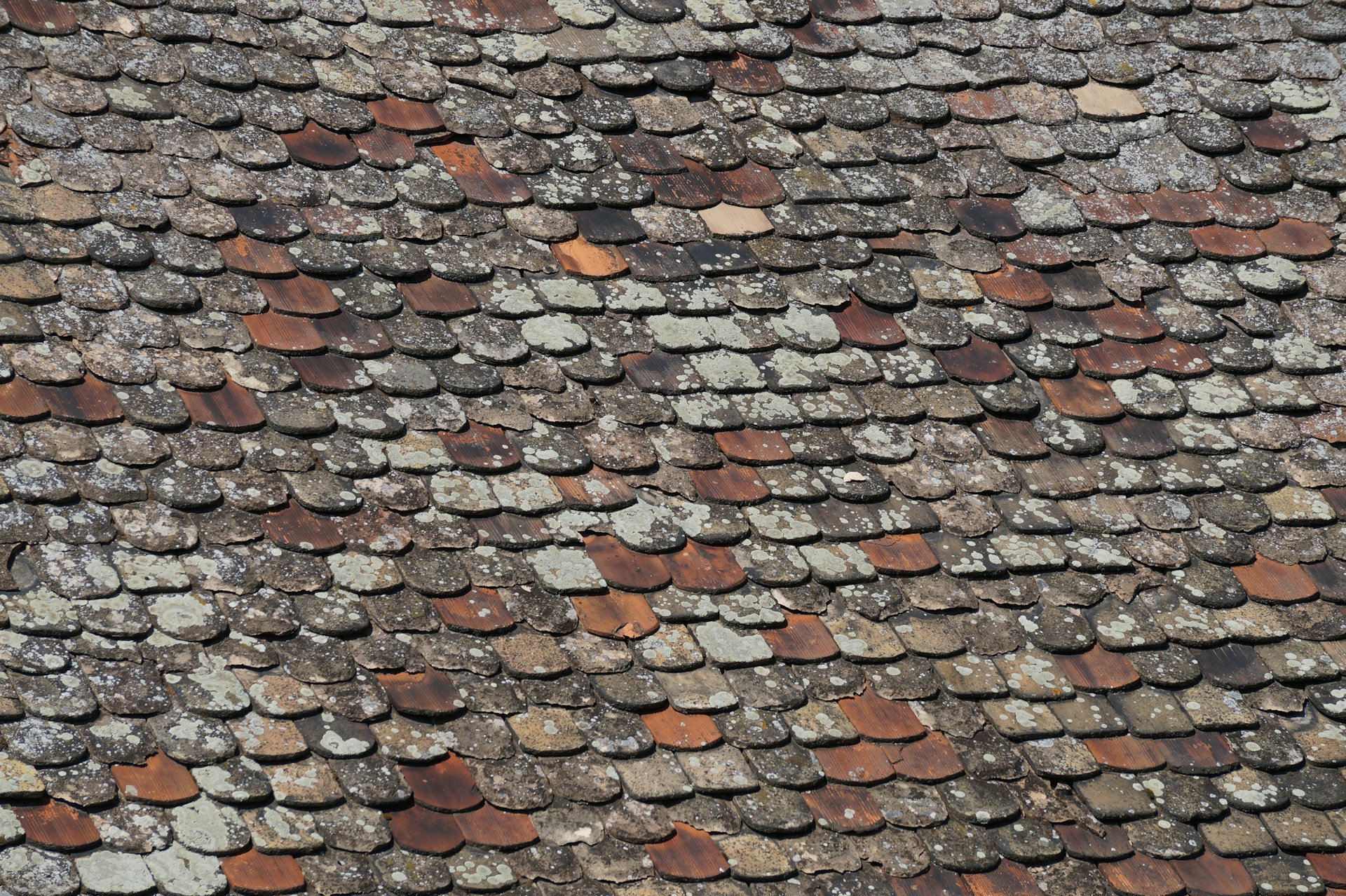
Salvaged tile from a real historic teardown shows signs no factory can replicate. You will see uneven color distribution across the batch, slight dimensional variation from hand forming or early machine extrusion, and a weathered surface that developed over decades of UV, rain, and thermal cycling.
New lookalikes, by contrast, arrive in uniform color batches with machine-perfect edges and artificially applied "patina" coatings that wear off within a few seasons.
When vetting a supplier, ask for batch photos showing the actual tiles you will receive, not studio images of a sample piece. A legitimate reclaimed clay roof tile dealer can tell you the approximate age of the salvage, the region or structure of origin, and the inspection steps each tile passed before it was released for sale.
If the answer is vague, the tile probably is too. For a deeper look at how reclaimed tile is vetted, review the inspection criteria before you place an order.
Why Scarcity and Batch Variability Matter During Specification
French-profile clay tiles from historic restorations are not commodity products. Inventory depends on which buildings are being demolished or re-roofed at any given time. A supplier might have 30 squares of barrel clay one month and nothing the next. That reality changes how you write your specification.
If you are specifying reclaimed clay for a new luxury build, lock your tile selection early in the design phase. Ask the supplier to hold or reserve your batch once you confirm color and profile.
For restoration work, batch variability is actually an advantage: the slight color shifts and dimensional differences across a reclaimed batch blend naturally with what is already on the roof. Uniformity is the enemy of authentic clay roofwork.
When Reclaimed French-Style Profiles Make Sense for a Project
French-style clay profiles make sense any time the design intent calls for a rounded or low-profile roof surface with visible age.
Common project types include historic estate restorations, French Provincial and Mediterranean-style luxury homes, boutique commercial buildings, and institutional projects where design review boards require period-appropriate materials.
If the project is in a historic district governed by the Standards for Rehabilitation, using genuine salvage rather than reproduction satisfies the standard's emphasis on retaining original material character.
That distinction matters when preservation tax credits or local landmark approvals are on the line. It sets the stage for understanding the specific profile traits that define the look.
Profile Traits That Define the French Clay Roof Aesthetic
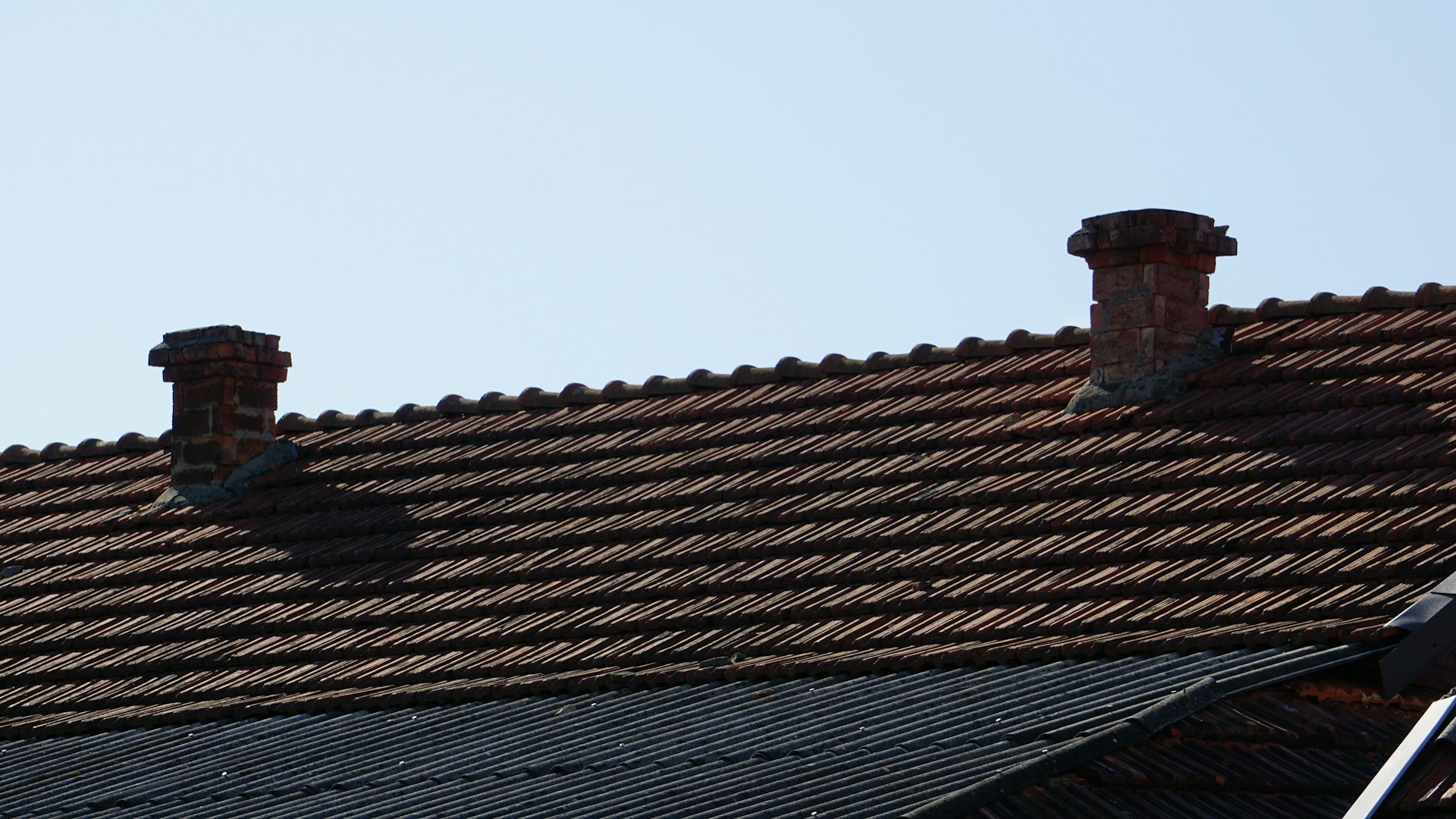
French clay roof tiles are identified by their rounded, low-profile forms and the soft, irregular texture that comes from traditional manufacturing methods. Unlike the flat, crisp edges of modern interlocking tiles, French clay profiles roll gently across the roof plane, creating shadow lines and depth that define the style.
Rounded and Low-Profile Forms Used in Heritage Design
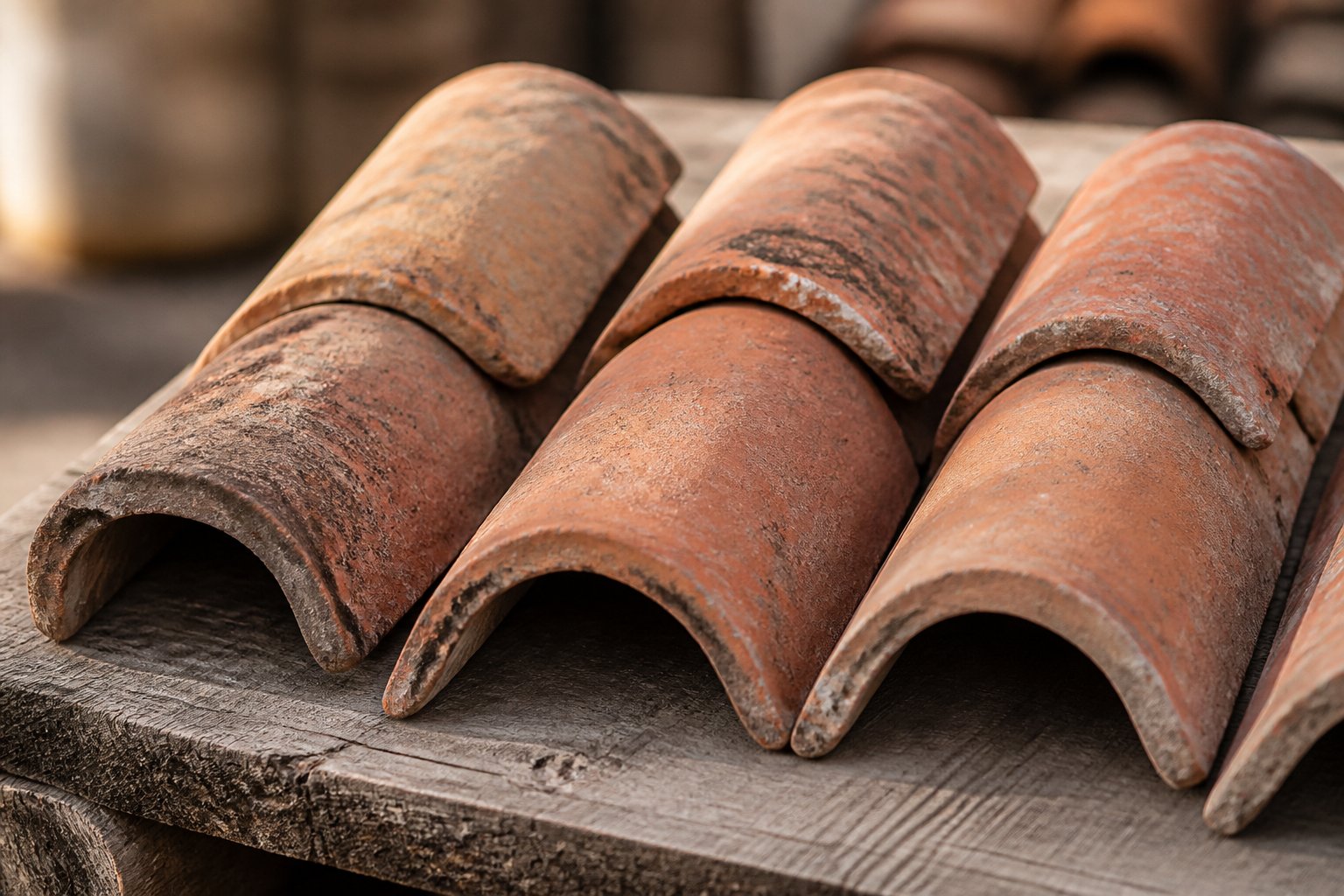
The classic French clay tile is either a half-round barrel (sometimes called a mission or canal tile) or a low-profile flat tile with a slight camber along its length. Barrel tiles typically measure 14 to 18 inches long, 6 to 8 inches wide at the open end, and taper to roughly 4 to 5 inches.
Wall thickness ranges from 3/8 inch to 5/8 inch depending on the era and kiln of origin. Ridge tile in French-profile systems uses a matching half-round cap. Sourcing matching ridge pieces from the same salvage batch is critical for visual consistency.
Aged Surface Character, Color Shift, and Hand-Formed Texture
Reclaimed French clay tiles carry color that no glaze line can replicate. You will see ochre, burnt sienna, warm grey, and pale terracotta blending across a single batch. That variation comes from original clay composition, kiln position during firing, and decades of natural weathering.
The wide range of historic clay tile colors and profiles is one of the style's most distinctive, character-defining qualities.
Hand-formed tiles also show fingerprint marks, slight warping, and surface undulations that catch light differently than machine-extruded products. These imperfections are what architects specify when they want a roof that reads as genuinely historic rather than freshly manufactured.
For projects that also incorporate reclaimed slate accents, mixing clay and slate across a roofline creates layered material storytelling that flat catalog products cannot achieve.
How Barrel and Flat Formats Change Roof Appearance
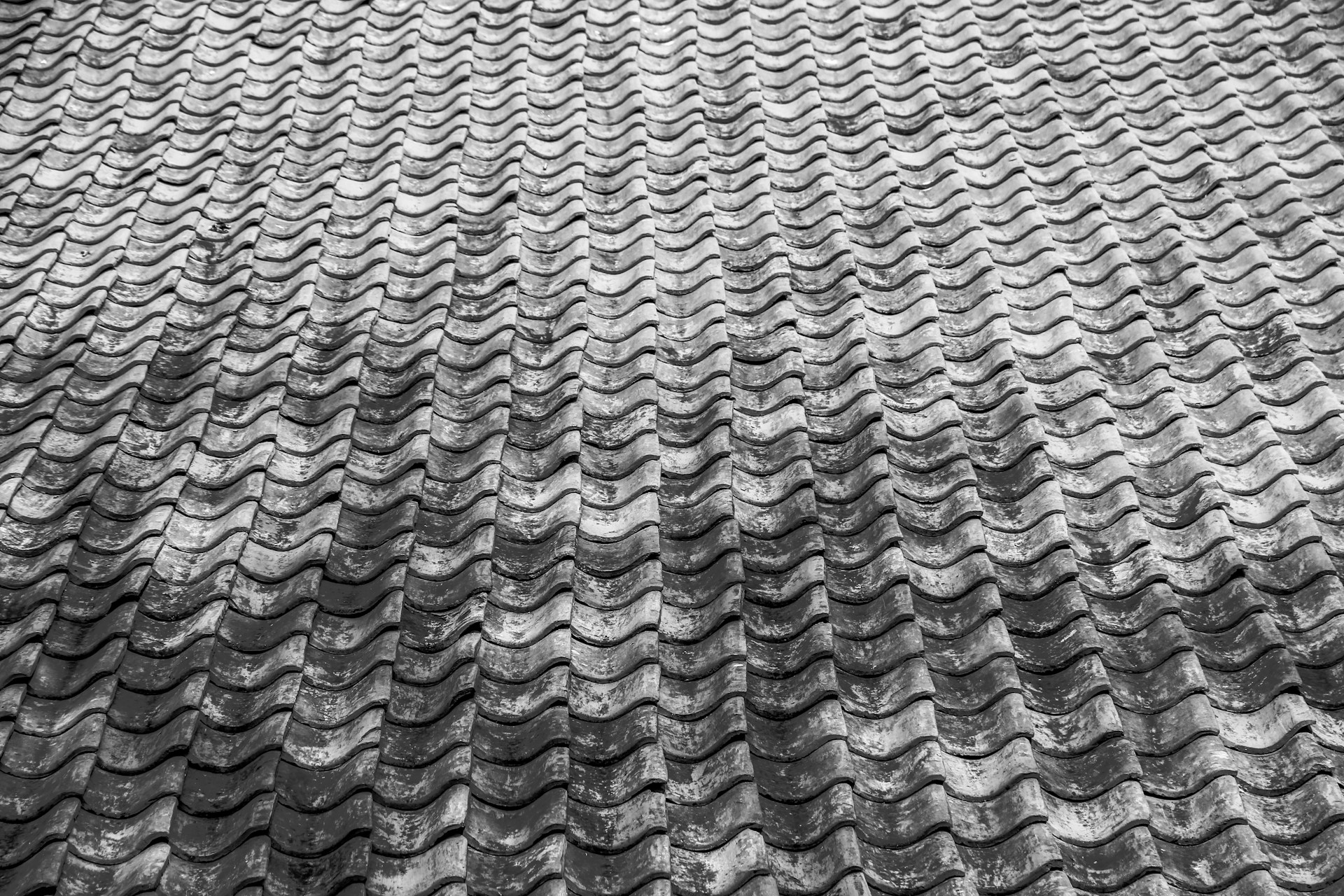
Barrel tiles create a deeply textured, undulating roof surface. When laid in alternating convex-concave rows, the shadow pattern is pronounced and rhythmic. Flat French tiles, by contrast, produce a smoother plane with subtle variation, better suited to steeper pitches or more restrained architectural styles.
- Barrel profile: Bold shadow lines. Mediterranean or Provincial character. Best on pitches of 4:12 to 7:12
- Flat profile: Subdued texture. Cleaner appearance. Works on pitches from 5:12 and steeper
- Ridge tile: Half-round caps that must match batch color and radius for a continuous roofline
- Coverage: Barrel tiles typically run 80 to 100 pieces per square depending on width and overlap
Knowing how each format reads on a finished roof helps you specify the right profile before you evaluate individual tile quality.
Why Reclaimed Clay Often Outperforms Modern Reproductions
Reclaimed antique clay roof tiles carry dimensional and aesthetic qualities that modern reproductions consistently miss. This is especially true on restoration and luxury projects where visual accuracy is non-negotiable.
Matching Patina and Proportion on Luxury and Restoration Work
New production tiles arrive with uniform color and crisp, machine-cut edges. When placed next to a 100-year-old clay roof, the mismatch is immediately visible.
Reclaimed clay tiles, salvaged from buildings of the same era, blend with existing roofwork because they have been exposed to the same weathering processes. On new luxury builds, that patina gives the roof an established, refined character from day one.
Proportion matters too. Historic French-profile tiles were often slightly thicker and heavier than modern equivalents. A reclaimed barrel tile at 5/8-inch wall thickness sits differently on the batten than a new tile at 3/8 inch. That thickness difference affects shadow depth and visual weight.
Dimensional Compatibility With Existing Historic Roofs
Restoration projects frequently fail at the material match. Modern reproductions are manufactured to current metric or imperial standards, which may not align with the sizing of 19th- or early-20th-century originals. Width, length, taper, and nail-hole placement can all differ enough to create visible coursing problems.
Reclaimed tiles from the same era as the existing roof share those original dimensions. When you need to replace 15 or 20 damaged tiles on a 1920s barrel clay roof, sourcing salvage from that period avoids the dimensional clash that forces field cutting or irregular coursing.
For help vetting a reclaimed supplier, start with those who let you review batch dimensions before you commit.
Long Service Life and Repair Value Over Time
Clay tile that has already survived 75 to 100 years on a roof has proven its durability through real-world exposure. Tiles that would have failed due to poor firing, soft clay bodies, or inadequate vitrification are long gone. What remains in a quality salvage batch is the material that passed the ultimate test: time.
When properly reinstalled on modern underlayment with correct fastening, reclaimed clay tiles can deliver another 50 to 75 years of service. That makes roof repairs with matched salvage tiles a long-term investment, not a stopgap. It raises the question of how to evaluate what you are buying before it ships.
How to Evaluate Tile Quality Before You Buy
Every reclaimed tile must be individually assessed before it belongs on a job site. The inspection process separates usable salvage from material that looks historic but will fail structurally.
Checking for Cracks, Spalls, and Glaze Problems
Hairline cracks are the most common defect. Hold each tile at an angle to strong light and look for fractures along the edges and across the face. Spalling, where the fired surface flakes away to expose soft clay underneath, indicates freeze-thaw damage or under-firing.
Glazed tiles should show an intact, bonded glaze surface with no crazing deep enough to admit water.
Reject any tile with through-cracks, active spalling larger than a thumbnail, or glaze separation that has exposed the clay body to moisture intrusion. Minor surface crazing on an unglazed tile is cosmetic and acceptable if the tile body is sound.
Reviewing Weight Uniformity, Shape Consistency, and Weathering
Pull a random sample of 10 to 15 tiles from the batch and weigh them individually. Uniform weight across the sample suggests consistent clay density and firing.
Wide weight variation within the same nominal size points to mixed salvage from different kilns or eras, which can cause coursing problems and inconsistent water shedding. Check that tiles lay flat (or maintain their intended camber for barrel profiles) without rocking.
Warped tiles create gaps that compromise water tightness, especially on interlocking tiles where the overlap must seat flush.
Surface weathering is expected and desirable. Structural warping is not. A thorough set of reclaimed tile quality checks applies many of the same principles to clay that it does to slate.
Understanding Hand Inspection, Sounding, and Culling
Sounding is the single most reliable field test for structural integrity. Hold the tile by one corner and tap it with a knuckle or small hammer. A clear, resonant ring indicates a dense, intact body. A dull thud signals internal cracks or delamination that visual inspection may miss.
Culling is the process of removing tiles that fail sounding, weight, or visual checks. A reputable supplier culls before the tiles are crated, so the material that arrives at your job site has already passed these tests.
Ask your supplier what percentage of raw salvage typically gets culled from a batch. Cull rates of 15% to 25% are common for quality-controlled reclaimed clay.
Ordering, Quantities, and Job-Site Planning
Coverage estimates, freight logistics, and breakage allowances all need to be settled before you place a final-sale order on reclaimed clay.
How to Estimate Coverage and Pieces per Square
Pieces per square vary by tile profile and size. Use these general estimates for planning:
- Barrel tiles (16" to 18" long): 80 to 100 pieces per square
- Flat French tiles (12" to 14" long): 100 to 130 pieces per square
- Ridge tile: 30 to 36 lineal feet per bundle depending on piece length
Always confirm actual coverage with your supplier based on the specific batch dimensions. Reclaimed tile sizing is not standardized.
What to Ask About Lead Times, Crating, and Freight Delivery
Reclaimed clay is heavy. A square of barrel tile weighs roughly 900 to 1,100 pounds. Orders ship crated and palletized on freight carriers, and you should confirm liftgate availability if your job site lacks a forklift.
Most orders ship within 2 to 5 business days of order confirmation. For details on how reclaimed roofing freight delivery works, review the freight coordination process ahead of your order.
Ask whether tracking and delivery scheduling are included. Coordinating a delivery window with your crew avoids demurrage charges and prevents pallets from sitting exposed on site.
How to Handle Accessories, Matching, and Breakage Allowance
Order ridge tile, hip tile, and any specialty trim pieces from the same batch as your field tile. Color matching across separate batches is unreliable with reclaimed material. Build in a breakage allowance of 10% to 15% above your calculated coverage. This accounts for handling damage during delivery and installation.
Reclaimed clay orders are typically sold as final sale due to the nature of the material. Review batch photos and dimensions before confirming your order, because returns are not an option once the crate leaves the warehouse.
That makes pre-purchase verification essential. This is exactly what the next section addresses.
Check Availability Before You Specify
Specialty reclaimed clay inventory changes constantly. Confirming availability before you write it into a spec or submit a bid protects your project timeline and your client relationship.
Questions to Ask a Supplier Before Approval
Before you approve any reclaimed clay tile for a project, get clear answers on the following:
- What is the exact quantity available in this batch?
- Can you hold or reserve material while I finalize the spec?
- What are the tile dimensions, wall thickness, and weight per piece?
- What percentage of the raw salvage was culled during inspection?
- Are matching ridge and hip pieces available from the same batch?
- What is the shipping weight per pallet, and is liftgate service available?
These questions protect you from mid-project shortages and mismatched material.
When to Call for Current Inventory and Matching Support
Call before you finalize your specification. Barrel tiles in the right color range and profile may be available today and gone next week.
If you are working on a restoration where the existing roof sets the match standard, send photos of your current tiles along with measurements. A supplier who stocks genuine salvage can compare your existing material against current inventory and confirm whether the batch is a workable match.
For projects combining clay and slate, browse the available reclaimed black slate alongside clay options to coordinate your full roofing material package from one source.
What to Confirm Before Final Sale and Delivery
Because reclaimed clay is sold as final sale, confirm everything in writing before you authorize shipment.
Review batch photos for color consistency, check dimensions against your layout, and verify that the quantity includes your breakage allowance. Confirm the delivery address, liftgate needs, and preferred delivery window.
Report any freight damage within 48 hours of delivery so the supplier can work with the carrier to resolve the claim. Inspect crates on arrival before signing off with the driver. That level of care at every stage is what separates a clean project from a costly callback.
Frequently Asked Questions
How Do You Verify Salvage Origin and Authenticity Before the Tiles Are Released as Job-Site Ready?
A reputable supplier documents the source structure or demolition site for each batch and performs hand inspection, sounding, and culling before crating. Ask for batch-level photos and provenance detail rather than generic product images. If the supplier cannot tell you where the tiles came from, treat that as a red flag.
What Should a Roofer Inspect for in Patina, Warping, and Edge Wear When Selecting Heritage Clay Tiles?
Look for natural, even patina with no artificially applied coatings. Check that tiles lay flat or hold their intended barrel curve without rocking. Edge wear is normal on reclaimed tiles, but chips deeper than 1/4 inch along the overlap zone can compromise weather tightness and should be culled.
How Do You Calculate Quantity, Waste Factor, and Matching for a Mixed Reclaimed Batch on a Real Roof?
Start with your measured roof area in squares. Determine pieces per square based on actual tile dimensions from the batch, then add 10% to 15% for breakage and field cutting. For mixed batches, sort tiles on the ground by color tone and size before installation to ensure even distribution across the roof plane.
What Are the Common Downsides of Clay Tile Roofs in Freeze-Thaw Climates and How Do You Mitigate Them in the Spec?
Freeze-thaw cycling can cause spalling in under-fired or porous tiles. Mitigate this by specifying only fully vitrified, sound tiles and installing them over a quality synthetic underlayment with proper ventilation. Reclaimed tiles that have already survived decades in cold climates have essentially proven their freeze-thaw resistance.
What Kind of Service Life Can You Realistically Expect From Reclaimed Clay Tiles Once They Are Reinstalled on New Underlayment?
Tiles that passed sounding and visual inspection after 75 to 100 years of service can realistically deliver another 50 to 75 years on modern underlayment with correct fastening. The tiles that would have failed already did so on their original roof. This leaves only the strongest material in the salvage batch.
How Do Pricing and Lead Times Typically Compare Between Reclaimed Stock and New Production for a Restoration Schedule?
Reclaimed clay pricing varies by batch rarity and profile, but builder-direct reclaimed pricing often competes with or undercuts premium reproduction lines once you factor in the visual match advantage. Lead times on reclaimed stock tend to run shorter than custom new production, which can take 8 to 12 weeks from European or domestic kilns.
The Right Tile Is Only Worth Specifying if You Can Actually Get It
Reclaimed French clay roof tiles deliver a level of authenticity, character, and proven durability that no reproduction line can match. Whether you are restoring a historic estate or building a new home with genuine heritage materials, the sourcing decision determines the outcome. Confirm your batch, verify the inspection, and lock the inventory before you finalize the spec.
Barrel clay in the right color and profile moves as fast as it comes in, so the batch you can see today is the one worth building your spec around. Reclaimed Slate Roofing can match your existing tiles against current salvage and put a verified batch on a truck to your site. Call 225-954-8393 to check what clay is in stock now, or browse current inventory at reclaimedslateroofing.com.