You are specifying a roof that demands deep, consistent black slate, and you need to know whether authentic Buckingham Black is available, what sizes you can get, and how to avoid ending up with mislabeled stock that will not match the existing field.
Whether you are pricing a historic restoration, writing a material spec for a luxury residential project, or patching a century-old slate roof where the original Buckingham Black still performs, the sourcing path for this material looks nothing like ordering standard roofing products from a catalog.
Reclaimed Slate Roofing carries reclaimed Buckingham Black, hand-inspected and sourced from verified historic demolitions. As a direct-source wholesale supplier of genuine reclaimed slate and clay tile, the company stocks the rare inventory that standard distributors simply do not carry.
In this guide, you will find the geologic and visual properties that set Buckingham Black apart and where it is most commonly specified.
You will also see the available random-width formats, why authentic supply is scarce, and how to order salvaged stock with fewer surprises on delivery day. Every detail here is written for the contractor, architect, or specifier who needs sourcing specifics, not filler.
What Sets Buckingham Black Apart
Buckingham Black slate is a hard, dense metamorphic stone quarried from the Arvonia-Buckingham belt in central Virginia. Its composition and color profile make it one of the most sought-after roofing slates in the United States, particularly for projects where a clean, unfading black is critical.
Geologic Makeup and Why It Matters on the Roof
The slate from this region formed under intense heat and pressure hundreds of millions of years ago, producing a material with an exceptionally tight grain structure and very low porosity. Its mineral composition includes high concentrations of carbon, which is what makes slate black.
Trace amounts of muscovite mica contribute a subtle surface sheen without compromising cleavage consistency.
On the roof, that density translates to absorption rates well below 0.25 percent. This threshold matters in freeze-thaw climates. Typical thicknesses for Buckingham Black roofing slate run between 3/16 inch and 1/4 inch, with structural grading that favors uniform cleavage planes.
The stone resists delamination far longer than softer slates from other regions. This is why many original Buckingham Black installations remain functional after 100 years or more.
Color, Sheen, and How It Differs From Grey Slate
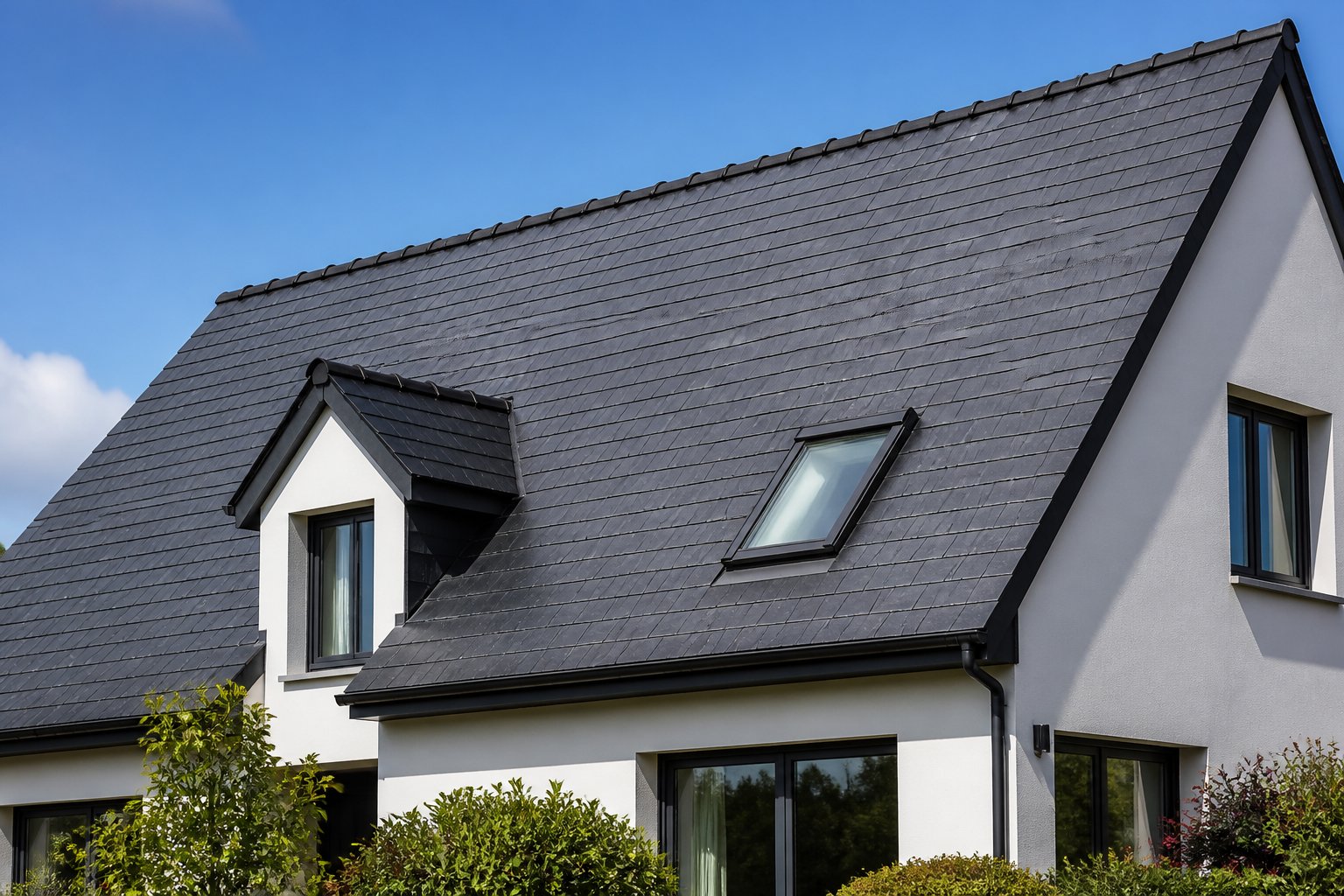
Where grey slate tends toward muted, neutral tones with soft weathering patterns, Buckingham Black holds a deep, near-uniform black with a low natural sheen. The color does not fade or shift toward brown or green over decades of UV exposure the way some lesser black slates do. This consistency is a direct result of the carbon-rich mineral base.
Architects specifying this material often select it for contrast against lighter stone facades, white trim, or copper flashings. If you are comparing it to grey reclaimed slate, the visual difference is significant.
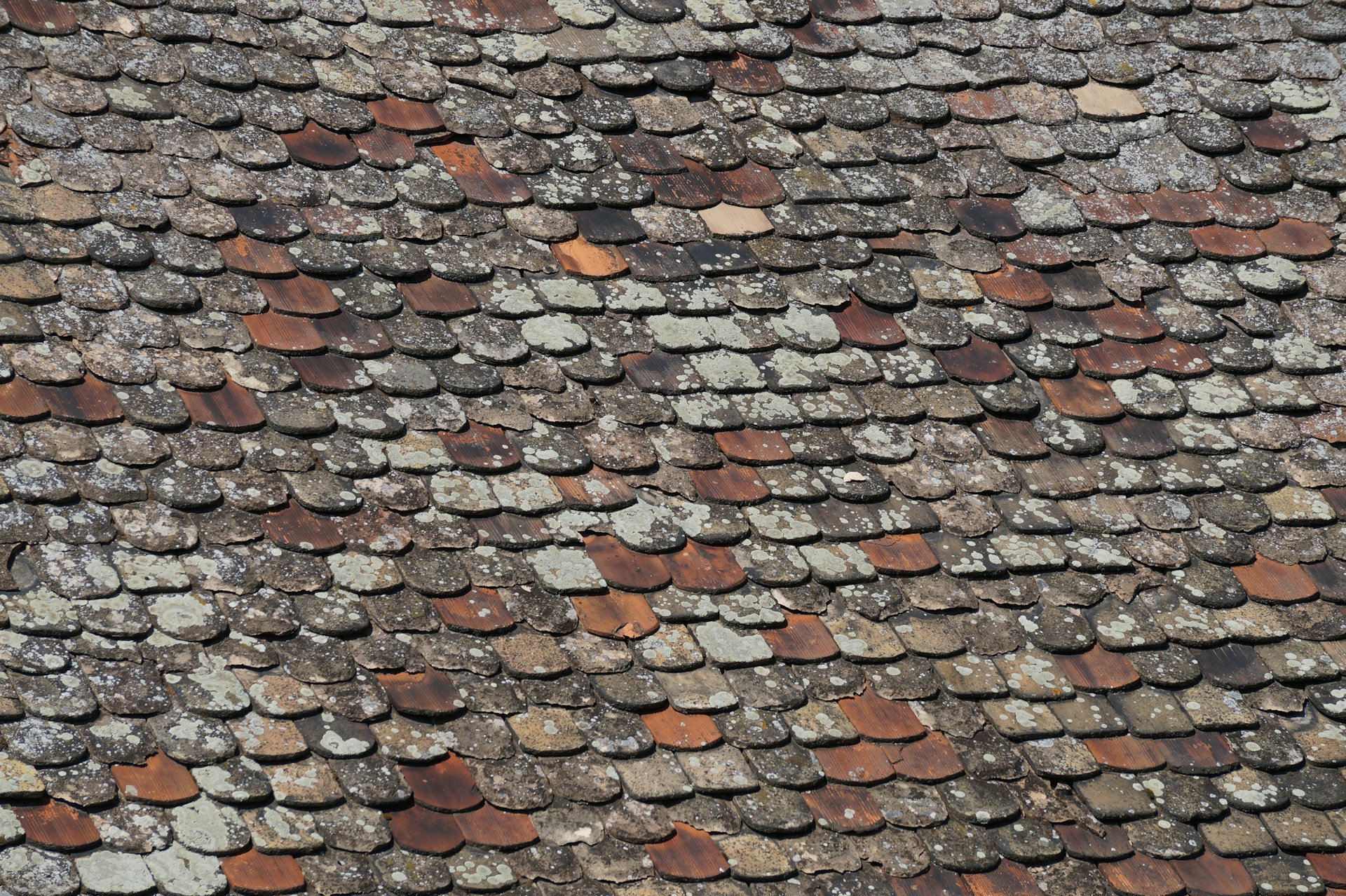
Grey softens a roofline. Buckingham Black sharpens it. The original surface is retained with no artificial cleaning or finishing, so each piece carries authentic patina from its first installation.
Historic Reputation of Virginia Slate
Virginia slate, particularly from the Buckingham County quarries, roofed some of the most prominent institutional and residential buildings on the East Coast from the late 1800s through the mid-twentieth century.
Government buildings, universities, churches, and estate homes favored Buckingham Black for its longevity and refined appearance.
That reputation was earned by performance. Properly installed slate roofs can last 60 to 125 years or longer depending on the stone type, and Buckingham slate consistently falls at the upper end of that range.
Understanding where this slate is typically called for helps you decide whether it fits your current project.
Where This Slate Is Usually Specified
Buckingham Black slate roofing shows up most often on projects where material authenticity is non-negotiable and visual impact carries real design weight.
Historic Restorations Requiring Authentic Color Matching
When a restoration project involves a roof originally laid with Buckingham Black, the specification almost always calls for the same stone. Substituting a different black slate, even one from another Virginia quarry, risks visible color mismatch in both the short and long term.
Preservation guidelines from the Secretary of the Interior's Standards emphasize using materials that match the original in composition and appearance.
For period-correct roof replacement, reclaimed Buckingham Black from a verified demolition gives you slate with comparable age, weathering, and mineral character. That makes blending replacement pieces into an existing field far more convincing than new-quarried alternatives.
Luxury Residential Roofs Seeking Deep Black Character
High-end custom homes and estate-scale builds frequently specify Buckingham Black for its visual authority. The deep black creates a sharp, elegant roofline that synthetic alternatives cannot replicate in texture or depth.
Architects working on homes with natural stone facades, standing-seam copper accents, or heavy timber framing often pair this slate to anchor the material palette.
If you are sourcing slate for luxury restorations, Buckingham Black sits at the top of the list for projects where generic roofing material will not do.
Architecturally Significant New Construction
New institutional and commercial buildings sometimes call for Buckingham Black to connect visually with a campus or district aesthetic rooted in historic slate architecture. In these cases, the spec is driven by design intent rather than restoration code.
Reclaimed stock works well here because the natural weathering and patina give a new building an established presence from day one.
Knowing what formats are actually available for order is the next step before you write the spec or price the job.
Available Formats and What to Confirm Before Ordering
Reclaimed Buckingham Black is available in three standard random-width formats. Each is suited to different roof scales, pitches, and headlap requirements.
20-Inch Random Slate
The 20-inch by random-width format offers the most extensive coverage per piece and is typically specified for steep-pitch roofs on institutional or estate-scale buildings. At standard exposure with a 3-inch headlap, you can expect roughly 7.5 inches of exposure per course.
Confirm thickness consistency across the batch. Reclaimed lots can vary between 3/16 inch and 5/16 inch depending on the original quarry run.
18-Inch Random Slate
The 18-inch random is a versatile middle option that works across a wide range of residential and commercial roof pitches. It gives you moderate exposure, typically around 7 inches at a 4-inch headlap on standard slope roofs. This size shows up frequently in restoration matching because many mid-Atlantic buildings from the early 1900s were originally roofed with 18-inch Virginia slate.
16-Inch Random Slate
At 16 inches by random width, this format is commonly used for repairs, smaller roof sections, dormers, and accent applications. It is the easiest size to blend into a patchwork repair of an existing roof without creating visible scale mismatches.
Before confirming any order, review the following checklist:
- Thickness range of the batch (3/16 to 1/4 inch is standard for roofing grade)
- Width distribution across the random lot
- Nail hole condition on reclaimed pieces (pre-punched holes must be assessed for location and size)
- Quantity per square based on your chosen exposure
- Batch photos showing both face and back surfaces
- Color consistency across the lot to avoid blending surprises on the roof
Knowing why this material is hard to find through normal channels will sharpen your sourcing strategy.
Why Authentic Supply Is Scarce
Genuine Buckingham Black slate is not something you can order from a standard roofing distributor. Supply depends almost entirely on the pace of historic demolitions and the quality of the recovery operation.
Why Standard Channels Rarely Have True Buckingham Stock
Most roofing distributors stock new-quarried slate from active domestic and imported sources. The Buckingham County quarries have had limited or intermittent production in recent decades.
This means fresh-cut Buckingham Black is not reliably available at commercial scale. What you will find labeled "black slate" at general suppliers is often imported stone with different mineral profiles, different absorption rates, and different long-term color behavior.
If your spec calls for sourcing authentic heritage slate, you need a supplier whose inventory comes from documented salvage operations, not a warehouse of mixed-origin imports.
The Role of Verified Demolition Recovery
Reclaimed Buckingham Black enters the market when historic buildings are demolished or re-roofed. Each recovery event produces a finite batch.
The slate is hand-removed, sounded for cracks, and culled to separate roofing-grade pieces from material too damaged for reuse. This process determines both the quantity available and the quality you can expect.
Suppliers who handle vetted reclaimed roofing materials inspect every piece before it enters inventory. That step is what separates a reliable source from someone selling ungraded tearoff piles.
How a Slate Quarry Background Affects Replacement Matching
When you are matching replacement slates to an existing Buckingham Black roof, quarry provenance matters.
Slate from different quarries within the Buckingham belt can vary in carbon content, ribbon density, and weathering behavior. Two batches of "Virginia black" may look different enough to clash visually within a few years.
This is why reclaimed material from a single verified building often provides a better visual match than newly quarried stock. This holds true even when the new stone technically comes from the same region.
How to Source Salvaged Material With Fewer Surprises
Ordering reclaimed slate well means confirming the right details before the crate ships, not after it arrives on your jobsite.
What to Review in Batch Photos and Inspection Notes
Ask for batch photos that show the face surface, back surface, and edge profile of representative pieces. Look for consistent color across the lot, absence of lamination at the edges, and clean cleavage planes.
Inspection notes should confirm that each piece has been hand-sounded to detect internal fractures. A good reclaimed slate quality evaluation will document thickness range, surface condition, and cull rate for the batch.
Quantity Buffers, Breakage Planning, and Color Blending
Plan for a 10 to 15 percent overage on any reclaimed slate order. Breakage during freight, cutting for hip and valley details, and field sorting will consume material.
If you are blending reclaimed stock into an existing roof, request pieces from a single batch to minimize color variation. Mixing lots from different demolition sources risks visible banding across the finished roof plane.
Consider these practical buffers:
- Full re-roof: 10 percent over calculated square count
- Patch or repair: 15 percent minimum, since smaller orders leave less room for field sorting
- Complex hip-and-valley layouts: 15 to 20 percent to account for cutting waste
Freight Timing, Crating, and Jobsite Delivery Coordination
Reclaimed slate ships palletized and crated for protection during freight transit. Most orders ship within 2 to 5 business days after order confirmation, with coordinated jobsite delivery arranged with your crew.
Liftgate service and delivery scheduling are available on request. Inspect crates at delivery and report any freight damage within 48 hours.
Making the Right Call for Your Project
Choosing the right slate for your project comes down to matching the material to the job's visual, structural, and timeline requirements.
When Reclaimed Buckingham Black Is the Best Fit
If you are restoring a roof originally laid with Buckingham Black, reclaimed is the only way to get a credible match. The same applies to luxury builds where the spec demands a deep, unfading black with natural patina.
There is an eco-friendly reclaimed roofing bonus too: you divert material from landfill and reduce demand for new quarrying, which can support LEED Materials and Resources (MR) credit documentation on qualifying projects.
When Another Authentic Slate May Be More Practical
If your project does not require a specific color match and timeline flexibility is limited, a different authentic reclaimed slate in grey or mottled tones may ship faster and in larger quantities. Buckingham Black inventory fluctuates with demolition availability. For projects on tight schedules, confirming current stock levels early is essential.
Checking Current Availability and Lead Time
Inventory for Buckingham Black moves quickly when a new batch enters stock. Call ahead to confirm what sizes, thicknesses, and quantities are available before writing your spec or locking in a project schedule. Getting real numbers early prevents specification delays and substitution headaches later.
Buckingham Black is the one slate where an approximate match is not good enough, so the smart move is to pin down real inventory before your spec is final. Call Reclaimed Slate Roofing at 225-954-8393 to confirm the sizes and quantities in stock right now, or browse current salvage at reclaimedslateroofing.com.
Frequently Asked Questions
How Does Buckingham Black Perform in Freeze-Thaw Cycles Compared to Other Virginia Slates?
Buckingham Black has one of the lowest absorption rates among Virginia slates, typically below 0.25 percent. That low porosity means less water infiltration and less internal expansion during freeze-thaw cycling. This is a key reason it outperforms softer, more porous slates from other Appalachian quarry regions in northern climates.
What Standard Thicknesses and Formats Are Typically Available for a Buckingham Black Slate Roof Specification?
Reclaimed Buckingham Black is most commonly available in 3/16-inch to 1/4-inch thickness, in 20-inch, 18-inch, and 16-inch random-width formats. Width varies by batch since each lot comes from a different historic recovery. Confirm exact thickness distribution with your supplier before finalizing headlap and exposure calculations.
What Are the Most Common Failure Points on Older Slate Roofs, and How Do You Diagnose Whether the Slate or the Fasteners Are the Issue?
The two most frequent failures are nail corrosion and flashing deterioration, not the slate itself. If individual slates are slipping without visible cracking, the fasteners have likely corroded. If the slate face is flaking or delaminating, the stone has reached the end of its service life, though that is rare with Buckingham Black.
How Do You Match Replacement Slates to an Existing Roof When the Original Has Developed Decades of Patina and Weathering?
Use reclaimed slate from the same quarry region and of similar age whenever possible. New-quarried stone, even from the same geologic deposit, will appear noticeably different for years. Reclaimed Buckingham Black that has already developed comparable surface weathering blends far more naturally into an aged roof field.
What Are the Practical Downsides of Slate Roofing on Today's Job Sites: Weight, Detailing, Lead Times, and Installer Requirements?
Slate weighs roughly 700 to 1,000 pounds per square foot depending on thickness, which requires verified structural capacity before installation begins. Detailing at valleys, hips, and penetrations takes skilled labor; not every crew has slate experience. Lead times for reclaimed lots depend on current inventory, so confirm availability early in the project schedule.
Where Is the Virginia Slate Sourced From, and What Quarry History or Provenance Documentation Is Typically Available for Reclaimed Lots?
Most Buckingham Black originates from the Arvonia-Buckingham slate belt in central Virginia. Reclaimed lots are typically documented by the demolition site, building age, and general quarry region rather than a specific quarry name. A reliable supplier should be able to tell you the recovery source and approximate vintage of each batch.