A commercial restoration is on the boards, the project owner wants Leadership in Energy and Environmental Design (LEED) certification, and the roof calls for authentic slate, not a synthetic lookalike. Someone on the team asks whether reclaimed roofing LEED credits are actually achievable.
The answer depends on which credits you target, what documentation you collect, and how your supplier tracks source history and material quality.
Reclaimed Slate Roofing is a direct-source supplier of hand-inspected reclaimed slate and clay tile salvaged from verified historic structures. The inventory ships nationwide, crated and palletized for job-site delivery. The company works with architects and builders who need genuine heritage materials that also meet green building goals.
Keep reading to find a practical breakdown of which LEED v4 and LEED v4.1 Materials and Resources (MR) credits reclaimed roofing can support, what documentation your review team will expect, how salvaged slate and clay tile reduce embodied carbon, and where the practical limits are before you submit. This is sourcing-level detail, not marketing filler.
Which LEED Credits Reclaimed Roofing Can Support
Reclaimed slate and clay tile can contribute to several MR credit categories under both LEED v4 and LEED v4.1, particularly those that reward material reuse, responsible sourcing, and reduced life-cycle impact. The credits most often cited in projects using salvaged roofing fall under the Materials and Resources credit family maintained by the U.S. Green Building Council (USGBC).
Materials and Resources Credits Most Relevant to Salvaged Roofing
The MR credits that matter most when you are specifying reclaimed roofing include:
- MR Credit: Building Product Disclosure and Optimization (BPDO), Sourcing of Raw Materials. Salvaged products that avoid new extraction can contribute to this credit's reuse thresholds.
- MR Credit: Building Life-Cycle Impact Reduction. Projects that reuse existing building elements or specify salvaged materials can demonstrate reduced embodied carbon across the building life cycle.
- MR Credit: Construction and Demolition Waste Management. Diverting roofing material from landfill by reusing it on another project supports waste diversion goals.
- Innovation Credit. Some project teams have documented exceptional material reuse strategies under the Innovation credit path when reuse exceeds standard thresholds.
- Regional Priority Credits. Depending on the project's zip code, the USGBC may assign bonus points to credits already earned if they align with regional environmental priorities.
Where Reclaimed Slate and Clay Tile Fit in LEED v4 and LEED v4.1
Under LEED v4, salvaged materials count toward BPDO Sourcing of Raw Materials when you can document the reuse value as a percentage of total material cost. LEED v4.1 refines this by weighting products with lower life-cycle impacts more favorably.
This gives reclaimed roofing an edge because it skips quarrying, kiln firing, and factory processing entirely.
In both rating systems, the Green Building Certification Institute (GBCI) reviews credit documentation through LEED Online. Your reclaimed roofing purchase gets logged by cost. The reuse percentage is measured against total permanent building material cost, not just roofing cost alone.
Why Credit Outcomes Depend on Project-Level Review
No supplier can guarantee you a specific number of LEED points. Credit achievement depends on your full materials budget, the rating system version you registered under, your documentation quality, and the GBCI reviewer's assessment.
The role of the supplier is to provide the material data and source documentation your team needs to make the credit case. The next section explains exactly why salvaged roofing carries real environmental weight beyond the credits themselves.
How Salvaged Roofing Contributes to Materials Reuse and Embodied Carbon Reduction
Reclaimed roofing materials eliminate the two heaviest carbon phases in a conventional product's life cycle: raw material extraction and manufacturing. When you install a piece of slate that was quarried 120 years ago and has already served one building, zero new mining, processing, or kiln energy is required to put it back into service.
How Reclaimed Materials Avoid New Extraction and Manufacturing
A new slate roof involves quarrying stone, cutting it to size, and transporting raw material from the quarry to a finishing facility. A new clay tile roof adds high-temperature kiln firing, one of the most energy-intensive steps in ceramic manufacturing.
Each of those stages carries an embodied-carbon cost before the material ever reaches a roof.
Salvaged slate and clay tile bypass that entire chain. The only energy input is transportation from the salvage site to the supplier, hand inspection and culling, crating, and freight to your job site. That is a fraction of the embodied carbon in a newly manufactured product.
Building Life-Cycle Impact Reduction and Adaptive Reuse Context
The LEED MR credit for Building Life-Cycle Impact Reduction rewards projects that demonstrate measurable reductions in environmental impact across a building's full life cycle.
Reusing roofing materials directly from a prior structure is one of the clearest ways to show impact reduction. You are extending the useful life of a product that has already proven its durability over 75 to 100-plus years.
This logic applies equally to adaptive reuse projects, where an existing building is repurposed rather than demolished. If your project retains or reinstalls salvaged roofing, that material contributes to the reuse calculation.
If you are sourcing it from an off-site demolition, you still capture the reclaimed roofing carbon savings of avoiding new production.
Why Authentic Patina and Reuse Matter Beyond Aesthetics
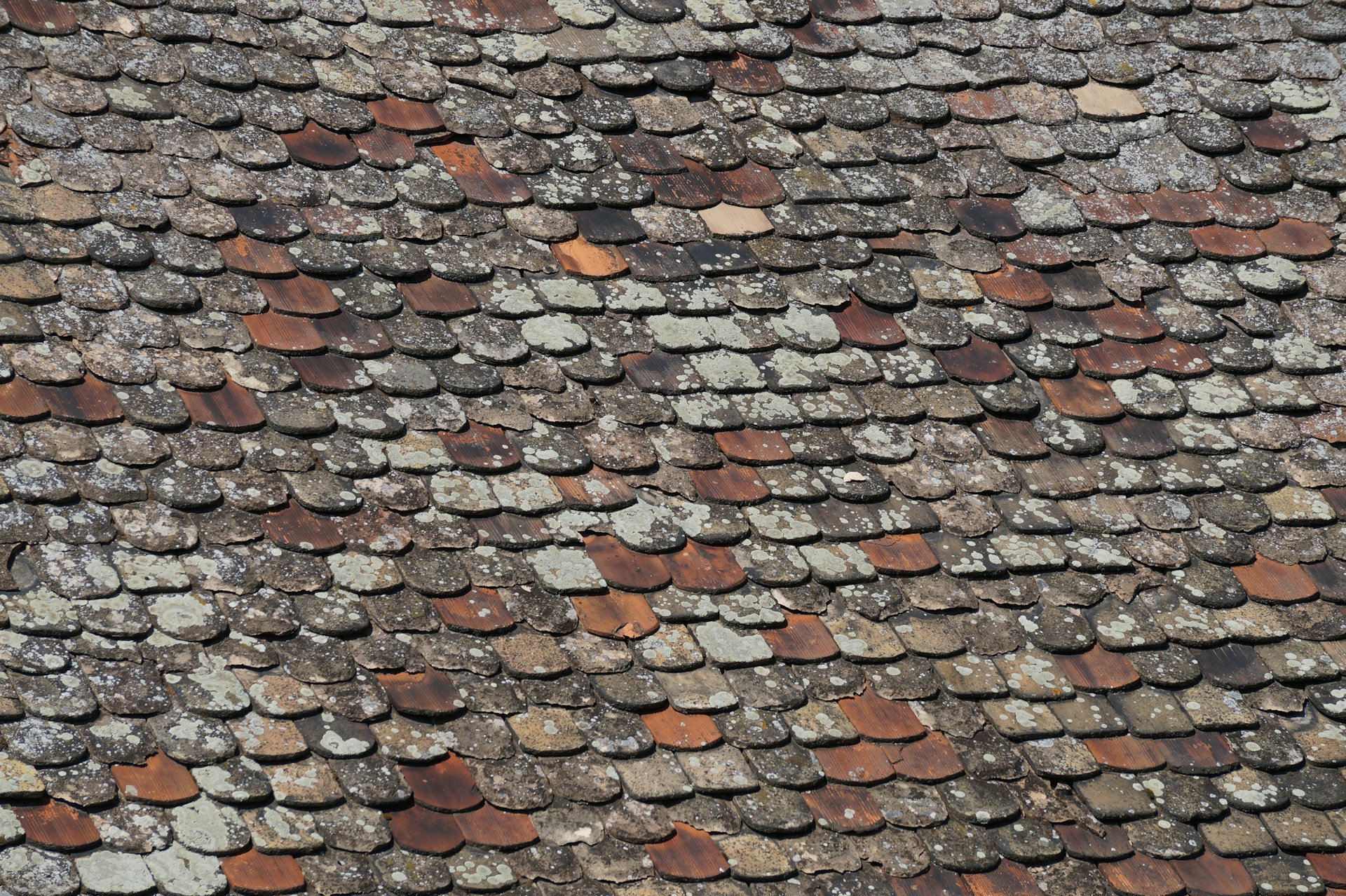
A slate tile with 100 years of natural weathering carries an original surface that no factory finish can replicate. That patina is not just visual. It confirms that the stone has survived freeze-thaw cycles, wind exposure, and moisture without structural failure.
When you specify tested and vetted reclaimed roofing materials, you are choosing a product with a proven track record, not a projected one.
For LEED documentation, the reuse story strengthens the narrative your team submits to reviewers, especially when you can identify the source building, approximate age, and material type. But that narrative needs numbers behind it. This brings us to specification details and how reclaimed slate and clay tile are tracked in practice.
Material Types, Product Scope, and Specification Considerations
Reclaimed slate and reclaimed clay tile serve different structural and aesthetic roles. LEED documentation treats them according to their material cost and reuse value within the total project budget.
Reclaimed Slate Versus Reclaimed Clay Tile in LEED-Oriented Specifications
Reclaimed slate typically arrives in random-width formats. Common sizes include 20" x random, 18" x random, and 16" x random, with thickness ranging from approximately 3/16" to 1/4" depending on the quarry of origin.
Colors range from deep Buckingham black to neutral grey tones, along with rarer mottled green and purple. Slate is a metamorphic stone with natural fire, water, and weather resistance.
Reclaimed clay tile differs in profile and weight. Barrel and mission-style clay tiles have rounded forms, aged color variation, and hand-formed texture. Clay tile is heavier per square foot than slate and requires adequate structural support.
Both materials qualify as salvaged products under LEED MR credits. They are tracked separately in your material cost spreadsheet because their unit costs and coverage rates differ.
What Product Data and Material Specifications Should Cover
Your specification for a LEED-registered project should document the following for each reclaimed roofing product:
- Material type (slate or clay tile)
- Size range and format (random width, standard length)
- Approximate age and source region
- Color description and surface condition
- Inspection and grading method (hand-sounded, culled)
- Quantity ordered (by square or by piece count)
- Total purchase cost
This data feeds directly into your LEED Online submittal. The supplier should be able to confirm material type and source details before you finalize the order.
How Quantity, Cost, and Volume Are Typically Tracked
LEED calculates reuse value as a percentage of total permanent building material cost. If you spend $18,000 on reclaimed slate for a project with $200,000 in total permanent materials, that reclaimed slate represents 9% of your material budget. That percentage is what gets entered into your MR credit documentation.
Learning how to estimate reclaimed slate cost early in schematic design helps you model this ratio before you commit to a credit path.
Getting these numbers right early matters. Your LEED review team will want to see matching invoices and delivery records, which is exactly what the next section covers.
Documentation Teams Usually Need From a Reclaimed Roofing Supplier
LEED reviewers expect clear, traceable records for every material claimed under MR credits. For reclaimed roofing, the documentation requirements center on proving the material is genuinely salvaged, not merely described as "reclaimed" on a marketing page.
Chain of Custody, Source History, and Batch Tracking
A credible chain of custody for salvaged roofing should trace the material from the source building through the supplier to your job site. Key records include the salvage location (city, state, building type), the approximate age of the material, and any batch or lot identifiers the supplier assigns during inspection and culling.
Not every reclaimed supplier tracks this data. When you are sourcing authentic reclaimed clay tile or confirming reclaimed slate quality, ask whether the supplier can provide written source history and batch photos before you commit to the order.
This is standard practice for LEED-oriented projects and a baseline sign of supplier professionalism.
Invoices, Quantity Records, and Delivery Documentation
Your GBCI reviewer will cross-reference invoices against your total materials cost calculation. Each invoice should list the material type, quantity, unit price, and total cost. Delivery receipts confirm that the material arrived at the project site and was incorporated into the building.
For crated freight delivery, expect crated and palletized shipments with tracking details and delivery instructions. Save every freight receipt, packing list, and delivery confirmation as part of your project file.
What to Coordinate During Schematic Design and Submittals
The best time to align your reclaimed roofing specification with your LEED credit strategy is during schematic design. At that stage, your architect or LEED AP can confirm which MR credits the project is targeting, estimate the reuse cost percentage, and flag any documentation gaps.
Contact your supplier early enough to confirm current inventory, request batch photos, and lock in pricing.
A resource for comparing reclaimed suppliers can help you weigh what different sources offer in product data and material support. The next section covers where the practical risks sit and what questions to ask before you finalize your submittal.
Practical Limits, Risk Points, and Coordination Before You Submit
Reclaimed roofing supports LEED credit goals, but it does not guarantee specific LEED points. The gap between "supports" and "guarantees" is where most confusion happens on project teams.
Why Reclaimed Roofing Does Not Guarantee Specific LEED Points
LEED point awards depend on your full project scope, your total permanent materials budget, and the GBCI reviewer's assessment of your documentation. A reclaimed slate order might represent 5% or 15% of your materials budget depending on the size and complexity of your project.
Whether that percentage crosses a credit threshold is a project-level calculation. It is not something any single supplier controls.
Your LEED AP or sustainability consultant should model the credit math before you submit. The supplier's role is to provide accurate material data, source documentation, and invoicing. It is not to certify credit achievement.
Inventory Variability, Matching, and Approval Workflow
Salvaged roofing inventory changes. Unlike manufactured products with fixed SKUs, reclaimed slate and clay tile come from specific demolition batches. A supplier may have 30 squares of 18" x random grey slate today and a different batch of Buckingham black slate next month.
This variability is inherent to genuine salvage and is actually a quality signal. It means the material is real and not factory-produced.
For LEED projects, confirm availability and reserve your material early. Review batch photos and approve color and condition before the order ships. All reclaimed slate orders are final sale. Inspect thoroughly during the approval window.
What to Ask About Freight, Final Sale, and Job-Site Readiness
Before placing your order, confirm these logistics details with your supplier:
- Is liftgate service available at your delivery location?
- Can the supplier coordinate delivery scheduling with your crew?
- What is the typical turnaround after order confirmation?
- Will tracking and delivery details be provided before shipment?
- What is the process for reporting freight damage within 48 hours?
These details affect your project timeline and your ability to document material receipt for LEED. Sorting these questions out before you order removes friction from both the construction schedule and the credit submittal process.
Sourcing Strategy for Teams Comparing Reclaimed Roofing Options
The earlier you engage a reclaimed roofing supplier in your project timeline, the more flexibility you have to match material to your LEED credit strategy and design intent.
When to Engage a Supplier for Material and Documentation Support
Ideally, reach out during schematic design or early design development. At that stage, you can confirm whether the supplier has the size, color, and volume you need, and whether they can provide the source documentation your LEED AP requires. Waiting until construction documents are finalized risks discovering that the specific batch you wanted has shipped to another project.
For projects comparing reclaimed slate against reclaimed lumber or salvaged wood as reuse materials, the documentation process is similar. You need source history, cost records, and delivery receipts. The difference is in the product data.
Slate and clay tile are measured by the square, not by board footage, and their structural characteristics (thickness, weight per square, fire rating) differ from wood framing or paneling.
How Reclaimed Roofing Fits Commercial and Restoration Specifications
For commercial and restoration projects, the practical requirement is verified reclaimed heritage formats in the sizes those jobs specify: 16", 18", and 20" lengths in random widths, hand-inspected and sounded before shipping, with barrel clay profiles available where a project calls for tile rather than slate.
For sustainable slate roofing on LEED-registered projects, the combination of verified salvage sourcing, hand-culled quality control, and detailed invoicing aligns with the documentation standards described throughout this article. Most orders ship within 2 to 5 business days after confirmation.
Next Steps for Pricing, Availability, and Project Review
If your team is weighing reclaimed roofing for a LEED-registered project, the earlier you confirm real inventory and gather source documentation, the cleaner your submittal will be.
Reclaimed Slate Roofing can supply current availability, per-project pricing, and the salvage-source records your LEED AP needs to build the credit case. Call 225-954-8393 to confirm what is in stock, or browse available material at reclaimedslateroofing.com.
Frequently Asked Questions
Which LEED v4/v4.1 Credits Can a Reclaimed Slate or Clay Tile Roof Support on a Commercial Project?
Reclaimed roofing most directly supports MR credits for Building Product Disclosure and Optimization (Sourcing of Raw Materials), Building Life-Cycle Impact Reduction, and Construction and Demolition Waste Management.
Some projects also pursue Innovation credits for exceptional material reuse strategies. The specific credits achieved depend on your project's total material budget and documentation quality.
What Documentation Will a LEED Reviewer Expect for Salvaged Roofing: Source Building, Chain of Custody, and Invoices?
Reviewers typically expect written source history identifying the salvage location and approximate material age, a chain of custody showing how the material moved from demolition to your job site, invoices listing quantity and cost, and delivery receipts confirming the material was incorporated into the project. Batch photos approved before shipment also strengthen the submittal.
How Does Reclaimed Roofing Count Toward the Materials and Resources "Building Product Disclosure and Optimization" Credits?
Salvaged roofing materials count as reused products that avoided new raw material extraction. Their purchase cost is logged as a percentage of total permanent building material cost. If that percentage meets or exceeds the credit threshold, it contributes to the BPDO Sourcing of Raw Materials credit under both LEED v4 and v4.1.
Does Reusing Salvaged Slate or Clay Tile Count Toward the LEED Building and Material Reuse Thresholds?
The Building Life-Cycle Impact Reduction credit measures reuse against the completed building's surface area, at 25%, 50%, and 75% thresholds under its building and material reuse option.
Roofing on its own rarely reaches those whole-building percentages, so salvaged slate and clay tile more often contribute through the credit's whole-building life-cycle assessment path and through the Sourcing of Raw Materials credit, where they lower embodied impact and reused-material cost. Your LEED AP models where the material lands against the full project scope.
Can a Roof Built With Authentic Salvaged Slate Help With LEED for Existing Buildings and Major Renovations?
Yes. Under LEED for existing buildings, reusing salvaged slate on a major renovation supports MR credits by demonstrating material reuse and waste diversion. The key is documenting the material's salvage origin and tracking its cost against total project material expenditures.
How Do You Calculate the Value or Cost Basis of Reclaimed Roofing for LEED Submittals When Inventory Is Hand-Sorted and Mixed Lot?
Use the actual invoiced purchase price as the cost basis. Even if the inventory comes from mixed lots or multiple salvage batches, the invoice total represents the market value of the reclaimed material. Record the total quantity, unit price, and lot or batch identifier for each shipment so your LEED AP can calculate the reuse percentage accurately against total permanent building material cost.