You have a restoration bid on your desk, and the spec calls for period-correct slate to match an existing 1920s roof. Or you are pricing a new build where the architect wants authentic reclaimed clay tile, not a synthetic lookalike. Either way, you need a reliable source for genuine salvaged material that arrives on time, passes inspection, and installs without surprises.
Reclaimed roofing for contractors is not a niche curiosity anymore. It is a growing category driven by historic preservation mandates, sustainability goals, and client demand for real character.
Reclaimed Slate Roofing operates as a direct-source wholesale supplier of hand-inspected reclaimed slate and clay tile from verified historic salvage.
The company ships nationwide, with most orders crated and palletized for job-site delivery within 2 to 5 business days after confirmation. That supply chain matters when you are coordinating trades and holding a project schedule.
Keep reading to find a practical breakdown of how to confirm material specs before you price a reclaimed roof and how to evaluate salvaged inventory quality.
Also see how to write project documents that prevent unwanted substitutions, what changes during installation with reclaimed slate and tile, and how to coordinate delivery on active job sites. Every section is written for contractors and architects who need sourcing specifics, not filler.
What Contractors Need to Confirm Before Pricing a Reclaimed Roof
A reclaimed roofing bid falls apart when you price one material, and the supplier ships another. Before you quote, lock down the material type, dimensions, color range, and quantity buffers that your project actually requires.
Material Type, Roof Scope, and Match Requirements
Start by confirming whether you need reclaimed slate, salvaged clay tile, or a mix. A full reroof on a historic church is a different procurement than patching twelve broken slates on a residential dormer.
For restoration work governed by historic preservation standards, the material must match the original in type, profile, and visual character, not just approximate it.
Knowing your roof scope also sets the order scale. A 30-square slate roof install needs very different logistics than a 2-square repair. Confirm early whether you are sourcing for a complete installation, a section replacement, or spot repairs. Lead times and pricing tiers often shift with quantity.
Slate Size, Exposure, Thickness, and Course Compatibility
Reclaimed slate is typically sold in random widths at standard lengths: 20-inch, 18-inch, and 16-inch are the most common salvaged formats. Your exposure setting depends on the length. A 20-inch slate set at a standard 3-inch headlap gives you an 8.5-inch exposure.
Verify thickness ranges in the lot. Most reclaimed slate formats run between 3/16 inch and 1/4 inch, but mixed lots from different quarry origins can vary.
Course compatibility is critical on partial replacements. If the existing roof was laid in graduated courses with larger slates at the eave tapering to smaller slates at the ridge, you need to source specific lengths for each zone. One uniform size will not suffice.
Color Range, Weathering, and Visual Approval Standards
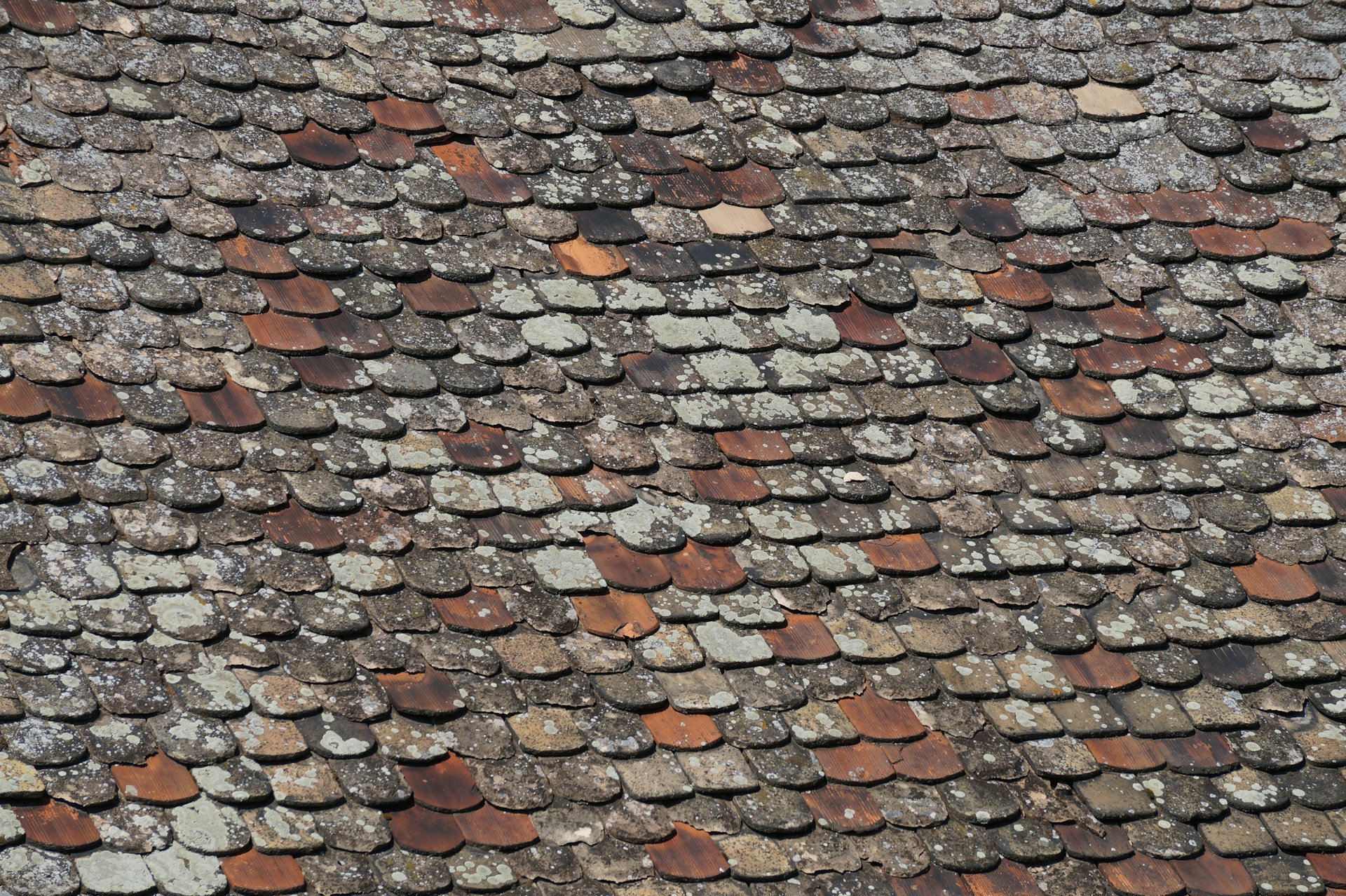
Reclaimed slate color is quarry-specific. Vermont produces greens, greys, purples, and unfading blacks.
Pennsylvania yielded soft grey and blue-black. Virginia Buckingham stock runs a deep, consistent black. Weathered surfaces carry natural patina that new slate cannot replicate. This is exactly why architects specify reclaimed in the first place.
Get batch photos before you commit. The visual approval process should confirm that the slate color matching aligns with what is already on the roof or with the architect's intent for a new build.
Quantity Takeoffs, Attic Stock, and Breakage Buffers
Standard waste factors for new slate run about 10%. For reclaimed material, plan 12% to 15% to account for occasional pieces that do not pass final field inspection or break during cutting. If the project requires attic stock for future repairs, add another 3% to 5% on top.
Accurate takeoffs prevent reorder delays that can stall a crew for days. That margin question connects directly to how you evaluate the inventory before it ever ships.
How to Evaluate Salvaged Inventory Before You Order
Not every piece of salvaged slate or clay tile is reusable. Knowing what to look for separates a clean install from a warranty headache.
Nail Hole Condition, Delamination, and Edge Wear
Check existing nail holes for cracking that radiates outward. A clean, tight hole can be redrilled without issue. A hole surrounded by micro-fractures means the piece will split under fastener load.
Delamination, where layers of the slate separate along the cleavage plane, disqualifies any piece for roof use. Edge wear is acceptable if it is cosmetic. Chipping that reduces the effective headlap or sidelap coverage is not.
Hand Inspection, Sounding, and Culling Standards
Reputable suppliers hand-inspect every piece, sounding it by tapping to listen for a clear ring versus a dull thud. A clear ring indicates solid stone.
A dull sound suggests internal fracture. This culling process should remove cracked, soft, or structurally compromised pieces before they reach your pallet. Ask your supplier about their slate culling standards before releasing an order.
Batch Photos, Sample Review, and Lot Consistency
Request batch photos showing the range of color, texture, and size within the specific lot you are buying. Lot consistency matters because a single salvage job can yield slate from different quarry eras or original roof sections.
If you are matching an existing roof, ask for a small sample shipment first when feasible. This is especially important on high-visibility facades.
When Reclaimed Slate Outperforms New Material for Repairs
On a repair job where you are replacing 20 or 30 slates on a century-old roof, new quarry slate can stand out visually for years. Reclaimed slate that has already weathered 80 to 100 years blends immediately. That visual match is often the deciding factor for architects and historic commissions. It carries real weight in your specification documents.
Writing Project Documents Without Creating Substitute Problems
Vague spec language opens the door for substitutions that compromise the project. Your documents should make it difficult for anyone to swap in a synthetic or reproduction product.
Specification Language for Authentic Salvaged Slate and Clay Tile
Write the material spec to include "genuine reclaimed natural slate (or clay tile) salvaged from verified historic structures." Exclude replicas, synthetic slate, fiber-cement, and rubber composites explicitly.
Reference the quarry region or color type where known, such as "Buckingham Black Virginia slate, reclaimed" or "salvaged barrel profile clay tile." NPS Preservation Brief 29 reinforces that historic slate roofs should be repaired with compatible original materials rather than modern substitutes.
Matching Existing Roofs by Size, Color, Texture, and Patina
When the project involves partial replacement, spec documents should state the acceptable size range (for example, "18-inch by random width, 3/16-inch to 1/4-inch thickness"), the target color family, and whether original weathered patina must be retained.
Note that salvaged clay tile matching follows the same principle. Profile shape, glaze condition, and color must align with the field tile already in place.
Acceptable Variations in Reclaimed Material Lots
Reclaimed lots are not factory-uniform. Your spec should define acceptable variation ranges:
- Width variation: Random widths within each length category are standard
- Thickness variation: Typically 1/16-inch variance within a lot
- Color variation: Minor tonal shifts across the lot are expected and authentic
- Surface condition: Original patina retained; no cleaning or artificial treatment
Including these parameters prevents change orders and protects you if the owner questions lot consistency.
Coordination Notes for Architects, GCs, and Roofing Specialists
Your submittal package should include batch photos, supplier documentation of the salvage source, and a written description of the inspection and culling process. Share this with the architect and general contractor (GC) before material release.
On projects where LEED Materials and Resources credits apply, document the reclaimed material's weight and percentage of total building materials for the submittal. Clear coordination here prevents last-minute disputes over what arrives on the roof. It sets the stage for smoother installation.
Installation Details That Change With Reclaimed Slate and Tile
Reclaimed slate installs differently from new quarry stock because each piece carries its own history. Existing nail holes, slight dimensional variance, and surface wear affect layout decisions.
Headlap, Side Lap, and Exposure Checks on Mixed Lots
Standard headlap for slate roofing is 3 inches on slopes of 8:12 and steeper, increasing to 4 inches on lower pitches.
With mixed reclaimed lots, check each course for uniform exposure. A 20-inch slate at 3-inch headlap should give 8.5 inches of exposure. An 18-inch slate drops to 7.5 inches. When mixing lengths on the same roof, adjust your coursing layout to maintain consistent headlap across transitions.
Side lap should be at least 3 inches. Random-width lots usually provide adequate side lap if you sort widths before installation and avoid stacking narrow pieces adjacent to each other.
Fastener Strategy Around Existing Nail Holes
Most reclaimed slates arrive with two existing nail holes from prior installation. If those holes align with your batten or deck spacing, you can reuse them. If not, drill new holes using a carbide-tipped bit at low speed without hammer action.
Place new holes at least 1 inch from any edge and at least 2 inches from the old holes to avoid fracturing the stone. Use copper or stainless steel slating nails. Galvanized fasteners corrode against natural stone over time.
Underlayment Choices for Historic Restorations and High-End New Builds
On historic restorations, breathable synthetic underlayment performs better than standard asphalt felt because it allows moisture vapor to escape from the deck without trapping condensation beneath the slate.
For high-end new construction, some specifiers layer a self-adhering membrane at eaves and valleys with synthetic underlayment across the field. Your underlayment choice should match both the building code requirement and the project's ventilation design.
Flashing Transitions With Copper, Valleys, and Penetrations
Copper is the standard flashing metal for slate and tile roofing due to its longevity. It matches the 75 to 100-year service life of natural slate. Open copper valleys, step flashing at sidewalls, and copper counter-flashing at chimneys are all standard details.
For solar penetrations on new builds, coordinate bracket placement before the slate goes down. Do not wait until after. Penetration boots should be lead or copper, not rubber, on any roof specified with authentic reclaimed material.
Proper flashing details protect the investment in premium reclaimed material. They also determine how smoothly delivery and staging go on the job.
Delivery, Staging, and Crew Coordination on Active Jobsites
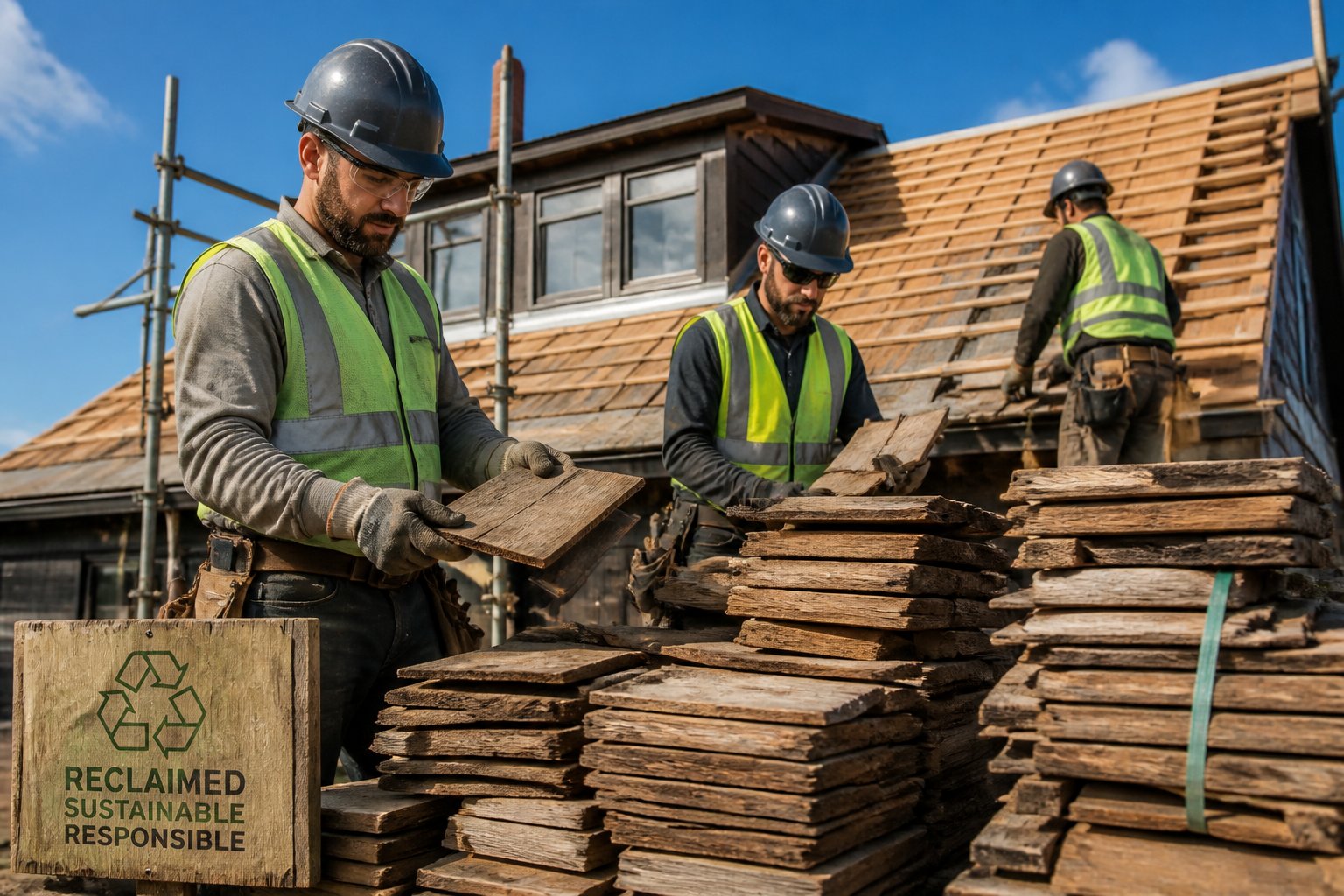
Reclaimed slate and clay tile arrive heavy, fragile, and palletized. Planning your site logistics before the truck shows up prevents breakage and wasted labor.
Crating, Palletizing, and Job-Site Ready Freight Delivery
Quality suppliers crate and palletize orders so they are ready for direct unloading at the job site. Each pallet is secured to prevent shifting during transit. A typical pallet of reclaimed slate weighs between 2,000 and 3,000 pounds depending on quantity and format.
Confirm with your supplier that the freight is job-site ready. Tracking details will be provided before the shipment date.
Scheduling Around Liftgate Access and Site Constraints
If your job site lacks a forklift, request liftgate service at the time of order. Schedule delivery windows to avoid conflicts with other material drops, dumpster swaps, or crane work. Residential sites with narrow driveways or overhead wires need advance coordination between your crew and the freight carrier.
Separating Lots for Repair Work Versus Full Roof Installs
When you receive a mixed order, separate repair stock from field stock immediately. Repair slates should be sorted by size and color and stored flat under cover. Field installation stock can be staged closer to the lift point. Keeping lots separated on the ground saves sorting time on the roof.
When to Source Direct Instead of Searching Salvage Yards
Searching local salvage yards for specific sizes, colors, and quantities of reclaimed slate is time-consuming and unreliable. A direct supplier with hand-inspected, culled inventory and verifiable sourcing ships a consistent lot to your site in days.
For contractors managing multiple restoration or high-end projects, sourcing direct is a scheduling decision as much as a quality decision.
Making Reclaimed Roofing Work on Schedule and on Spec
The projects that run smoothest with reclaimed material are the ones where the contractor, architect, and supplier align early on size, color, quantity, and timeline.
Best-Fit Projects for Salvaged Slate and Clay Tile
Reclaimed slate and clay tile fit best on these project types:
- Historic restorations requiring period-correct material to satisfy preservation standards
- Partial roof repairs where visual matching to the existing field is critical
- Luxury residential builds where clients want genuine character over manufactured uniformity
- Commercial buildings with architectural significance or landmark status
- LEED-tracked projects where reclaimed material reuse contributes to Materials and Resources credits
Common Mistakes That Cause Delays or Visible Mismatches
Ordering without batch photo review is the most frequent cause of visible mismatch on a finished roof.
Other common mistakes include underestimating breakage buffers, failing to specify quarry origin or color family, and not confirming thickness compatibility with existing coursework. Each of these is avoidable with upfront communication between your team and the supplier.
Supplier Questions to Ask Before Release and Shipment
Before you release an order, confirm these specifics with your supplier:
- What salvage source did this lot come from?
- What is the inspection and culling process?
- Can you provide batch photos of the actual lot, not stock images?
- What is the thickness range in this shipment?
- What is the turnaround time from order confirmation to delivery?
- Are all sales final, and what is the process for reporting freight damage?
These questions protect your project and your client relationship.
Checking Availability and Next-Step Ordering
Reclaimed roofing rewards the contractor who pins down size, color, and quantity before the bid goes out, not after the crew is on the deck. Get the batch confirmed and the lot reserved, and the material stops being a scheduling risk.
Call Reclaimed Slate Roofing at 225-954-8393 to confirm current inventory and reclaimed slate pricing for your specific scope, or browse available stock at reclaimedslateroofing.com.
Frequently Asked Questions
How Do You Verify Reclaimed Slate or Clay Tiles Are Authentic and Not Reproduction Before You Spec Them?
Ask the supplier for documentation of the salvage source, including the building location and demolition date. Genuine reclaimed slate shows natural weathering, existing nail holes, and patina that reproductions cannot replicate. Batch photos and physical samples confirm authenticity before you write it into a spec.
What Job-Site Inspections Should a Crew Perform on Reclaimed Slate to Confirm It Is Sound and Ready to Install?
Sound each piece by tapping it with a knuckle or slating hammer. A clear, ringing tone means intact stone. A flat or dull tone signals internal fracture. Visually check for delamination along edges, radiating cracks around nail holes, and any excessive chipping that would reduce effective headlap coverage.
Which Reclaimed Slate Types and Colorways Hold Up Best in Freeze-Thaw Regions?
Dense, hard slates like Buckingham Black from Virginia and unfading Vermont greens and purples have proven freeze-thaw durability across decades of service in northern climates. Softer Pennsylvania grey slates may show faster weathering in extreme freeze-thaw zones, so confirm the quarry origin and grade before specifying.
How Do Reclaimed Roof Tile Quantities Get Measured and Estimated for Waste, Cuts, and Matching on a Restoration Roof?
Measure the roof area in squares (1 square equals 100 square feet). Calculate the pieces per square based on slate size and exposure, then add a 12% to 15% waste and breakage buffer. For restoration matching, add another 3% to 5% for attic stock so future repairs use the same lot.
What Are Typical Lead Times and Delivery Options for Shipping Reclaimed Slate or Clay Tile to a Commercial or Residential Job Site?
Most orders ship within 2 to 5 business days after order confirmation. Material is crated and palletized for freight delivery, with liftgate service and delivery scheduling available on request. Tracking details are provided before the shipment arrives.
What Should Contractors Include in an RFI or Submittal Package for Reclaimed Slate Roofing on Historic or High-End Projects?
Include batch photos, a written description of the salvage source, the supplier's inspection and culling standards, the slate size and color range, and thickness tolerances. For historic projects, reference applicable preservation standards and guidelines and note that all material is genuine reclaimed, not reproduction.