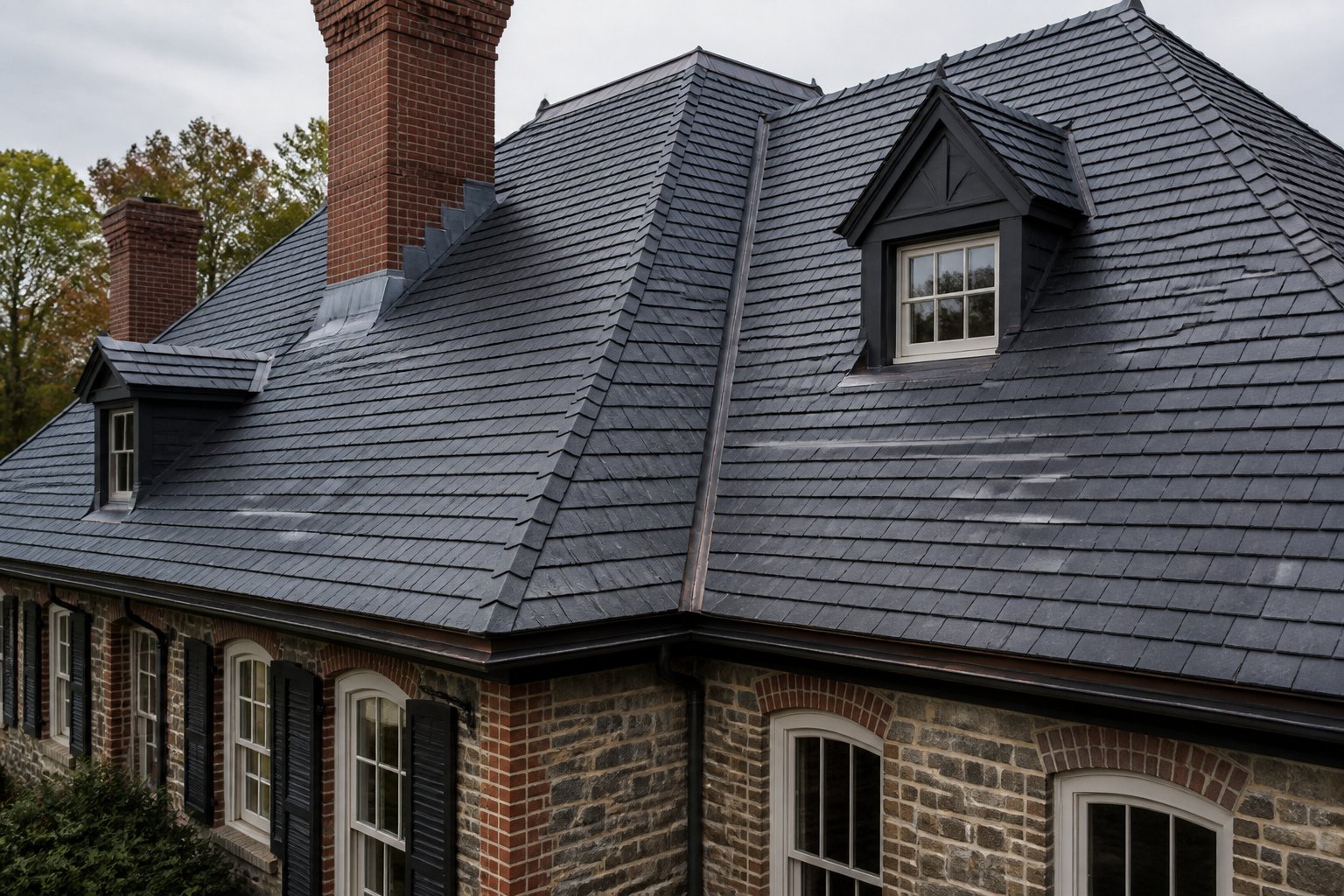
You pull a slate off a 1910s Queen Anne roof and flip it over. The face shows sea green fading toward buff, and the slate beside it holds a deep plum. The owner wants every missing piece matched, and the architect wants the new wing to read as part of the same roof. That is the core problem with multicolor reclaimed slate roofing: the color variation is the design, and it has to be managed from the first sketch.
The most reliable way to plan a multicolor roof is to start from real batch photos. Set color ratios by what the salvaged lot contains, then choose a layout (blended random, sorted bands, or a gradient) that suits the building's era. Mottled green with purple, semi weathering green, purple, grey, and black all mix well when you control the proportions and spread them with intent.
Keep reading to learn how weathering and minerals create color shifts, which slate colors pair well, and how crews lay a blend without clusters. You will also see what a color-specific specification should lock down before material arrives. A multicolor lot that fits your roof may exist as one run of salvaged stone, so the plan has to start with what is on the pallet.
How Do You Plan Multicolor Reclaimed Slate Roofing?
Every good multicolor roof starts with a fixed reference point, either the roof already on the building or a clear design goal. Without one, even beautiful salvaged slate can end up looking random in the wrong way.
Start with the Roof's Existing Colors or Design Intent
For a restoration, the existing roof sets the palette. Pull a few loose or broken slates and photograph them in daylight, both wet and dry. Count roughly how many of each color appear across one full slope.
The National Park Service preservation brief lists size, shape, color, texture, exposure, and coursing as the traits to document and match. Old photos, nail hole patterns, and leftover slates found in eave cavities all help rebuild the original look.
For new construction, architects and homeowners set the palette through design intent. Decide early if the roof should read as one soft tone from the street or as visible, lively color. Our guide to historic slate matching covers the documentation step in more depth.
Choose a Natural Mix or a Deliberately Composed Blend
A natural mix uses slate the way it came off the salvaged roof. Mottled green with purple is a good example, since each batch already carries both colors in varied amounts. You spread the lot evenly and let the stone do the work.
A composed blend mixes two or more separate lots on purpose. As an optional starting point for a mockup, you might try 60 percent grey, 30 percent green, and 10 percent purple. This takes more planning, but it lets you tune the roof to trim, brick, or stone on the walls.
- Natural mix: faster to plan, reads as authentic age, and depends on one lot.
- Composed blend: more control, suits new builds and additions, and needs enough stock in each color.
- Hybrid: a natural mixed lot, lightly accented with a solid color at ridges or dormers.
Whichever route you choose, the colors on those slates came from somewhere specific, and that origin shapes how they will look in fifty more years.
What Creates Color Variation in Salvaged Slate?
Slate color comes from the minerals locked in the stone, then gets shifted by decades of sun, rain, and air. Reclaimed slate carries both layers of that story on its face.
Mineral Variation, Patina, and Exposure
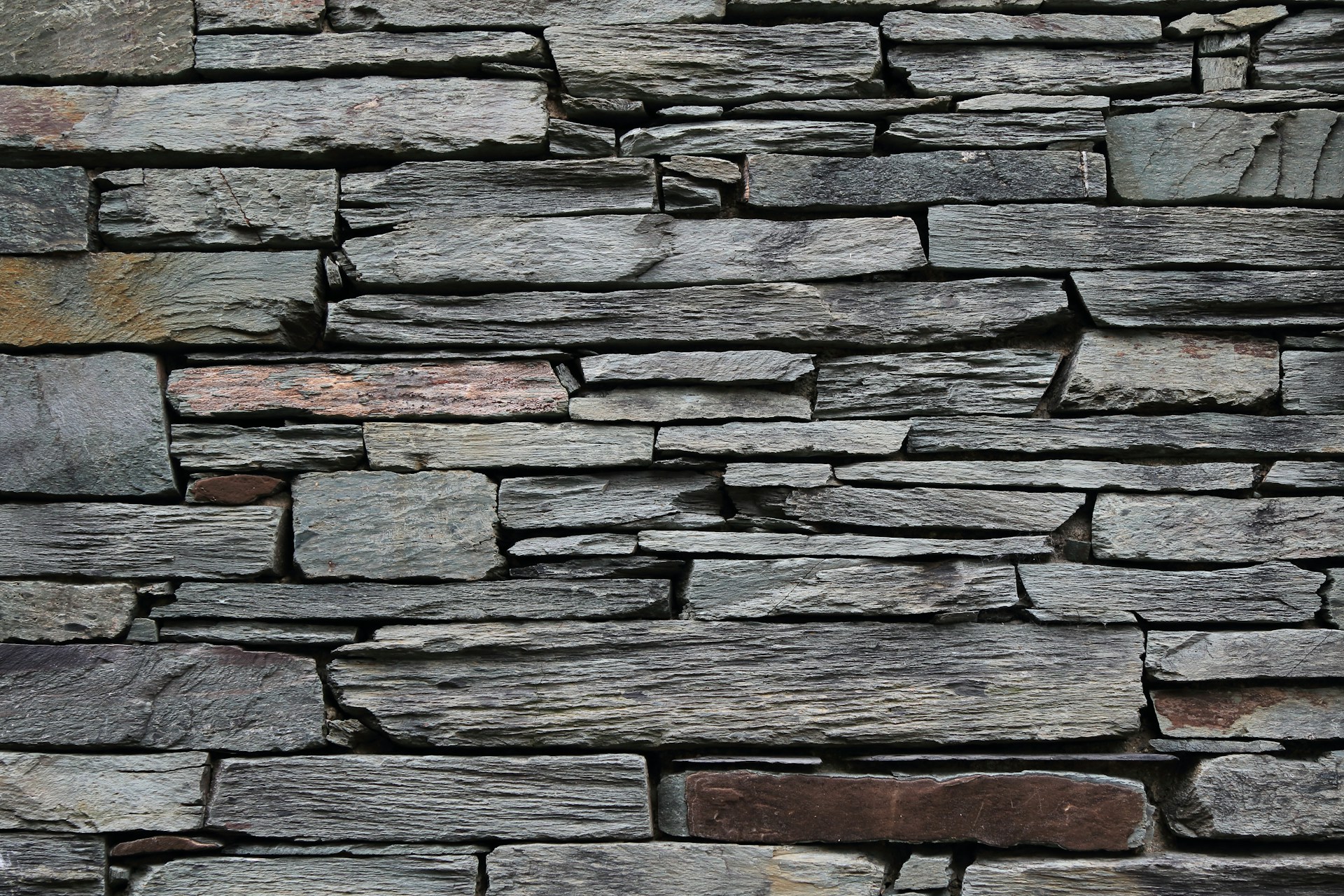
Slate color is generally linked to its mineral content. Green is commonly associated with chlorite, purple and red with hematite, and dark grey and black with carbon-rich material. Variation in those minerals, even within one quarry bed, can create mottling on a single slate.
Exposure adds a second layer. The park service explains chemical weathering as a change in at least some minerals within a rock. On a roof, that slow change shows as softened tone, lichen shadows, and a dry matte patina.
Slopes with different exposure can weather differently. That means slates salvaged from one building may arrive in two or three tone groups. Good salvage keeps that surface intact, which is why weathered slate roof tiles ship uncleaned and with no artificial finish.
How Salvage Batches and Semi-Weathering Slate Differ
Roofing slate falls into two color behaviors. Unfading slate holds its color for decades. Semi-weathering slate shifts over time, often from green or grey toward buff, brown, or rust tones.
With new semi-weathering slate, you wait for that shift. With salvaged natural roofing slate, the shift has already happened. A semi weathering green slate off a century-old roof shows its settled color today, so what you approve in the batch photo is close to what you live with.
Salvage batches also vary by source building. One demolition might yield slate from a single quarry, while another holds decades of repairs from mixed quarries. See how reclaimed roofing is sourced for how that recovery works, since the source roof decides which colors you can pair.
Which Colors Work Together on a Roof?
The best multicolor palettes pair one lively color family with one steady anchor tone. Green and purple bring the movement, and grey or black keeps it calm.
Mottled Green with Purple, Semi Weathering Green, and Purple
Mottled green with purple slate carries both colors in every batch, supplied in 20" x random, 18" x random, and 16" x random sizes. It is naturally weathered, never cleaned, and fully sounded and culled. It suits Queen Anne, Gothic Revival, and custom homes that want a bold roof.
Semi weathering green works as a softener. Its green-grey face, touched with buff, blends the strong purple so the roof does not look striped. Solid purple slate adds depth when you need more warmth than the mottled lot provides.
These are rare slate roof tiles in salvage terms, and lots do not restock once sold. See our notes on rare slate colors for how these colorways serve luxury restorations.
Using Grey and Black to Anchor a Multicolor Palette
Grey reclaimed slate is the easiest anchor. Its neutral tone and soft weathering sit between green and purple without competing. A roof that is mostly grey with scattered color reads as refined up close and calm from the street.
Black slate gives sharper contrast. A deep black like Buckingham Black frames lighter colors and pairs well with pale stone or white trim. Use black at eaves, rakes, or ridges to outline the roof planes. These optional starting points can guide a mockup; they are not fixed rules:
- Try grey as 50 percent or more of the field for a quiet blend.
- Try black at edges or in bands to add structure.
- Try keeping bright purple under about one quarter of the field for a softer result.
When Quarry Origin Matters for a Historic Match
Quarry origin matters most when you patch or extend a historic roof. The park service brief notes that quarries opened in Vermont, New York, Virginia, and Pennsylvania after the Civil War. Tone and weathering behavior can vary by region and by quarry, so compare samples rather than relying on a color name.
Imported slate may read differently from aged American stone on a period roof. For custom blend roof slates on a landmark, compare samples against the existing roof and confirm origin where records allow.
Our write-up on period-correct roofs explains why origin shows up in the details. Once your palette is set, the crew's placement decides if the colors look planned or accidental.
How Should Contractors Lay Out the Color Blend?
Layout turns a good palette into a good roof, and there are three proven approaches. Pick one before the first course goes down, since switching midway shows from the ground.
Blended Random Placement for Even Variation
Blended random is the most common choice for a natural slate roof. The crew opens several crates at once and pulls from each in turn. That spreads color evenly across the whole slope.
Set a simple rule, like no two slates of the same strong color touching side by side or directly above. Stage slates on the roof in mixed stacks so the installer does not reach for one pile. Step back to the ground every few courses to check for clumps.
This method hides small tone shifts between crates. It is also the most forgiving approach when a batch has more of one color than expected. Our installation guide covers staging and nailing basics.
Sorted Bands for a Defined Pattern
Sorted bands group slates by color into horizontal stripes. The park service brief describes polychromatic historic roofs with sunbursts, flowers, sawtooth designs, and even initials and dates. Bands are the simplest form of that tradition.
Sort the slates by color on the ground before loading. Snap chalk lines for each band and count courses to keep band widths equal on every face of the roof. A two-course purple band between wider grey fields suits a mansard or a tower.
Bands need exact counts, so order extra of the band color. Running short of purple halfway around a turret is hard to fix with a different lot.
Gradients and Mockups for a Controlled Transition
A gradient moves slowly from one color to another, often darker at the eaves and lighter near the ridge. It echoes the graduated slate roofs of institutional buildings, where size and thickness also shrink toward the ridge.
Build a mockup panel of about 4 by 8 feet first. Lay it at the job site, photograph it in morning and afternoon light, and have the architect sign off. This one step prevents most color disputes.
- Divide the slope into four or five zones from eave to ridge.
- Test a ratio per zone in the mockup, such as 80/20 grey to green at the eave and 40/60 at the ridge.
- Pre-mix each zone's slate in marked stacks.
The mockup only works if the specification behind it names exactly which slate you are getting.
What Should a Color-Specific Specification Confirm?
A color-specific specification should lock down the exact lot, the quantity per color, and the condition of the stone before anyone signs a purchase order. Reclaimed roofing materials sell as final sale, so approval happens up front.
Batch Photos, Available Quantities, and Replacement Allowance
Ask for batch photos of the actual lot, shot in daylight with a few slates flipped and fanned. Confirm square footage per color, not just total footage. A mixed lot might hold far less purple than the photos suggest.
Add a replacement allowance on top of standard waste. Keeping spare slates from the same lot makes future repairs match. Our guide to replacing broken slate shows why saved stock pays off later.
Our wholesale cost breakdown notes that a 1,700-square-foot roof may need 1,900 to 2,000 square feet of material once waste is included. Budget the same cushion for each color.
Color Balance Across 16-Inch, 18-Inch, and 20-Inch Random Formats
Reclaimed slate often ships in 20" x random, 18" x random, and 16" x random lengths. Colors do not always spread evenly across sizes. The 20-inch pieces might skew grey while the 16-inch run holds most of the purple.
That matters on a graduated roof, where large slates sit at the eaves. Ask for a color count by length before you plan a gradient or band. Random widths also change how color reads, since wide slates show more of one tone per course.
If one size is short on a key color, plan that color into the smaller courses near the ridge. It keeps the design intact without forcing a second lot.
Soundness, Thickness, and Delivery Timing Before Installation
Every slate should be hand-inspected and sounded. A sound slate rings when tapped, and a dull thud points to hidden cracks or delamination. Our note on tested and vetted materials explains the culling standard.
Check thickness consistency within each color, since mixed thicknesses cause uneven courses. Confirm the frame can carry the load too.
Schedule delivery around the mockup and crew start dates. Most orders ship within 2 to 5 business days after confirmation, crated and palletized, with liftgate service and delivery scheduling on request. Inspect crates on arrival and report freight damage within 48 hours. The same rules apply if your project also calls for reclaimed clay roof tiles or barrel clay tiles on a porch or outbuilding.
Build the Palette Around the Available Batch
The strongest multicolor roofs are designed around the salvaged stone that exists today, not a color chip. A good lot of mottled green with purple, or a deep run of grey, becomes the starting point, and the layout grows from it. That approach keeps the roof authentic and on schedule. It also supports the sustainable slate roofing goals many owners now ask for.
Reclaimed Slate Roofing sources authentic slate from historic buildings, then hand-inspects, sounds, and culls every piece. Each lot ships with its original patina, and batch photos come before approval. Read about sourcing tips, rare roofing materials, and specifying for historic homes as you plan. You can also see why builders choose reclaimed.
Specific lots do not restock once they sell. If you are matching an existing roof or writing a palette for a restoration, call Reclaimed Slate Roofing at 225-954-8393 and tell us what you are working with. You can also email bourgeoismaterials@gmail.com with photos, or browse current reclaimed slate inventory before the lot you want sells through.
Frequently Asked Questions
Can Reclaimed Slate Colors Be Matched to an Existing Roof?
Yes, in most cases. Send photos of the existing slate along with its size and thickness, and the supplier compares them to current salvaged lots. Our spot repair solutions guide covers matching for small patches.
Does Multicolor Reclaimed Slate Roofing Cost More Than a Single-Color Roof?
It often costs somewhat more, since rarer colors like mottled green with purple carry higher prices than widely available grey. Composed blends also need extra stock in each color for waste and future repairs. Using grey as the main field color helps control the budget.
How Do Roofers Prevent Color Clusters During Installation?
Crews open several crates at once and stage mixed stacks on the roof. They follow a rule that no two strong-colored slates touch, and they check the slope from the ground every few courses. A signed mockup panel gives everyone a clear target.
Can Reclaimed Slate From Different Batches Be Used on One Roof?
Yes, if the batches share thickness, size range, and compatible tones. Blend the lots across the whole roof so one slope does not end up in a different color. Review batch photos of both lots side by side before you approve the order.
How Early Should I Check Availability for a Palette-Specific Order?
Check during the design phase, before the drawings lock in colors. Salvaged lots are finite, and most orders ship within 2 to 5 business days after confirmation.