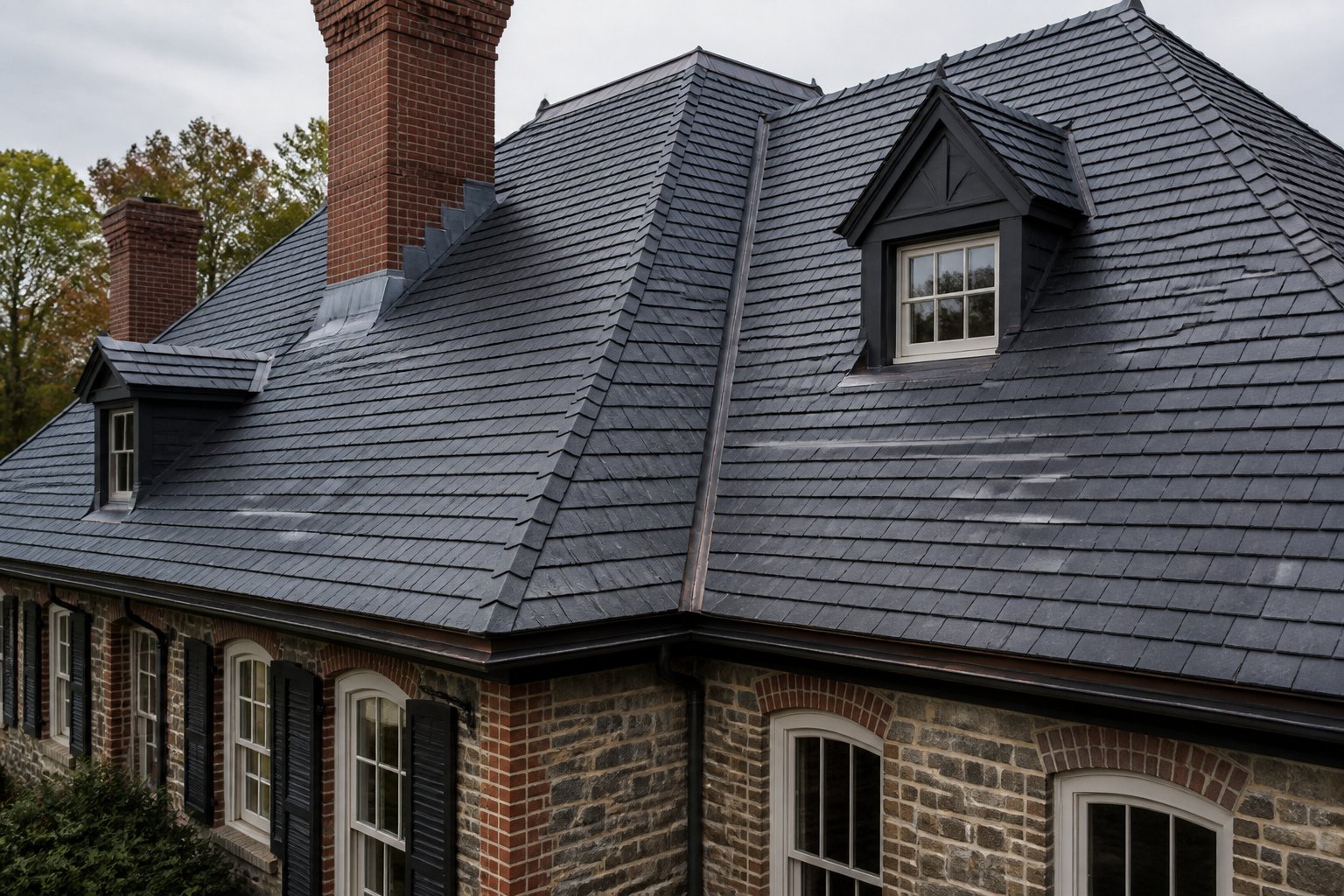
A 1908 church roof is coming down next week, and its Buckingham slate still rings clear when you tap it. Whether that slate becomes landfill or a finished roof on your next restoration depends on what happens in the few days before the excavator arrives. Roofing materials from demolished buildings carry a century of proven weather performance. Salvaged slate and clay tile can meet job-site quality standards when they are recovered by hand, sounded piece by piece, culled hard, and sorted by format and color before they ship.
Reclaimed Slate Roofing works on that salvage side every day, pulling authentic slate and clay tile off historic teardowns and grading it for reuse. Its stock includes Buckingham Black from Virginia quarry stock, Semi Weathering Green, Purple, Grey, and barrel clay tile. The slate comes in 20-inch, 18-inch, and 16-inch random formats. Every piece is hand-inspected, sounded, and culled before it is crated, and the patina it earned on the original roof stays on the surface.
Keep reading to learn how a recoverable roof is spotted, how tiles come off without hidden cracks, and how each piece is tested. You will also see how variable salvage inventory should shape your specification and waste allowance. If you are writing a restoration spec, the length format and color family you lock in on day one decide which lots can serve your job.
Which Roof Tiles Are Worth Salvaging?
Slate and fired clay tile are the roofing materials most worth saving because they can outlast the buildings they sit on. Whether any covering survives removal in usable shape depends on its type, age, condition, and how carefully it comes off. Dense natural slate and kiln-fired clay often do.
Much authentic salvage comes from older churches, schools, courthouses, mills, and large homes. Many of those buildings carried heavy, high-grade material because it was the standard of the day. That is why historic building roofing materials from these demolition sites still have decades of service left.
How Are Roofing Materials from Demolished Buildings Identified?
The search starts on a demolition schedule. Once a teardown permit is issued, the window to recover slate or clay can shrink to days. Recovery crews check a roof from the ground and from the attic before they commit labor to it.
A roof worth salvaging usually shows these signs:
- Tight, even courses with few slipped or missing pieces
- Sound decking with no widespread sag or rot at the eaves
- Original nailing instead of repeated face-nailed repairs
- Consistent color and thickness across the field
Roofs that fail these checks can still yield partial lots, but the recovery rate drops fast. These field checks overlap with good reclaimed slate sourcing tips for buyers vetting a supplier's stock.
What Makes Historic Slate and Clay Tile Suitable for Reuse?
Geology and firing do the heavy lifting. The National Park Service notes that properly installed slate roofs last 60 to 125 years or longer, and some have passed 200 years. Buckingham Virginia slate is rated at 175 years or more in the same guidance.
That means a slate pulled from a 100-year-old roof can hold plenty of service life. The same logic drives choosing long-life roofing materials over products with short track records. For slate longevity by quarry region, see this look at slate roofing lifespan.
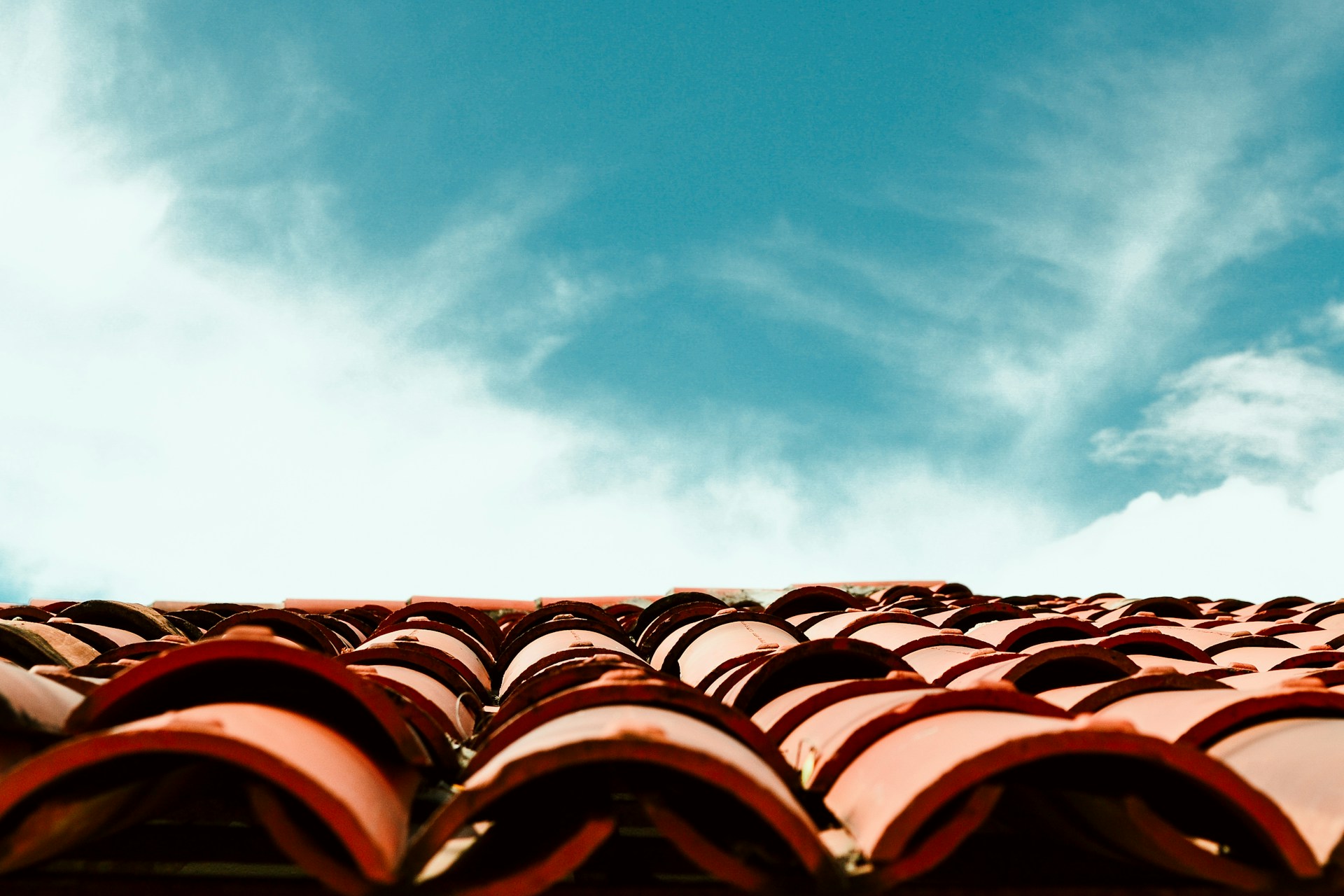
Clay tile earns its place through kiln firing, which leaves a dense, water-shedding body. Salvaged reclaimed clay roof tiles keep the profile, color, and texture that newer concrete substitutes struggle to copy.
What Can Provenance Tell a Specifier?
Provenance is the record of where a lot came from and what it was. It tells you the quarry region, the likely weathering behavior, and the original exposure the slate was cut for. Good records capture the building address, construction date, and photos of the roof in place before removal.
For preservation review, that paper trail makes period correct roofing materials defensible. Architects writing specs for roofing for historic homes often need to state origin in the drawing set. The photo record then follows the lot into the batch photos you approve.
How Is Potential Hazardous Material Handled?
Old roofs can bring old hazards. Lead paint on flashings, asbestos in some underlayment felts or cement products, and weak decking can all turn up on older buildings. Suspect materials should be assessed before salvage begins.
Testing, notification, removal, and disposal requirements vary by jurisdiction and project. Bring in qualified abatement professionals to identify and handle suspect materials. The U.S. Environmental Protection Agency (EPA) outlines federal asbestos demolition standards, and state and local rules may add more.
Where Do Architectural Salvage and Specialist Suppliers Fit In?
Salvage yards buy mixed lots and resell what they can move, often selling doors, beams, and timbers alongside roofing. Architectural salvage slate roofing from a general yard may be unsorted, unsounded, and mixed with look-alike composites.
A specialist roofing supplier grades every piece and sorts by length, thickness, and color family. That is the reason builders pick salvaged roofing materials from a dedicated source. It also opens access to rare reclaimed roofing materials and full lines of reclaimed roofing supplies that general yards seldom stock.
Picking the right roof is half the job. The other half happens on the ladder, where one careless hour can ruin a lot.
How Are Tiles Removed Without Breaking Them?
Tiles survive removal when crews work by hand from the ridge down and pull nails with a slate ripper. Prying a slate loose loads it against its own bedding planes. That starts cracks you will not see until the piece is back on a roof.
Why Does Selective Deconstruction Matter?
Deconstruction takes a building apart in the reverse order it went up, so each material comes off whole. Reclaimed materials depend on this. A machine demolition turns a slate roof into rubble in minutes.
Slate comes down by hand or conveyor in small bundles. Crews avoid building tall stacks on a live deck, because a dropped bundle causes hairline cracks that pass a visual check and fail sounding later. Nail holes need care too, since a slate with a blown-out hole cannot hang on its original punch.
Curved clay is less forgiving. Barrel clay roof tiles concentrate stress at the crown, so a stepped-on tile cracks along its length. Mortar-set tiles are freed first, and the mortar is chipped off on the ground where a controlled strike does less harm.
How Are Recovered Tiles Sorted and Stored?
Recovered slate goes onto pallets stacked on edge in single rows. Flat stacking in tall piles puts weight on the corners, which chips and cracks them. Clay tiles are nested to protect the curve.
At the yard, lots are sorted into groups a roofer can use:
- Length format, such as 20-inch, 18-inch, or 16-inch random
- Thickness range, because a 3/8-inch slate will not sit flush against a 1/4-inch course
- Color family, from Semi Weathering Green to Black
- Condition grade after sounding
These sorting groups line up with how slate roofing materials are specified on a drawing. Sorted stock is only half the promise, though. Every piece still has to prove it is sound.
How Is Salvaged Roofing Checked for Structural Integrity?
Each slate is tested by hand, one piece at a time, with a tap and a close look at its edges. A face that looks perfect can hide a soft interior, so sound and sight both have to pass.
What Do Hand-Sounding and Edge Inspection Reveal?
Sounding is the core test. The inspector holds a slate at one corner and taps it. National Park Service guidance says high-grade slate gives a clear, solid sound, while badly weathered slate gives a dull thud.
That thud means delamination, where inner layers separate from mineral reactions over decades of wet and dry cycles. Edge inspection catches what the ear misses:
- Hairline cracks running from nail holes toward the head
- Broken or stretched nail holes that will not hold a fastener
- Deep pitting on the weather face
- Chipped tails that shorten usable exposure
Clay gets its own checks. Tiles are nested to confirm the curve matches, and light flexing plus a tap reveals cracks, since fired clay also rings.
Why Are Unsound Pieces Culled?
One failed slate can let water into a valley and rot decking below it. So pieces that fail sounding or edge checks go to the cull pile. A real reject rate is a sign the grading is honest, not a flaw in the supply.
Slates also cannot be flipped to hide a worn face. The NPS brief shows that flaking on the underside is often as bad as on the exposed side. Culling is what turns a pile of salvage into tested and vetted roofing. Repair crews count on that when replacing broken slate tiles on a live roof.
Why Keep the Original Patina Instead of Cleaning It?
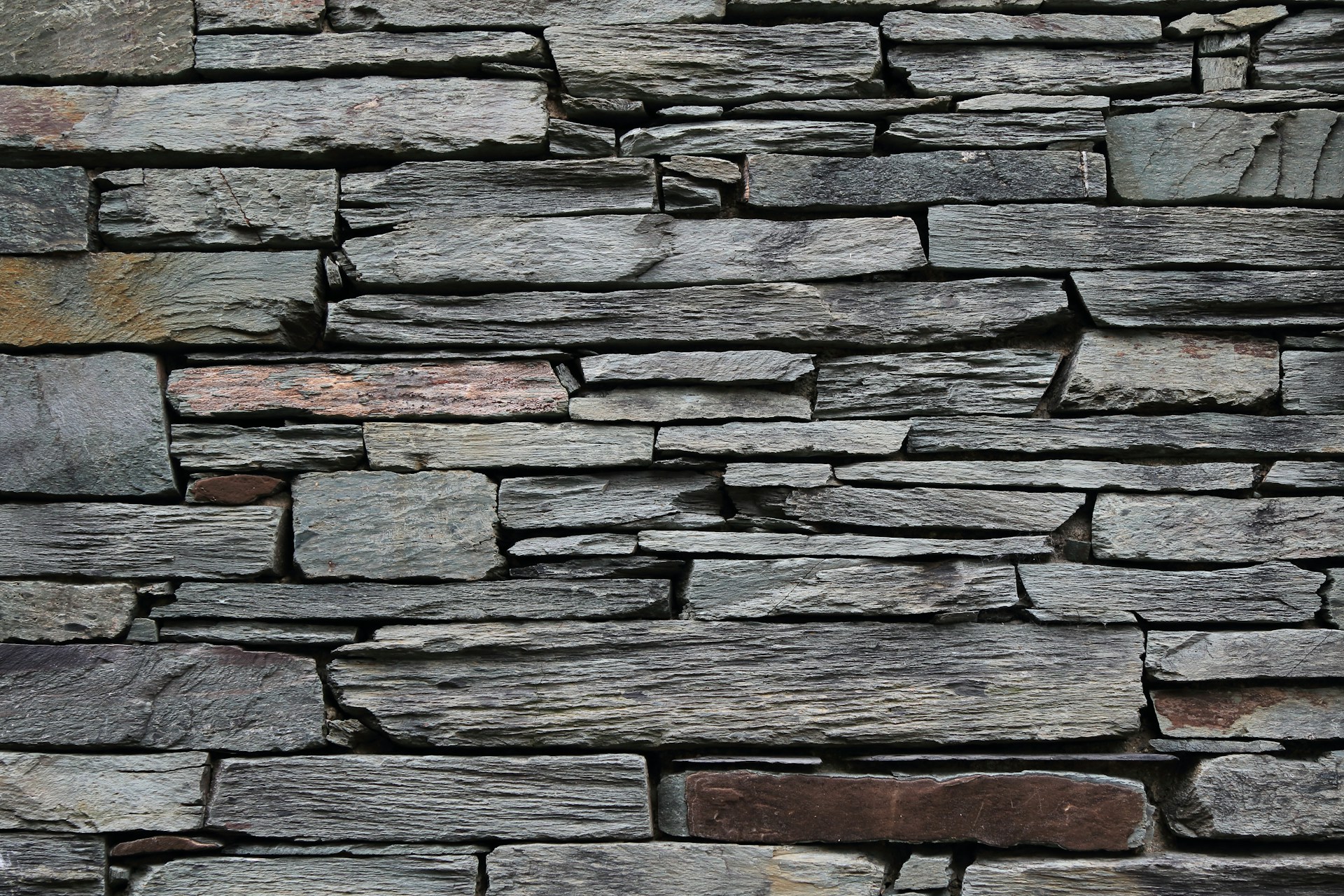
The patina is the match. A century of rain, sun, and lichen gives slate its soft tone shifts, and that surface is what blends with an existing roof. Pressure washing or acid cleaning strips it and can open the surface to faster wear.
Reclaimed slate ships with its original surface, with no cleaning or artificial finish. Minor marks are part of that character and are shown in batch photos before approval. Passing inspection is one thing. Finding enough of the right color, in the right length, is the next challenge.
How Does Variable Inventory Affect a Roof Specification?
Salvage stock changes every week, so your spec has to name a color family and length format and then confirm a real lot. You cannot reorder the same batch next month. Once a lot sells through, it is gone.
Which Slate Colors and Random Formats Might Be Available?
Color choice is a geology choice. Vermont and New York quarries produced Semi Weathering Green, Purple, and Mottled Green, each aging differently. The mottled green with purple blend is common on late 1800s institutional roofs.
Grey and Black slate hold their tone with little shift, which suits both restorations and modern builds. Buckingham Black slate from Virginia is prized for its mica sparkle and stability, and genuine reclaimed stock is scarce. Supply of rare slate colors moves with what comes off recent teardowns.
Formats run 20-inch, 18-inch, and 16-inch random. Random width means widths vary within a fixed length, the way these roofs were first laid. A 20-inch random will not stand in for an 18-inch course without redesigning the layout.
How Should Architects Confirm a Match and Allow for Waste?
Start with batch photos of the actual lot. Review them in daylight next to photos of the existing roof taken at the same angle. These historic slate matching guides walk through reading color range at roof height.
Then order more than the takeoff. Hip and valley cuts plus breakage eat into a lot. The right allowance depends on roof complexity, lot condition, and the installer, so treat these as examples only:
- Full roofs: some projects add 10 to 15 percent over net square footage
- Repairs and patches: small lots may call for 25 percent or more
- Attic stock: some owners set aside one to two squares for future maintenance
Small patch jobs benefit most from that buffer, as covered in these reclaimed tile repair solutions. For budget planning, see what contractors pay for reclaimed slate at wholesale.
What Makes an Inspected Order Job-Site Ready?
An approved lot is crated and palletized so your crew can unload and start. Most orders ship within 2 to 5 business days after order confirmation, with nationwide freight delivery. Liftgate service and delivery scheduling are available on request.
Tracking and delivery details arrive before the truck does. Inspect crates on arrival and report any freight damage within 48 hours so a carrier claim can be filed. Your installer should also review reclaimed slate installation details, such as hanging slate on nails that sit just proud of the surface. All of this effort pays back in a way most buyers never measure.
What Does Roofing Reuse Save?
Reuse saves the energy, quarrying, and landfill space that a new roof would demand. A salvaged slate that goes back on a roof skips extraction, splitting, and trimming entirely.
How Does Reuse Reduce Disposal and Demand for New Materials?
The waste stream is huge. EPA figures show 600 million tons of debris came from construction and demolition in 2018, with demolition making up more than 90 percent. Brick and clay tile are among the materials tracked in that total.
Every reclaimed roof pulls tons out of that stream and cuts demand for virgin materials from new quarries. This is the circular economy working at roof scale. For a closer look, read how reclaimed roofing reduces waste and the practical eco-friendly roofing benefits for green building projects.
When Is Reuse Different from Recycling?
Reuse keeps a tile whole and puts it back to work in its original form. Recycling crushes or reprocesses material into something new, such as aggregate or road base. Crushing a slate that could have served another 75 years throws away most of its value.
Reclaimed building materials roofing sits at the top of that ladder because nothing is remade. That is also why reclaimed slate can support LEED Materials and Resources goals on green projects. The case for sustainable slate roofing rests on this simple fact: the most efficient roof is one that already exists.
From Recovered Tile to a Roof-Ready Specification
Every slate that reaches your job site has passed three gates: a careful removal, a hand-sounding test, and a match check against a real lot. The weakest step decides the quality of the roof. A supplier who skips sounding or strips patina hands that risk to your crew.
For your spec, lock the length format and color family early, approve batch photos in daylight, and order a real buffer. That applies whether you are patching a failed valley on a 1908 roof or specifying Buckingham Black for a new heritage build. The lots that fit best are often the first to sell.
Reclaimed Slate Roofing can tell you what is on hand right now. Call 225-954-8393 to check availability and get a direct price, or email bourgeoismaterials@gmail.com with photos of the roof you are matching. You can also browse current salvaged inventory at reclaimedslateroofing.com before a specific lot sells through.
Frequently Asked Questions
Can Slate From a Demolished Building Be Used on a New Roof?
Yes, as long as each piece passes sounding and edge inspection. Many historic slates are rated for 100 years or more, so a salvaged piece often has decades of service left. It suits both new builds and restorations.
How Do Suppliers Tell Whether a Salvaged Roof Tile Is Still Sound?
They tap each slate while holding it at one corner and listen. A clear ring means solid stone, while a dull thud points to delamination. Inspectors also check nail holes, tails, and the weather face for cracks or pitting.
Can Reclaimed Tiles Match an Existing Historic Roof?
Yes, when you match length format, thickness, and color family from real batch photos. Compare photos of the lot with your existing roof at the same angle in daylight. Salvaged patina blends better than new slate because it has weathered the same way.
Are Salvaged Clay Tiles Cleaned Before They Are Shipped?
No, reclaimed tiles ship with their original surface and patina intact. Loose mortar is removed from set tiles, but no cleaning or artificial finish is applied. That weathered surface is what helps tiles blend with an aged roof.
What Happens If Demolition Yields Fewer Usable Tiles Than Expected?
Culling often cuts a lot below its first estimate, so a specialist supplier with sorted stock can fill the gap. Ask for matching color and format from other lots. Agreeing on an overage with your roofer up front lowers this risk.